
The Wildfire Money Machine: How California’s Fire Safe Council Profits From Disaster
Table of Contents
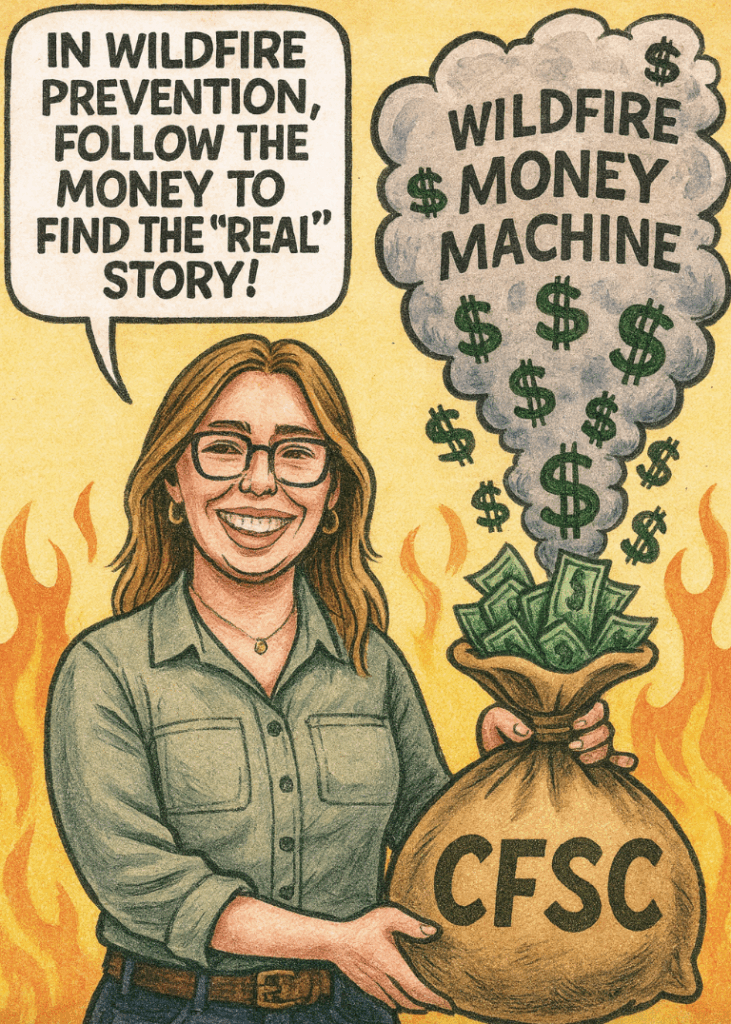
Follow the money, and you’ll find the real story behind California’s wildfire “prevention” industry
Every wildfire season, as flames tear through California communities and families flee for their lives, one organization quietly benefits from the destruction: the California Fire Safe Council. While presenting itself as a community-driven nonprofit dedicated to protecting Californians from wildfire, a deep investigation reveals the California Fire Safe Council operates as something far more insidious—the central hub of a statewide wildfire-industrial complex that enriches timber companies, biomass operators, and insurance giants while making communities more vulnerable to fire.
This isn’t hyperbole. This is a story of how public money flows through a carefully constructed network to benefit private industry, all under the banner of “community safety.”
California Fire Safe Council’s True Role: Grant Broker, Not Grassroots
While the California Fire Safe Council brands itself as a facilitator for local, community-based fire safe councils, in reality it operates as a top-down financial gatekeeper. The organization manages federal and state wildfire funds, deciding who gets funded, what types of projects qualify, and how money is distributed.
But perhaps the most revealing evidence of the California Fire Safe Council’s true priorities comes from their own documents, which describe one of their goals as to “maintain and improve the capacity of wood products and range industries.” That is not a fire safety goal—that’s an industrial economic objective spelled out in black and white.
Local Fire Safe Councils, such as the Lassen Fire Safe Council, are not spontaneous grassroots organizations. They are often founded or co-opted by individuals tied to timber companies, retired fire officials, or utility-aligned professionals. In practice, these “local” FSCs function as project implementers for the California Fire Safe Council’s industry-aligned agenda rather than genuine community representatives.
Since 2004, the California Fire Safe Council has distributed over $100 million in federal grants across California, with recent awards including $1.575 million in 2023-2024 alone to 17 projects across 15 counties. This massive funding flows through carefully constructed networks designed to benefit the same industrial interests that helped create the modern California Fire Safe Council.
The Great Takeover: How Public Became Private
The original California Fire Safe Council was created in 1993 as a loose collaboration of state agencies and local councils coordinated through CAL FIRE—a public agency accountable to taxpayers. This coalition operated as a genuine public collaborative, bringing together community leaders, governmental agencies, and organizations to provide education on wildfire dangers and prevention.
But when massive federal wildfire funding became available through the National Fire Plan and Healthy Forest Restoration Act in the early 2000s, everything changed. In 2002, the California Fire Safe Council, Inc. was formed as a private 501(c)(3) nonprofit, effectively dissolving the original public coalition and replacing it with a centralized grant administrator without direct public oversight.
This wasn’t organizational evolution—it was corporate capture disguised as efficiency. The new California Fire Safe Council became the “clearinghouse” for nearly all federal wildfire prevention grants in California, allowing it to distribute funding, vet proposals, and collect administrative fees while operating like a private contractor. This move permanently shifted wildfire prevention power from state agencies and community groups into the hands of a private, industry-linked nonprofit.
Federal agencies now provide large master grants to the California Fire Safe Council, which then selects, manages, and monitors subgrants to local communities while collecting administrative fees ranging from 5% to 8% of total funds administered. Those fees have generated millions in revenue for the California Fire Safe Council over the past two decades from over $100 million in federal grants distributed since 2004.
The Timber Industry’s Inside Track
Perhaps the most damning evidence of industry control comes from the California Fire Safe Council’s board composition. David Bischel, who served 22 years as president and CEO of the California Forestry Association—the state’s primary timber lobbying organization—sat on the California Fire Safe Council’s board of directors until his death in 2019.
This isn’t just a conflict of interest—it’s a smoking gun. Bischel spent over two decades advocating for “active forest management” and “sound forest practices”—industry euphemisms for logging operations. He started his career as a field forester and served as Executive Officer for both the Foresters Licensing Program and the California Board of Forestry and Fire Protection before leading the timber industry’s primary trade association. His seamless transition from timber lobbyist to wildfire grant administrator reveals the true nature of the California Fire Safe Council’s mission.
But the California Forestry Association’s influence extends far beyond the California Fire Safe Council’s board. As the state’s preeminent timber trade association, CalForests influences policy that affects who gets grants and for what purposes. While they don’t directly distribute funds, they lobby CAL FIRE and state agencies to create grant criteria that favor their members—ensuring that “fire prevention” projects consistently benefit timber companies, biomass operators, and herbicide contractors.
This creates a perfect closed loop: CalForests shapes the rules at the state level, their former president shapes federal grant decisions through the California Fire Safe Council, and both funding streams flow to the same industry interests. The California Fire Safe Council’s own documents explicitly state their goal to “maintain and improve the capacity of wood products and range industries”—confirming that this isn’t about fire safety, it’s about subsidizing timber extraction with public money. When the same industry lobby controls policy development and grant distribution, the fix is in.
The Insurance Angle: Profiting From Risk
The California Fire Safe Council’s founding board included Jerry Davies, an executive from Farmers Insurance—a detail that initially seems puzzling until you understand the business model. Why would an insurance executive help launch a nonprofit about wildfire prevention?
The answer lies in optics and liability management. Insurance companies benefit enormously from being able to claim they’re “helping reduce fire risk,” even if the actual projects increase fire exposure. It also allows them to justify pulling out of regions, raising rates, or shifting blame to vegetation and homeowners instead of development patterns and corporate risk exposure.
When insurance companies abandon high-risk areas, they avoid catastrophic claim payouts while forcing homeowners into California’s FAIR Plan—a state-backed insurance pool where losses are spread across the entire industry and ultimately backstopped by taxpayers. This allows companies to socialize their losses while continuing to cherry-pick profitable customers in safer areas. They can claim they’re “participating in solutions” through the FAIR Plan while actually just shifting their risk to competitors and the public.
This creates a dangerous and profitable feedback loop: the California Fire Safe Council helps industry promote monoculture tree planting and forest conversion projects that increase fire risk, insurance companies use that elevated risk to justify abandoning communities, and the industry collectively benefits from spreading losses through state programs while maintaining profits elsewhere. The public pays three times—once through taxes funding the projects that make fires worse, again through higher insurance costs or policy cancellations, and finally through taxpayer backing of the FAIR Plan when those abandoned communities inevitably burn.
“Fuel Reduction” as Industrial Camouflage
Through its control of funding, the California Fire Safe Council directs local Fire Safe Councils to implement “fuel reduction” projects that function as commercial logging operations in disguise. These projects systematically clear-cut or heavily thin forests under the guise of fire prevention, remove both dead and living trees including those with commercial value, deliver truckloads of wood to biomass energy facilities or sawmills, spray herbicides to prevent natural regeneration, and replant with fast-growing conifer monocultures that are more flammable and ecologically harmful.
The California Fire Safe Council’s funding consistently promotes these industrial practices across California. Local Fire Safe Councils supply truckloads of “waste” wood to biomass plants—up to 80 per day in some locations—coordinate with timber companies for “site preparation,” and implement herbicide treatments with minimal environmental oversight, all while avoiding full environmental review by being broken into piecemeal permits or exempted from CEQA entirely.
The justification is always “fire prevention,” but the real result is a steady supply chain of timber and biomass subsidized by the public. The magic word “fire prevention” serves as a regulatory get-out-of-jail-free card, allowing projects to bypass environmental review and operate with limited public input. When local Fire Safe Councils refuse to disclose environmental impact data or comply with public records requests—as many do—you can be certain they’re hiding the industrial scope of their operations.
The Science the California Fire Safe Council Ignores
Here’s what makes this particularly egregious: extensive scientific research shows that monoculture tree plantations—the California Fire Safe Council’s preferred “restoration” method—actually increase wildfire risk. Uniform stands of the same species burn hotter, faster, and more destructively than diverse native ecosystems.
If the California Fire Safe Council were genuinely interested in reducing fire risk, it would prohibit monoculture planting. Instead, its funding systematically converts fire-adapted ecosystems into timber plantations designed for profit, not survival.
Local “Grassroots” Groups That Aren’t
The California Fire Safe Council maintains the fiction that local Fire Safe Councils are citizen-driven grassroots organizations. The reality is starkly different. These councils are typically launched through institutional networks by retired fire officials, industry representatives, or carefully selected locals aligned with funding agencies.
The Lassen Fire Safe Council provides a telling example of how this system operates. While the California Fire Safe Council paid the Lassen Fire Safe Council approximately $95,000 in 2022 through its County Coordinator Grant Program, the Lassen Fire Safe Council has actually received over $27 million in combined state and federal grants since 2012. This massive funding flows through the same networks of industry insiders—former Forest Service supervisors, retired CAL FIRE chiefs, and timber industry affiliates—who control both state and federal grant processes.
The Lassen Fire Safe Council’s leadership structure mirrors the California Fire Safe Council’s approach: industry professionals masquerading as community representatives. The organization distributes token community gifts ($43,500 total) while managing multi-million dollar industrial operations—a public relations budget of less than 0.2% designed to manufacture local consent for projects that benefit timber companies and biomass facilities.
This pattern repeats across California. Local Fire Safe Councils function as project implementers for the California Fire Safe Council’s industry-aligned agenda rather than independent community advocates. The relatively modest coordination grants the California Fire Safe Council provides are just seed money to manage much larger funding streams that flow directly from state and federal agencies to the same local organizations.
The Wildfire-Industrial Complex Exposed
What emerges from this investigation is a clear picture of systematic capture:
Private control of public funds: the California Fire Safe Council transformed from a public collaborative into a private gatekeeper controlling over $100 million in federal grants, while facilitating additional billions in state funding through aligned local organizations
Industry insiders in key positions: Former timber lobbyists control federal funding decisions while the same networks of industry professionals run state grant programs and local implementation
Insurance company involvement: Major insurers helped found organizations whose projects increase the fire risk they profit from—creating a perverse feedback loop where bad outcomes generate more revenue
Regulatory avoidance: The “fire prevention” label allows projects to bypass environmental review while functioning as commercial timber and biomass operations
Scientific malpractice: the California Fire Safe Council’s funding systematically promotes practices proven to increase fire risk rather than reduce it, from herbicide applications to monoculture plantations
Community manipulation: Local Fire Safe Councils use minimal community outreach budgets to manufacture consent for massive industrial operations that serve private interests rather than public safety
The Cost to Communities
While the California Fire Safe Council and its industry partners profit, California communities pay the price. The systematic promotion of monoculture plantations makes fires burn hotter and more destructively, herbicide spraying contaminates local water sources, clear-cutting destabilizes slopes and increases erosion, and insurance companies use the elevated fire risk to justify abandoning vulnerable communities entirely.
Across California, communities receive token gestures while landscapes are converted into industrial timber operations that make fires worse. The pattern is consistent: local Fire Safe Councils distribute small community grants representing tiny fractions of their total budgets while the real money flows to contractors and industry partners.
This isn’t incompetence—it’s a business model. The same industries that profit from “fuel reduction” projects also benefit when those projects make fires worse. It’s a perfect storm of perverse incentives, all funded by taxpayers who believe they’re paying for protection.
Time to Break the Cycle
The California Fire Safe Council isn’t making California safer from wildfire—it’s making certain industries wealthier while making fires worse. Every dollar that flows through the California Fire Safe Council to industry-aligned projects is a dollar not spent on proven fire prevention methods like prescribed burning, defensible space, and native ecosystem restoration.
Californians deserve to know that what’s happening under the “Fire Safe” banner isn’t community empowerment—it’s corporate capture. The wildfire-industrial complex has hijacked our fire prevention infrastructure and is using public money to subsidize private extraction while communities burn.
It’s time to follow the money, expose the networks, and demand that wildfire prevention actually prevent wildfires instead of enriching the industries that profit from disaster.
The public deserves protection from wildfire, not protection rackets disguised as nonprofits.
The Board Behind the California Fire Safe Council
The California Fire Safe Council’s board is presented to the public as a group of dedicated community leaders. In reality, it is a roster of insurance lobbyists, long-term CAL FIRE veterans, utility executives, and industry-linked policy influencers — the very sectors that profit from the wildfire-industrial model. Many of these individuals also serve on other wildfire-related boards or hold roles in agencies that are part of the same interlocking network, including Resource Conservation Districts (RCDs) that receive CAL FIRE funding and channel it to logging companies under the guise of fire prevention or “emergency reforestation.”
Rex Frazier — Insurance Industry Lobbyist
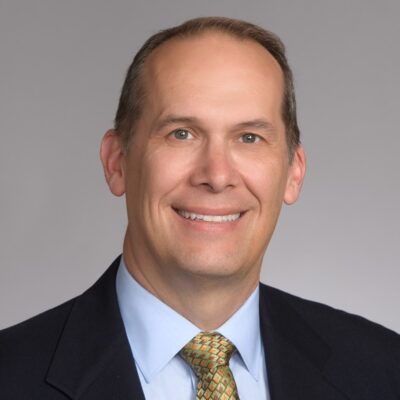
President of the Personal Insurance Federation of California, Rex Frazier leads the lobbying arm for the state’s largest personal lines insurance companies. These companies benefit when they can withdraw from “high-risk” areas, push homeowners into the taxpayer-backed FAIR Plan, and raise rates in lower-risk zones. CFSC projects that increase fire risk ultimately bolster the insurance industry’s justification for abandoning communities. His role ties CFSC directly to the insurance sector’s profit model, where risk is socialized and profits are privatized. Frazier also works within broader industry coalitions and advisory bodies that influence wildfire-related policy statewide.
Chris Anthony — Former CAL FIRE Chief Deputy Director
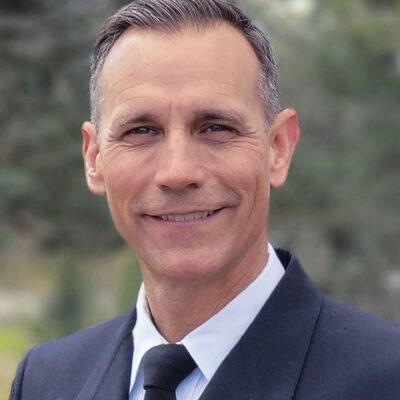
Chris Anthony spent over 27 years with CAL FIRE, including service as Chief Deputy Director. In that role, he oversaw fire protection, resource management, and operations, all within CAL FIRE’s industrial vegetation management framework — heavy thinning, biomass removal, and large-scale replanting with monocultures. These policies, mirrored in CFSC’s grant priorities, benefit timber and biomass industries while ignoring proven ecological fire prevention strategies. Anthony also holds positions on interagency wildfire advisory groups that reinforce these same industrial approaches.
Frank Bigelow — CAL FIRE Deputy Director for Community Wildfire Preparedness & Mitigation
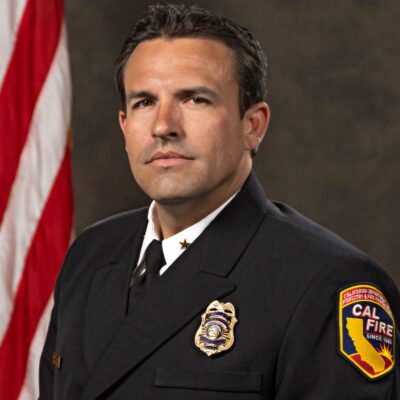
Frank Bigelow has held leadership positions in CAL FIRE since 2004, including oversight of vegetation clearance, burn permit programs, and wildfire mitigation task forces. His work has advanced large-scale vegetation removal projects that double as timber extraction operations. Bigelow’s interconnections with RCD-led initiatives further link CFSC to funding channels that route public money to logging contractors. He also participates in multiple wildfire policy and coordination boards that promote CAL FIRE’s industrial model.
Kate Dargan — Former California State Fire Marshal
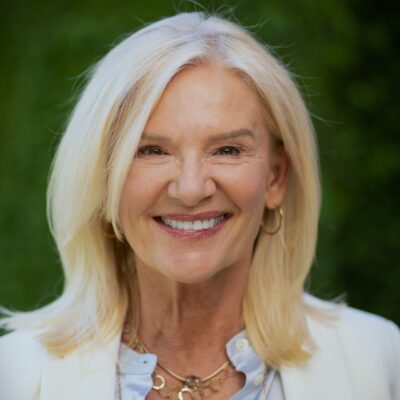
Kate Dargan was California’s first woman State Fire Marshal and previously served as Napa County Fire Marshal. She has extensive experience in regulatory oversight that favors industrial “fuel reduction” and has worked with both state agencies and private firms to advance this model. Her current roles with wildfire technology companies and service on other wildfire-focused boards strengthen her influence over funding priorities and policy directions across multiple agencies.
Angie Gibson — Vice President of Emergency Preparedness, PG&E
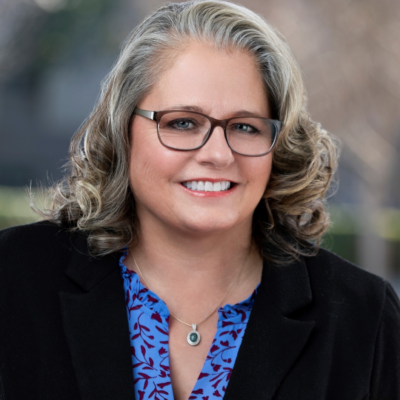
As PG&E’s Vice President of Emergency Preparedness, Angie Gibson represents California’s largest investor-owned utility — a company with billions in wildfire liability exposure. PG&E benefits directly from vegetation clearance projects around its infrastructure, and CFSC provides a conduit to direct public wildfire prevention funds toward utility risk management. Gibson also sits on interagency wildfire planning bodies where utility and state priorities are closely aligned.
Troy Whitman — Senior Fire Management Officer, Southern California Edison
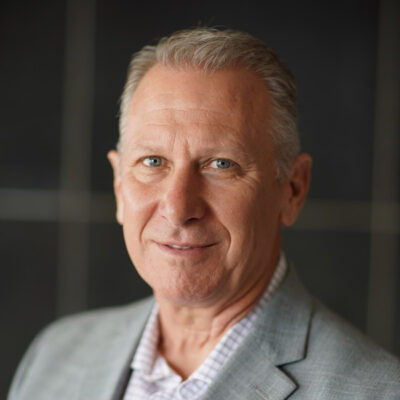
Troy Whitman has worked in utility wildfire mitigation for over 30 years, currently serving as Senior Fire Management Officer for Southern California Edison. His position on the CFSC board ensures that vegetation clearance around utility assets is prioritized in grant funding. Whitman also serves on regional wildfire councils and coordination groups where utility, CAL FIRE, and RCD interests intersect.
Southern California Edison (SCE) is one of California’s major investor-owned utilities that purchases electricity generated from biomass facilities as part of the state’s Renewable Portfolio Standard and BioRAM procurement programs. These programs require utilities to buy renewable power, including from forest biomass plants, to meet renewable energy mandates. SCE contracts with biomass energy producers — some located in Northern California — meaning vegetation and wood waste from areas like Lassen County can ultimately be converted into electricity that is sold to Southern California Edison customers. This creates a direct market link between large-scale vegetation removal projects in the north and electricity sales in the south.
Chris Ochoa — Senior Counsel, California Building Industry Association
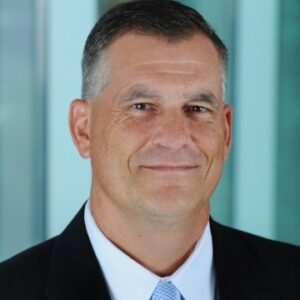
Chris Ochoa operates at the nexus of land use, development, and building codes as Senior Counsel for the California Building Industry Association. His presence on the board aligns CFSC with the development sector’s interest in shaping wildfire policy to enable expansion into fire-prone areas, while using public funds to meet compliance and infrastructure protection needs. Ochoa’s policy involvement extends into state-funded planning groups that favor vegetation management contracts aligned with industry interests.
Pat Frost — Resource Conservation District & Timberland Stewardship Leader
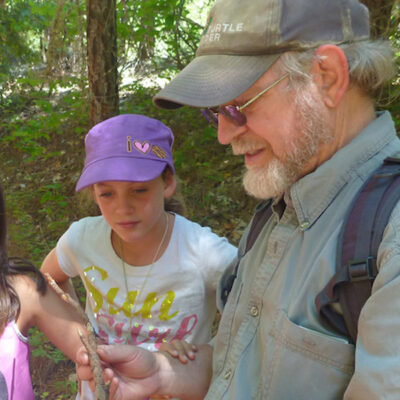
Pat Frost has decades of experience with Resource Conservation Districts and personal forestland management. His leadership roles have often placed him in direct partnership with timber and land management industries. Through RCDs, Frost is positioned to direct CAL FIRE funding toward logging companies, reinforcing the closed loop between public funds and private industrial gain. His presence on other wildfire boards expands his influence over how state and federal grants are allocated at the local level.
Laura Blaul — Former Orange County Fire Authority Assistant Chief
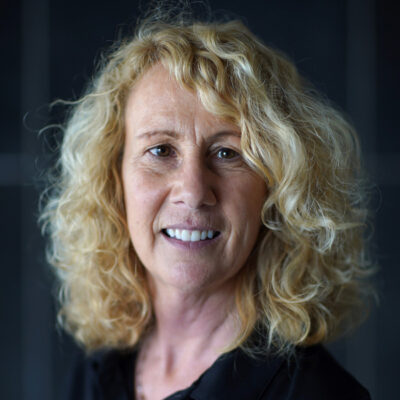
Laura Blaul served as Assistant Chief and Fire Marshal for the Orange County Fire Authority, where she led community risk reduction programs and fire prevention strategies. She played a central role in the creation of the Pre-Fire Management Section and has deep ties to institutional wildfire prevention programs that often align with utility and CAL FIRE priorities. Blaul’s experience ensures that CFSC’s policies remain consistent with the traditional agency-driven wildfire management framework.
David Horne, Ph.D. — Academic and Fire Safe Council Treasurer
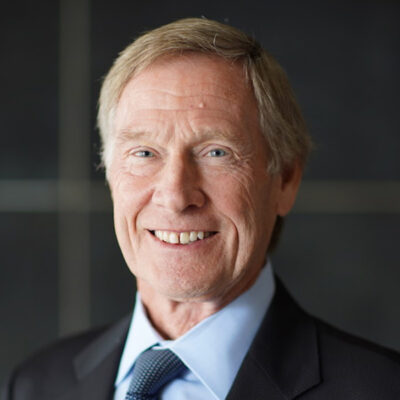
David Horne is Professor Emeritus of Marketing at CSU Long Beach and has been CFSC’s Treasurer since 2002. While his background is academic, he also chairs the Greater Laguna Coast Fire Safe Council, integrating CFSC’s model into local operations. His long tenure in CFSC leadership has helped institutionalize its funding structures and industry-aligned priorities.
David Shew — Former CAL FIRE Staff Chief
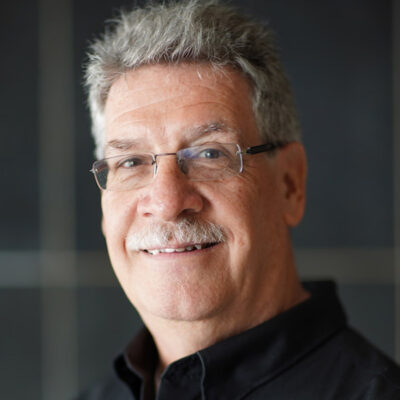
David Shew retired as CAL FIRE’s Staff Chief for Planning and Risk Analysis, where he specialized in structural ignition prevention and wildfire risk assessment. His work directly supports the industrial vegetation management model, and his presence on CFSC’s board continues CAL FIRE’s institutional influence over funding priorities.
Seth Schalet — Secretary; CEO, Santa Clara County FireSafe Council
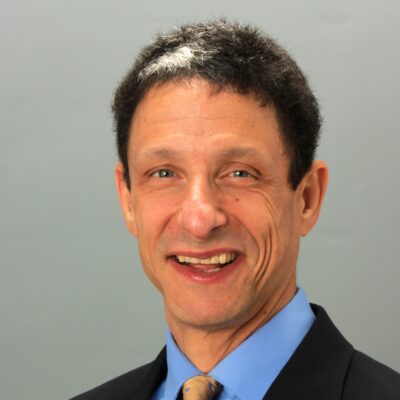
Since 2020, Seth Schalet has served as Chief Executive Officer of the Santa Clara County FireSafe Council, placing him in a key position within California’s broader fire-prevention funding network. His background spans 25 years in global sales and operations for technology startups, Fortune 500 divisions, and private equity–backed companies, with expertise in mergers, acquisitions, and corporate restructuring. He has also developed partnerships in software, hardware, and AI-based solutions, blending a corporate technology mindset with wildfire policy leadership.
Schalet’s role as Secretary of the CFSC board gives him direct influence over statewide grantmaking and funding priorities, while his position as a local FireSafe Council CEO allows him to shape how funds are implemented at the county level. This dual role creates a feedback channel between local and state wildfire agendas, ensuring that CFSC’s funding model is reinforced on the ground. His longstanding ties to nonprofit boards and grantmaking foundations further embed him in the interlocking network of public, private, and philanthropic actors driving California’s wildfire-industrial economy.
A Closed Loop of Industrial Interests
When examined individually, each CFSC board member’s background reveals clear ties to sectors that profit from California’s wildfire crisis:
- Insurance lobbyists ensure CFSC’s work supports industry narratives and risk-shifting.
- Long-term CAL FIRE officials reinforce industrial vegetation management as the default.
- Utility executives secure vegetation clearance around infrastructure with public funding.
- Policy and land management leaders align wildfire prevention with industrial growth.
- RCD-linked board members and affiliates control local funding pipelines that channel CAL FIRE money into contracts for logging companies.
- Many members hold positions on multiple wildfire-related boards, ensuring the same priorities dominate across agencies and funding bodies.
This is not community representation. It is a carefully constructed board that guarantees wildfire prevention policy and funding will serve corporate and industrial interests first — while California’s communities bear the risk, the environmental damage, and the cost.