Kelsey Siemer, Director of the Honey Lake Resource Conservation District, Oversees Toxic Forestry Operations in Lassen County
Kelsey Siemer, director of the Honey Lake Resource Conservation District (HLRCD), located in Susanville, California, is directly overseeing taxpayer-funded programs that support widespread herbicide spraying across Lassen County under the false pretense of “wildfire recovery.” While publicly promoting forest health and community protection, Siemer and the HLRCD have quietly funneled millions of dollars each year in taxpayer money to the Lassen Fire Safe Council (LFSC) — an organization now tied to extensive chemical use, timber industry partnerships, and environmental risk.
Records and field evidence show that the project funded by HLRCD under Siemer’s direction involves the use of multiple hazardous herbicides, including:
- Hexazinone
- Glyphosate
- Triclopyr
- Oxyfluorfen
- Indaziflam
- Penoxsulam
- Methylated Seed Oils (MSO)
- and most likely others
Despite the scale and toxicity of this chemical cocktail, HLRCD performs absolutely no water or soil testing — even though it is the lead agency responsible for filing all CEQA documentation related to thousands of acres of chemically treated land across Lassen County. There are no baseline environmental tests, no follow-up contamination studies, no cumulative impact studies, and no evidence that the agency has conducted any independent verification of safety or environmental impact.
A formal California Public Records Act (CPRA) request was submitted to Kelsey Siemer on April 11, 2025, seeking herbicide records, environmental risk disclosures, and contracts associated with the Lassen County Wildfire Reforestation Project. Siemer and the HLRCD have refused to provide the requested public records — a complete blackout on all herbicide-related documentation. This refusal constitutes a direct violation of the California Public Records Act and the landmark California Supreme Court ruling in Sierra Club v. Superior Court (2013), which affirms that environmental data collected by public agencies must be disclosed.
The Honey Lake Resource Conservation District, under Kelsey Siemer’s leadership, is not restoring Lassen County. It is enabling the unchecked chemical treatment of thousands of acres of private timberland under the control of logging contractors and industrial forestry consultants. The public deserves answers, oversight, and protection — not secrecy, obstruction, and illegal concealment of public information.
Millions in Public Funds Routed Through HLRCD Without Environmental Safeguards
Each year, the Honey Lake Resource Conservation District approves and administers public grant contracts worth millions of dollars to timber-aligned nonprofits like the Lassen Fire Safe Council. These agreements fund mass-scale herbicide operations under the label of “forest restoration,” often with little to no public transparency, environmental review, or scientific oversight.
The public has not been informed that these projects involve the repeated use of herbicides known to cause aquatic toxicity, groundwater contamination, and long-term ecosystem disruption. Nor has HLRCD disclosed how many acres are treated each year, how contractors are selected, or how they verify that drift and runoff don’t impact nearby homes, springs, or livestock water sources.
Despite acting as the CEQA lead agency, HLRCD has failed to:
- Conduct baseline soil or water testing before herbicide use
- Monitor cumulative impacts across project zones
- Notify affected residents or landowners prior to spraying
- Disclose long-term chemical exposure risks
These omissions are not accidental. They represent a systemic pattern of greenlighting chemical-intensive forestry operations with zero independent oversight — and complete reliance on the word of private contractors and forestry consultants with direct financial interests in tree removal and plantation-style reforestation.
HLRCD’s CEQA Violations and the Collapse of Environmental Oversight
As the lead agency for CEQA compliance on thousands of acres of chemically treated land across Lassen County, the Honey Lake Resource Conservation District is legally obligated to identify, evaluate, and mitigate environmental risks associated with its projects. Instead, HLRCD has adopted a pattern of filing mitigated negative declarations (MNDs) and categorical exemptions that gloss over or entirely ignore the use of hazardous herbicides.
These documents routinely:
- Omit detailed descriptions of chemical ingredients and toxicity
- Fail to analyze runoff risks into waterways, wells, or wetlands
- Contain no cumulative impact analysis across multiple years or adjacent project areas
- Rely on boilerplate “mitigation” language lifted from herbicide product labels
- Avoid independent monitoring or third-party review
Although HLRCD is listed as the lead agency, its role has become largely ceremonial. Kelsey Siemer, as director, routinely signs off on CEQA documents prepared by outside consultants and the Lassen Fire Safe Council without any indication of scientific review or environmental verification. In reality, CEQA filings are often drafted by the very organizations receiving the grant money and executing the herbicide treatments—most commonly by LFSC or its forestry consultants like Kyle Keesey.
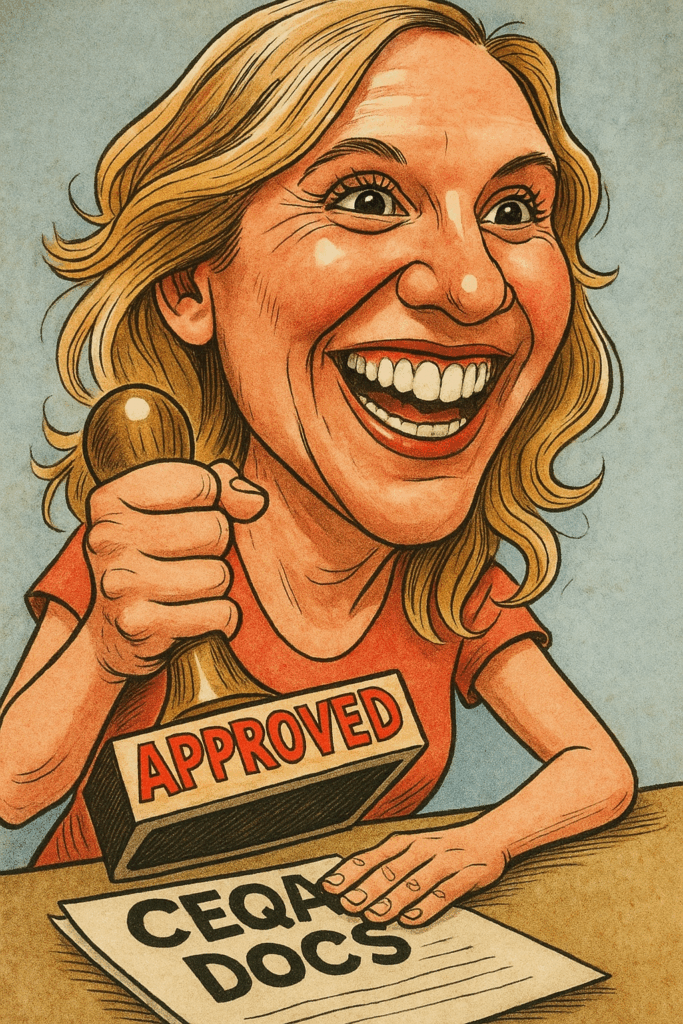
HLRCD’s approval process serves as a rubber stamp, allowing these contractors to bypass real oversight and push forward projects with potentially harmful impacts under the shield of government legitimacy.
By using these shortcuts, HLRCD has evaded the full environmental impact report (EIR) process, which would require transparent disclosures, public comment, and peer-reviewed science. This is a direct violation of the purpose and spirit of CEQA, a law designed to protect the public and environment from precisely these kinds of large-scale, poorly disclosed impacts.
The public has the right to know what chemicals are being used, where they’re being applied, and what risks they pose to human health, water quality, and wildlife. HLRCD has not only denied that right—it has weaponized CEQA’s loopholes to ensure that no meaningful oversight occurs.
HLRCD Is Illegally Withholding Herbicide Records from the Public
On April 11, 2025, a formal California Public Records Act (CPRA) request was submitted to Kelsey Siemer, director of the Honey Lake Resource Conservation District, requesting herbicide application records, CEQA documentation, environmental disclosures, and grant-related contracts for the Lassen County Wildfire Reforestation Project.
In response, HLRCD has released only a small number of highly selective documents—many of them redacted, incomplete, or of limited relevance. The records appear to have been curated through a restrictive and likely attorney-influenced process designed to create the appearance of compliance without providing access to the most critical information.
Most notably, the agency has refused to release any records related to herbicide use, including chemical types, application methods, environmental risk assessments, or site-specific treatment data. This is not a minor omission—it is a deliberate withholding of environmental information directly affecting public health, land, and water.
This selective release violates the California Public Records Act and contradicts the California Supreme Court’s decision in Sierra Club v. Superior Court (2013), which affirms that environmental data held by public agencies must be disclosed—even when created by contractors or third parties. HLRCD’s continued concealment of herbicide-related documentation is unlawful and undermines the public’s right to know.
By shielding the identities of chemicals being sprayed across Lassen County and avoiding accountability for environmental impacts, HLRCD has abandoned its role as a public conservation agency and assumed the posture of a legal firewall for the timber and spraying contractors it funds.
Why Donating to Honey Lake Valley RCD is a Bad Idea
The Honey Lake Valley Resource Conservation District (HLVRCD) presents itself as a community-based nonprofit working to “restore and sustain local agriculture and natural resources.” But behind the donation buttons and feel-good slogans lies a pattern of environmental harm, secrecy, and public betrayal.
HLVRCD has:
- Funded and coordinated large-scale herbicide spraying across Lassen County, often in steep, fire-scarred terrain without adequate erosion control or environmental monitoring
- Claimed to protect watersheds while supporting projects that apply toxic herbicides — herbicides that are notorious for running off into surface water and seeping into groundwater — in wildlife corridors and residential zones
- Refused to release public records related to herbicide use — despite multiple lawful Public Records Act requests
- Withheld the most basic information, including the locations where herbicides are being applied, leaving neighboring landowners and rural residents completely unaware of nearby chemical spraying
- Rubber-stamped environmental documents as the “lead agency” under CEQA, even when those projects benefit commercial timber and biomass contractors, not the public or the environment
This is not restoration. This is chemical land clearing disguised as conservation — and your donation could be enabling it.
HLVRCD has failed to answer public questions, denied access to environmental records, and actively concealed the scope of its herbicide-based operations.
Don’t give them your money. Demand answers first.
HLRCD’s Close Ties to LFSC and the Timber Industry Undermine Public Trust
The Honey Lake Resource Conservation District does not act alone. Much of its funding and project implementation is funneled through a longstanding partnership with the Lassen Fire Safe Council — a private nonprofit that has become a central hub for industrial logging, herbicide application, and plantation-style reforestation across Lassen County. This relationship allows both entities to operate in tandem while shielding each other from scrutiny.
Public records and meeting minutes show that HLRCD regularly awards large-scale grant contracts to LFSC, often with little transparency into how funds are spent, how contractors are selected, or how environmental oversight is maintained. Once the funding is transferred, LFSC handles the operations: hiring foresters, managing herbicide applicators, and filing CEQA documents that are then “approved” by HLRCD as the lead agency.
This dynamic enables a convenient cycle:
- HLRCD secures public funds and files as the CEQA lead agency
- LFSC writes or commissions the environmental documentation
- HLRCD signs off on the documents without meaningful review
- Contractors carry out logging, spraying, and tree planting with minimal oversight or accountability
Many of these projects directly benefit private timberland owners and industrial forestry consultants, who profit from tree removal and subsequent reforestation contracts. Meanwhile, the public receives no clear accounting of chemical use, water protection measures, or project outcomes.
This revolving door between public funding, private execution, and industry-aligned nonprofits has created a system where environmental protections are bypassed and the public interest is sidelined. Instead of functioning as an independent conservation district, HLRCD has become a pass-through mechanism — providing the appearance of regulatory compliance while advancing the objectives of a select group of contractors and landowners.
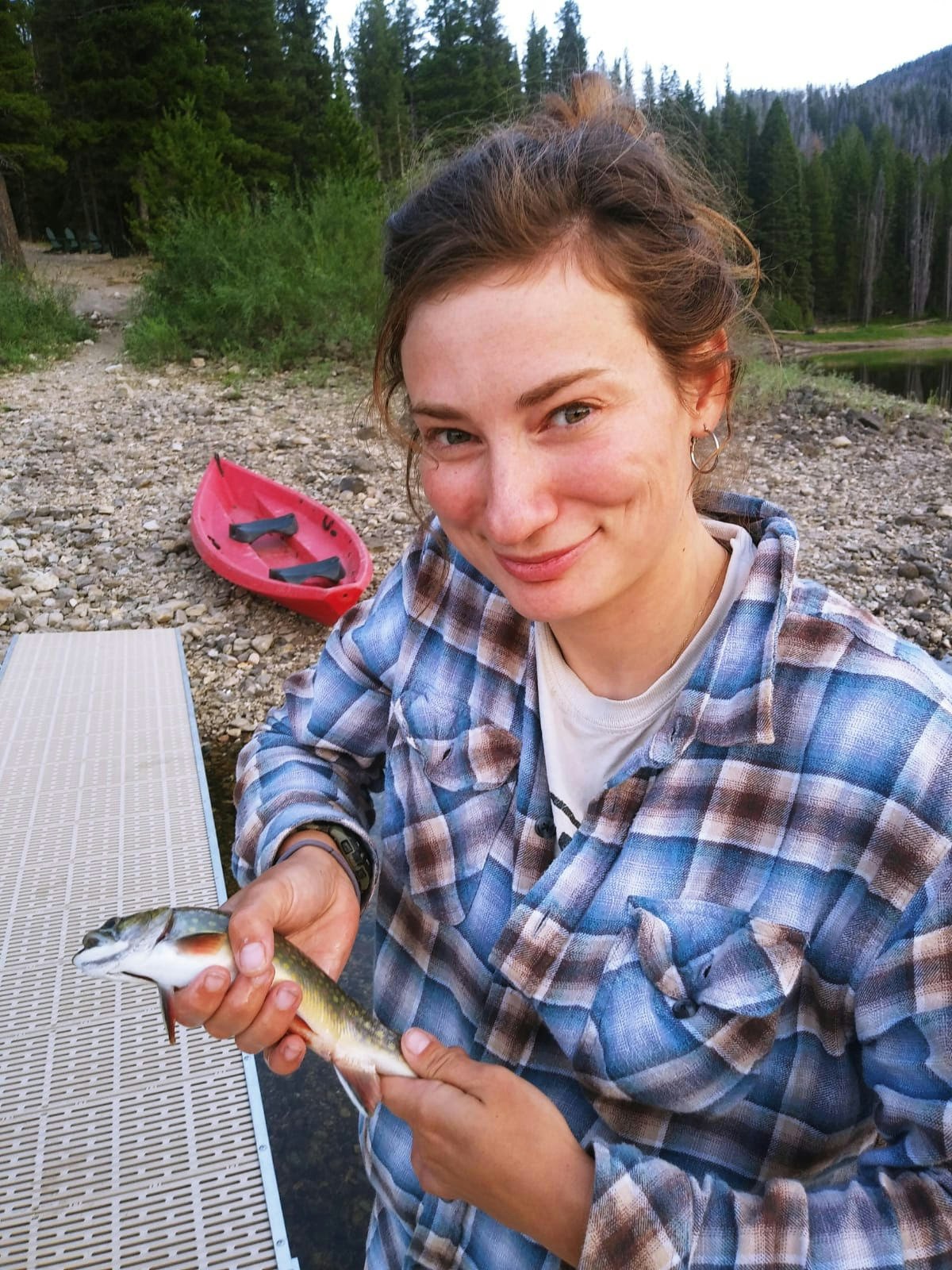
Catherine Wooster – A Contradiction in Public Image
Catherine Wooster serves as the Post Fire Recovery Project Coordinator at Honey Lake RCD. Her role involves direct coordination with the Lassen Fire Safe Council, a group closely tied to large-scale logging and herbicide operations.
What makes this especially unsettling is how Catherine is publicly portrayed. On the HLVRCD website, she is shown holding a fish in a scenic outdoor setting — reinforcing the image of a conservationist. Yet behind the scenes, she helps oversee and facilitate industrial herbicide spraying across thousands of acres of Lassen County.
This stark contrast between image and action raises serious questions about transparency, accountability, and the ethics of public-facing environmental roles.
A Double Standard: Restoration in Town, Contamination in the Mountains
The Honey Lake Resource Conservation District promotes itself as a champion of watershed health and ecological restoration — and in some cases, it has delivered. On paper, the district supports projects that appear aligned with its mission. For example:
- Susan River Canal Lining (Susanville): The Honey Lake Resource Conservation District spent over $4 million in taxpayer dollars to pipe 2,415 feet of the historic canal, claiming benefits like reduced seepage, improved flow efficiency, and better water quality.
- Johnstonville Dam Repairs: In late 2024, the district filed a CEQA Notice of Exemption to rehabilitate the Johnstonville Dam and its control structures, citing flood safety and improved water flow as public benefits.
- Lassen Creek Watershed Restoration: With funding from Proposition 1 and the Sierra Nevada Conservancy, the district supported forest thinning on 325 acres to reduce wildfire risk, enhance stream flows, and promote forest health.
But these local projects stand in sharp conflict with what the agency is doing elsewhere — and what it refuses to reveal.
While promoting watershed protection in visible, urban-facing projects, the Honey Lake Resource Conservation District is also funding and facilitating large-scale herbicide spraying across thousands of acres in Lassen County’s remote mountain terrain — often near creeks, springs, and seasonal drainages. These operations rely on a cocktail of toxic chemicals, including hexazinone, glyphosate, triclopyr, indaziflam, and others.
And yet:
- Absolutely no water testing is performed before, during, or after spraying
- No soil testing is conducted to assess chemical runoff or contamination
- No cumulative environmental studies are filed despite CEQA requirements
- No herbicide-related public records have been released despite formal legal requests
On one hand, the Honey Lake Resource Conservation District claims to protect watersheds. On the other, it signs off on herbicide-intensive projects over thousands of acres — with no scientific monitoring, no transparency, and no public accountability.
This is not conservation. It’s contradiction — and it’s being carried out with public funds, public trust, and no public oversight.
What Honey Lake RCD Was Created to Be — And What It Has Become
The Honey Lake Resource Conservation District (HLRCD) is not a private organization — it is a local government agency, created by the State of California and Lassen County under Division 9 of the California Public Resources Code. Like all RCDs in the state, it was formed to serve the public by conserving natural resources, improving soil and water health, and supporting responsible land management through education, science, and transparency.
RCDs are intended to function as public-benefit special districts, governed by local boards and funded in part by taxpayer dollars. Their duty is to act in the interest of the community — not private contractors, not timber companies, and not chemical applicators.
But under the leadership of Director Kelsey Siemer, the Honey Lake RCD has shifted far from its intended purpose. Rather than acting as an independent environmental steward, it now operates as a grant administrator and CEQA signatory for large-scale vegetation removal and herbicide projects — many of them involving private timber landowners, for-profit contractors, and toxic chemical mixes.
While the agency’s founding purpose was to protect watersheds and restore ecological health, it now:
- Files CEQA documents for massive chemical-based forestry projects without conducting any water or soil testing
- Funnels millions of dollars in public funds to unaccountable subcontractors and timber interests
- Refuses to release public records related to herbicide use and environmental impacts — in violation of state law
- Enables land treatment strategies that prioritize speed and industry convenience over long-term ecological recovery
Honey Lake RCD was created to protect the public’s environmental interests. Today, it protects the interests of the industrial forestry complex — using its government authority to shield herbicide use, silence public input, and legitimize toxic land treatments under the banner of “recovery.”
This is not conservation. This is government-enabled environmental harm — paid for by taxpayers, hidden from the public, and carried out without meaningful oversight.
Hold The Honey Lake Resource Conservation District Accountable
Kelsey Siemer, the Director of the Honey Lake Resource Conservation District, knows exactly what she is doing. As the lead administrator responsible for signing off on CEQA filings, coordinating state-funded reforestation projects, and managing public grant money, she is fully aware that these herbicides are being applied across thousands of acres without testing, disclosure, or oversight. She has received multiple formal public records requests detailing these concerns. She knows there is no monitoring in place. And she knows the risks these chemicals pose to water, soil, wildlife, and the residents of Lassen County — yet she continues to approve and shield these operations from public view.
Staff
Kelsey Siemer – District Manager
Email: kmarks@honeylakevalleyrcd.us
Catherine Wooster – Post-Fire Recovery Project Coordinator
Email: postfire@honeylakevalleyrcd.us
Odessa Amaryllis – Restoration & Resiliency Coordinator
Email: restoration@honeylakevalleyrcd.us
Board of Directors
Jesse Claypool – Board Chair
Email: jclaypool@honeylakevalleyrcd.us
William Johnson – Vice Chair
Email: wjohnson@honeylakevalleyrcd.us
Wayne Langston – Treasurer
Email: wlangston@honeylakevalleyrcd.us
Laurie Tippin – Director
Email: ltippin@honeylakevalleyrcd.us
Robin Hanson – Director
Email: rhanson@honeylakevalleyrcd.us
Honey Lake Resource Conservation District
1516 Main Street, Suite A, Susanville, CA 96130
Why We Must Fund Our Own Independent Testing
Right now, no government agency is testing our soil or water for herbicide contamination in Lassen County. Not the Honey Lake Resource Conservation District, not the Lassen Fire Safe Council, not the Department of Agriculture, not the State Water Board, not CAL FIRE, and not even the California Department of Fish and Wildlife.
Despite the widespread use of toxic chemicals like hexazinone, glyphosate, triclopyr, indaziflam, oxyfluorfen, penoxsulam, 2,4-D, and others on thousands of acres of land — including areas above wells, ponds, streams, agricultural property, and grazing land for cattle and sheep — no public testing has been conducted. None.
That’s why Protect Lassen is stepping in to do what these agencies won’t.
We are raising funds to carry out third party, independent soil and water testing across contaminated and high-risk zones in Lassen County. This includes
• Private wells near spray zones
• Streams, rivers, ponds, and wetland sediment in potential contamination zones
• Soil sampling downhill in the runoff path of sprayed burn scars
Samples are sent to a certified agricultural laboratory that specializes in detecting these toxic chemicals in water, soil, and sediment. The lab uses advanced analytical methods designed to identify long-term residue and low-concentration contamination — the kind that can quietly accumulate in drinking water and ecosystems over time.
These tests are expensive, but they are essential. Without data, there is no accountability. Without proof, these agencies will continue denying harm while poisoning our land, water, and communities behind closed doors.
If public agencies refuse to act, we will do it ourselves.
Your donation directly supports certified lab testing, sample collection kits, and expert analysis so we can build a legal and scientific record to protect our watershed and expose the truth.
Stand with us. Help us test what they’re hiding.