
Lassen County Counsel Michelle Nasise Under Fire for Blocking Public Access to Herbicide Records
Table of Contents
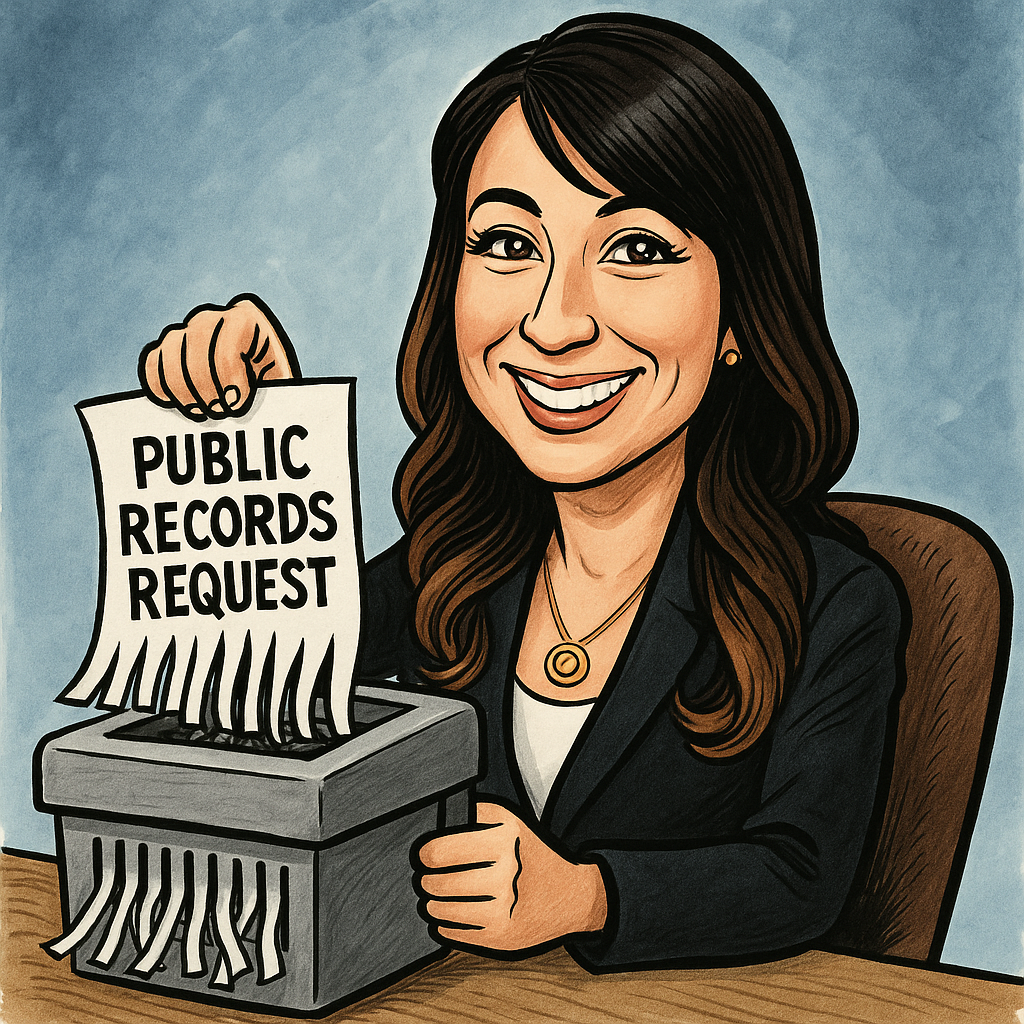
Michelle Nasise: Legal Architect of Obstruction
Michelle Nasise, attorney for Lassen County through the law firm Prentice|Long, is the central legal force behind the County’s refusal to release public records related to large-scale herbicide operations across Lassen County. As lead counsel for Prentice|Long’s Public Records Act Request practice group, Nasise has not only responded to CPRA requests — she has engineered the legal strategies used to conceal environmental misconduct.
These public records involve industrial herbicide applications across thousands of acres — including glyphosate, triclopyr, hexazinone, and 2,4-D — sprayed by helicopter across forests, watersheds, and lands near homes, livestock, and drinking water sources. Instead of ensuring the public is informed, Nasise has developed arguments to block access to the very documents that show where and how these chemicals are being used.
That Lassen County has hired a private attorney specifically to deny public records to its own residents is alarming. There is no legal “caution” needed — the California Public Records Act guarantees public access. Yet Nasise has turned a transparency law into a tool of silence.
Her legal tactics benefit agencies and contractors, while rural families, landowners, and water users are left in the dark — unable to see what’s being done around them, on their land, and above their water supply. Public money is being used to hide environmental risks — and Michelle Nasise is writing the script.
I. How She’s Blocking Access to Critical Records
On May 1, 2025, County Counsel Michelle Nasise responded to a Public Records Act request regarding herbicide spraying by W.M. Beaty & Associates. In that letter, she confirmed that approximately 150 records had been identified. Days later, she reversed course, stating:
“The County did not state the aforementioned (150) records were ‘responsive’… permits had been issued to W.M. Beaty & Associates for numerous parcels.”
She further claimed that the Agricultural Department could not isolate the records without a specific Operator ID or permit number, despite the fact that:
- The request already named the permit applicant, W.M. Beaty & Associates
- The County had already located the records prior to requesting the Operator ID
- The County’s own pesticide enforcement plan confirms these records are uploaded into a searchable digital system, CalAgPermits
No legal exemption was cited. No partial records were provided. Instead, the County placed the burden on the requester to provide internal codes that the agency itself had already used to locate the documents. When the requester offered a fallback — to receive the full set of 150 records and sort them independently — the County refused.
II. What the Withheld Records Involve
The documents being concealed include:
- Pesticide Use Reports
- Restricted Materials Permits
- Herbicide mixing and application logs
- Notices of Intent (NOIs)
- Internal inspection reports
- CalAgPermits database exports
- Environmental monitoring records for drift, water, or soil
These are not minor bureaucratic files. They show whether hazardous herbicides such as glyphosate, triclopyr, indaziflam, and hexazinone were applied near homes, water sources, gardens, or sensitive ecosystems. They are critical to determining whether illegal drift occurred, and whether residents were exposed to dangerous chemicals without notice.
III. Why This Is a Public Health Issue
By facilitating this concealment, Michelle Nasise has directly prevented landowners and the public from learning:
- What chemicals were sprayed on or near their property
- Whether herbicide drift reached residential or agricultural areas
- If toxic exposure occurred on private land
- Whether Lassen County conducted any environmental oversight
The chemicals in question are known to affect reproductive systems, disrupt soil microbiology, contaminate groundwater, and harm wildlife. The refusal to release documentation blocks any effort by residents to conduct testing, seek legal remedies, or take preventative action.
IV. Legal Conflicts and Internal Contradictions
The claim that these records are hard to find or not searchable is contradicted by the County’s own 2024 Pesticide Enforcement Work Plan, which states:
“All Notice of Intent forms and Restricted Materials Permits are uploaded to the CalAgPermits system.”
CalAgPermits is the centralized, state-mandated system used by all County Agricultural Commissioners for tracking restricted pesticide applications. It is searchable by date, chemical, applicant, and parcel location. Yet the County has claimed it cannot locate these same records without internal codes already in its possession.
This contradicts the California Public Records Act, which prohibits agencies from demanding excessive specificity when the records are identifiable, and from withholding public records based on internal filing systems.
V. Pattern of Obstruction, Not Oversight
Michelle Nasise’s legal correspondence reveals a consistent pattern: admit that records exist, then deny access to them; claim burden or lack of specificity, then ignore fallback offers; cite exemptions that do not apply, or fail to cite any exemption at all.
This is not a misunderstanding or a clerical delay. It is an intentional legal strategy to protect agencies and contractors involved in large-scale herbicide operations from scrutiny, while depriving landowners of information required to protect their property, water, and health.
VI. What This Means for Lassen County
Landowners have been blocked from learning:
- What was sprayed
- Where it was sprayed
- Whether the spraying was legal or permitted
- Whether any County agency conducted oversight, mitigation, or follow-up
No enforcement records have been released. No environmental monitoring documents have been provided. No permit or pesticide reports have been disclosed, despite the County’s legal obligation to make them available upon request.
VII. Conclusion
Michelle Nasise’s role in this concealment is not peripheral — it is foundational. She has authored the denials, justified the reversals, and reinforced the barriers standing between the public and the truth. Her actions are not merely administrative decisions; they are legal positions taken in opposition to environmental transparency, public health, and landowner rights.
The public has a legal and moral right to know what chemicals are being applied near their homes, in their watersheds, and on their shared land. The County’s refusal — under Nasise’s legal direction — to release these records is incompatible with that right.
Alleged Legal and Ethical Violations
The following actions have been alleged in connection with the conduct of Michelle Nasise, Prentice|Long, PC, Lassen County agencies, and affiliated entities. These allegations are based on formal notices, CPRA correspondence, and observed patterns of conduct. They are presented for public awareness and accountability and do not represent established findings or legal conclusions.
- Alleged Violations of the California Public Records Act (CPRA)
- Failure to produce pesticide permits, CEQA records, zoning approvals, and other documents under Government Code §§ 7922.500–7922.600.
- Providing misleading information regarding the existence and format of digital records, including records stored in CalAgPermits.
- Citing improper justifications for non-compliance, including excessive burden and formatting claims.
- Alleged Violations of the California Environmental Quality Act (CEQA)
- Failure to disclose or analyze cumulative environmental impacts, as required under CEQA Guidelines §§ 15125, 15126.2, and 15130.
- Proceeding with herbicide and land alteration activities under questionable or unsupported CEQA exemptions and Mitigated Negative Declarations.
- Lack of required site inspections, drift monitoring, or soil and water testing in connection with chemical applications.
- Alleged Violations of the California Food and Agricultural Code
- Potential noncompliance with Sections 14004.5, 14006, and 14009 regarding pesticide permits, enforcement procedures, and public safety notification requirements.
- Alleged Criminal Violations Related to Public Records and Misrepresentation
- Government Code § 6200: Willful concealment or falsification of public records.
- Penal Code § 115: Filing or use of false official documents.
- Penal Code § 118: False declarations made under penalty of perjury.
- Penal Code § 374.8: Failure to report or mitigate hazardous environmental discharges.
- Alleged Violations of the California Rules of Professional Conduct (Attorneys)
- Rule 1.2.1: Assisting a client in conduct known to be fraudulent or unlawful.
- Rule 3.3: Failure to act with candor toward public agencies.
- Rule 3.4: Suppression or concealment of evidence relevant to legal duties.
- Rule 8.4(c): Engaging in dishonesty, fraud, deceit, or misrepresentation.
Formal Legal Notice and Public Accountability Failure
Failure to Respond
As of the date of publication, attorney Michelle Nasise has not issued any response to the formal legal notice dated April 28, 2025. Despite detailed allegations involving violations of the California Public Records Act, CEQA, professional ethics rules, and public trust standards, no reply, clarification, or denial has been received.
Additionally, none of the individuals copied on the notice have responded. These include:
- Mike Scanlan, Lassen County Supervisor, District 1
- Gary Bridges, Lassen County Supervisor, District 2
- Tom Neely, Lassen County Supervisor, District 3
- Aaron Albaugh, Lassen County Supervisor, District 4
- Jason Ingram, Lassen County Supervisor, District 5
- Craig Hemphill, Lassen County Agricultural Commissioner
- Gaylon Norwood, Acting Director, Lassen County Planning and Building Services
- Cade Mohler, Executive Director, Lassen Fire Safe Council
- Ruth Morentz, Lassen Fire Safe Council
- Kelsey Siemer, District Manager, Honey Lake Valley Resource Conservation District
This complete lack of response from public officials and agency representatives further intensifies concerns about transparency, potential coordinated misconduct, and the failure of public institutions to uphold their legal obligations.
Hold Michelle Nasise Accountable
https://www.prenticelongpc.com/attorneys/michelle-nasise
Michelle Nasise, attorney for Lassen County through the law firm Prentice|Long, knows exactly what she is doing. As the legal representative overseeing the County’s responses to formal California Public Records Act (CPRA) requests, she is fully aware that residents are seeking documentation related to herbicide use, chemical exposure, and environmental harm. She has personally authored or approved responses denying access to critical information — not out of ignorance, but through deliberate legal strategy.
Nasise has received detailed CPRA requests outlining the public’s concern about toxic herbicides sprayed near homes, springs, wells, and ecological corridors. She knows these records exist. She knows they are being withheld. And she knows that refusing to disclose them violates the public’s right to transparency and environmental safety. Despite this, she continues to serve as the legal firewall protecting the County and its partner agencies from accountability — even as herbicides contaminate land, water, and communities across Lassen County.
Michelle Nasise Redding, CA