
A Deep Dive into W.M. Beaty & Associates’ Herbicide Use and the Systemic Lack of Oversight
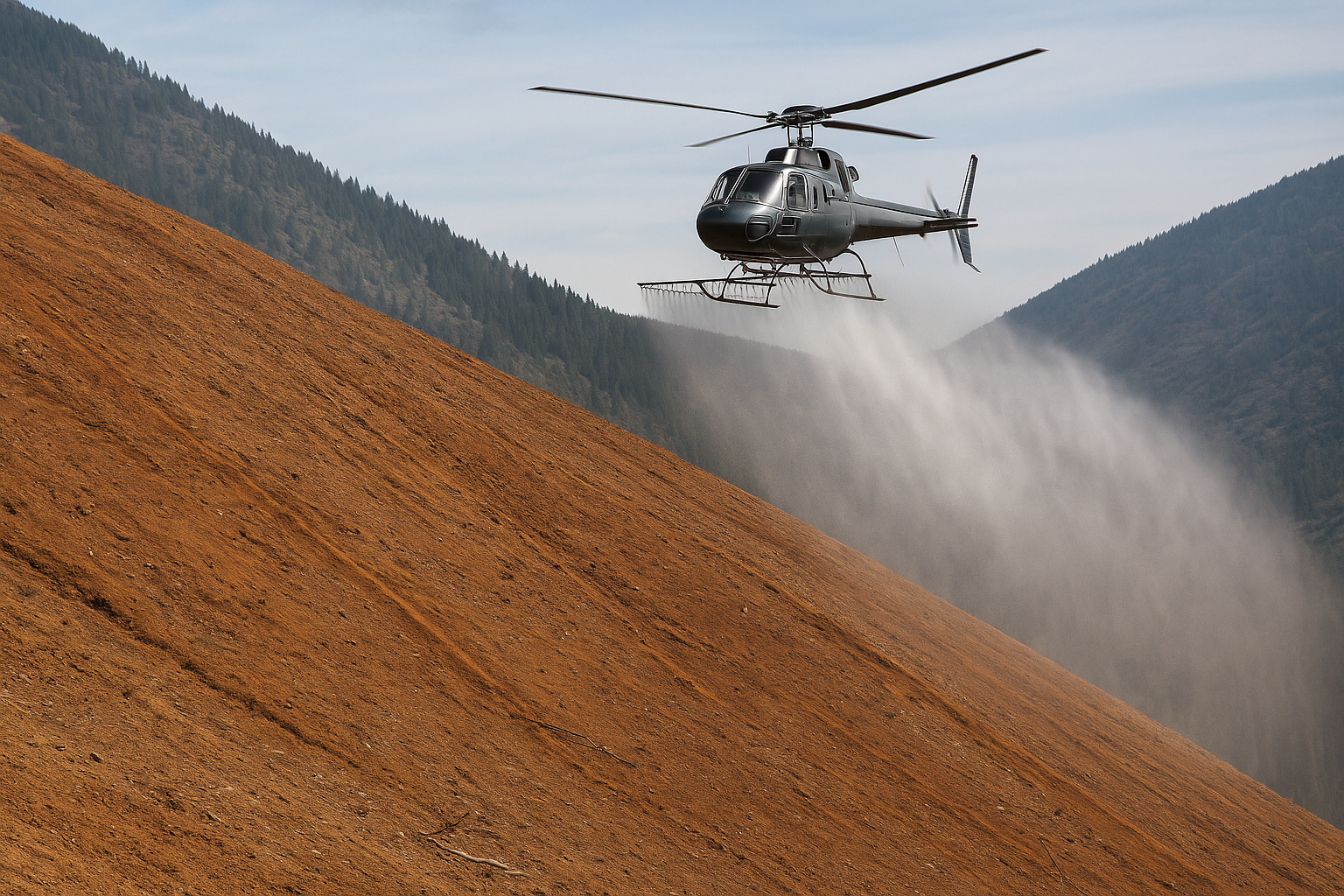
Across the forests of Lassen County, thousands of acres are being sprayed with powerful herbicides—often by helicopter. These operations are being carried out by timber company W.M. Beaty & Associates, using multi-year pesticide permits issued by the Lassen County Agricultural Commissioner. Despite the scale and risk, Protect Lassen has found no evidence of meaningful oversight from Commissioner Craig Hemphill and the Lassen County Agricultural Department.
What Chemicals Are Being Used? (Based on records obtained through CPRA requests by Protect Lassen)
According to pesticide permits and application logs from 2021 to 2025, W.M. Beaty & Associates has used a broad cocktail of herbicides—many applied by helicopter over tens of thousands of acres. These are the confirmed chemicals:
- 2,4-D (2,4-Dichlorophenoxyacetic acid)
- A systemic herbicide used to kill broadleaf plants in forest replanting and vegetation suppression.
- Classified as a possible human carcinogen and known endocrine disruptor.
- Highly mobile in soil and water, increasing runoff risk into streams, ponds, and drinking water sources.
- Extensively used by W.M. Beaty via aerial application.
Did You Know?
2,4-D was one of the two main active ingredients in Agent Orange, the defoliant used by the U.S. military during the Vietnam War. Agent Orange caused massive environmental destruction and long-term health effects, including cancer and birth defects. While today’s 2,4-D formulations are modified, it shares the same chemical base compound and remains controversial.
- Glyphosate (e.g., Accord XRT II)
- Broad-spectrum herbicide used to kill grass and broadleaf plants.
- Health hazard: probable human carcinogen (IARC Group 2A).
- Environmental hazard: mobile in soil, toxic to aquatic life, persistent.
- Triclopyr (e.g., Garlon 4, Garlon 3A, Vastlan)
- Targets woody plants and broadleaf weeds.
- Health risk: skin and eye irritant, possible endocrine disruptor.
- Environmental risk: high drift and groundwater contamination potential.
- Hexazinone (e.g., Velpar, Pronone)
- Soil-applied herbicide for long-term suppression of unwanted vegetation.
- Health hazard: toxic to kidneys and aquatic life.
- Environmental risk: persistent, high mobility.
- Indaziflam (e.g., Esplanade, Alion, Specticle)
- Pre-emergent herbicide preventing root growth in grasses and broadleaves.
- Health risk: irritant; long-term soil sterilization.
- Environmental risk: affects non-target plants, very persistent.
- Imazapyr (e.g., Polaris SP by Nufarm)
- Used for invasive woody species and long-term vegetation control.
- Health hazard: skin and eye irritation; potentially harmful with chronic exposure.
- Environmental hazard: persistent in soil, can leach into water bodies.
- Aminopyralid
- Used for selective control of invasive broadleaf weeds.
- Health hazard: can cause digestive and skin issues.
- Environmental risk: remains active in manure and compost for extended periods.
- Strychnine
- Extremely toxic rodenticide used to kill ground squirrels and burrowing pests.
- Health hazard: even small doses can be lethal to humans and animals; causes convulsions and death.
- Environmental risk: high toxicity to wildlife; secondary poisoning danger.
Other Chemicals (Adjuvants, Surfactants, Carriers)
Mixing these herbicides together—especially with powerful adjuvants and solvents—can significantly increase toxicity, persistence, and environmental mobility. These chemical cocktails are often applied in combinations that have not been thoroughly tested for synergistic effects. Some of these interactions may amplify health risks or ecological harm in ways that are not yet fully understood or studied.
These are not herbicides themselves, but are mixed with them to increase spread, adhesion, or penetration:
- MSO (Methylated Seed Oil) — Enhances herbicide uptake by plants and skin; increases potency and drift.
- LV6 — Petroleum solvent carrier that improves herbicide penetration into soil and plants.
- Alligare Products — Adjuvants and generic chemical formulations used to boost herbicide effectiveness.
- Nufarm Polaris SP — A branded imazapyr-based product used across multiple application zones.
How Are These Chemicals Applied?
Many of the permitted applications are made by helicopter over forested terrain. Aerial spraying dramatically increases the risk of herbicide drift, runoff, and non-target exposure. This method allows chemicals to move easily through wind, weather, and watershed channels, especially in steep or recently burned areas with loose soil.
Is the County Issuing Blanket Permits?
Yes. The Lassen County Department of Agriculture issued back-to-back blanket permits—Permit No. 18-20-4500033 (2020–2023) and 18-24-4500033 (2024–2026)—authorizing herbicide spraying across more than 30,000 acres of W.M. Beaty & Associates’ timberland holdings.
These permits apply to:
- Over 150 mapped treatment zones
- Multiple regions within Lassen County, including Westwood, the Diamond Mountains, and areas north of the Susan River
- Helicopter-based spraying with no required environmental monitoring or water testing
Despite the immense scope, the county:
- Does not require disclosure of application schedules
- Did not establish buffer zones for waterways or private property
- Provided no evidence of inspection, soil testing, or runoff analysis
This level of chemical use—authorized with minimal public review—raises serious questions about accountability, transparency, and risk to public health and water resources.
Who’s Monitoring This?
The short answer is: no one appears to be.
The Lassen County Agricultural Department signed off on the permit and is responsible for local pesticide enforcement. Yet public records show no inspection reports, sampling data, or environmental monitoring associated with the permit—and the department lacks the capability to test for these chemicals on their own.
When Protect Lassen files public records requests with the Lassen County Agricultural Department, the department immediately refers the requests to County Attorney Michelle Nasise, who then responds by denying access. In multiple cases, Nasise has issued false justifications for withholding public records, misled Protect Lassen about the availability of documents, and used deliberate delay tactics in an apparent effort to avoid transparency and stall until inquiries are abandoned.
The California Department of Pesticide Regulation (CDPR) is supposed to oversee the county’s enforcement activities—but there is no record of CDPR performing any follow-up testing or enforcement actions related to W.M. Beaty’s operations.
The Lahontan Regional Water Board oversees pollution of creeks and groundwater. Despite herbicide applications near culverts, stream channels, and alpine drainages, there is no evidence that Lahontan monitors W.M. Beaty’s projects by testing water runoff from the project area.
Why This Matters
As of the date of this article Protect Lassen has confirmed one case of contamination from a W.M. Beaty project in the Diamond Mountains, where the herbicide hexazinone was detected in both surface water and pond sediment on a neighboring property. This demonstrates that real-world chemical drift and runoff are already occurring—not just theoretical risks. More water and soil testing is currently being carried out on other properties in the area to determine the full extent of contamination.
If you live near or own property anywhere near a logging operation in Lassen County and would like to learn more, email us.
Chemicals like 2,4-D and hexazinone can persist in the soil and travel through surface runoff. Properties downhill from sprayed forestland may experience unpermitted exposure, yet there is no systematic testing or notification process in place.
Local residents, livestock, wildlife, and water sources are being exposed to chemicals without informed consent, oversight, or recourse.
Report suspected herbicide runoff or drift by emailing us at watch@protectlassen.org
This Is Not Just a Lassen County Problem: Oregon’s Herbicide Tragedy
The unchecked use of herbicides in logging operations is not unique to Lassen County—it’s part of a much larger pattern of environmental harm across the western United States. One of the most striking examples occurred in coastal Oregon, where timberland herbicide spraying led to serious health crises and widespread contamination.
In Gold Beach, Oregon, residents were exposed to a combination of 2,4-D, triclopyr, imazapyr, and other forestry herbicides during helicopter spray operations following clearcuts. The chemicals drifted far beyond their target zones, contaminating homes, gardens, and water supplies. Locals experienced severe symptoms including nosebleeds, vomiting, rashes, and respiratory distress, with livestock and pets also affected.
A comprehensive investigation by High Country News documented the event and the systemic failure of regulators to prevent or respond to it:
Timberland herbicide spraying sickens a community — High Country News (2014)
This Oregon case underscores a pattern: powerful chemical mixtures are being sprayed over vast landscapes with little to no testing, accountability, or protection for nearby communities. The same chemicals and spraying techniques documented in Oregon are now being used by W.M. Beaty & Associates across Lassen County—with even less transparency and oversight.
Protect Lassen’s findings show that the same risks—chemical drift, water contamination, and public health hazards—are now playing out locally. What happened in Oregon is a warning of what can happen when regulatory systems fail.