
Table of Contents
Project Boundary and Map Authority for the Motor Sheep Biomass Project
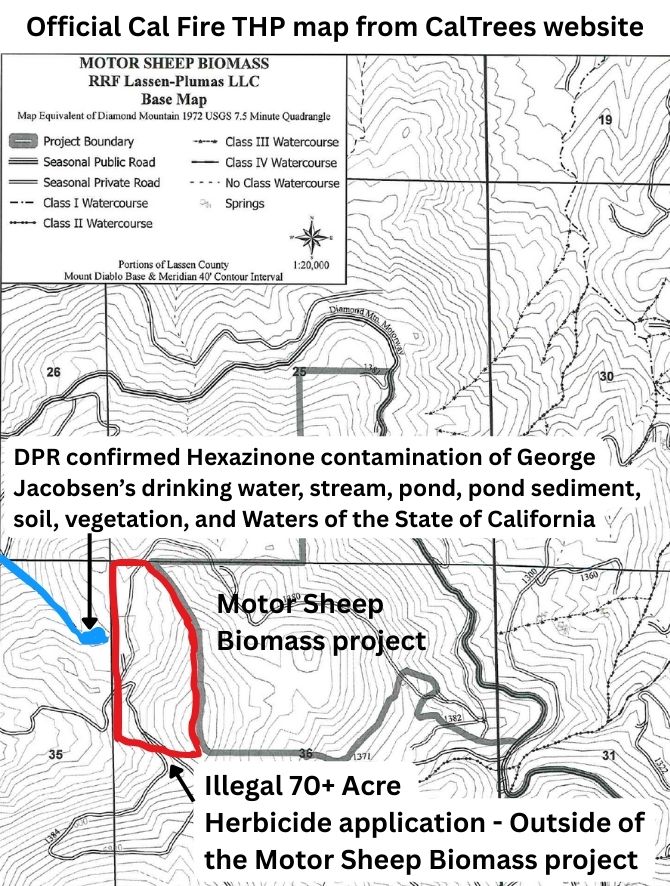
The official Motor Sheep Biomass project boundary is defined by CAL FIRE’s approved harvest documentation and the publicly accessible CALTREES map. That official project map shows a total approved project area of 328 acres. There are no amendments, extensions, boundary expansions, or supplemental maps that enlarge this footprint. No revised project acreage has ever been approved by CAL FIRE.
The only change made to the Motor Sheep Biomass record occurred on November 18, 2025, and it did not alter the project boundary. That correction was made solely to fix an incorrect legal description, after I contacted CAL FIRE by email to notify them of the discrepancy. CAL FIRE corrected the legal description accordingly. No acreage, map geometry, or treatment boundary was modified as part of that correction.
Accordingly, the CALTREES Motor Sheep Biomass map remains the controlling and authoritative project boundary.
Herbicide Application Outside the Approved Project Area
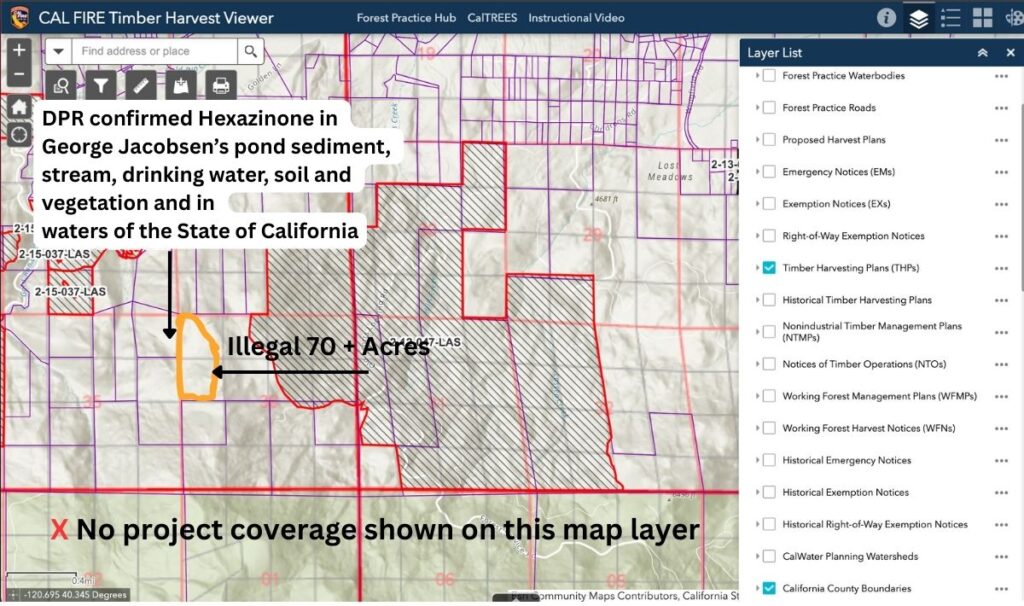
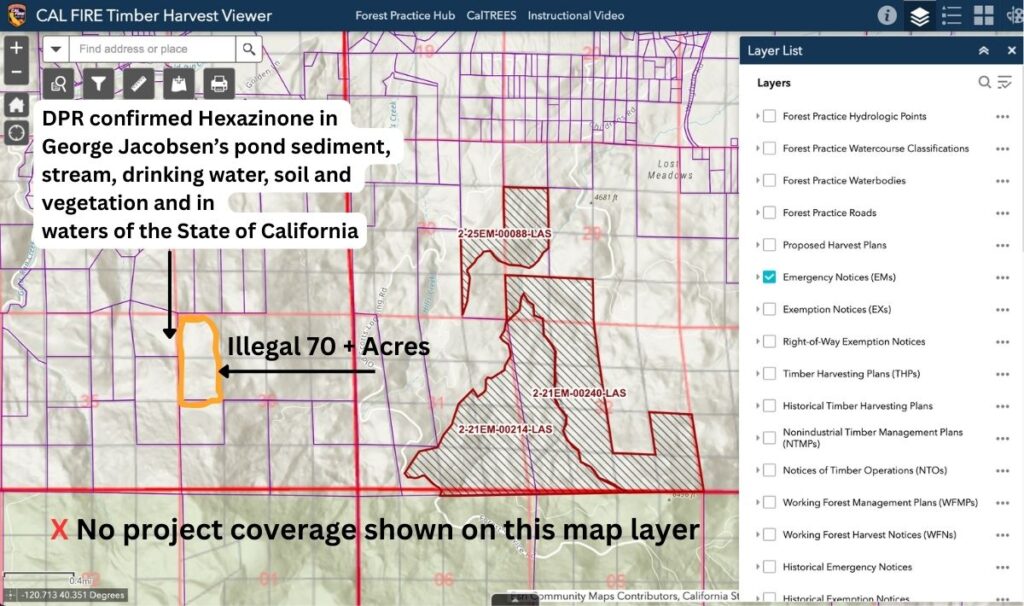
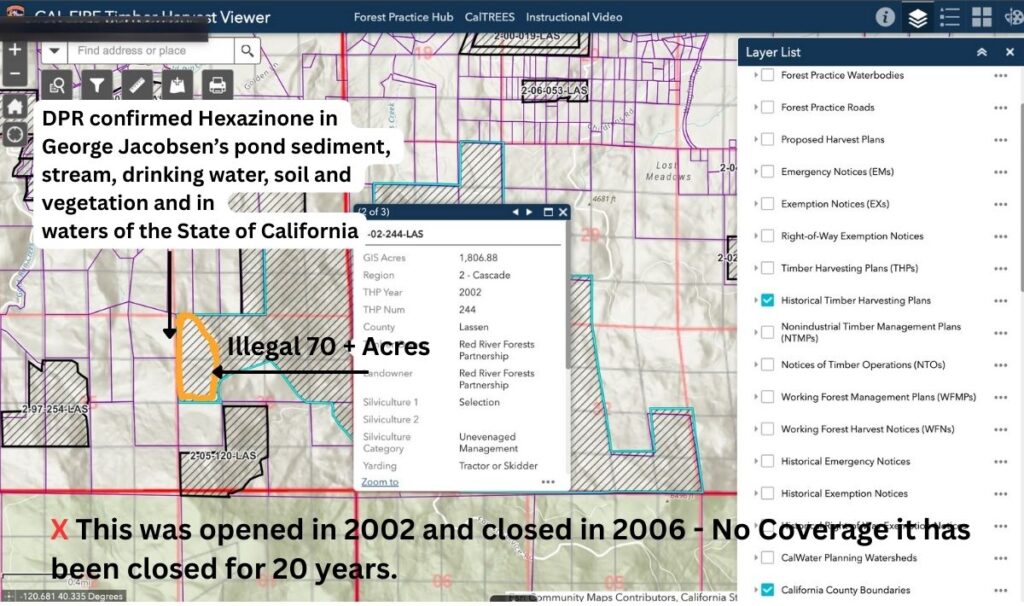
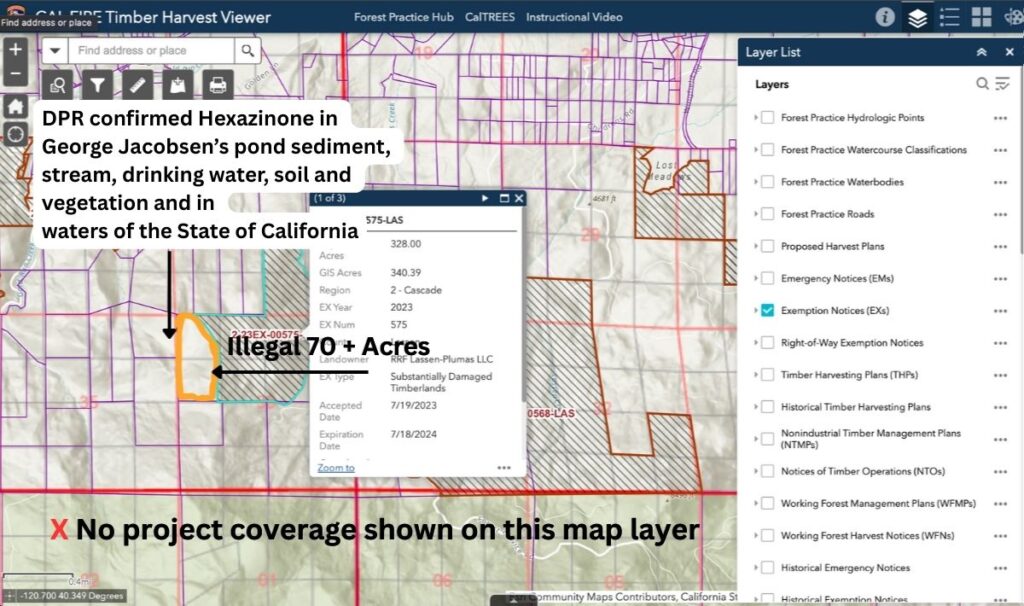
As shown on the ONX satellite map below, the area outlined in red represents an approximately 70-plus acre area located entirely outside the approved 328-acre Motor Sheep Biomass project boundary. This area is not included in the CAL FIRE–approved Motor Sheep Biomass map and is not covered by any Timber Harvest Plan, exemption, amendment, or emergency authorization.
Despite this, W.M. Beaty & Associates conducted an aerial herbicide application by helicopter on June 22, 2024 over this unapproved area.
In a written notification to the Lahontan Regional Water Quality Control Board dated May 23, 2024, Shane Compton of W.M. Beaty & Associates stated that a mixture of Roundup Pro (glyphosate), Polaris SP (imazapyr), MSO, blue dye, and Velpar DF (hexazinone) would be applied by helicopter in connection with the Motor Sheep Biomass project.
However, the actual aerial application extended well beyond the approved Motor Sheep Biomass boundary and into the unpermitted 70-plus acre area shown in red on the ONX map. That area has no CAL FIRE approval, no CEQA coverage, and no valid regulatory authorization for herbicide treatment.
Omission of Hexazinone From Pesticide Use Reporting
Velpar DF (hexazinone) was not reported in the Pesticide Use Reports submitted to the Lassen County Agricultural Department for the June 22, 2024 application. While W.M. Beaty & Associates reported the use of glyphosate, imazapyr, and MSO, hexazinone was omitted.
This omission is significant. Hexazinone is a soil-active, groundwater-tracked herbicide monitored statewide by the California Department of Pesticide Regulation due to its persistence and mobility. Hexazinone is known to remain detectable 18 to 24 months or longer after application.
More than one year after the June 22, 2024 aerial application, hexazinone was detected on my property, including in a private drinking water supply, a stream, soil, pond water, pond sediment, vegetation, and waters of the State of California. The illegal 70-plus acre herbicide application area lies directly uphill from my property, and the documented contamination migrated downslope from that unpermitted treatment area. These detections confirm off-site movement and environmental contamination originating from the illegal aerial application conducted outside the approved Motor Sheep Biomass project boundary.
Because the herbicides were applied as a tank mix and delivered by helicopter, and because hexazinone from that mix has been confirmed to have drifted onto and contaminated my property and waters of the State, it is reasonable and scientifically sound to conclude that the other co-applied chemicals, including glyphosate, imazapyr, and associated adjuvants, also reached waters of the State. The California Department of Pesticide Regulation did not test for these additional compounds because too much time had elapsed since the application for reliable detection. The hexazinone concentrations currently detected in drinking water and waters of the State necessarily reflect degraded and diluted levels relative to concentrations present immediately following application more than a year earlier. DPR likewise did not test for toxic degradation products of hexazinone, glyphosate, or imazapyr, despite their known environmental persistence and toxicity.
Summary
The Motor Sheep Biomass project is limited to 328 acres as shown on CAL FIRE’s official CALTREES map. There are no amendments or boundary expansions. The only post-approval change was a legal description correction on November 18, 2025. A 70-plus acre area outside the approved project boundary was aerially sprayed with herbicides on June 22, 2024. Hexazinone was omitted from pesticide use reporting and later detected in multiple environmental media, including waters of the State, confirming contamination originating from the unpermitted treatment area.
No Project Map Amendments
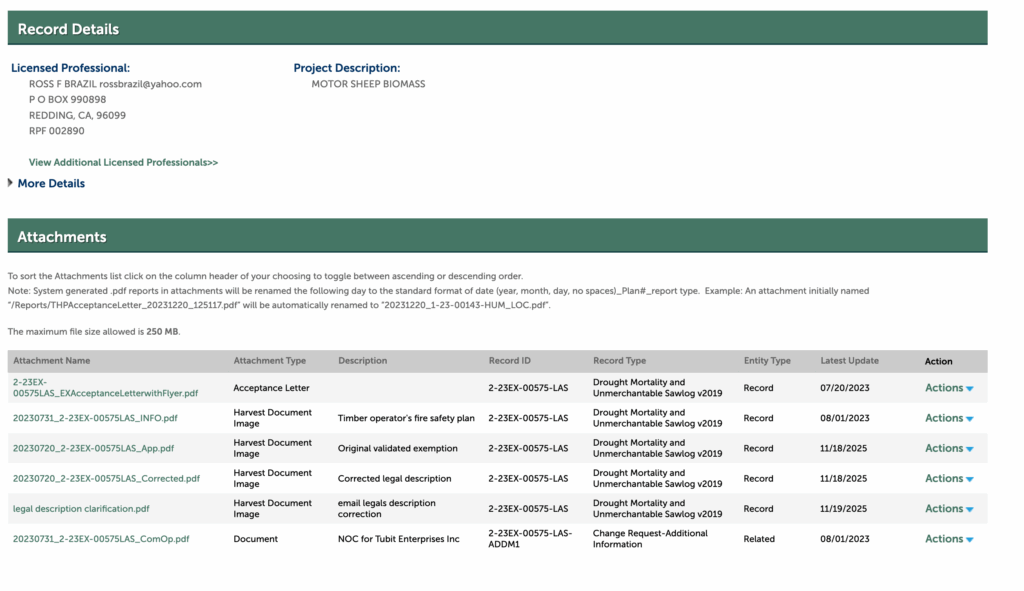
Cal Fire Motor Sheep Biomass Timber Harvest Plan
Shane Compton’s Lahontan Notification With Mislabeled Cat 6 Project Map Accepted By Lahontan Staff Anyway – They Don’t Check!
OnX App Satellite Map
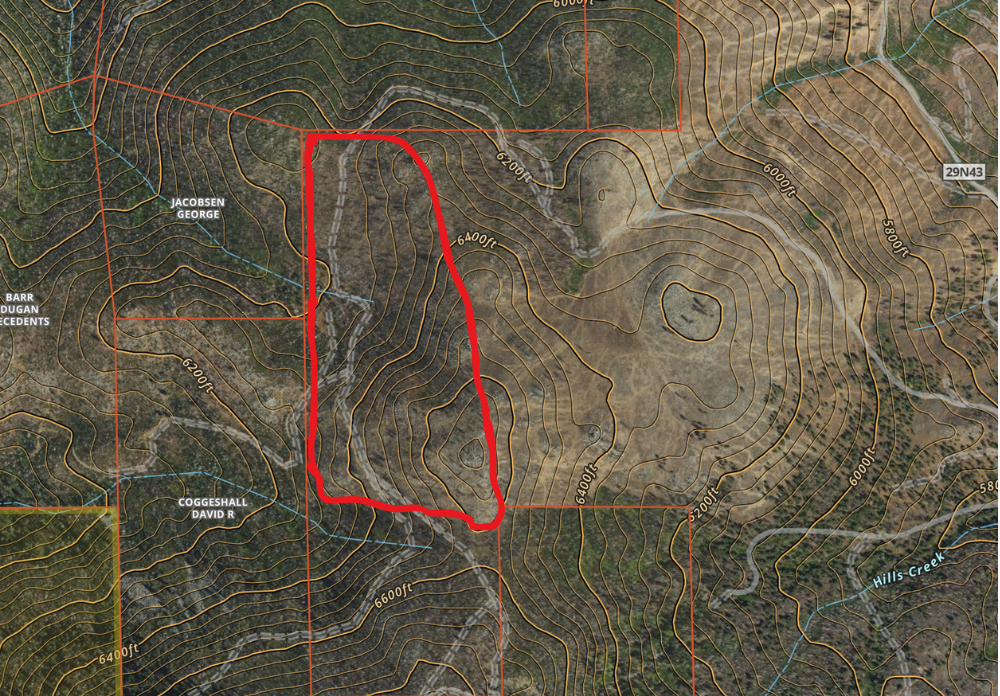
This OnX satellite map clearly illustrates the contrast between permitted and unpermitted herbicide application areas. The Motor Sheep Biomass project is visible as a tan, bare-soil landscape with widespread tree removal, reflecting large-scale, authorized vegetation treatment within the approved project boundary. In contrast, the area outlined in red identifies the illegal 70+ acre herbicide application located outside the Motor Sheep Biomass project boundary. This red-outlined area appears lighter and chemically altered compared to the surrounding private properties, which remain green and untreated. Within the red area, the soil tone is darker than the Motor Sheep Biomass footprint because W.M. Beaty & Associates left burned, dead trees down and standing, rather than removing them; however, the herbicide impacts are still clearly visible in the satellite imagery and match the vegetation injury documented in ground photographs. Notably, neighboring private properties also contain standing burned trees from past fire activity, yet remain green and biologically intact, demonstrating that the visual differences are attributable to herbicide application rather than fire effects or tree mortality alone.
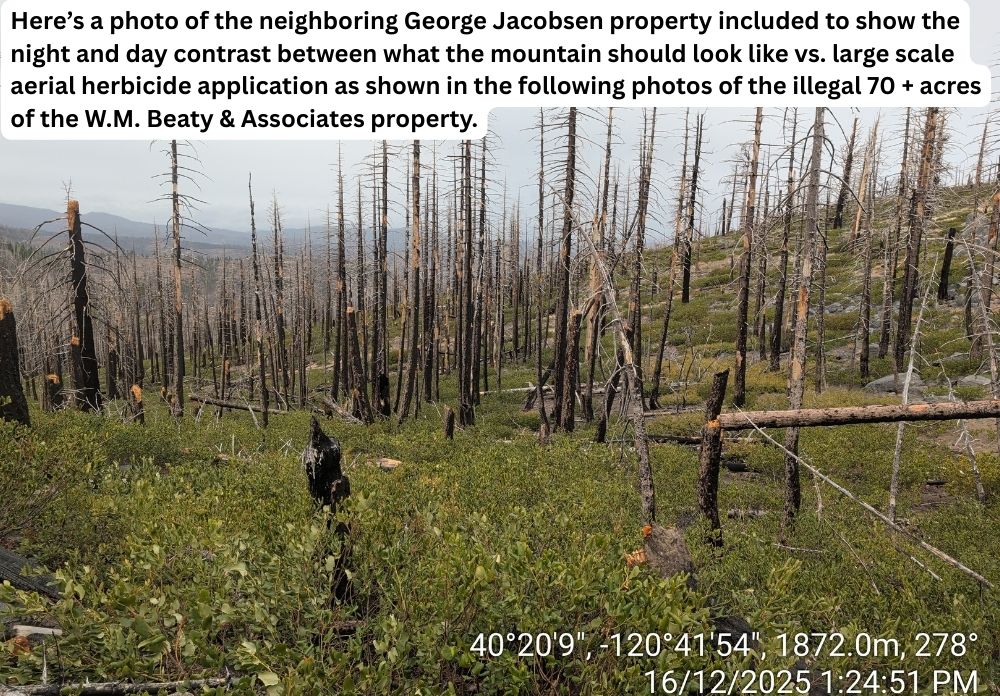
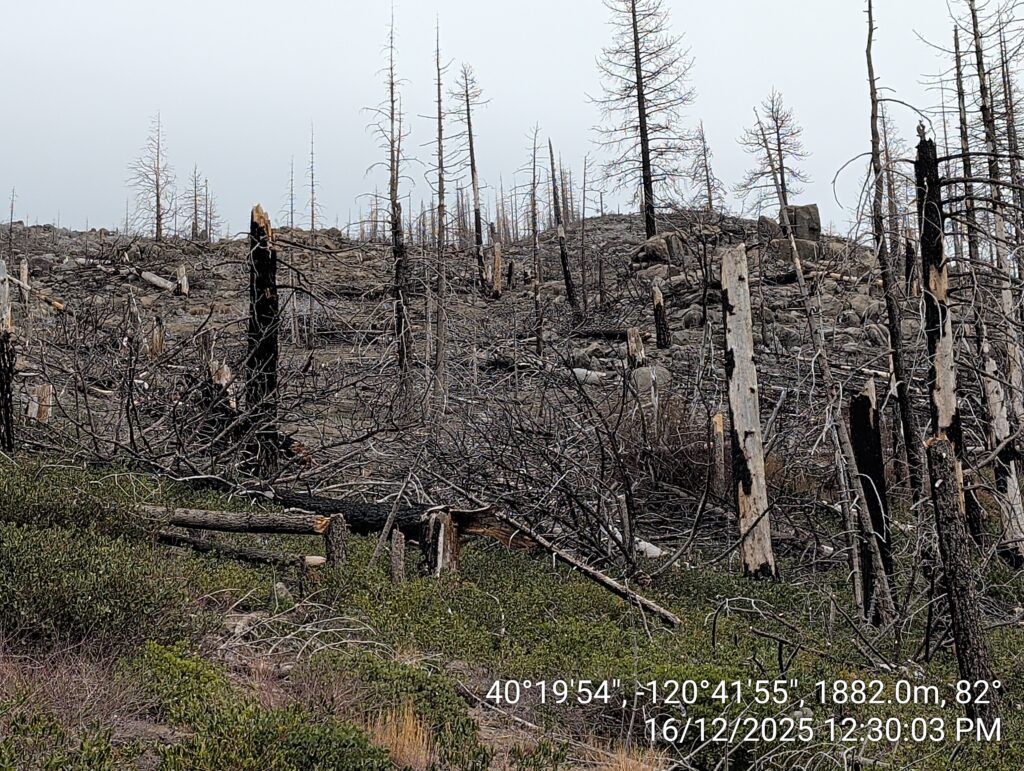
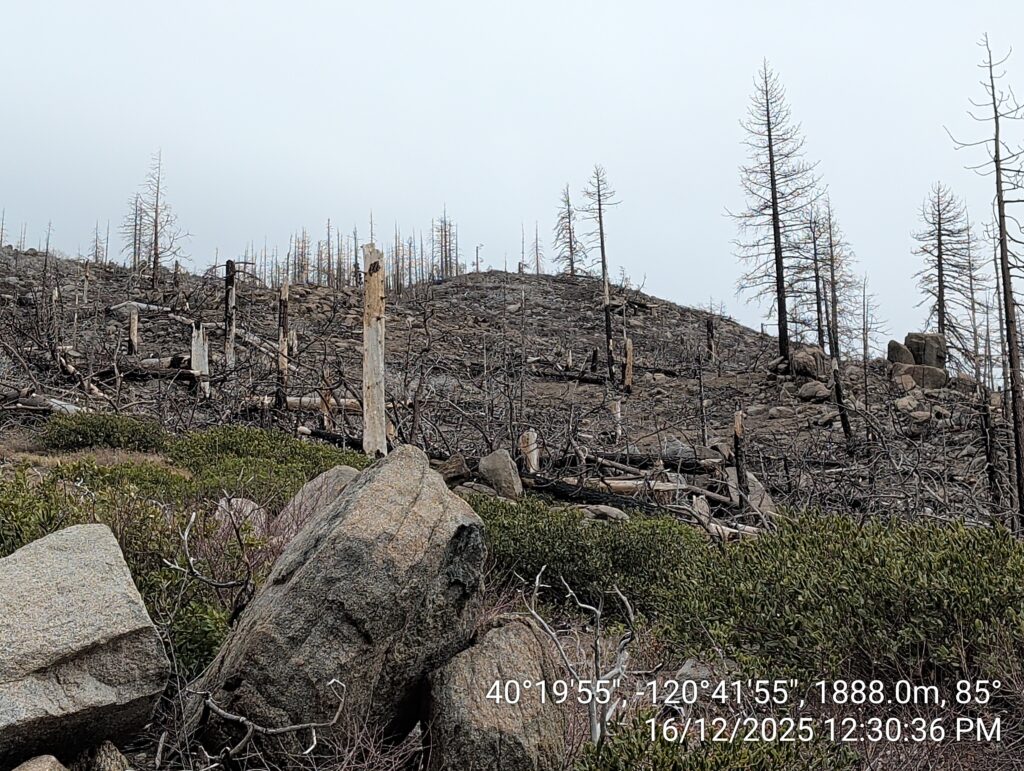
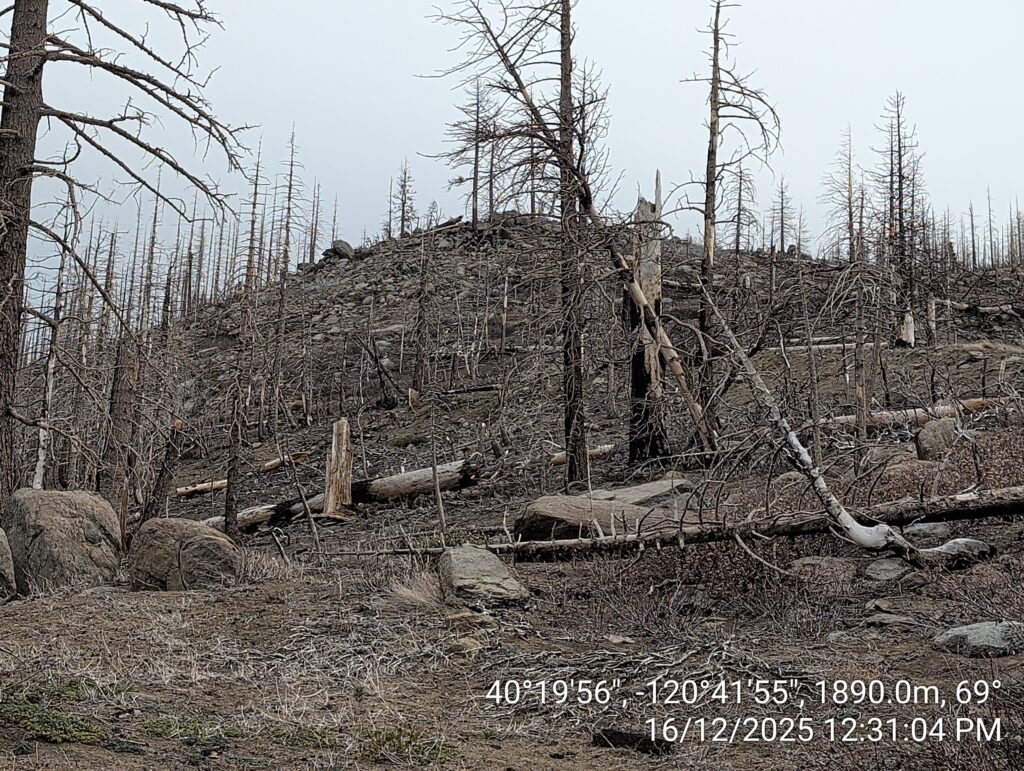
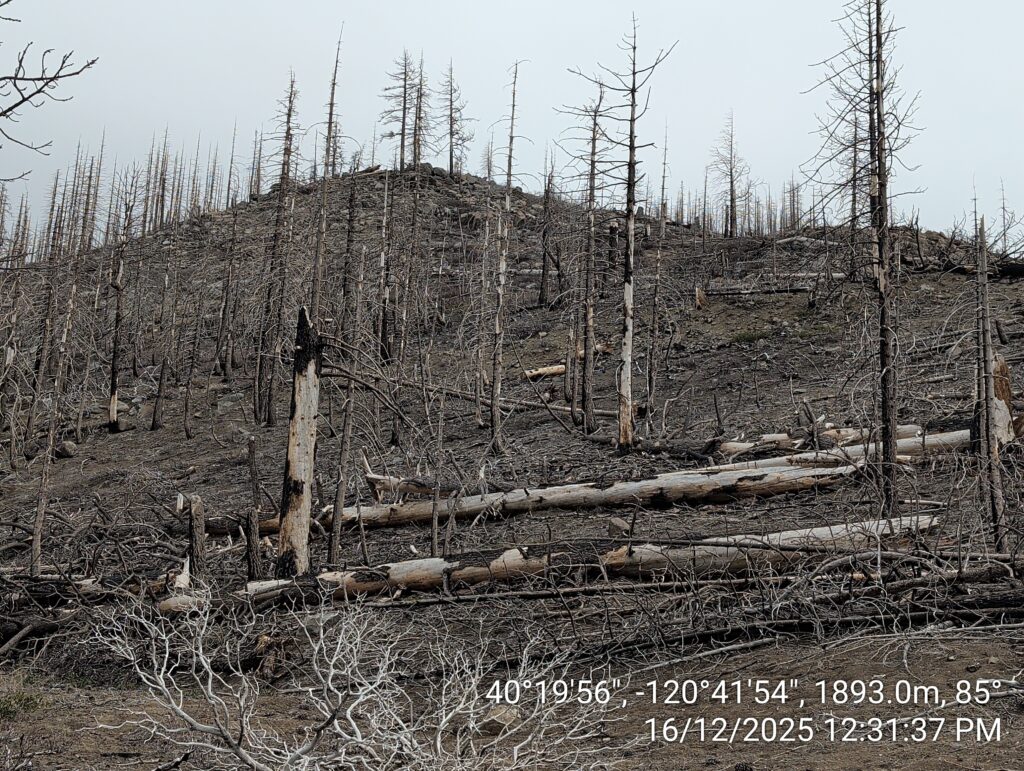
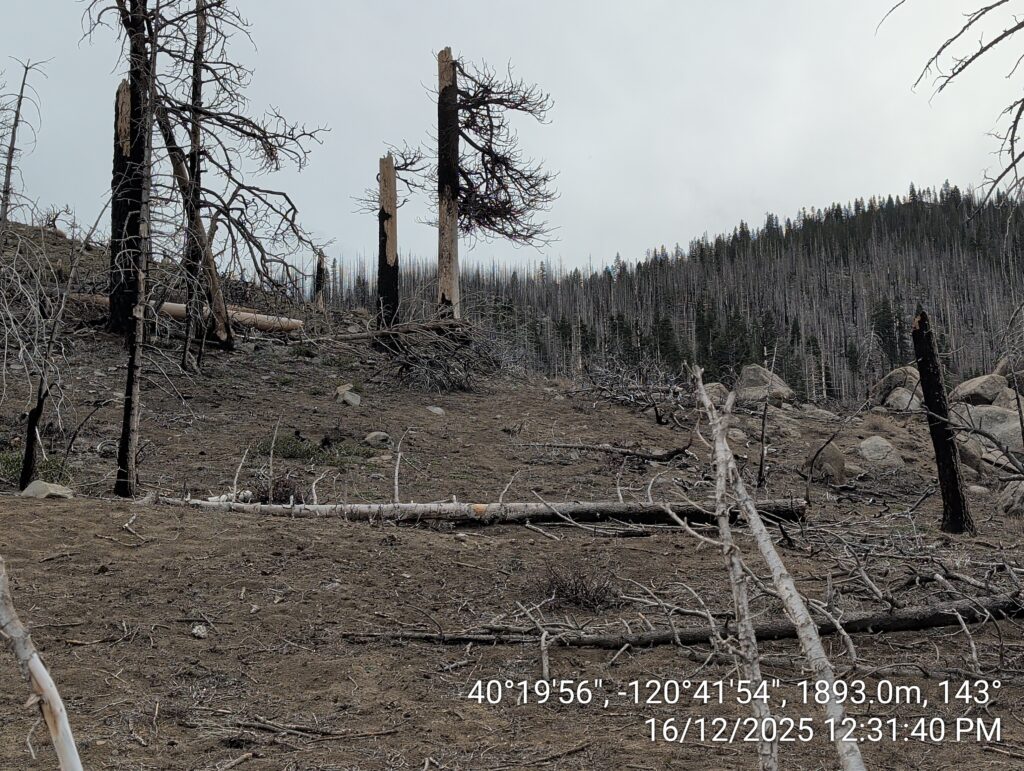
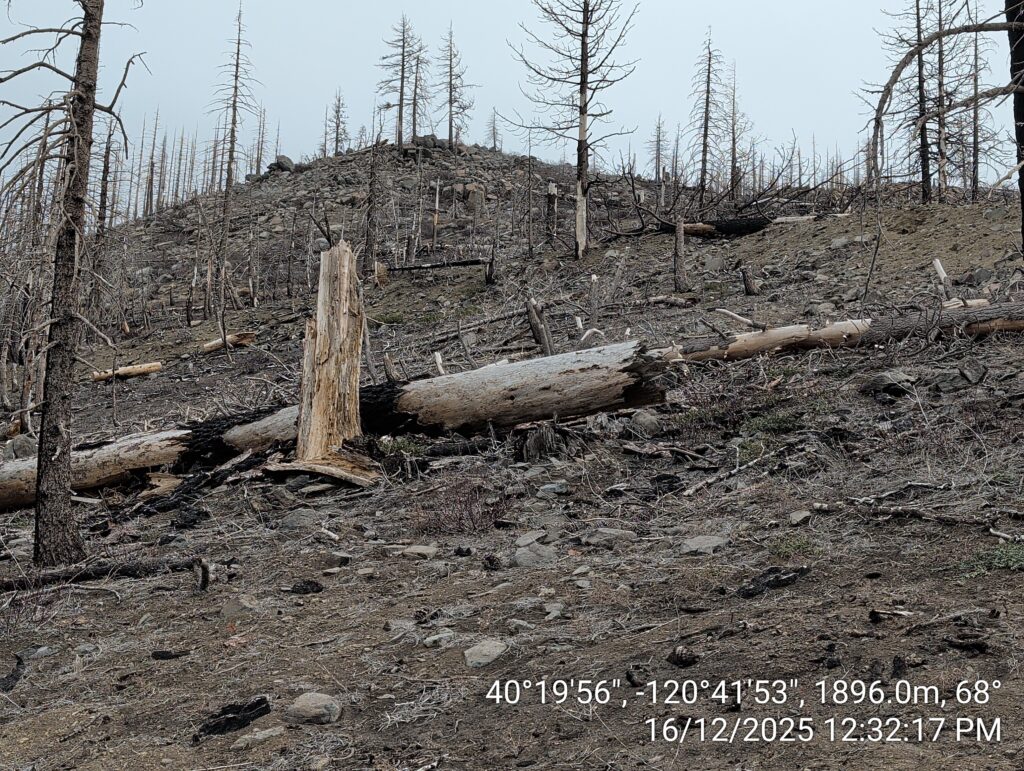
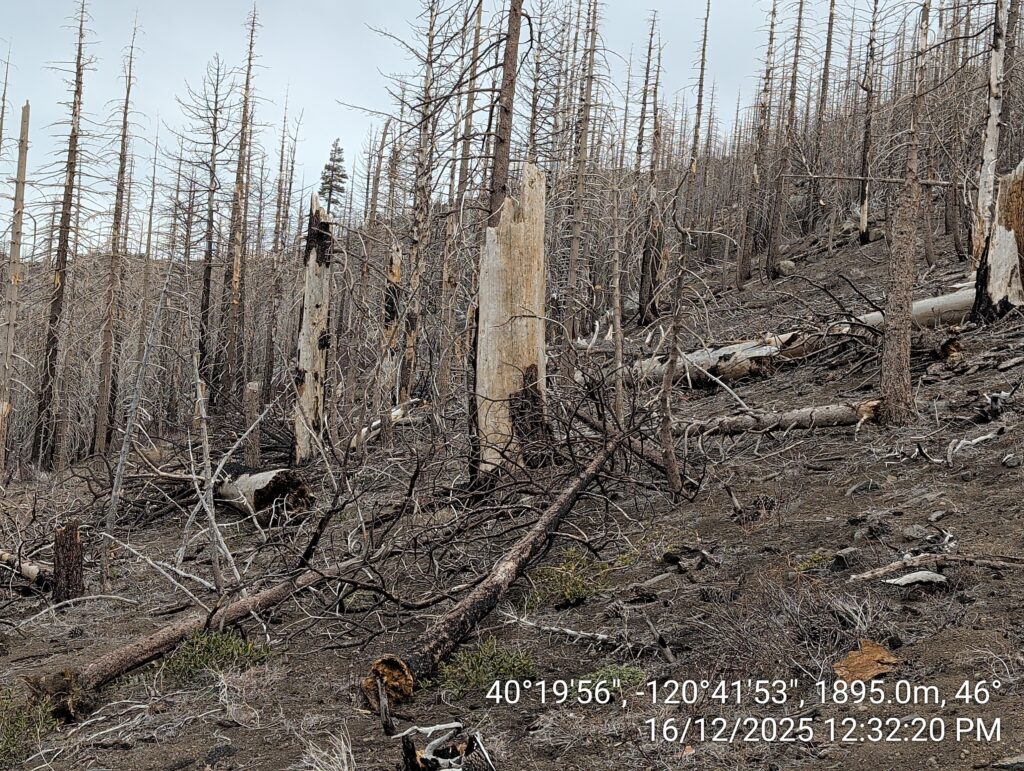
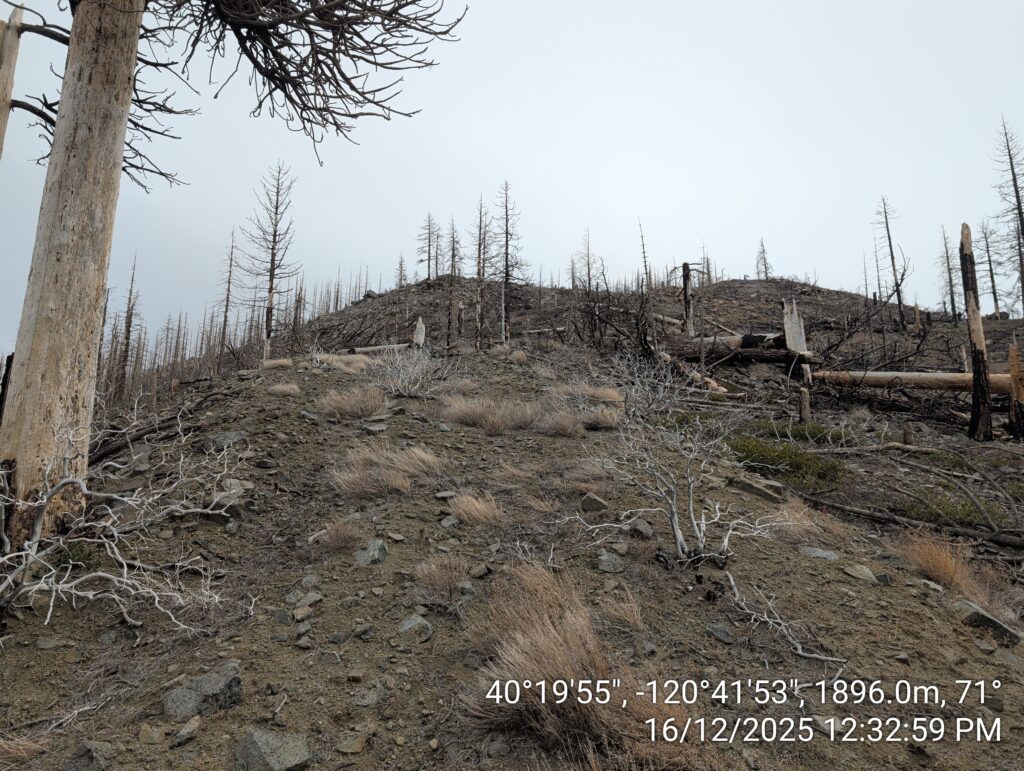
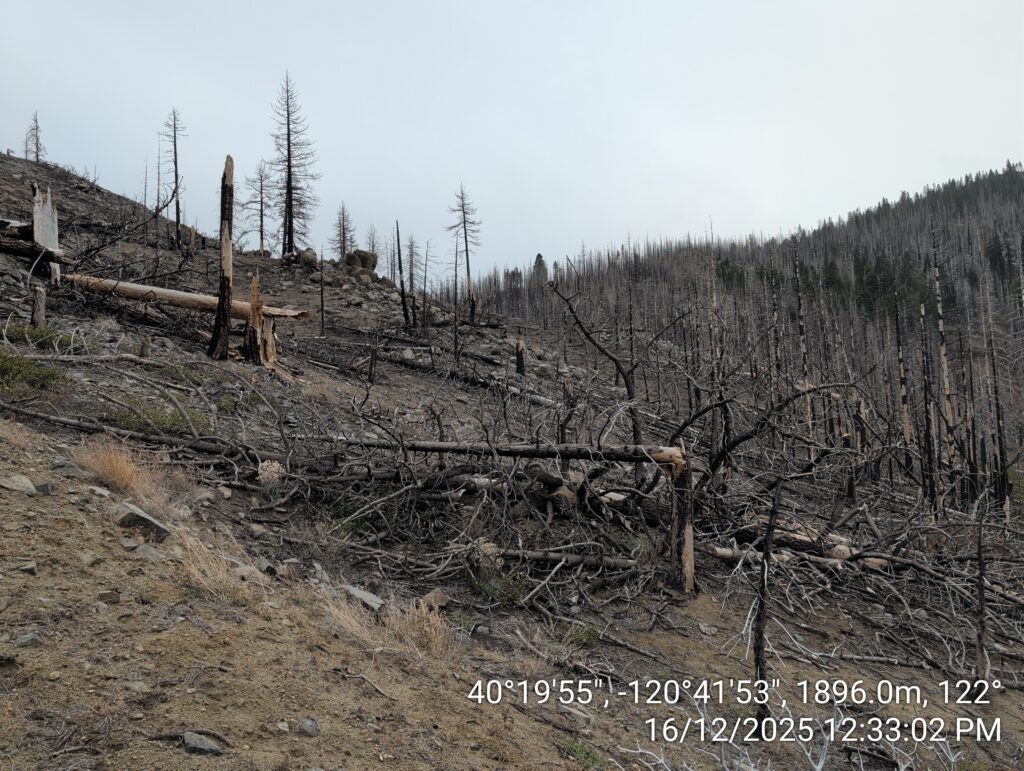
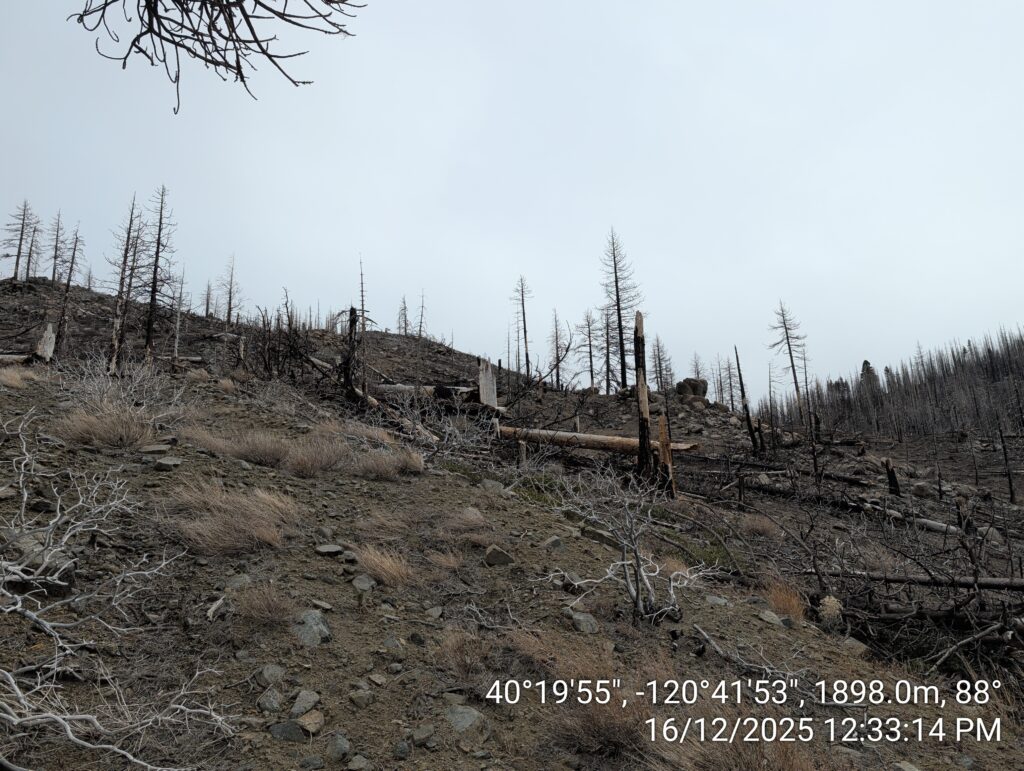
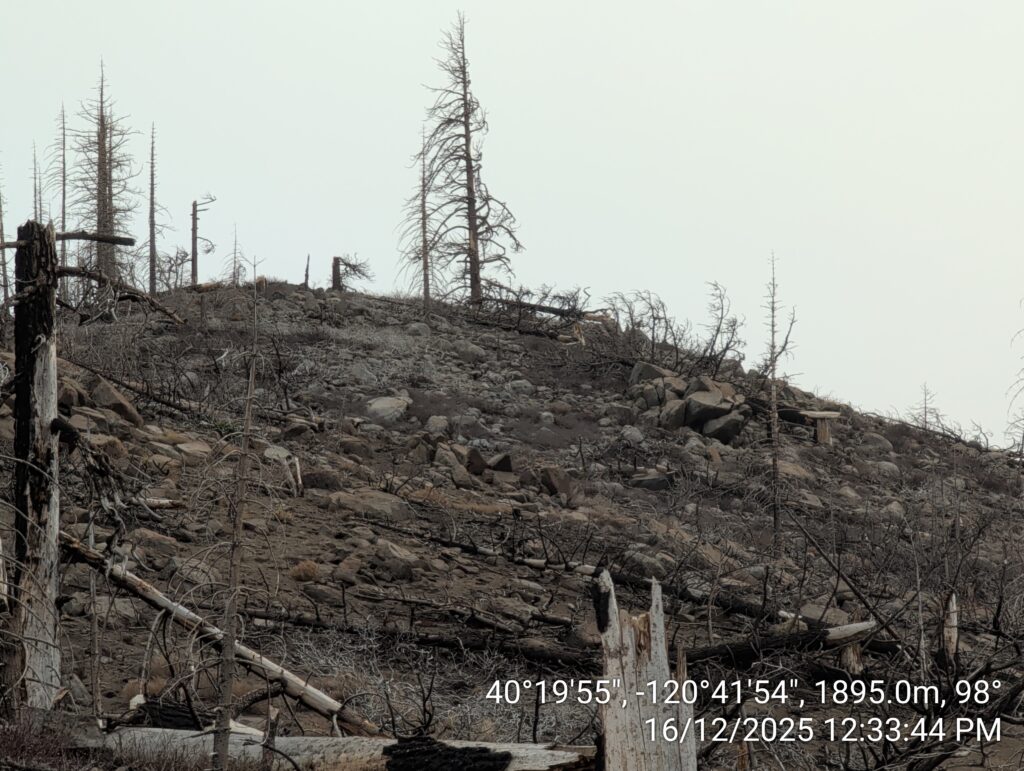
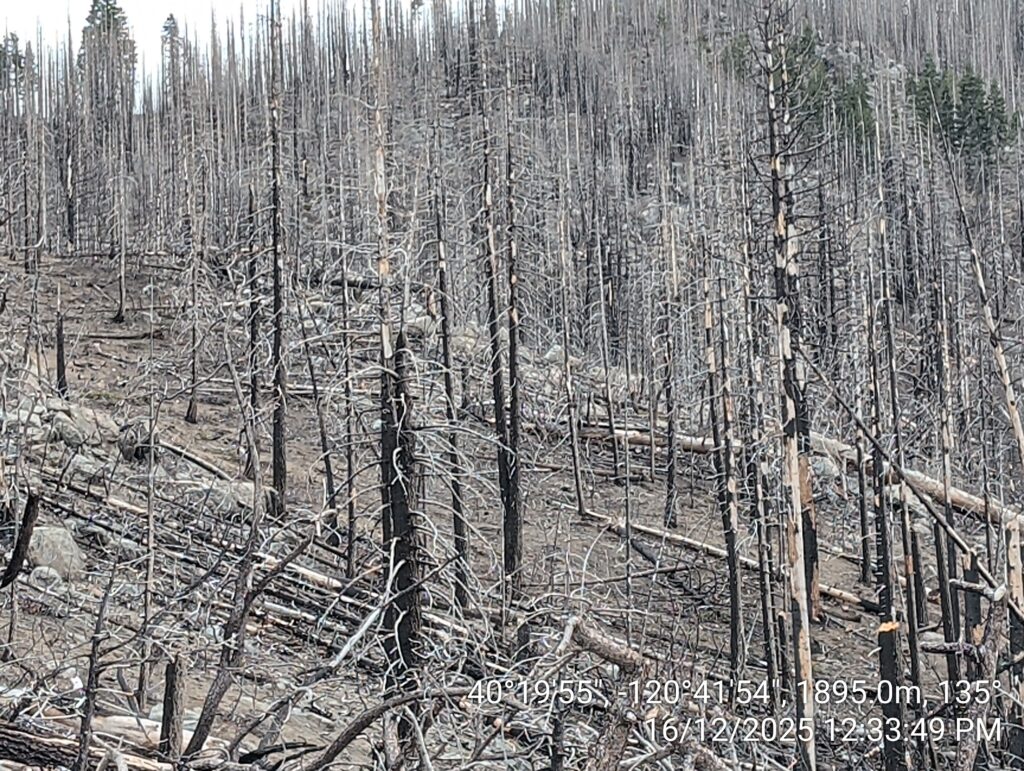
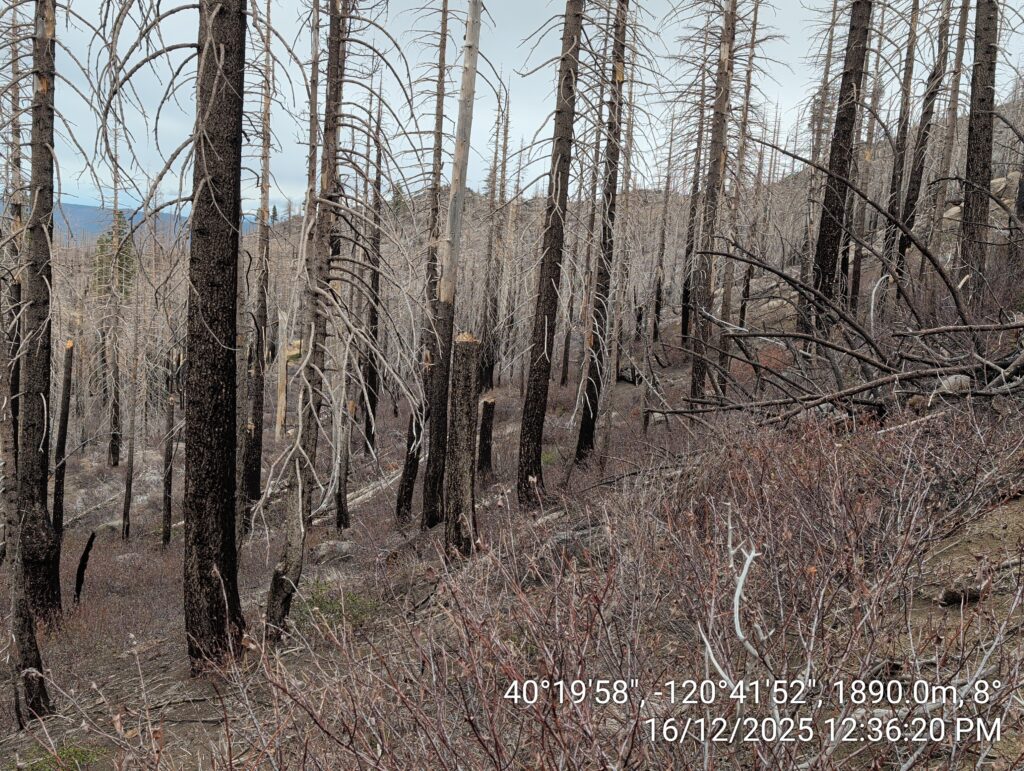
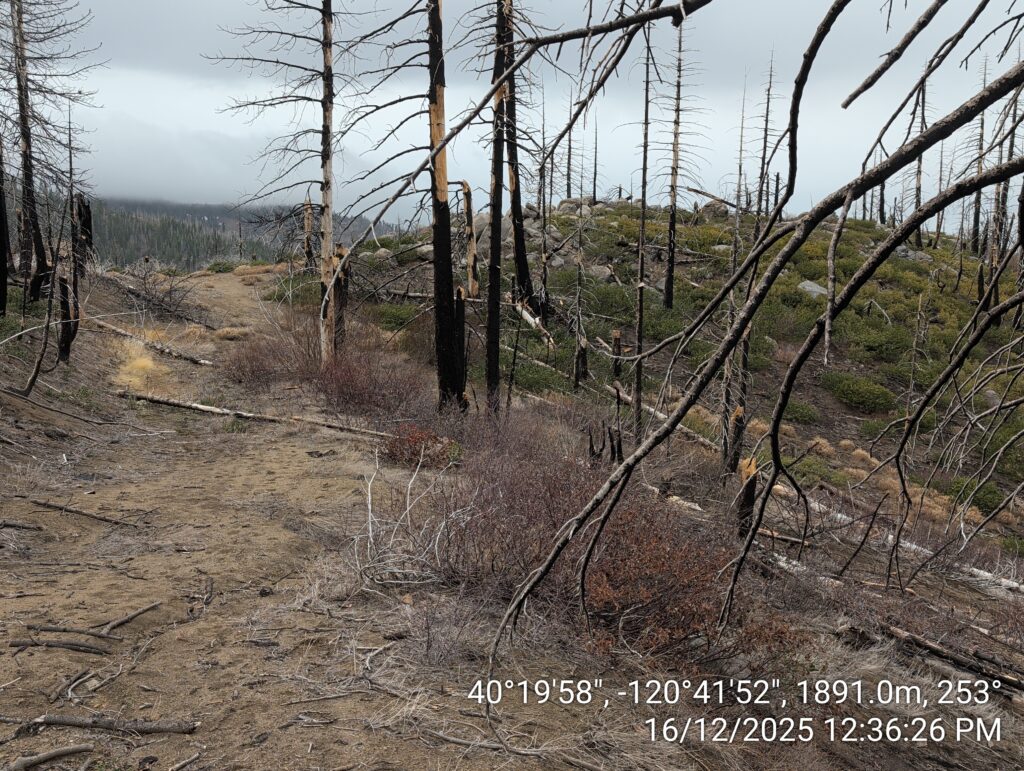
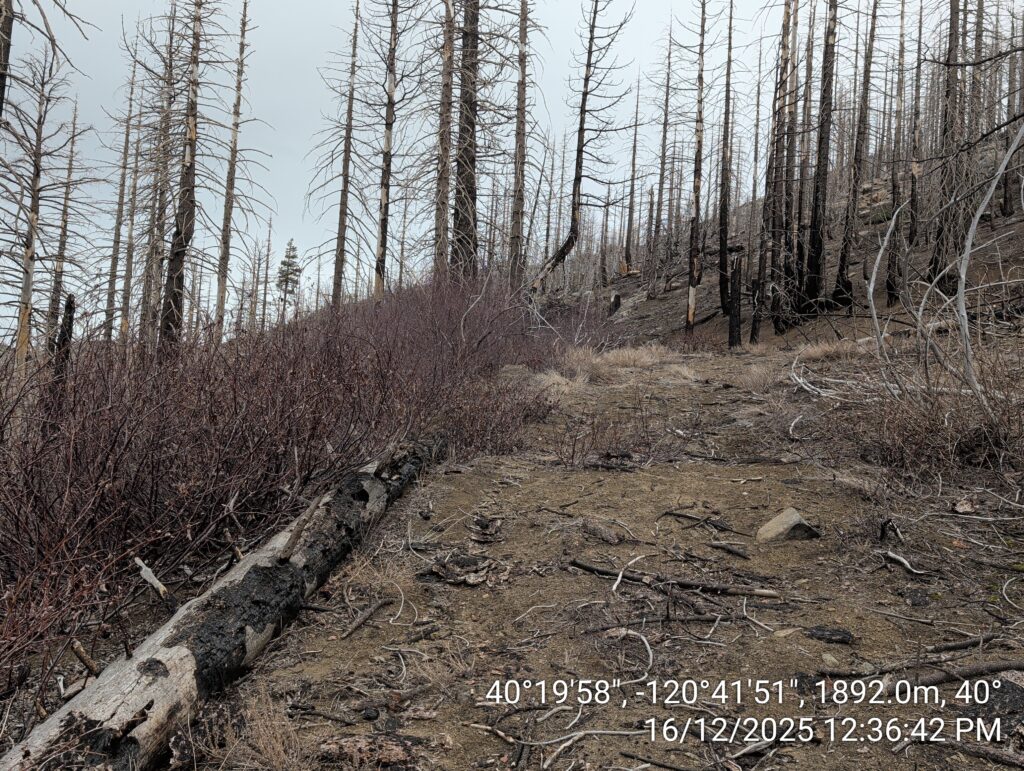
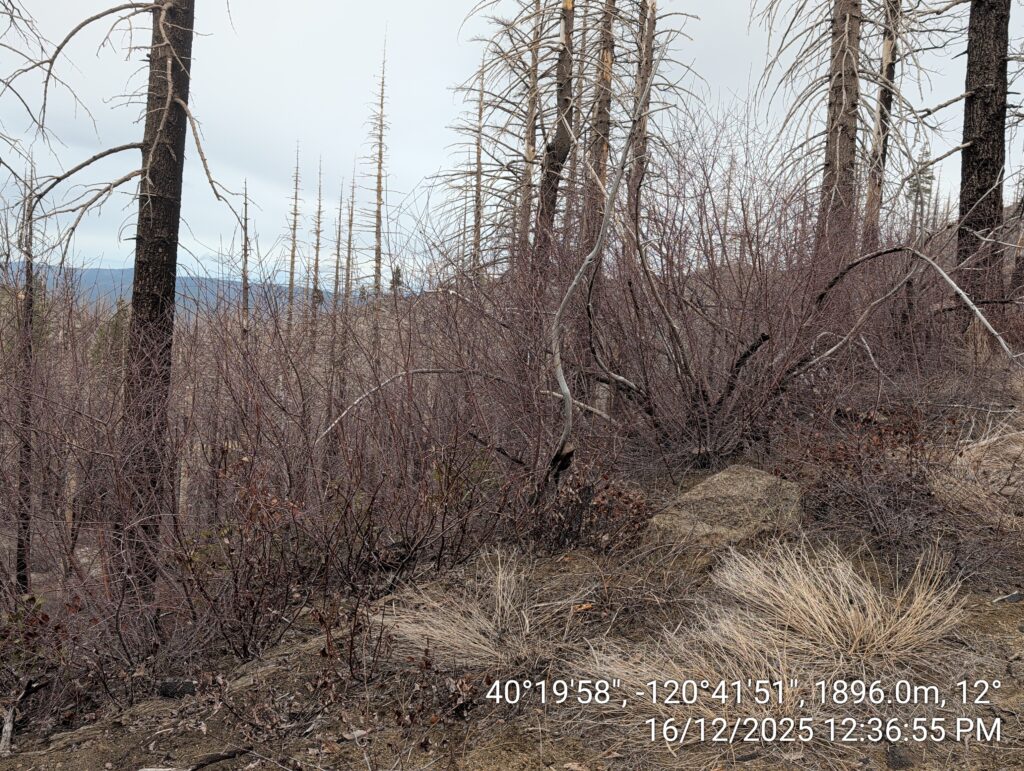
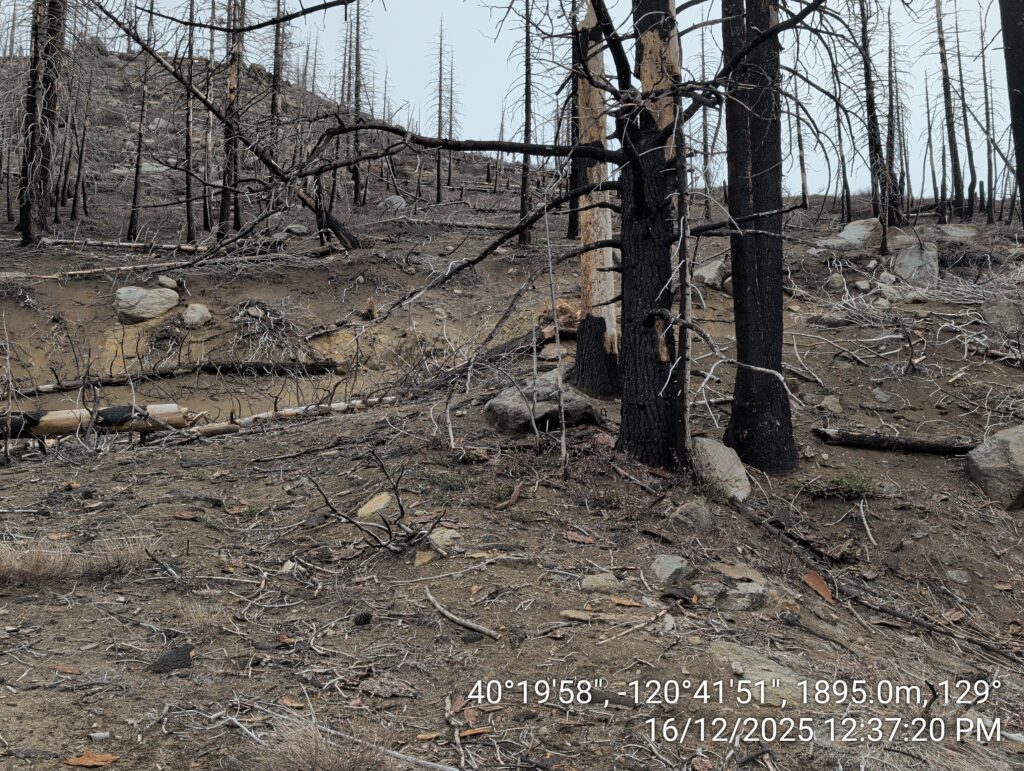
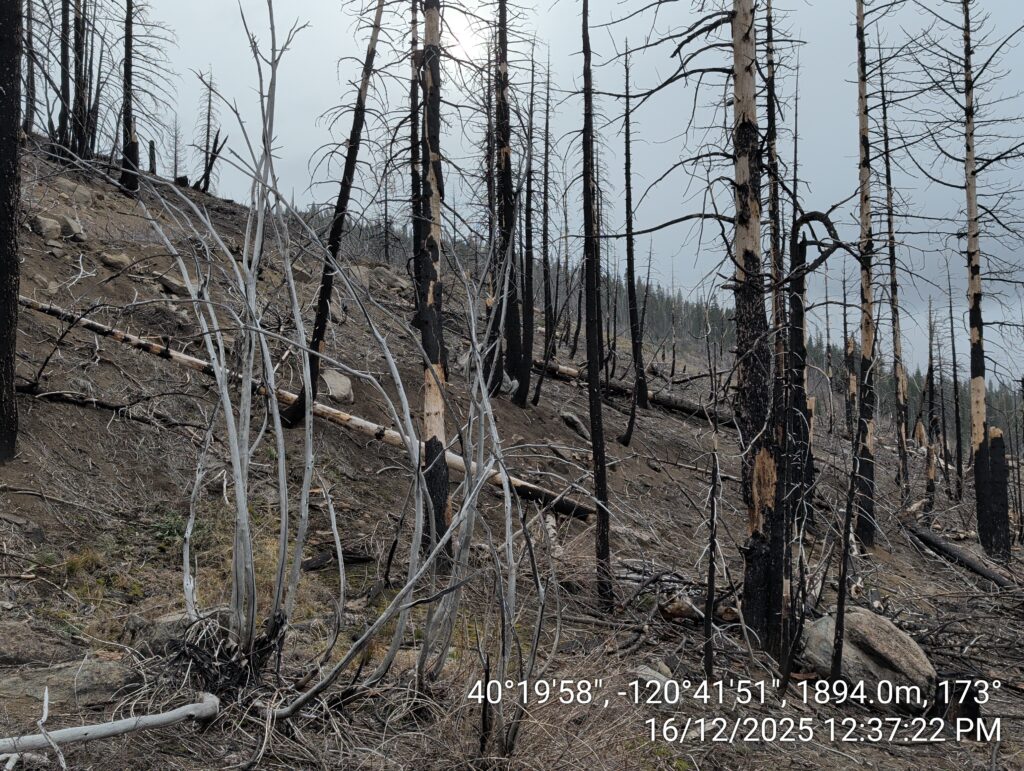
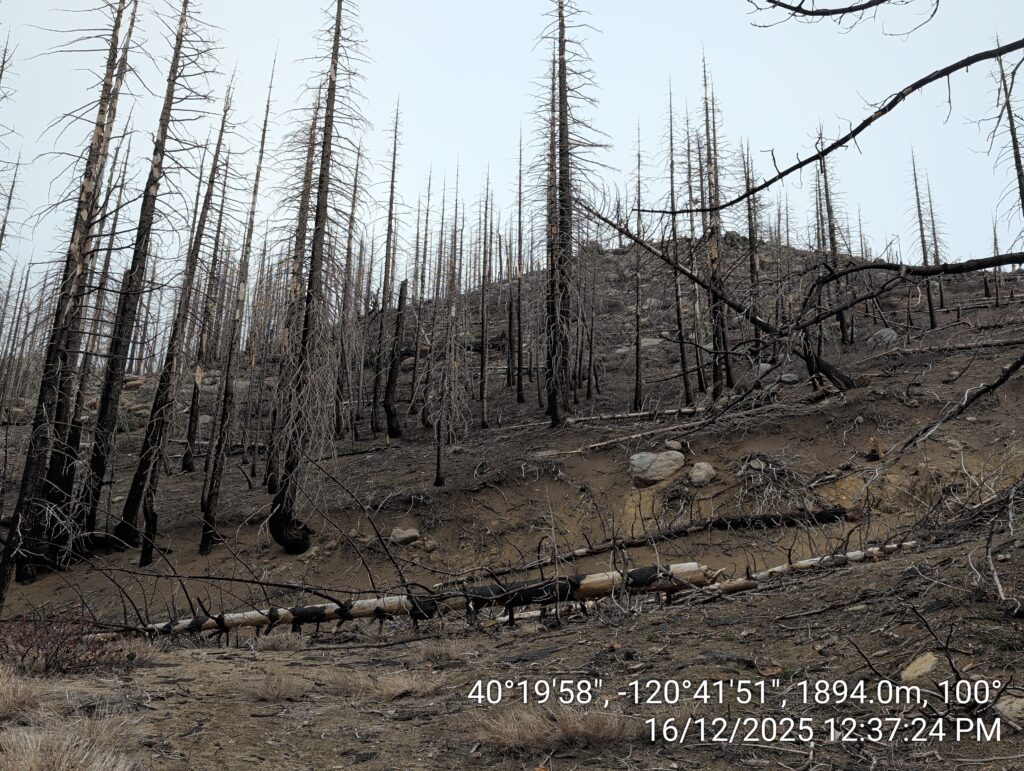
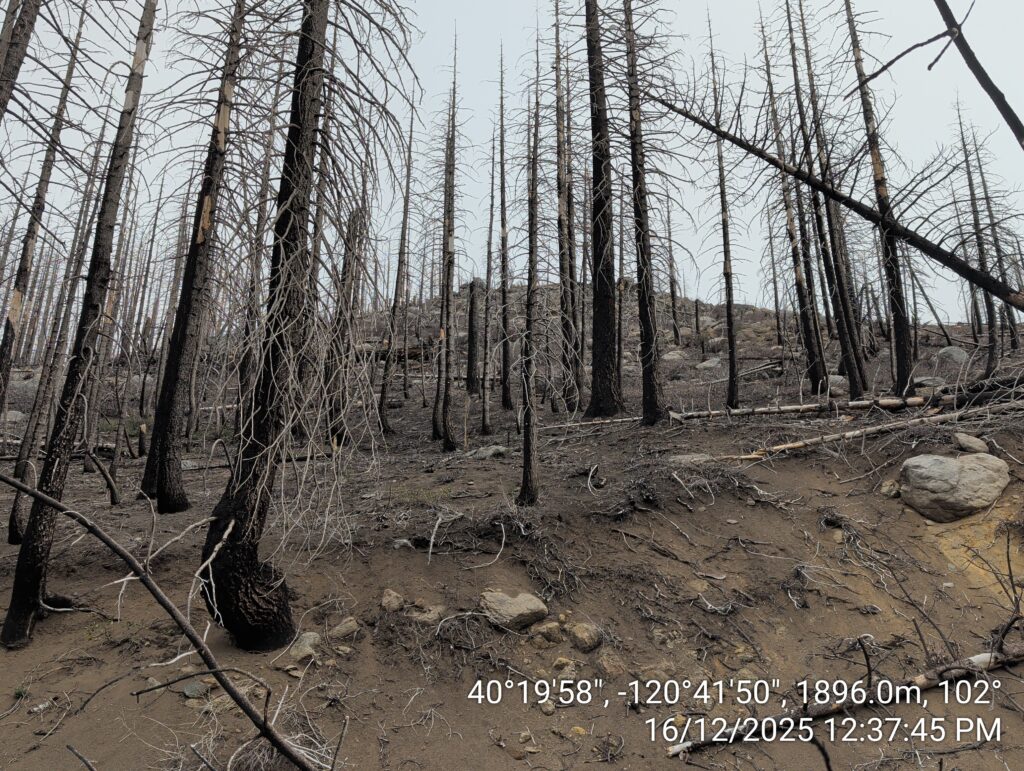
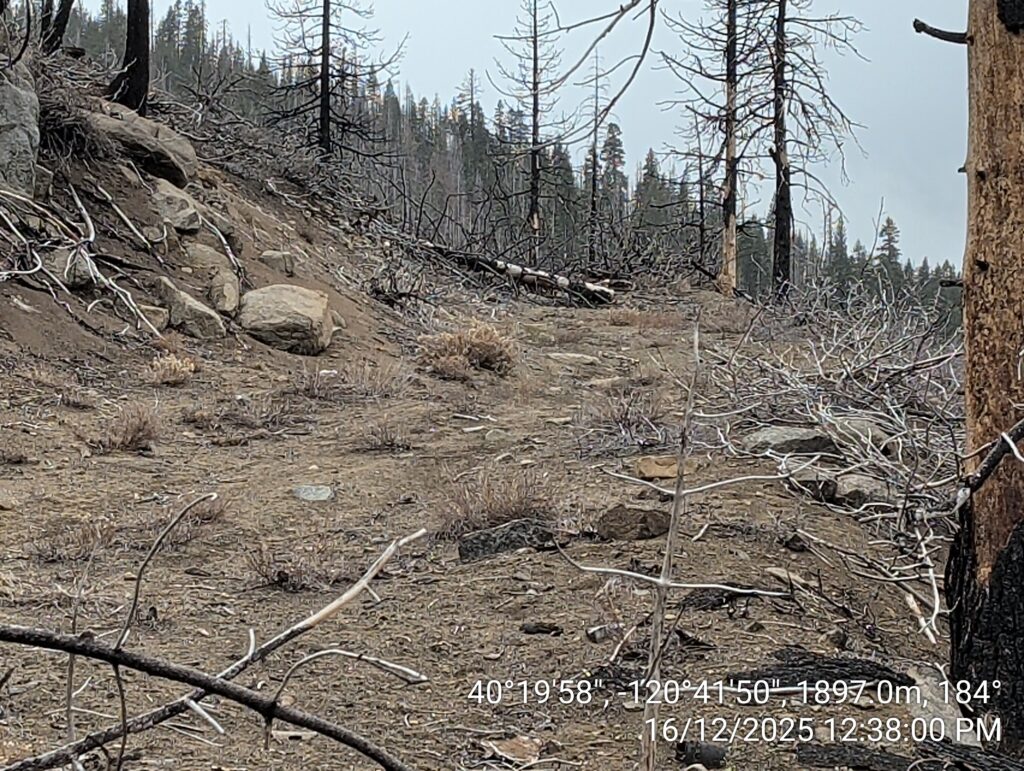
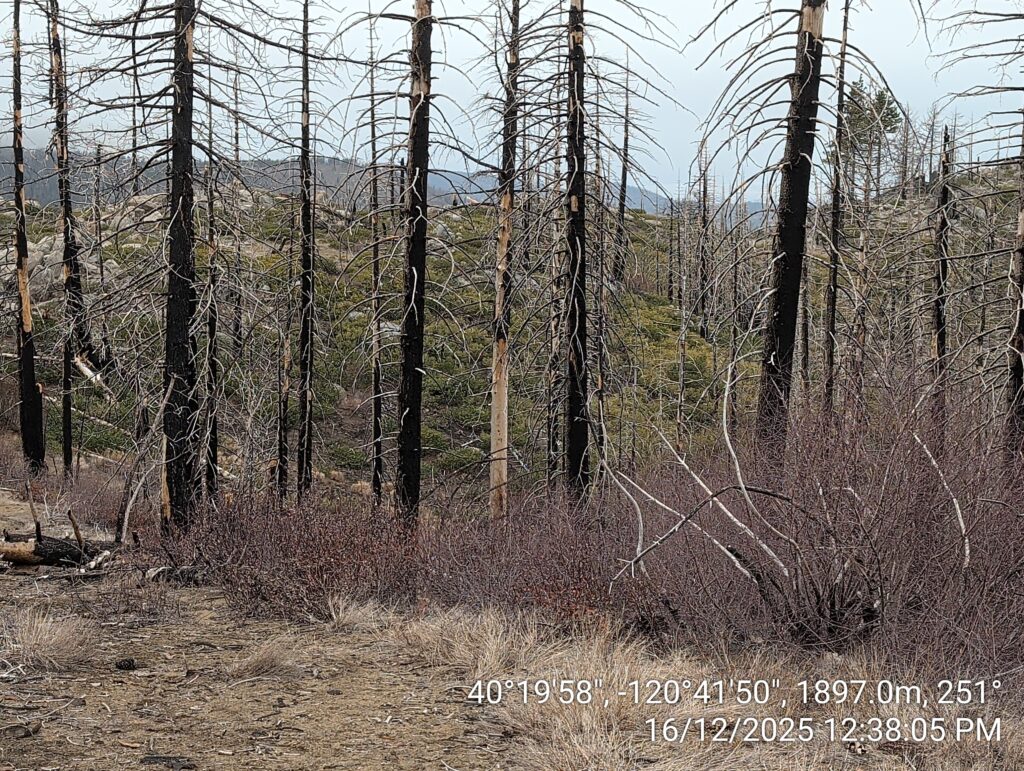
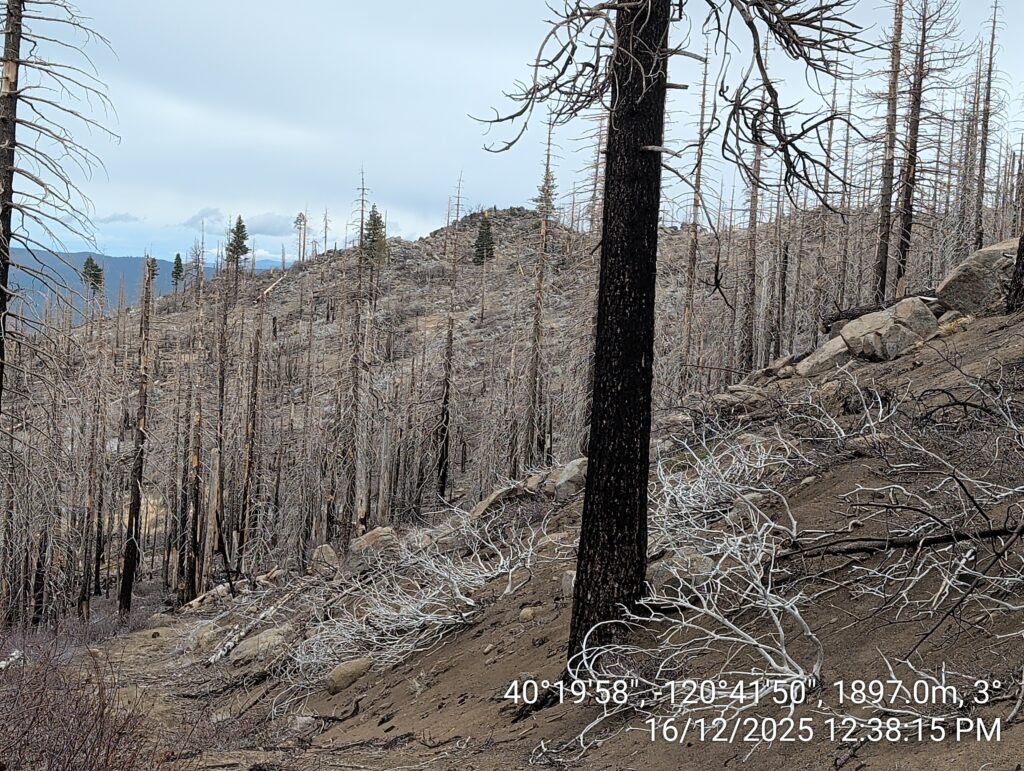
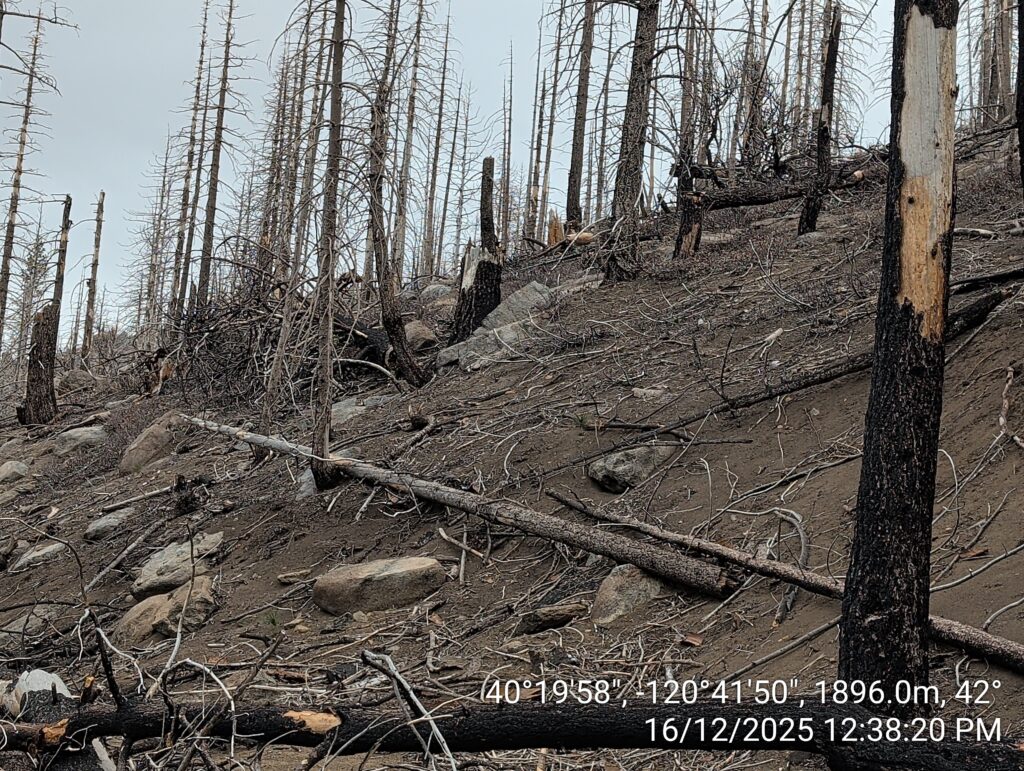
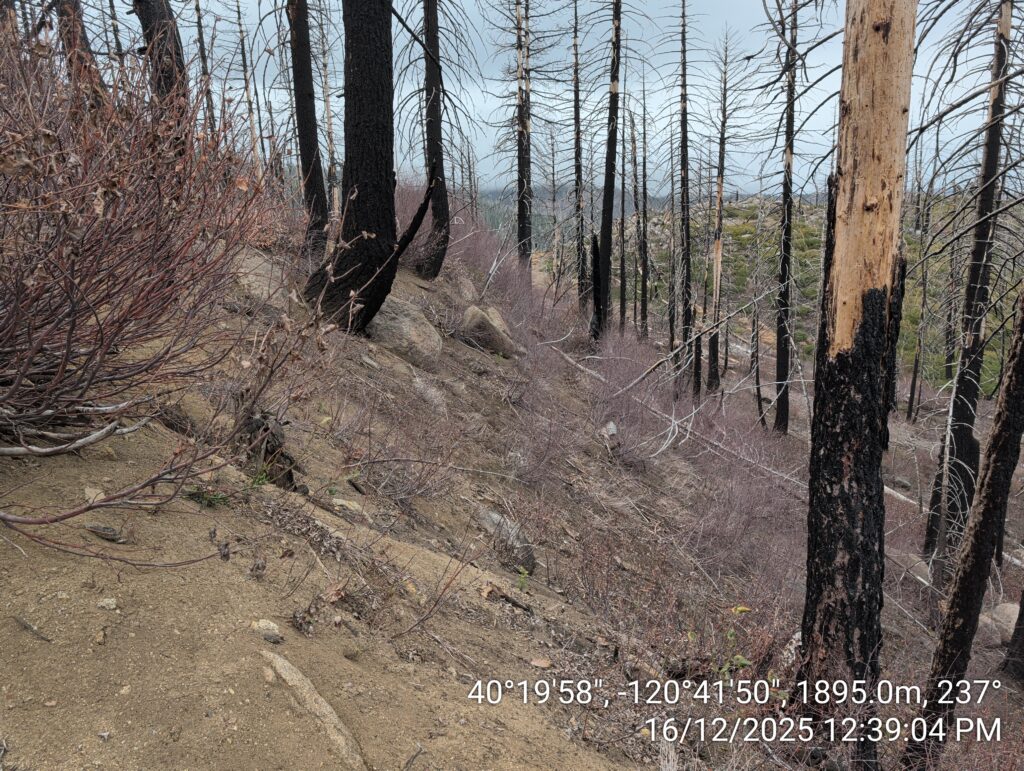
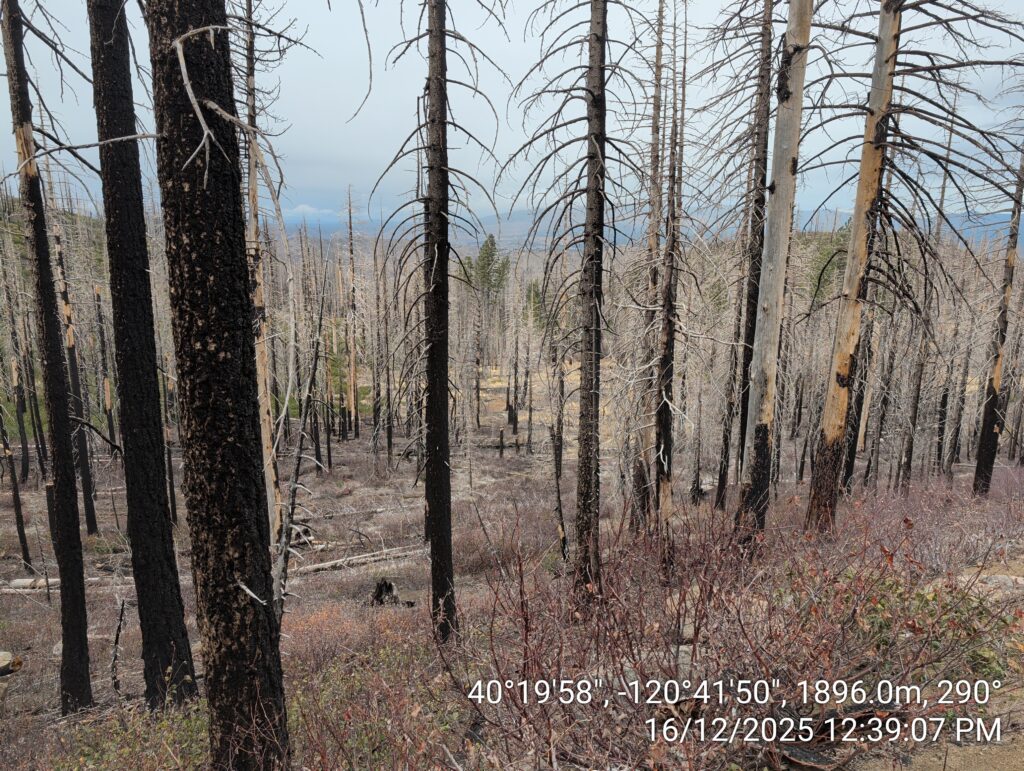
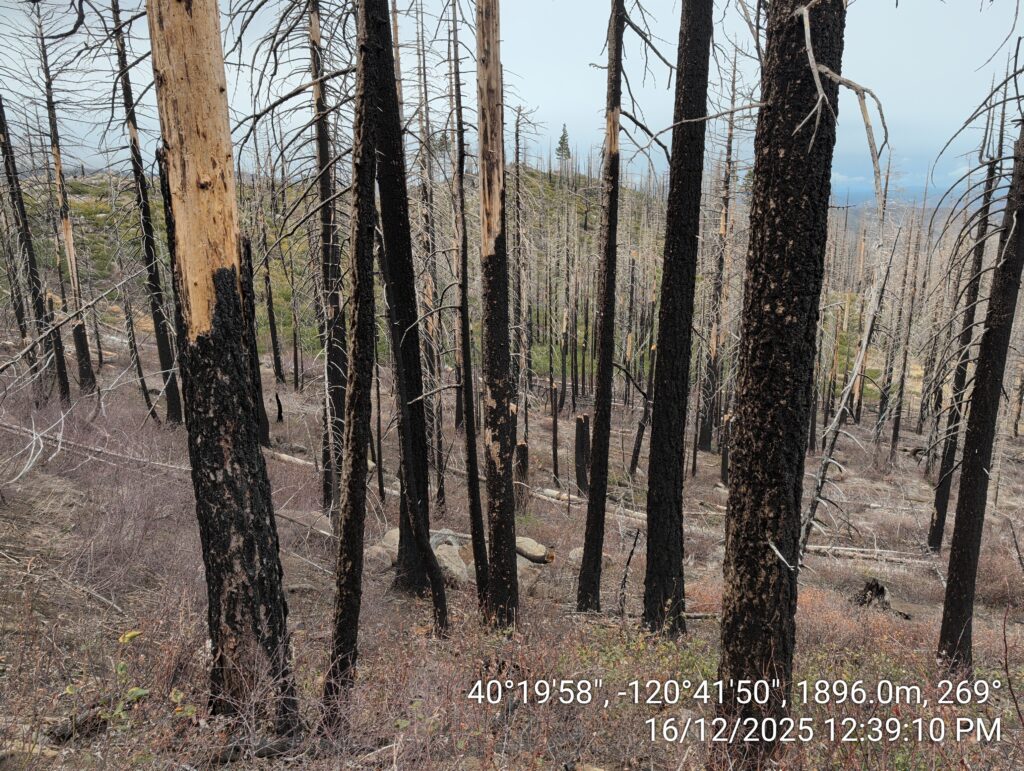
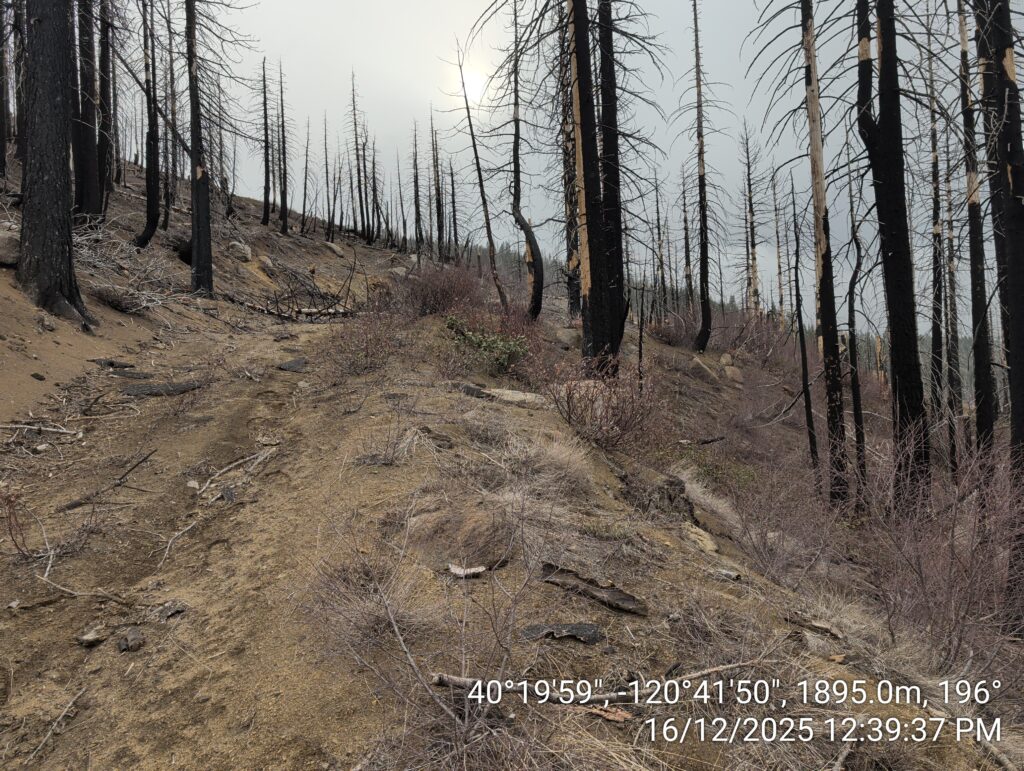
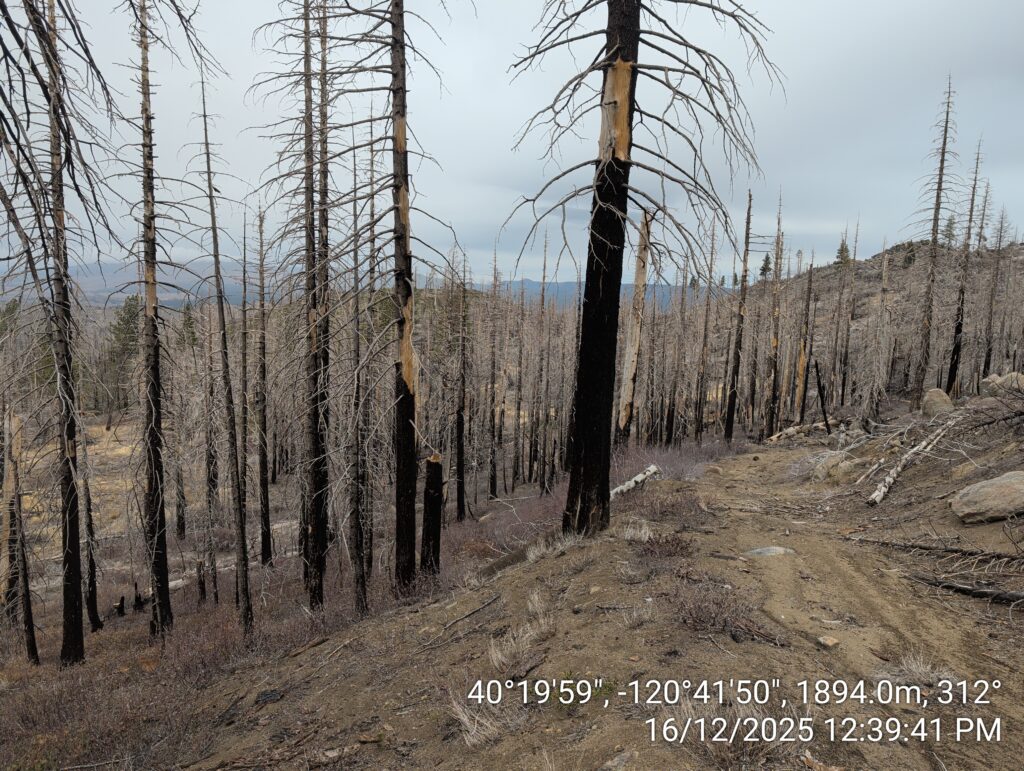
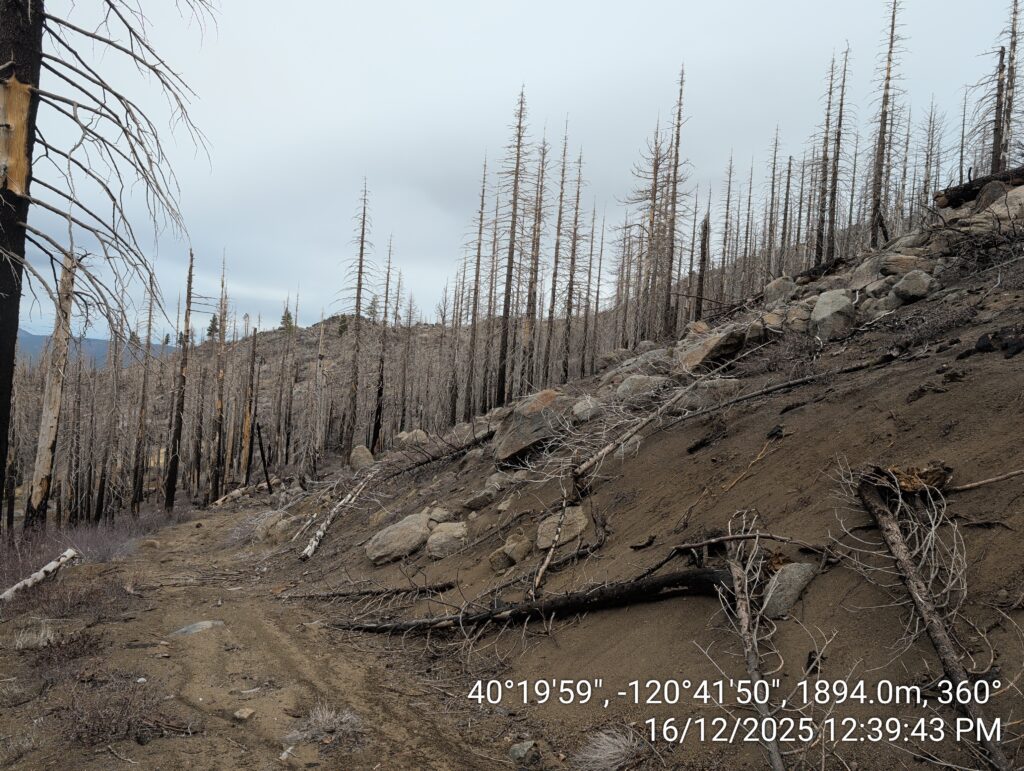
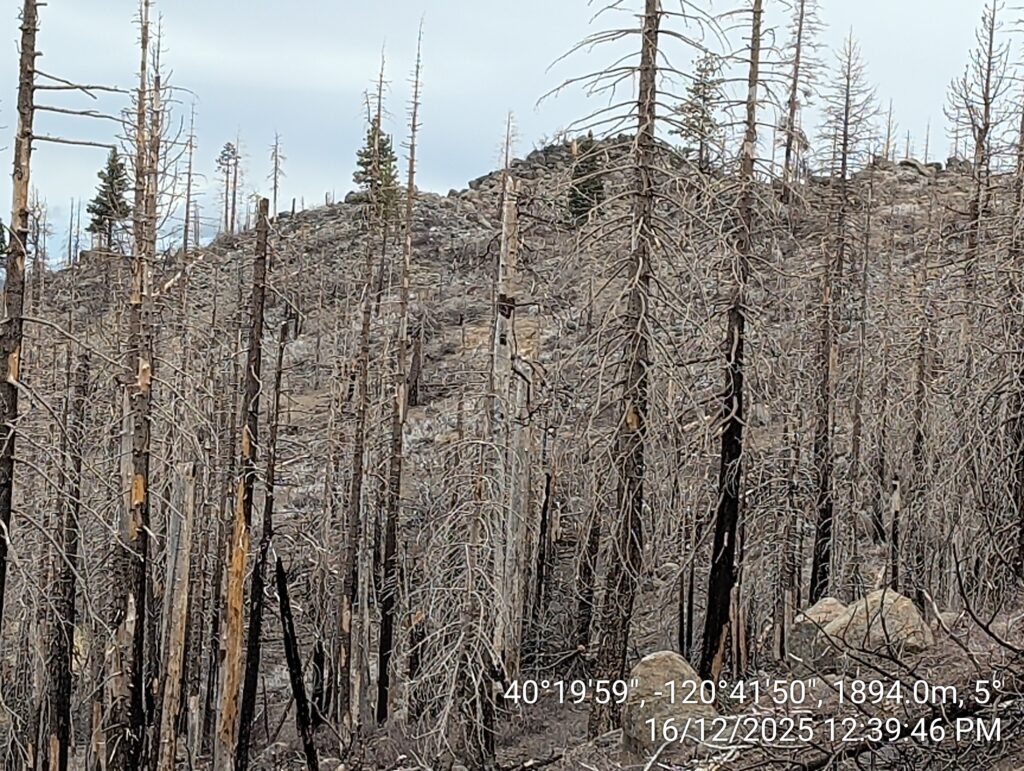
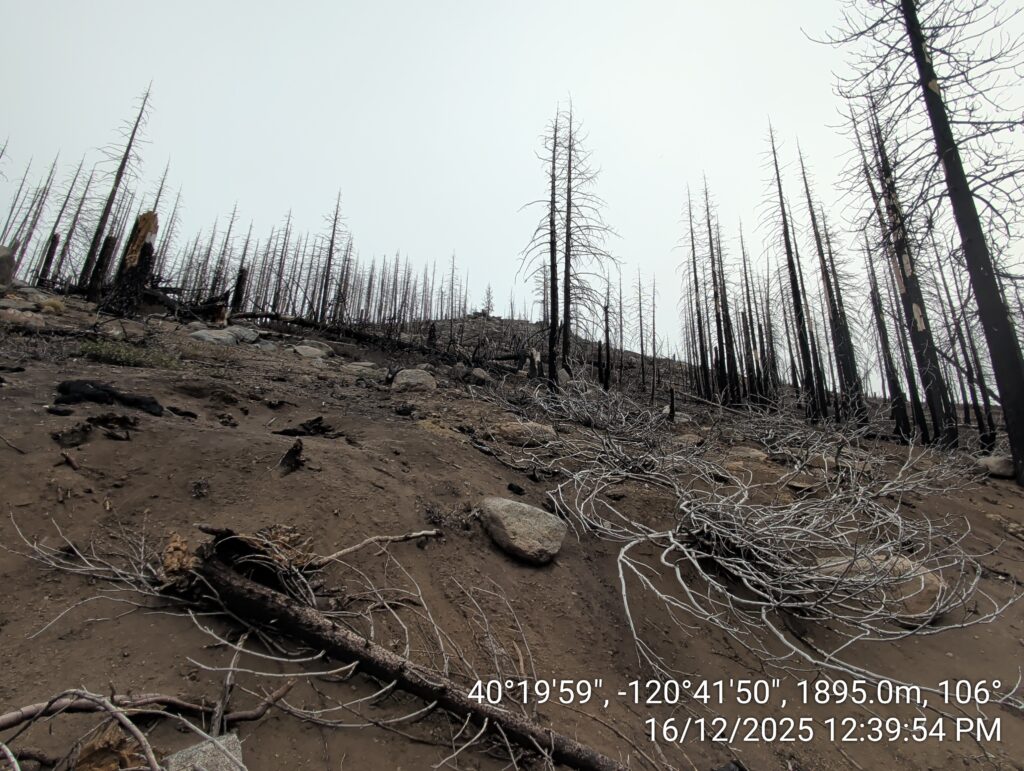
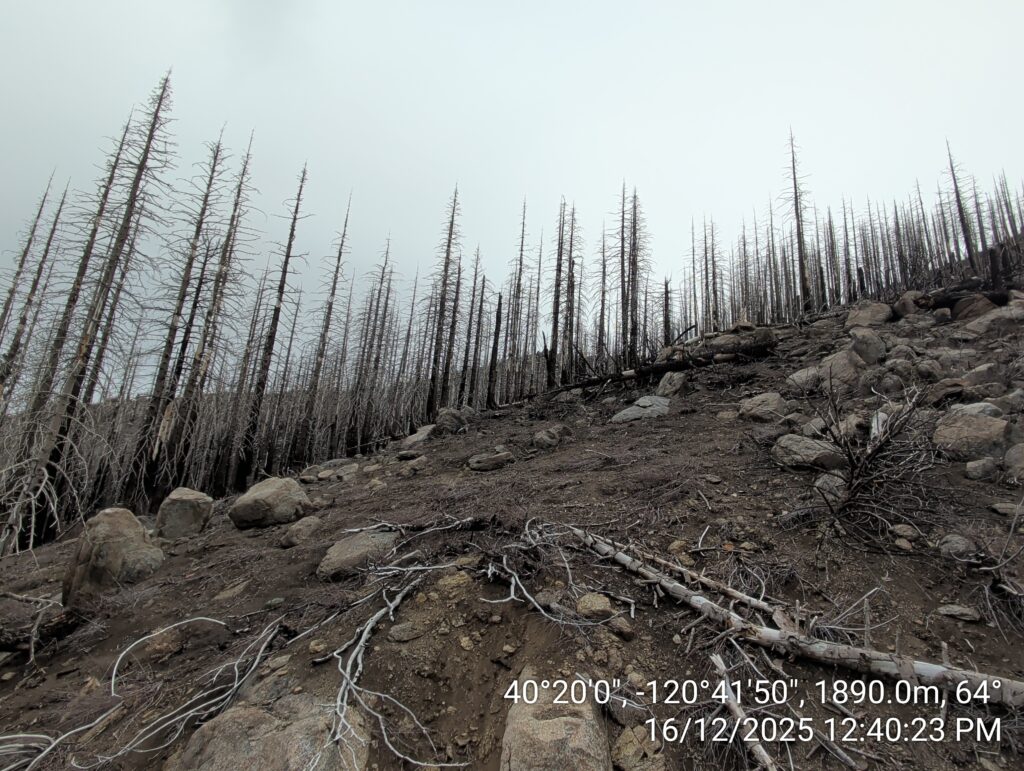
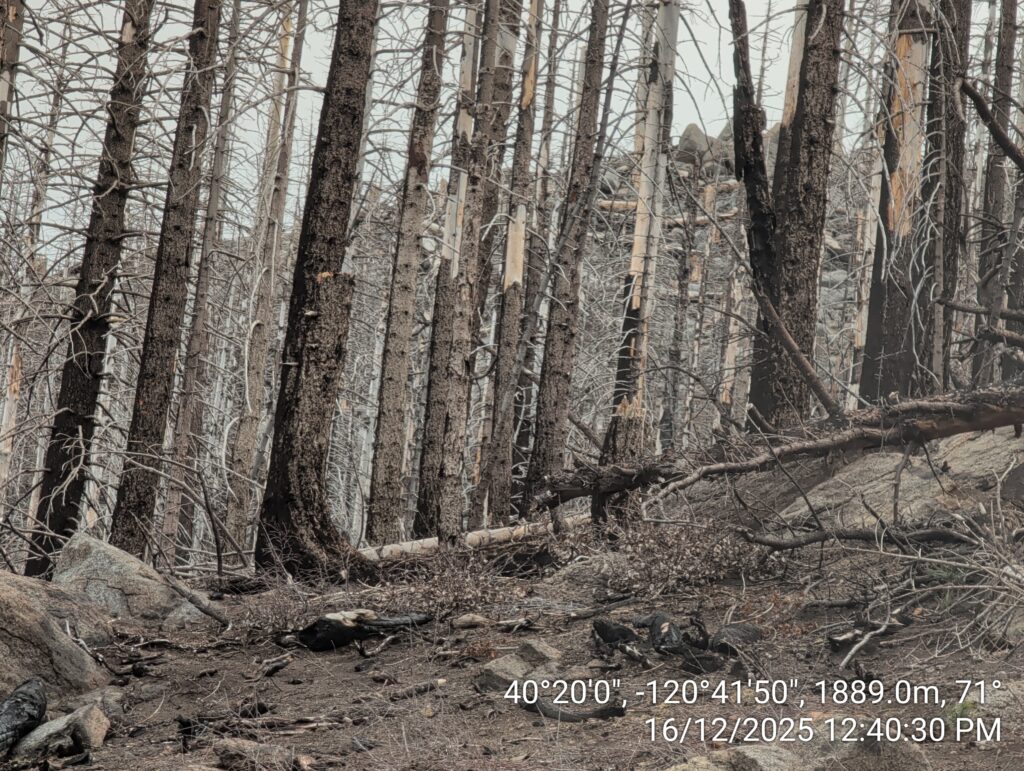
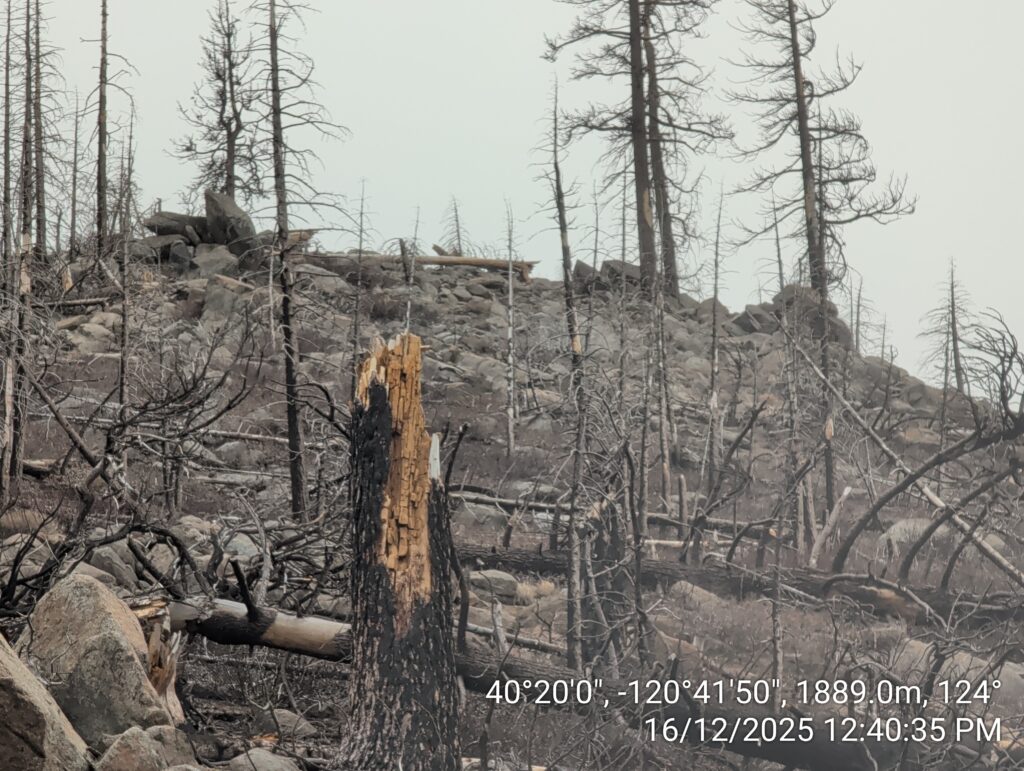
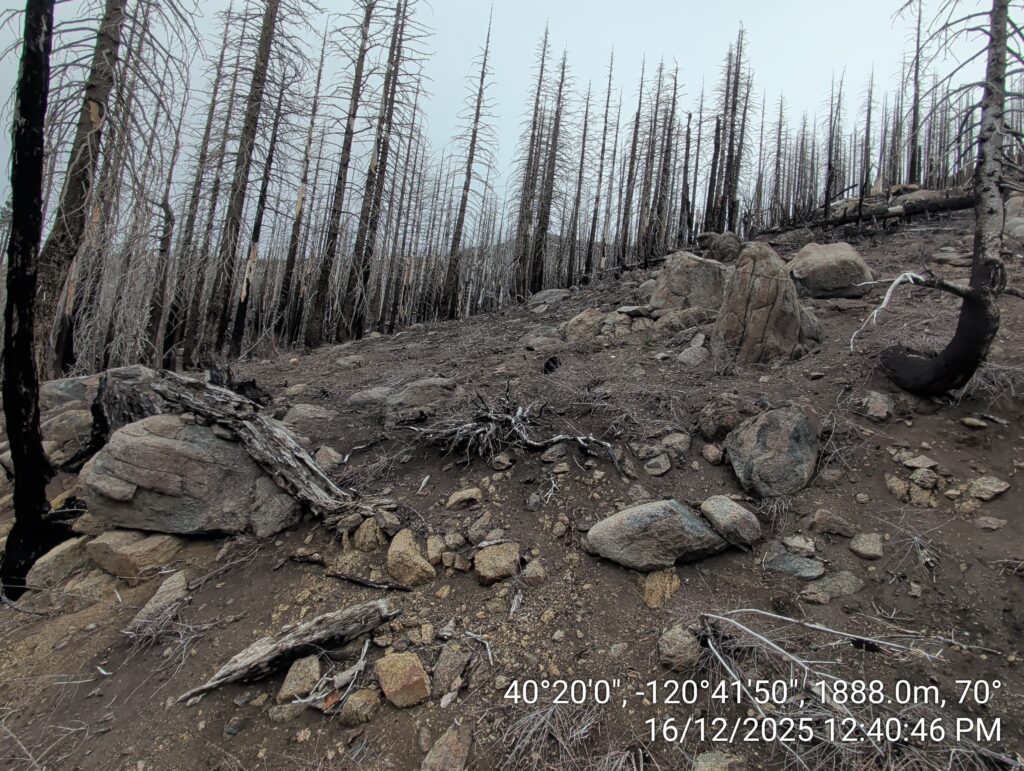
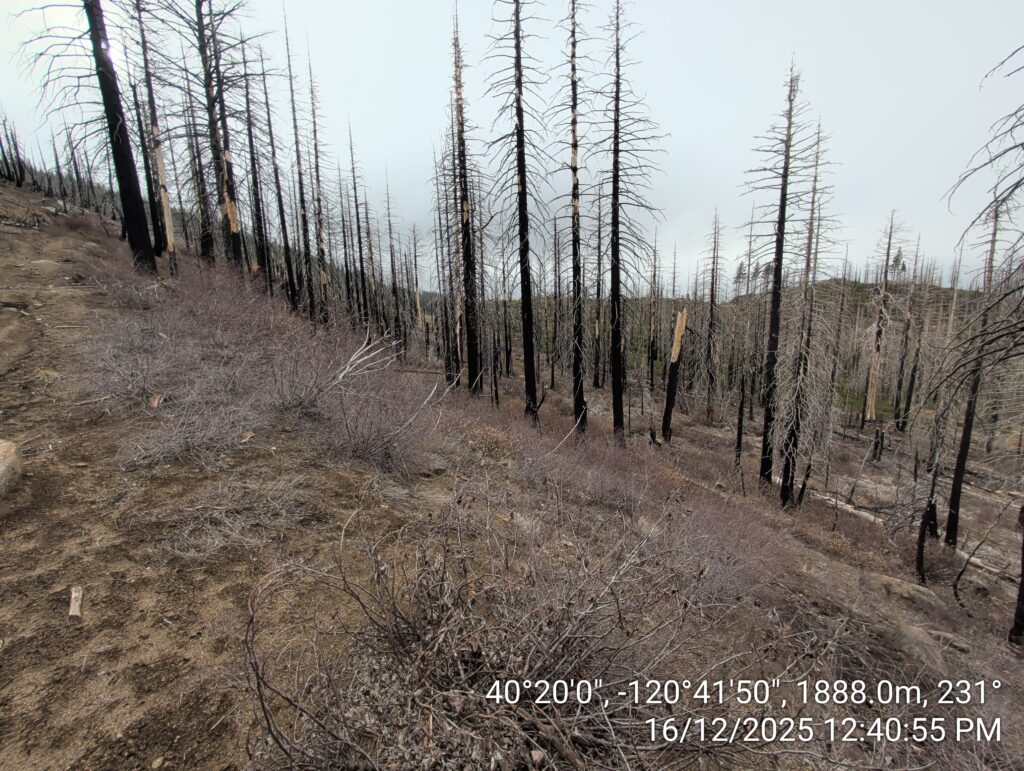
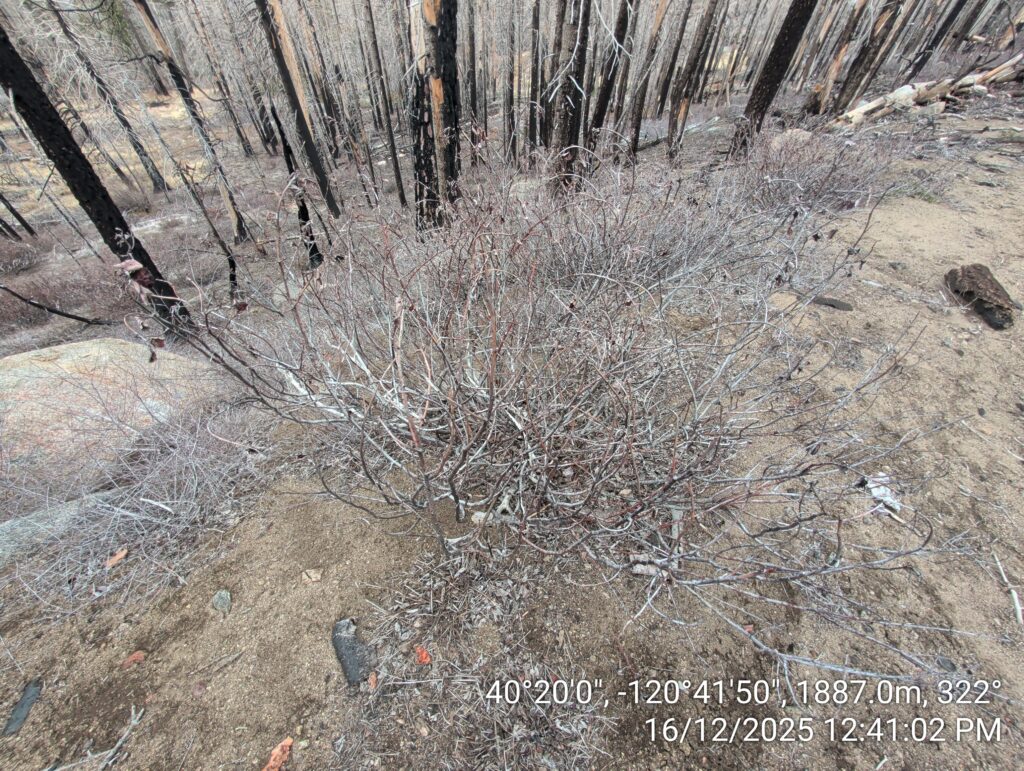
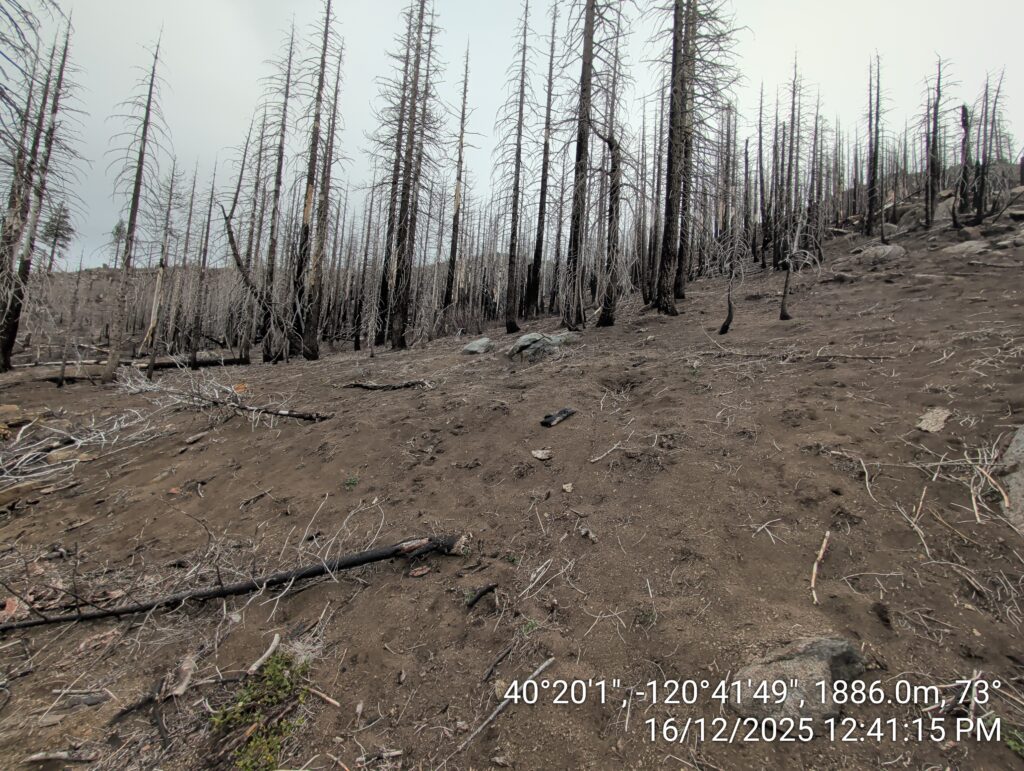
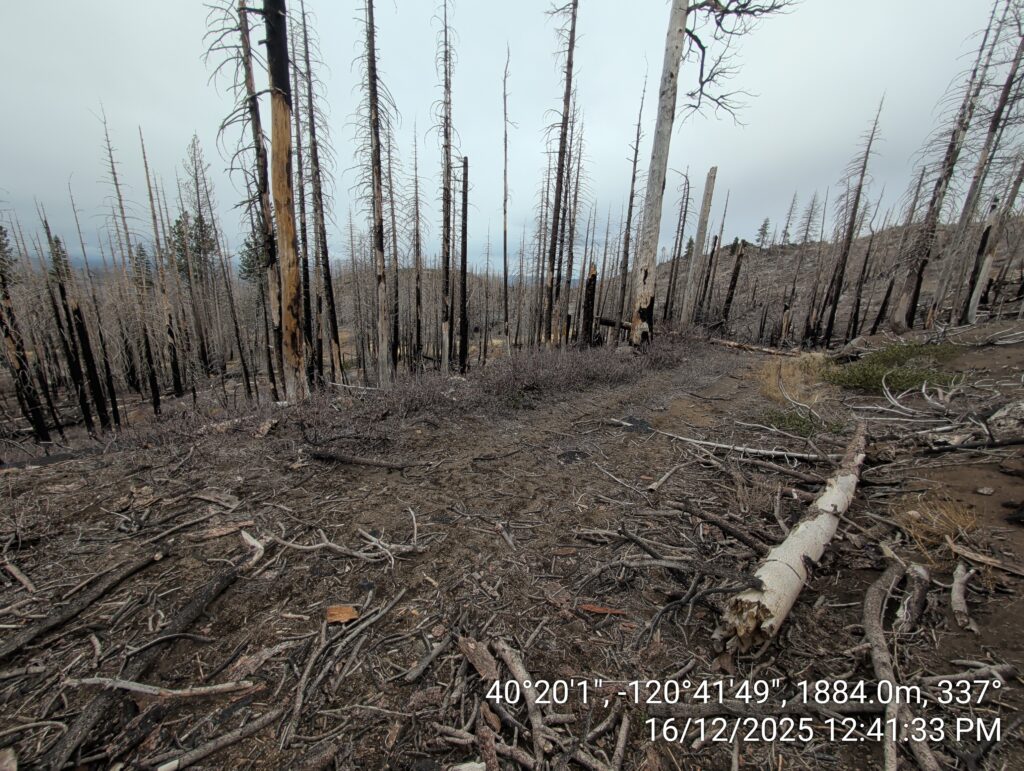
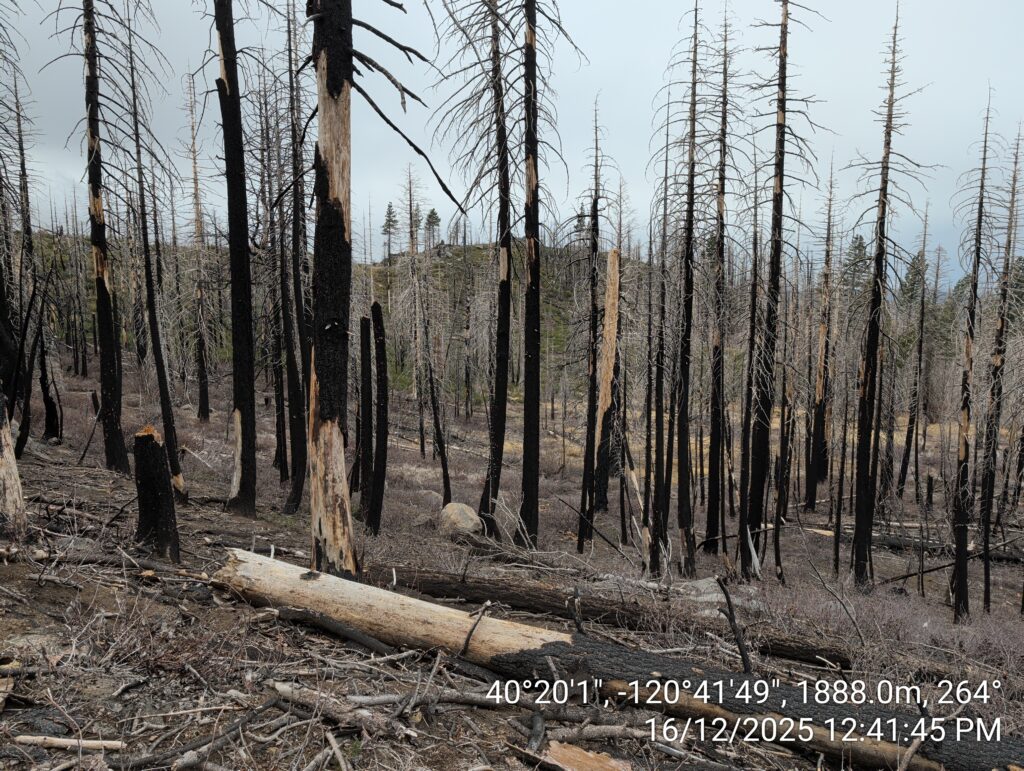
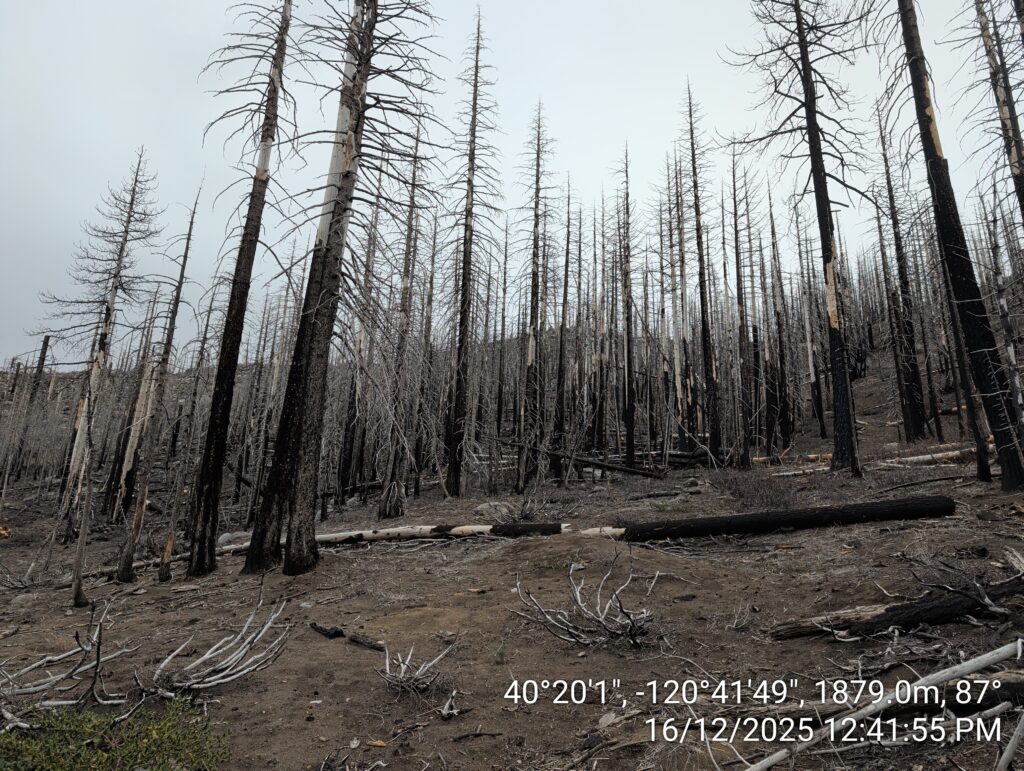
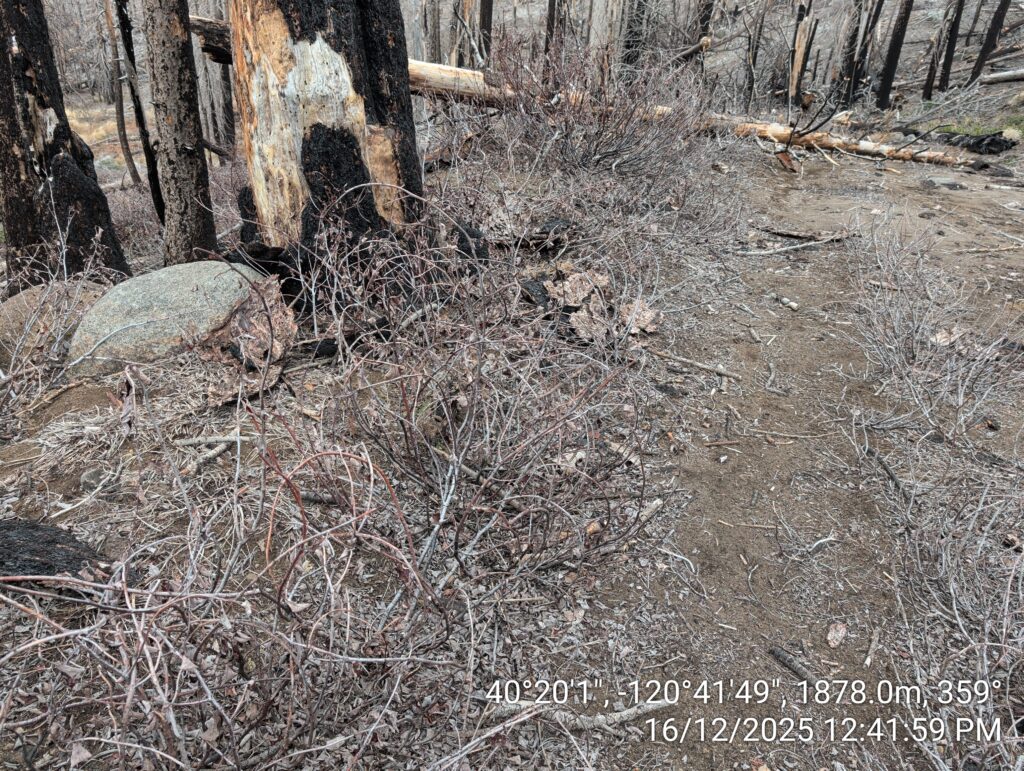
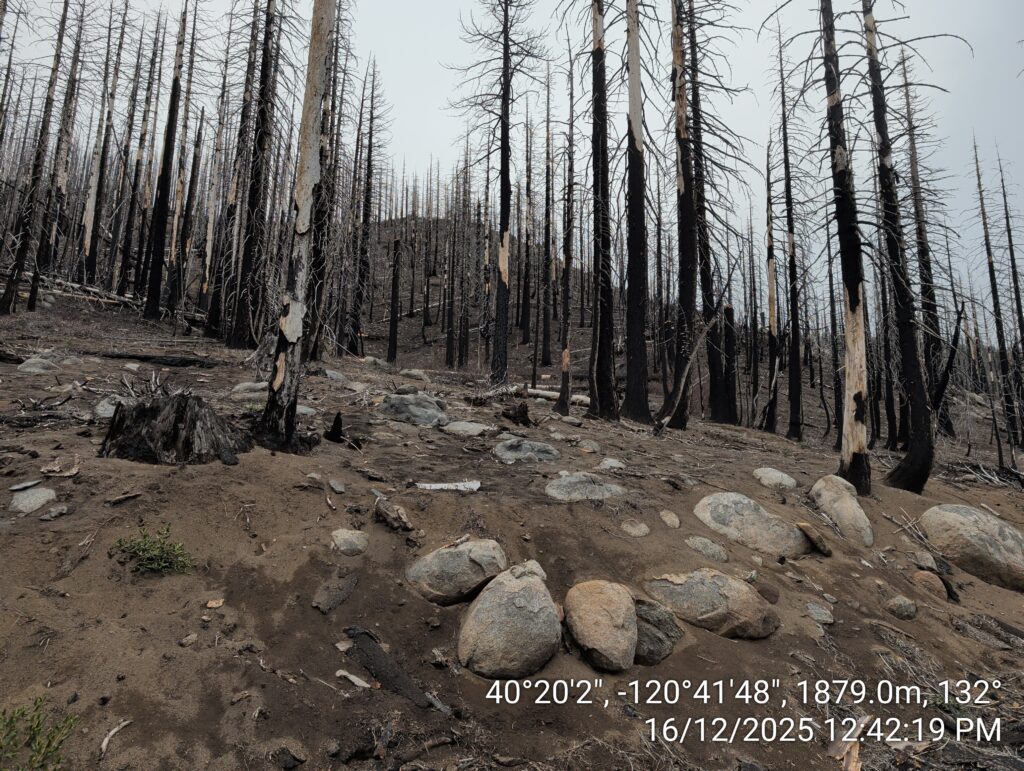
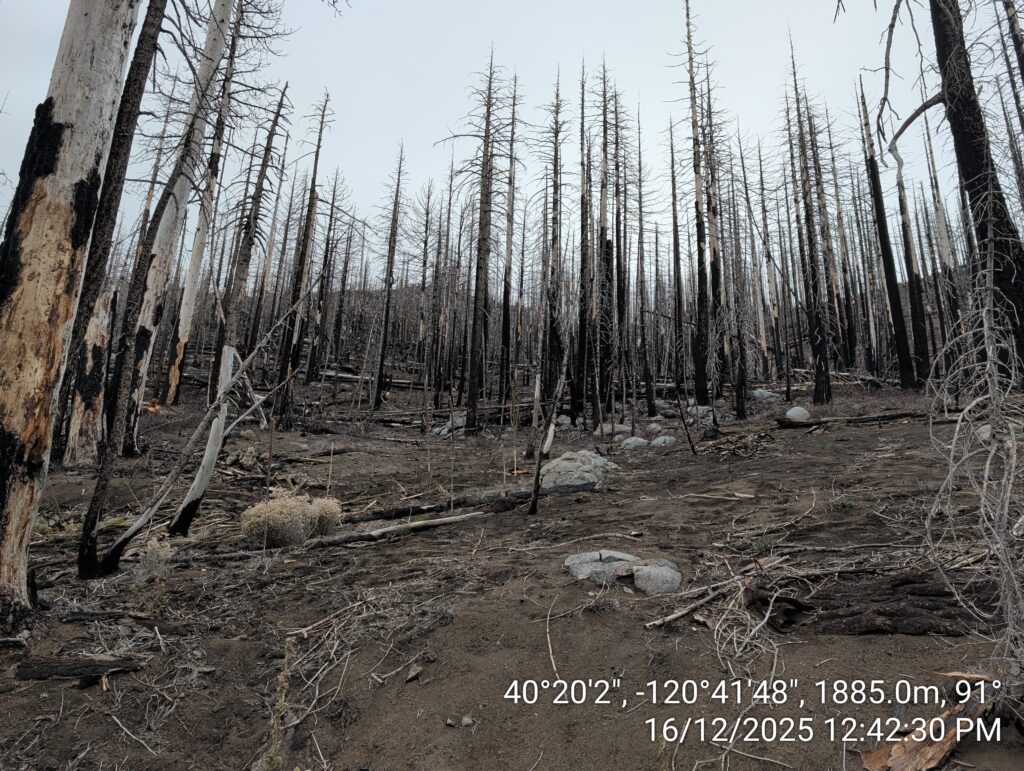
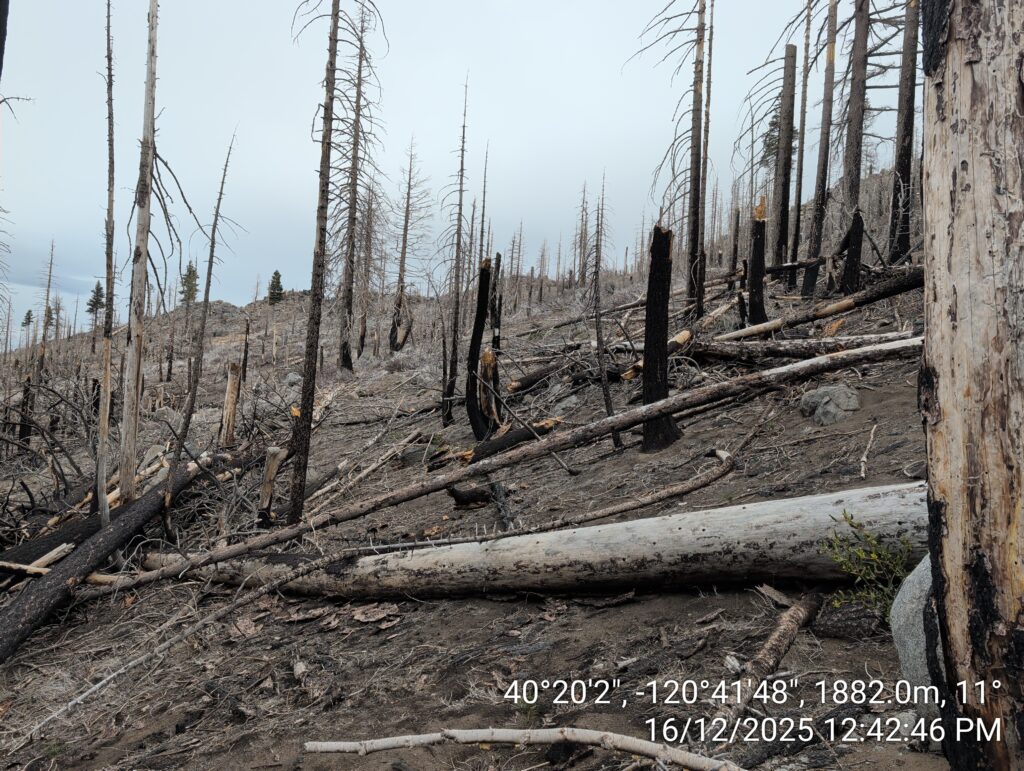
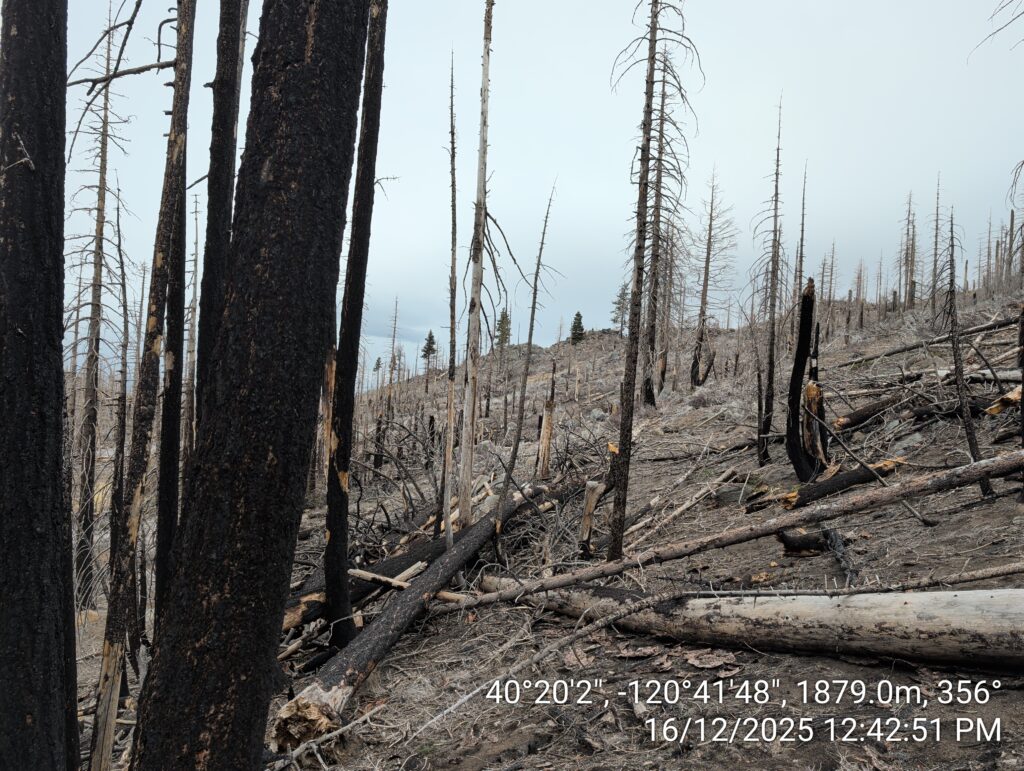
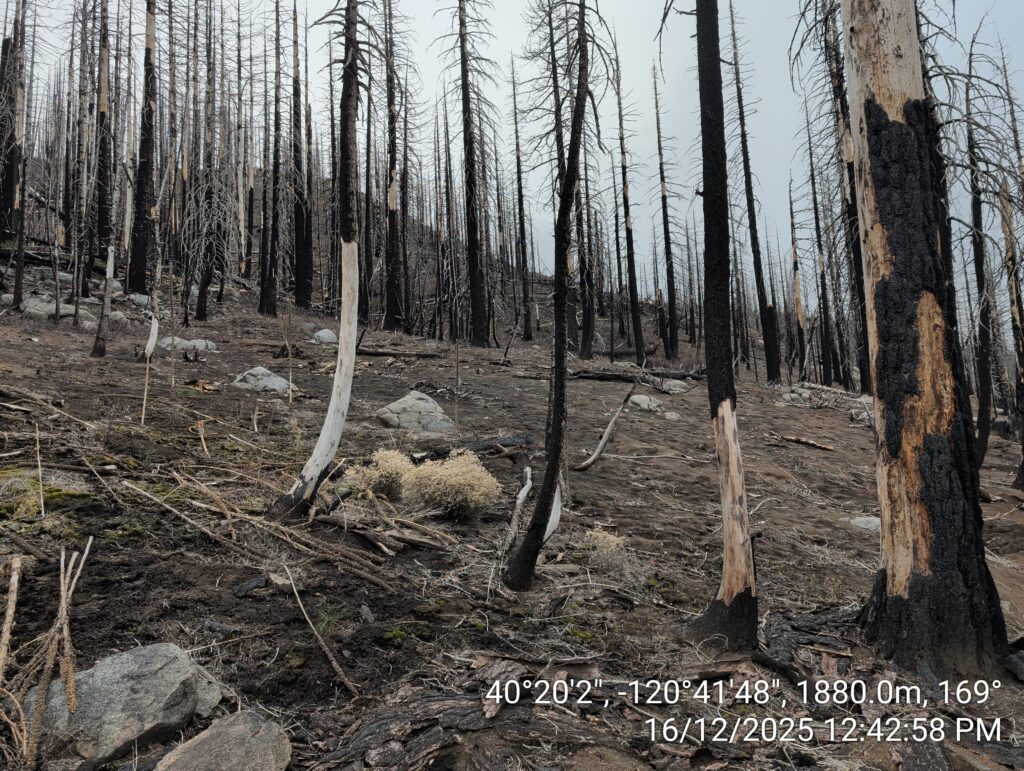
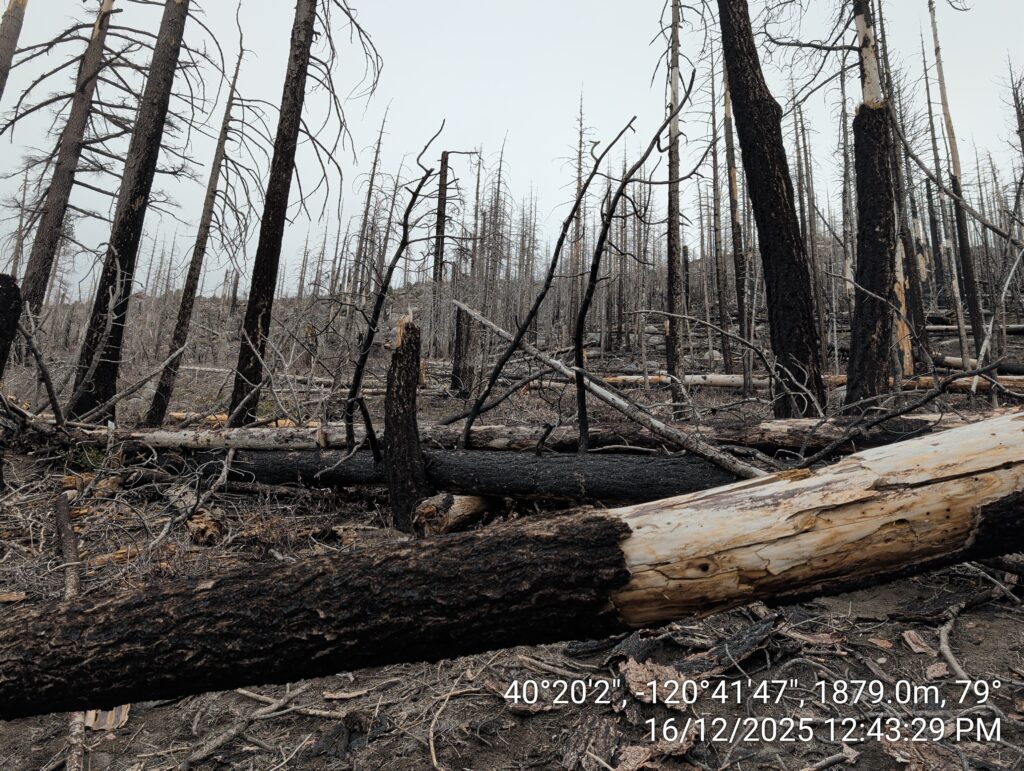
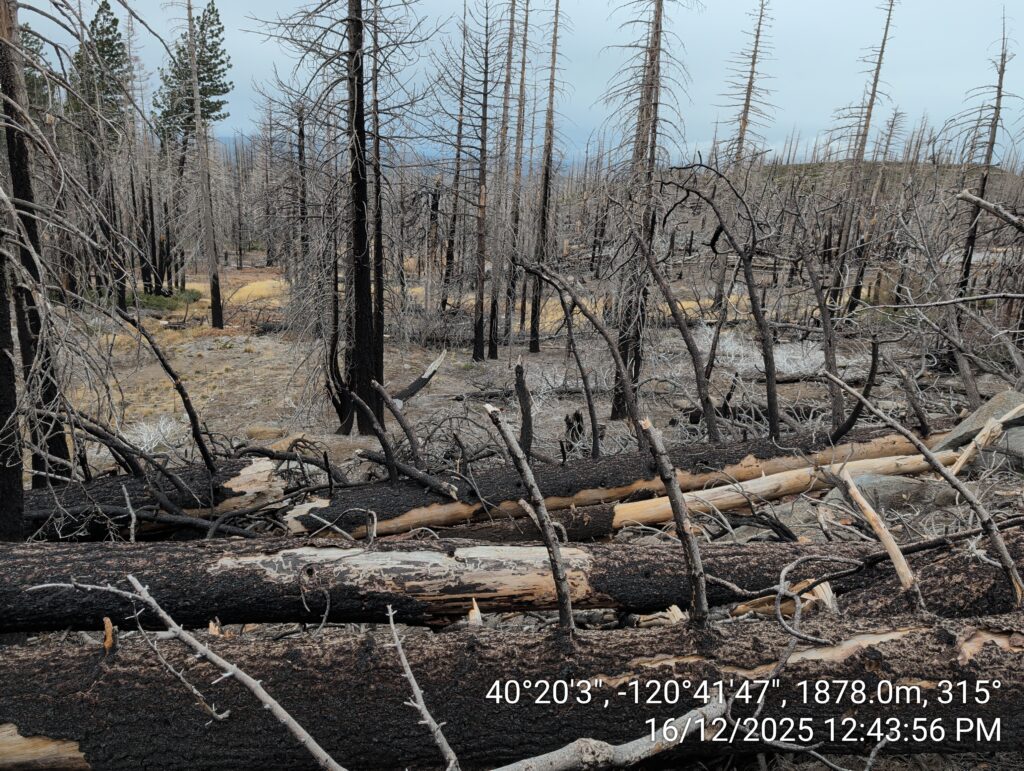
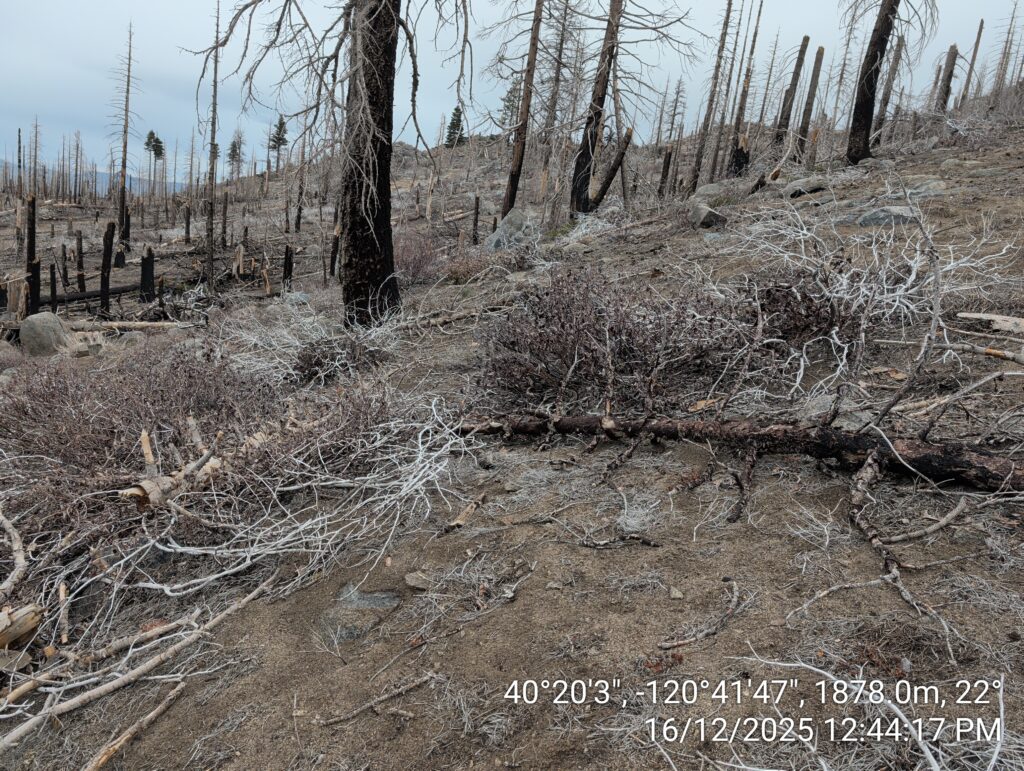
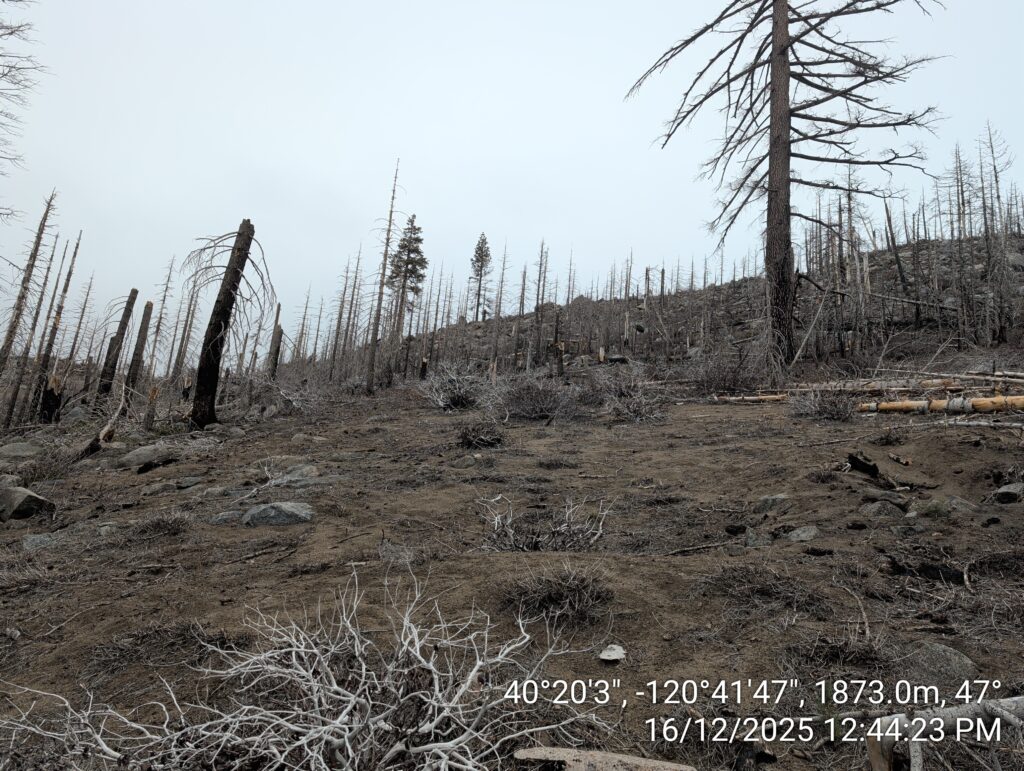
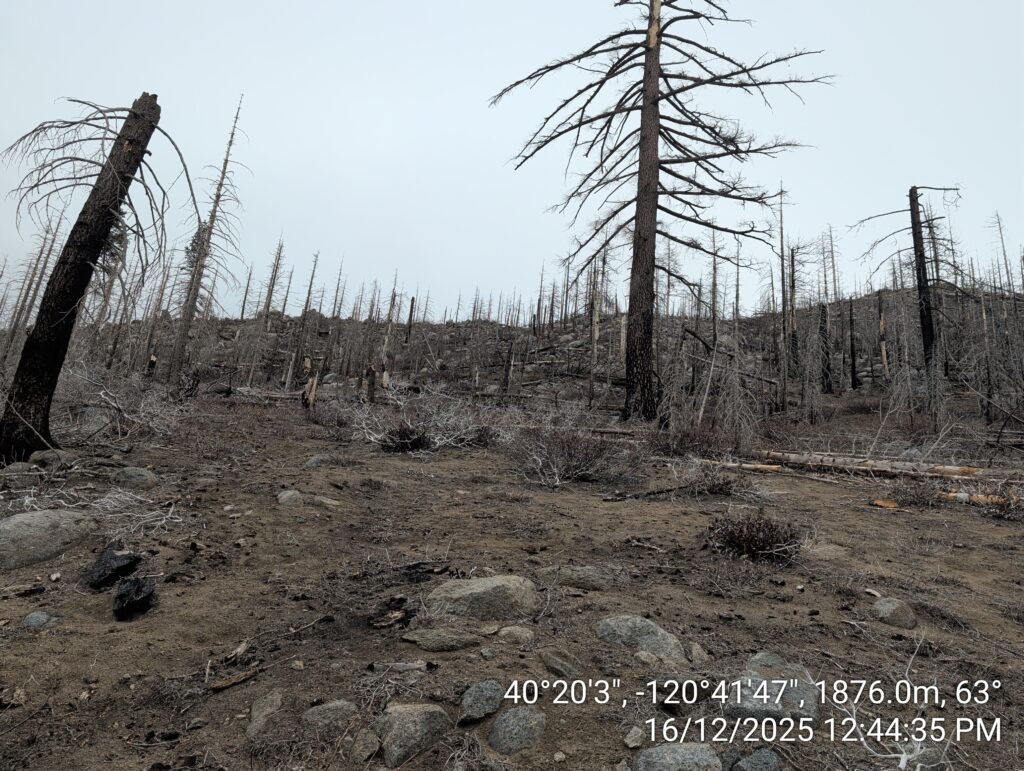
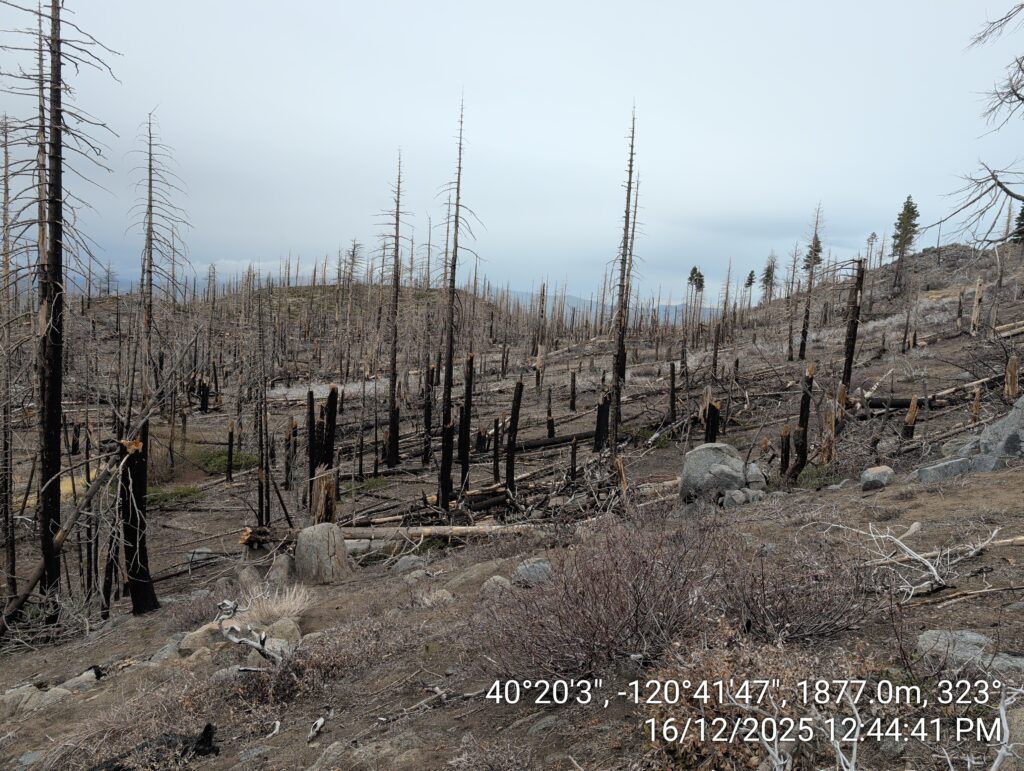
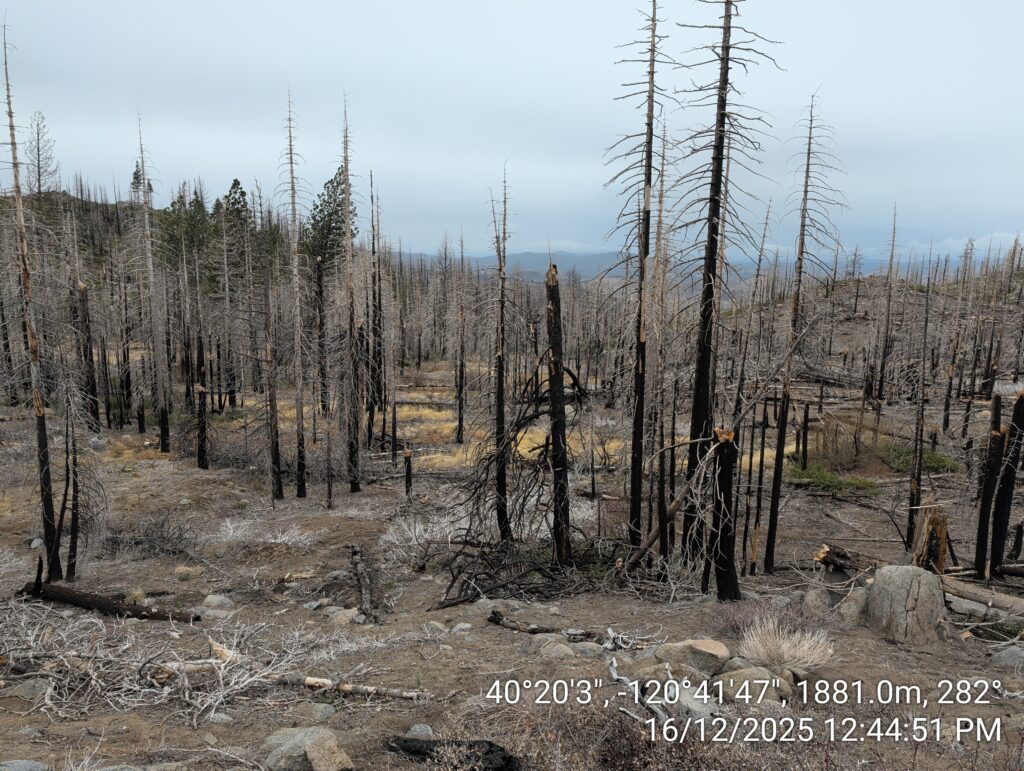
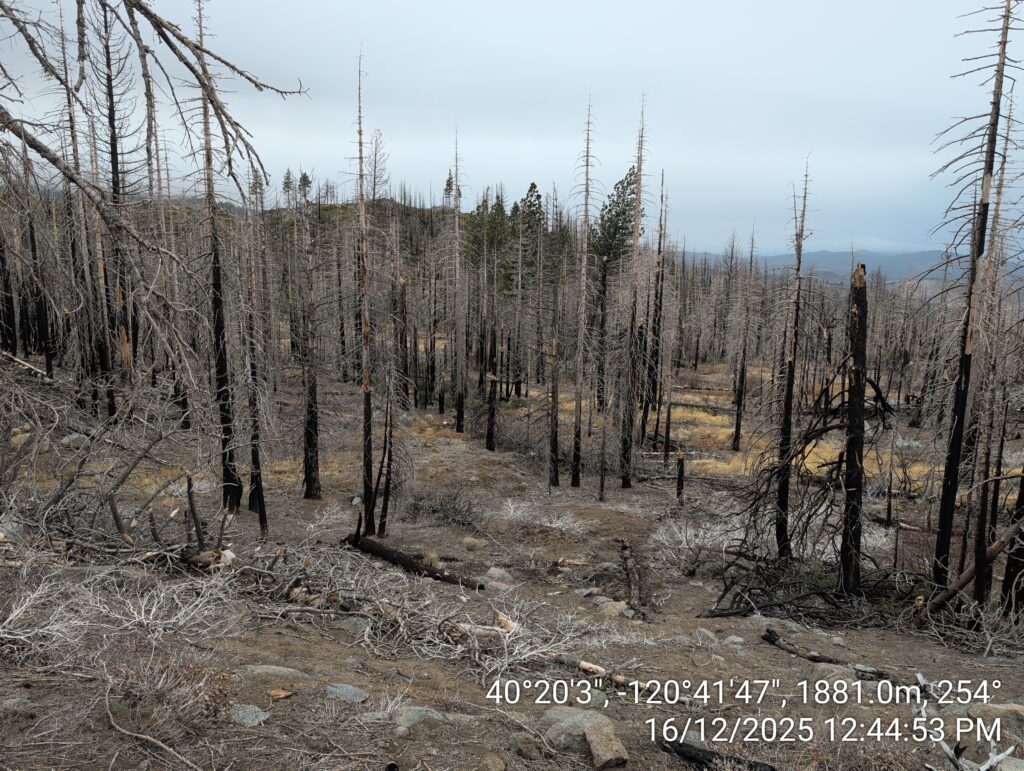
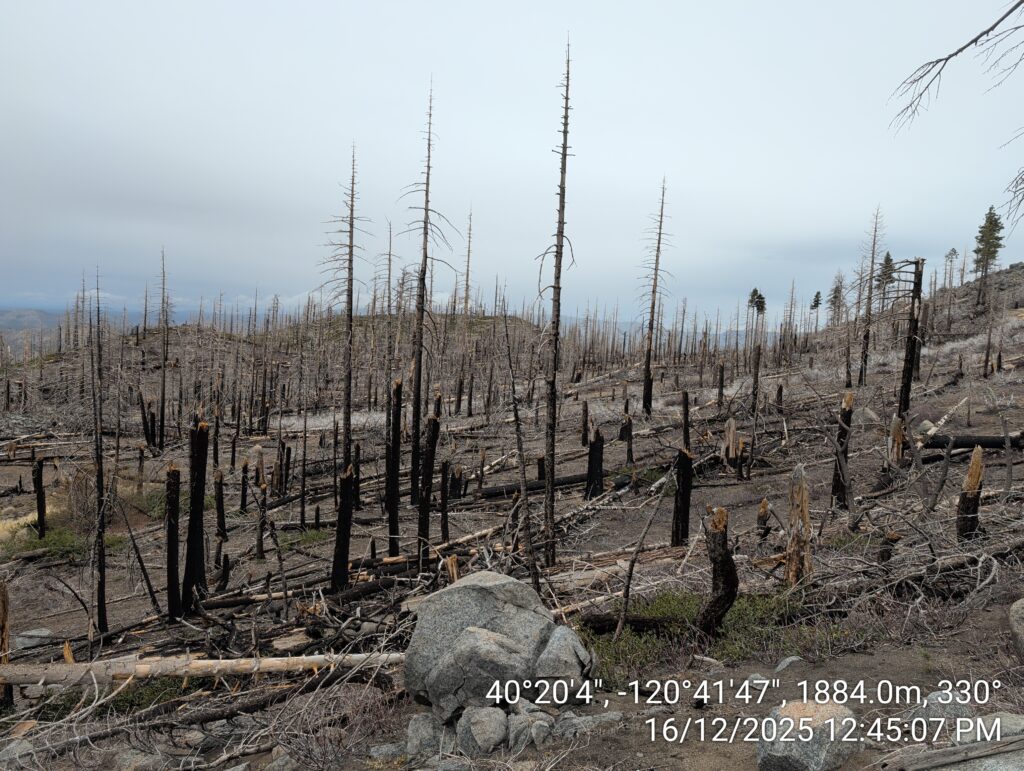
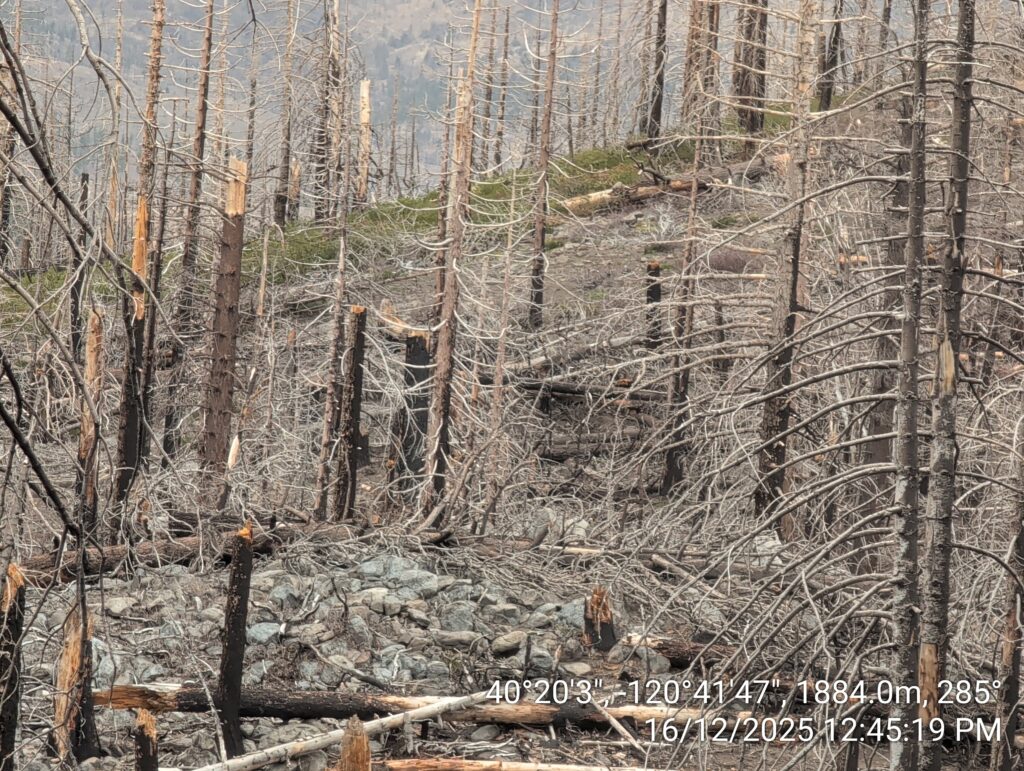
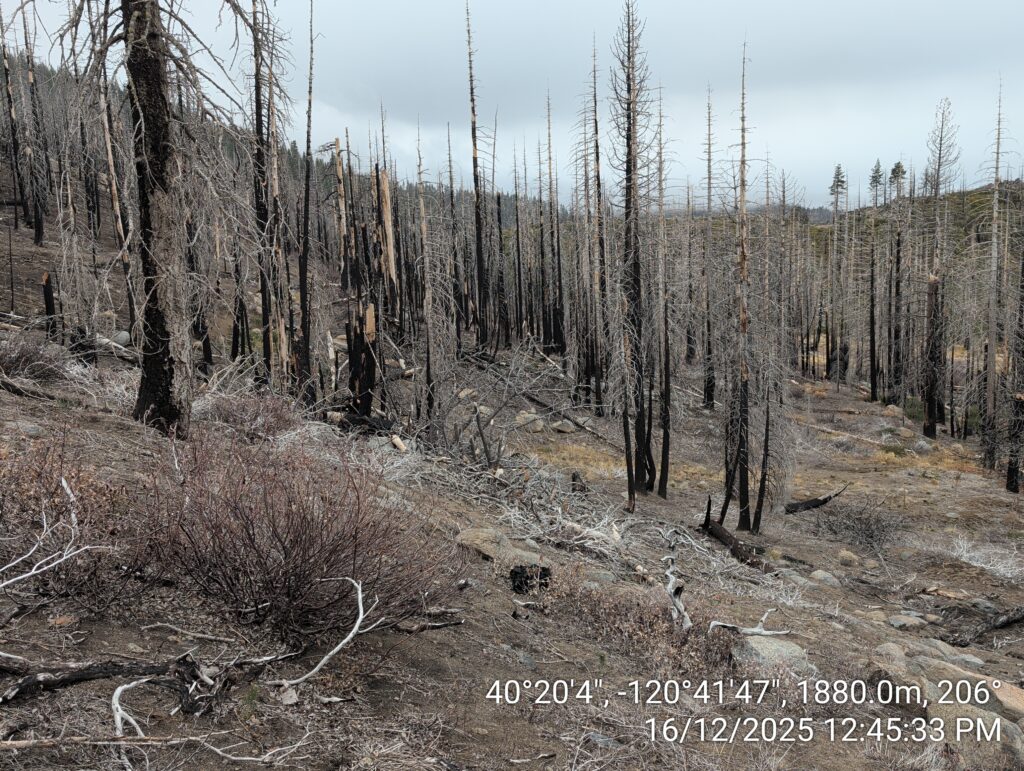
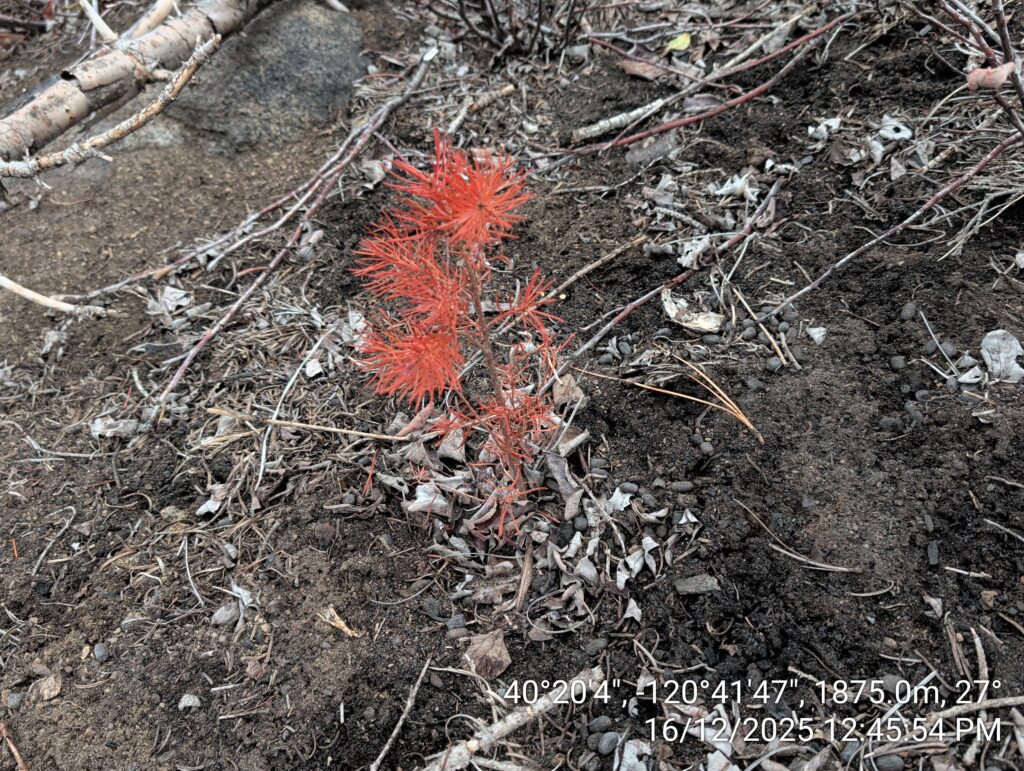
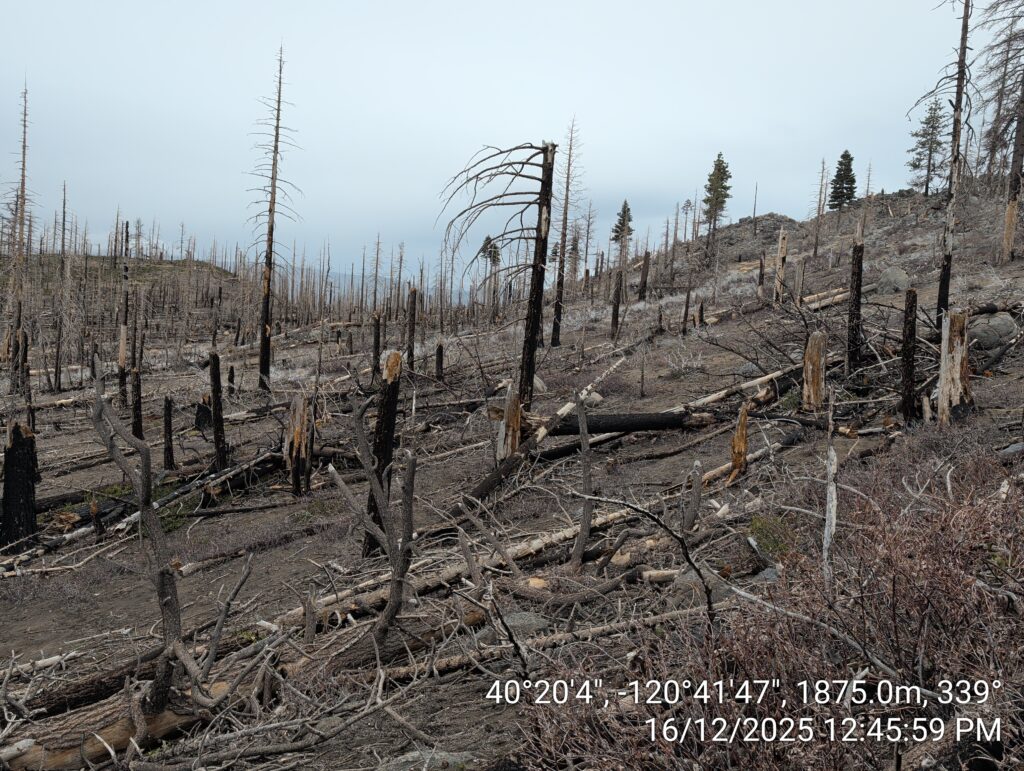
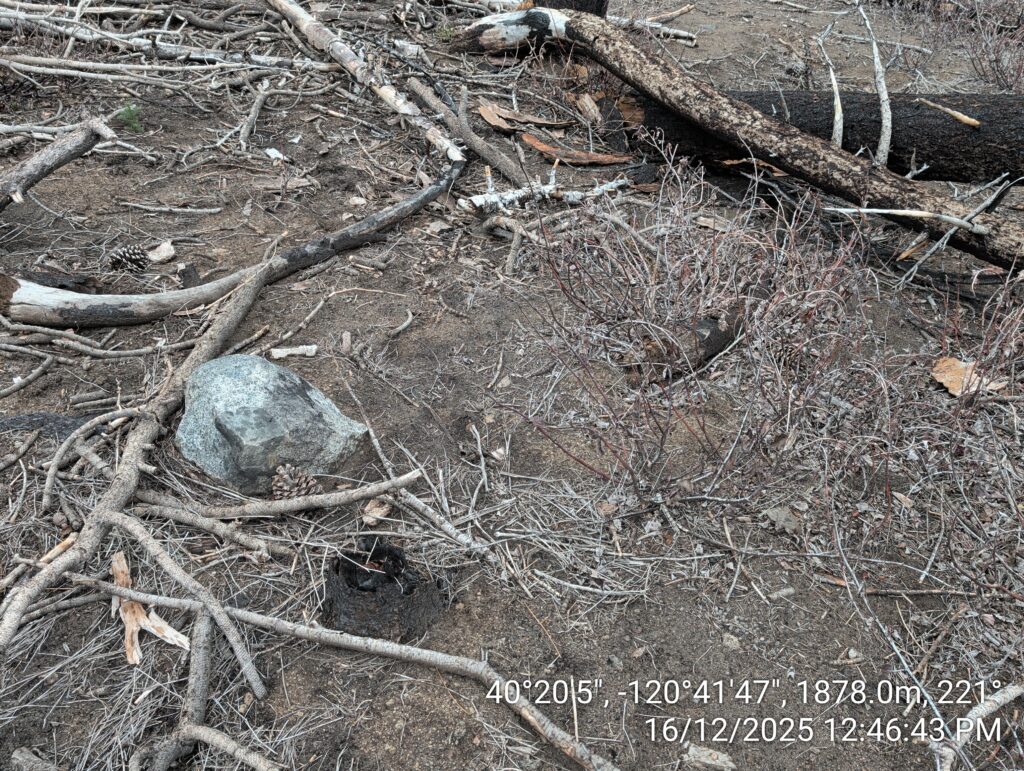
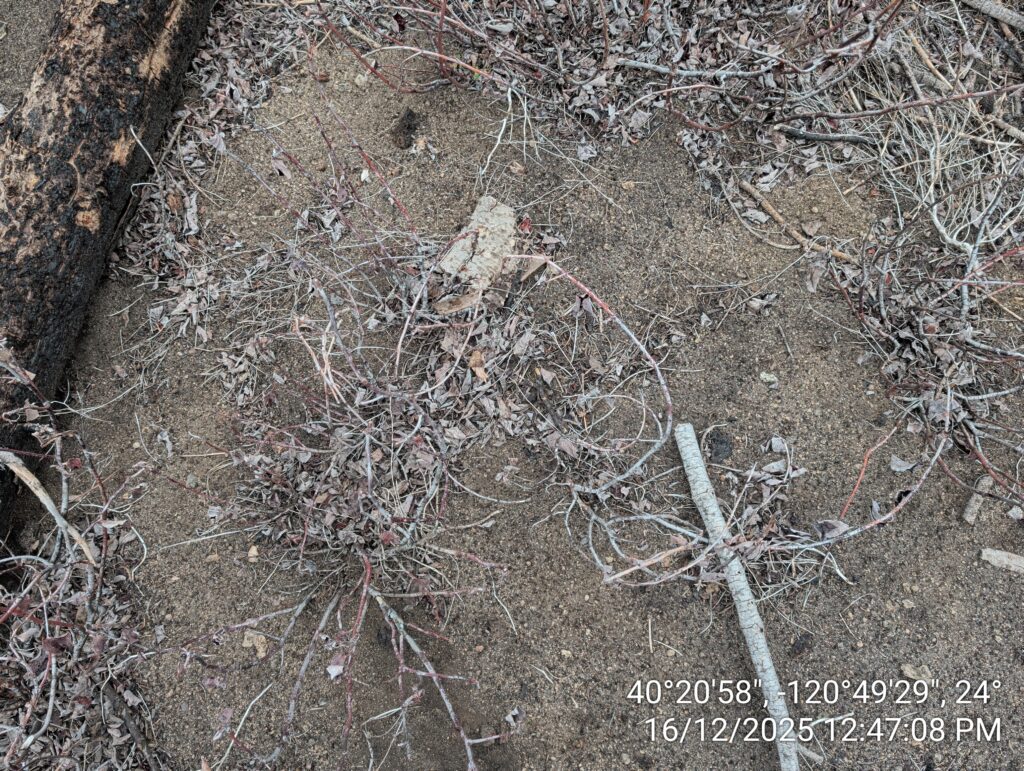
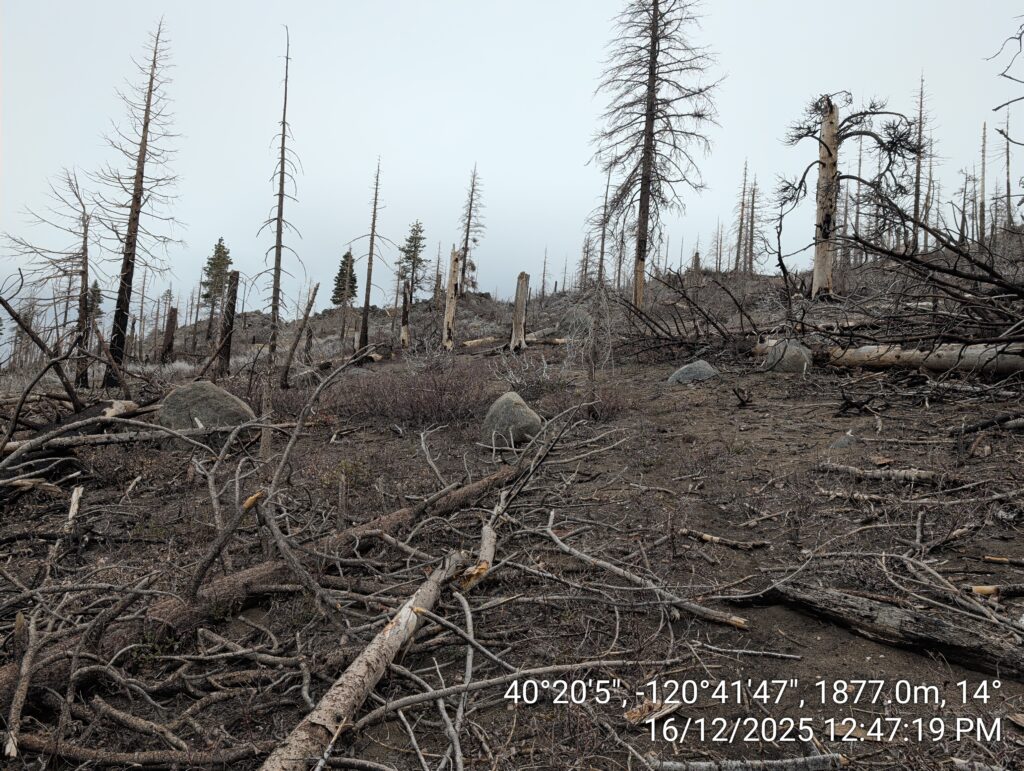
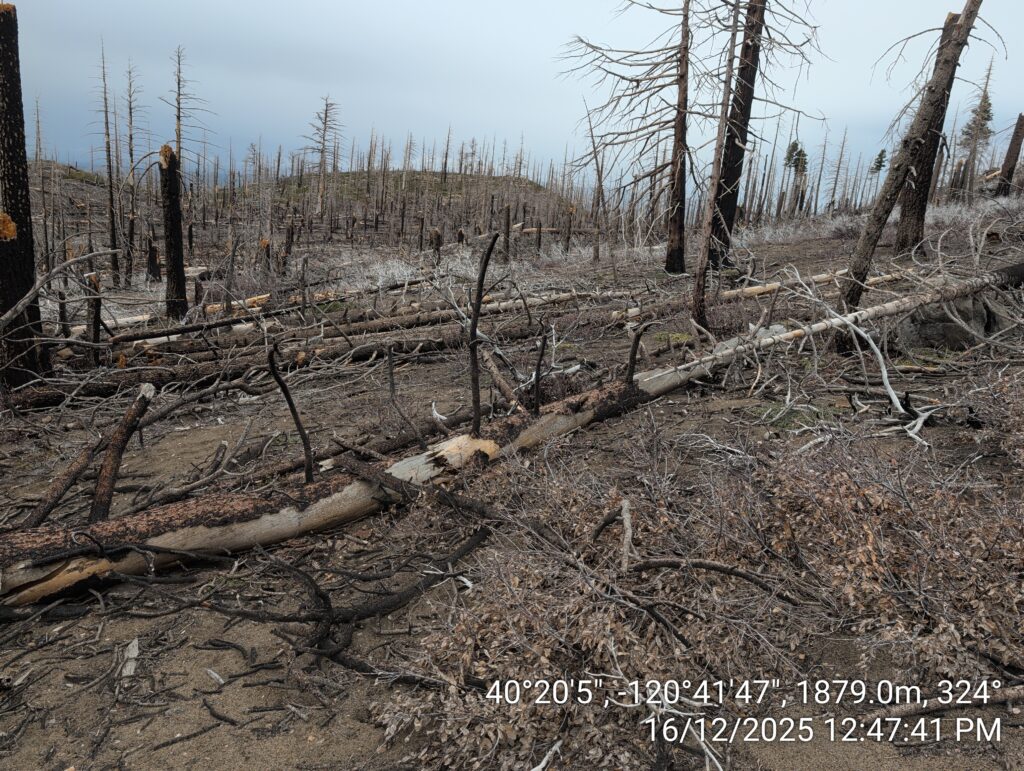
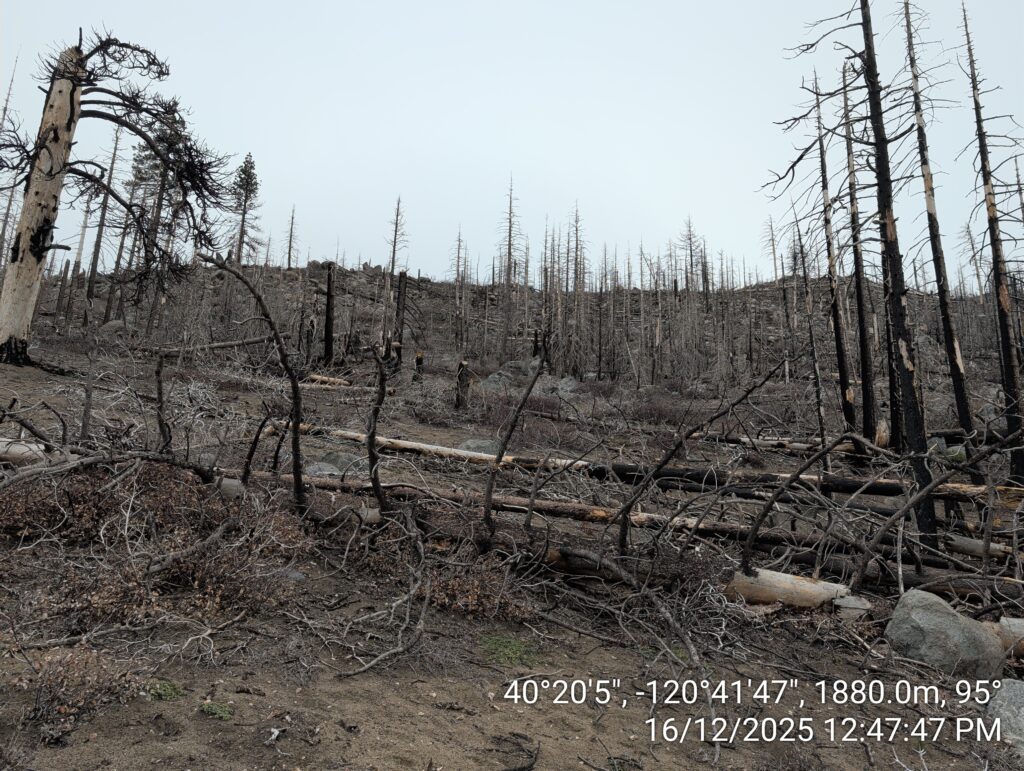
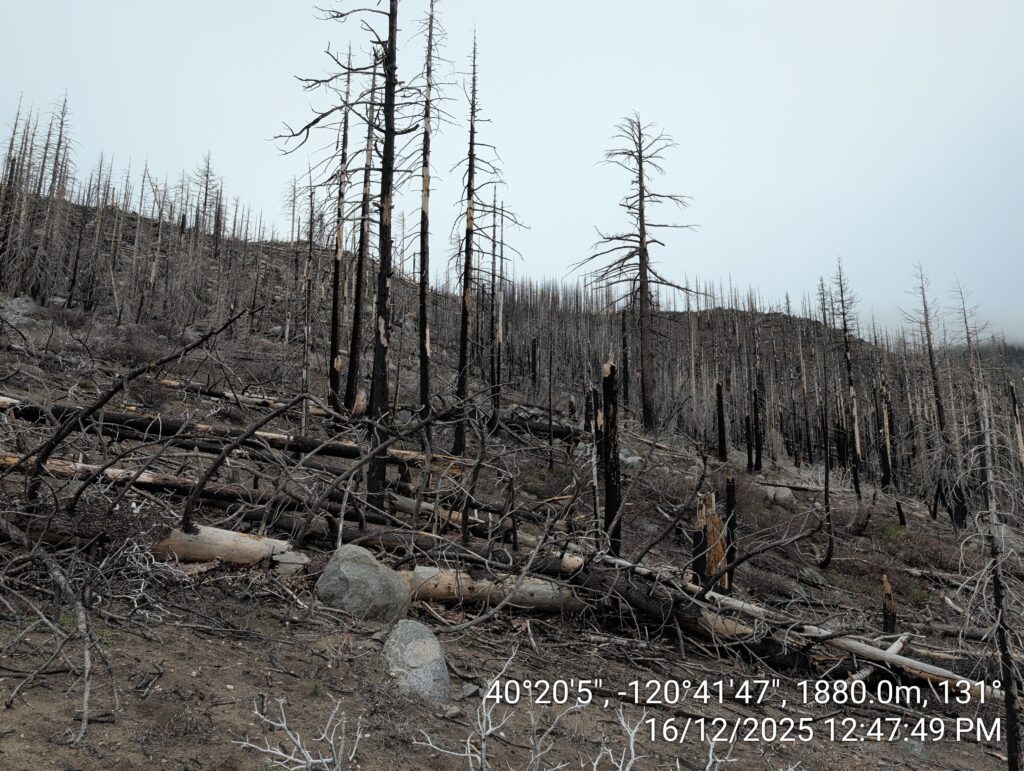
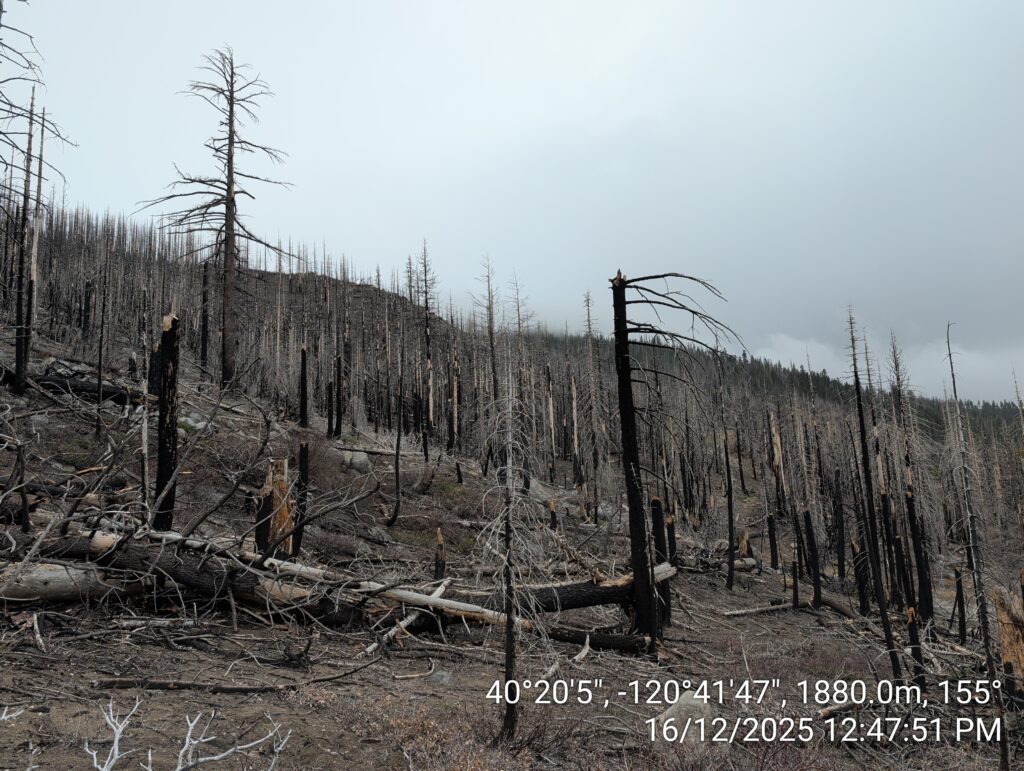
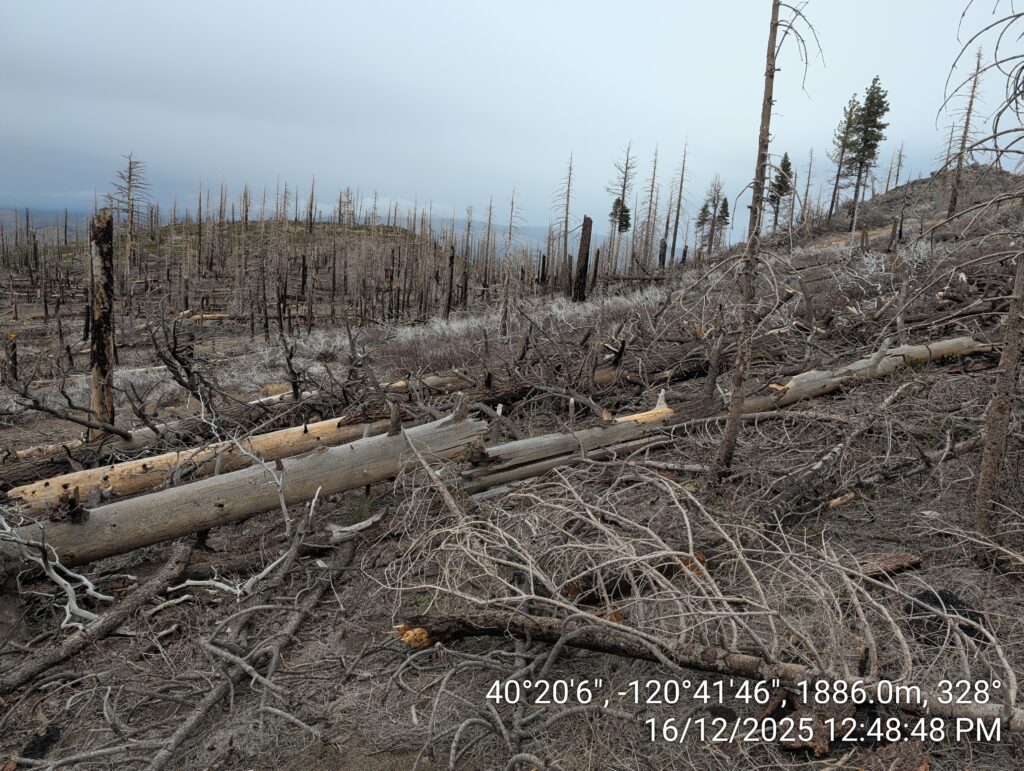
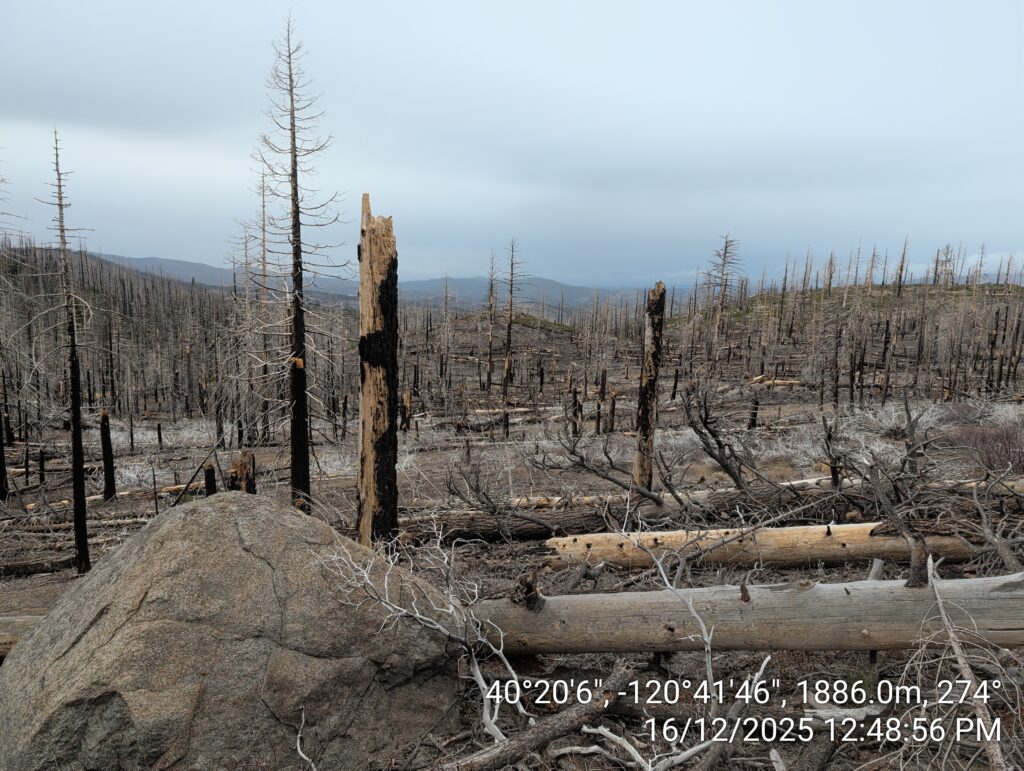
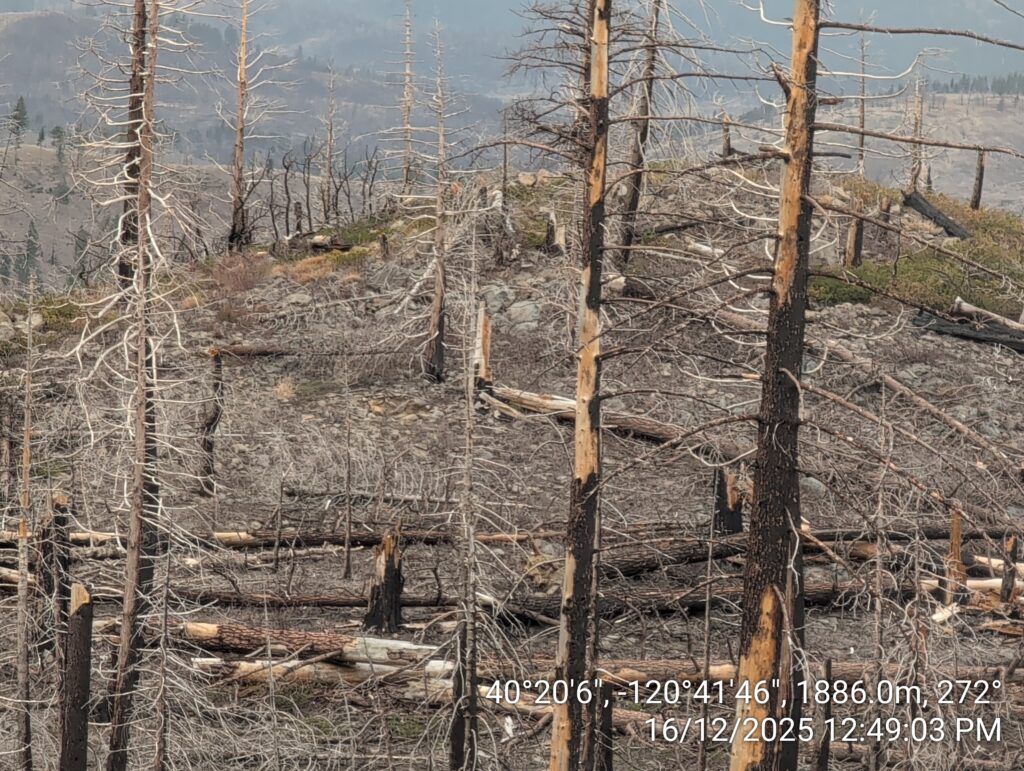
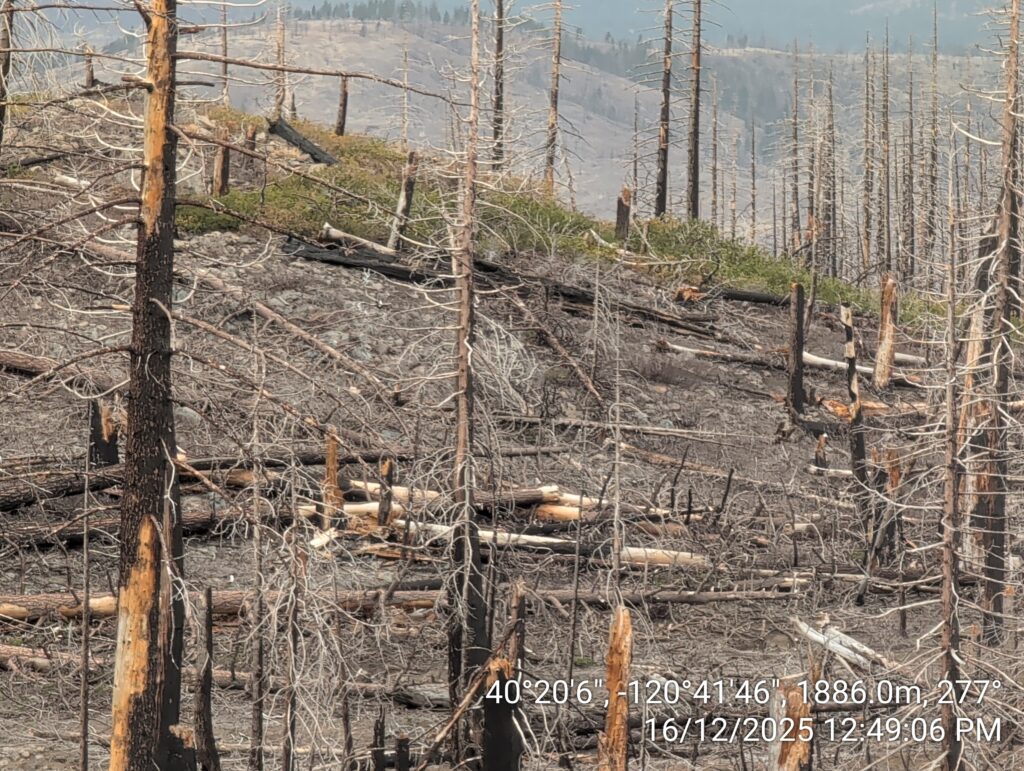
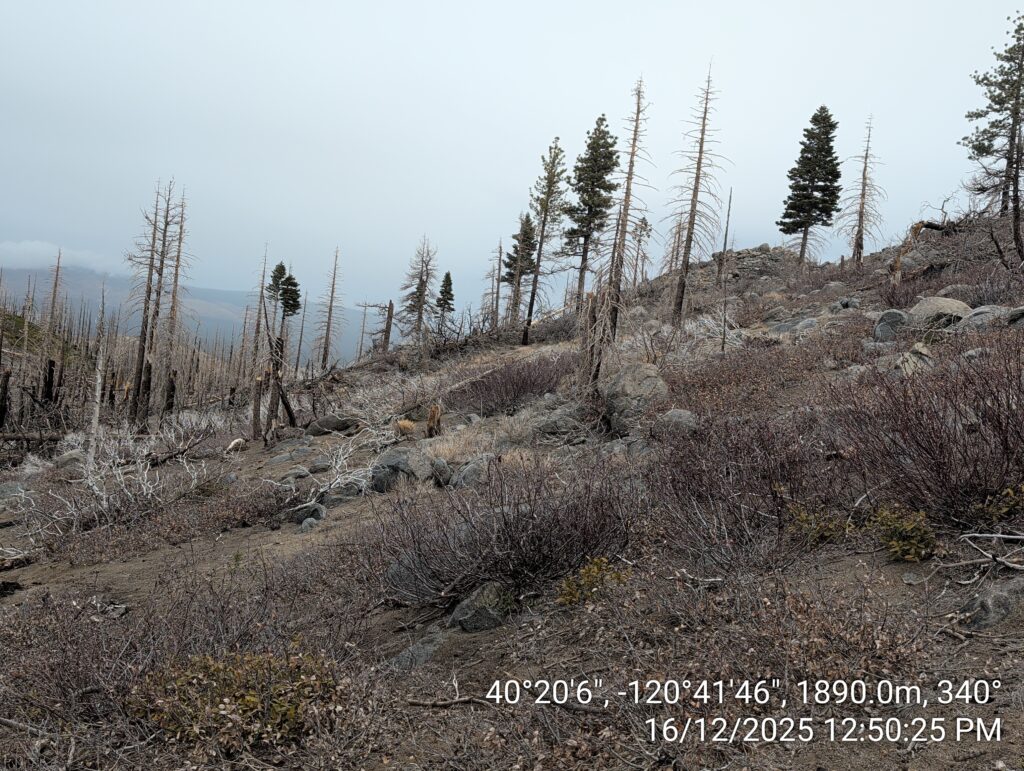
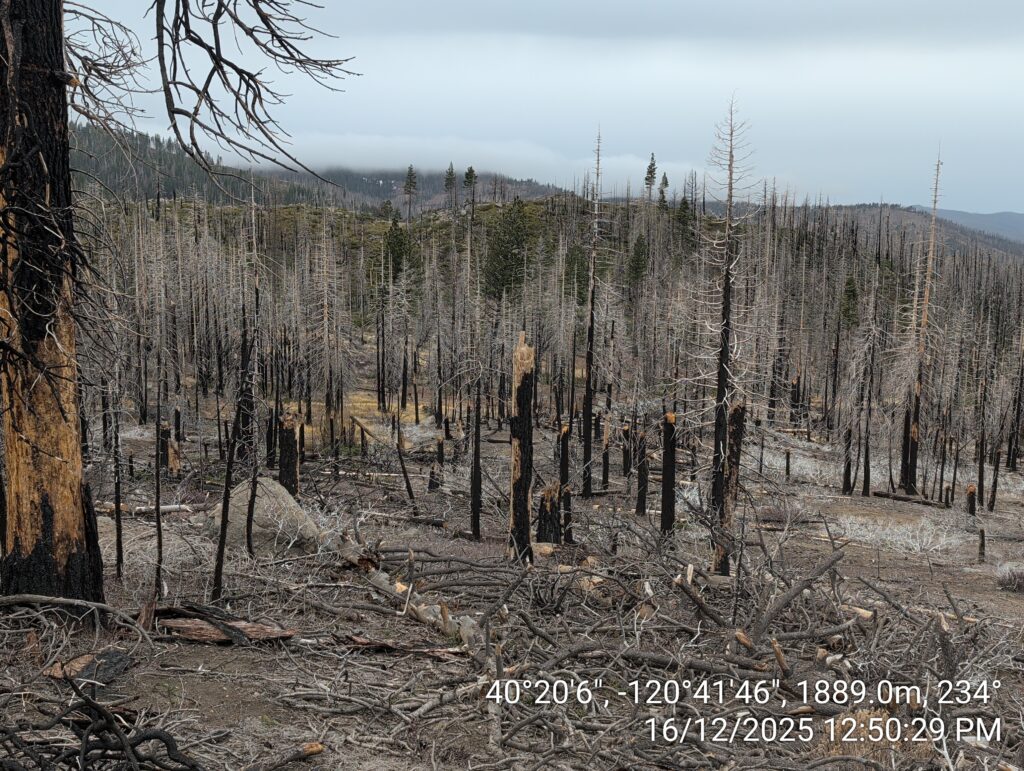
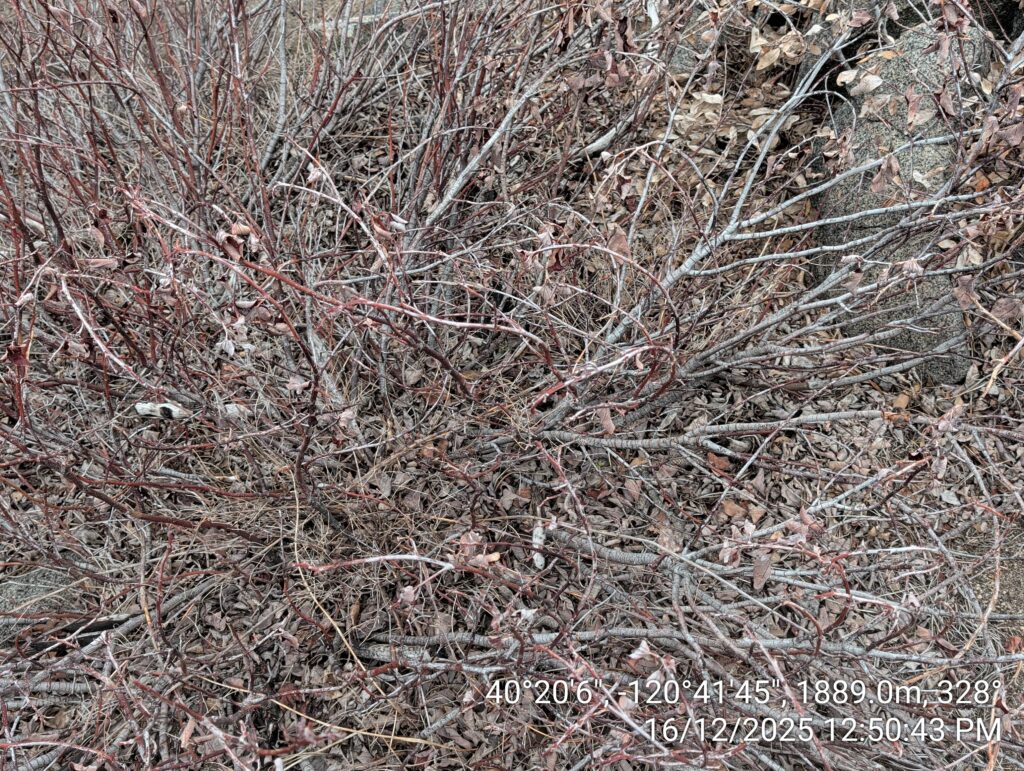
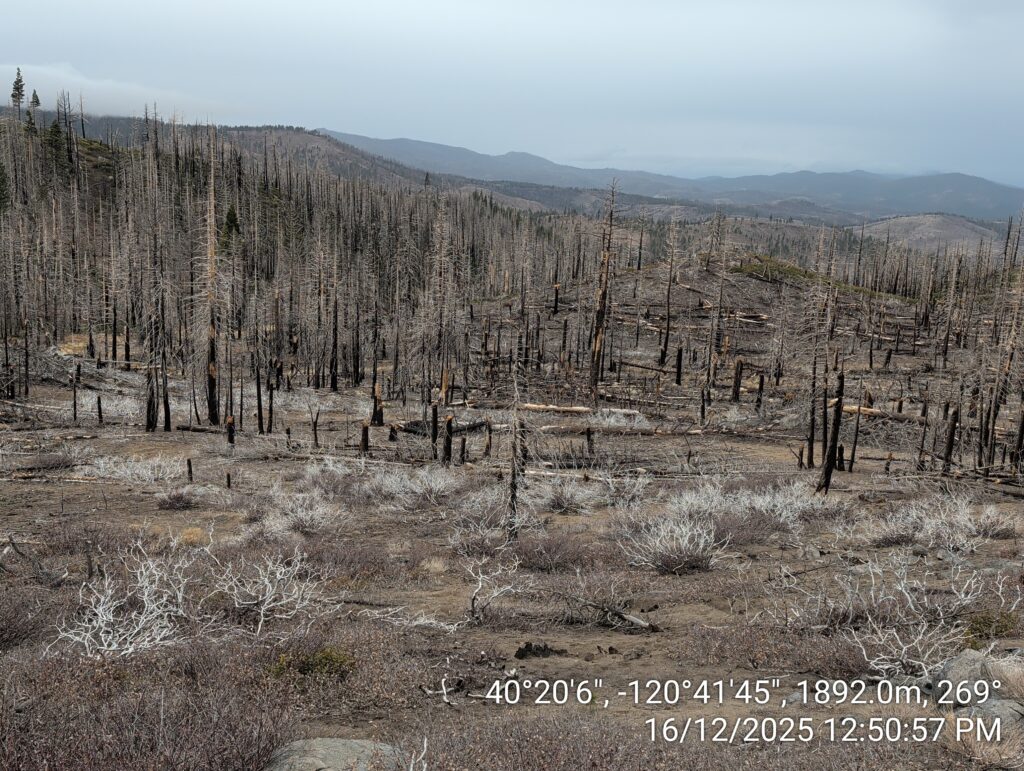
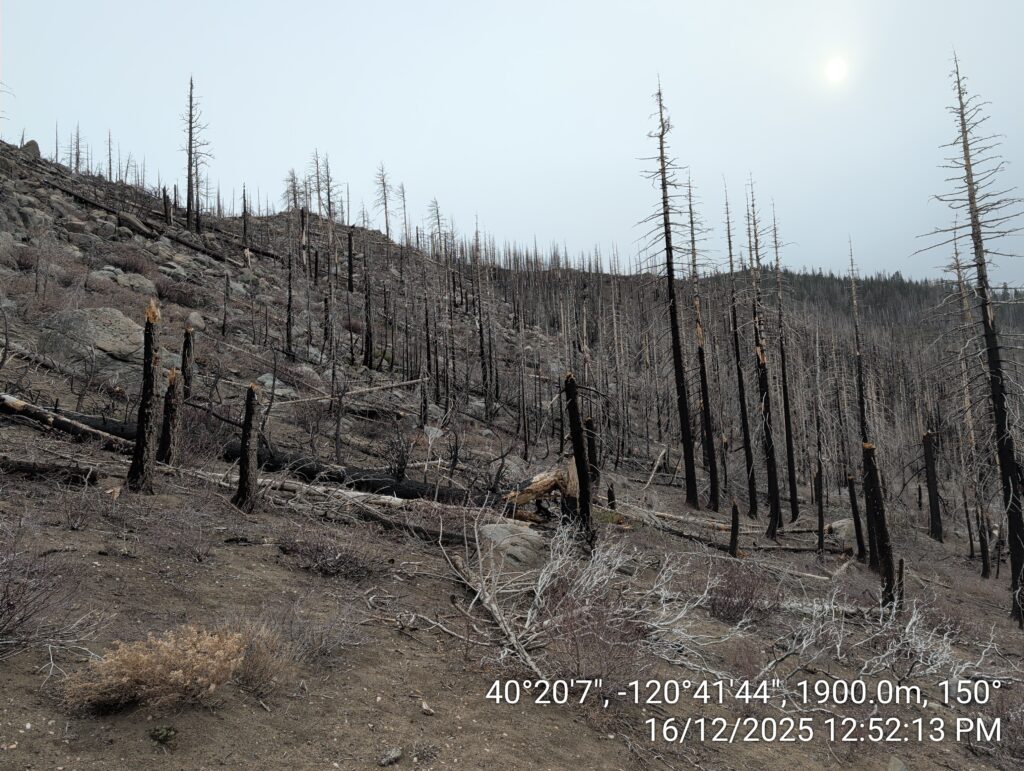
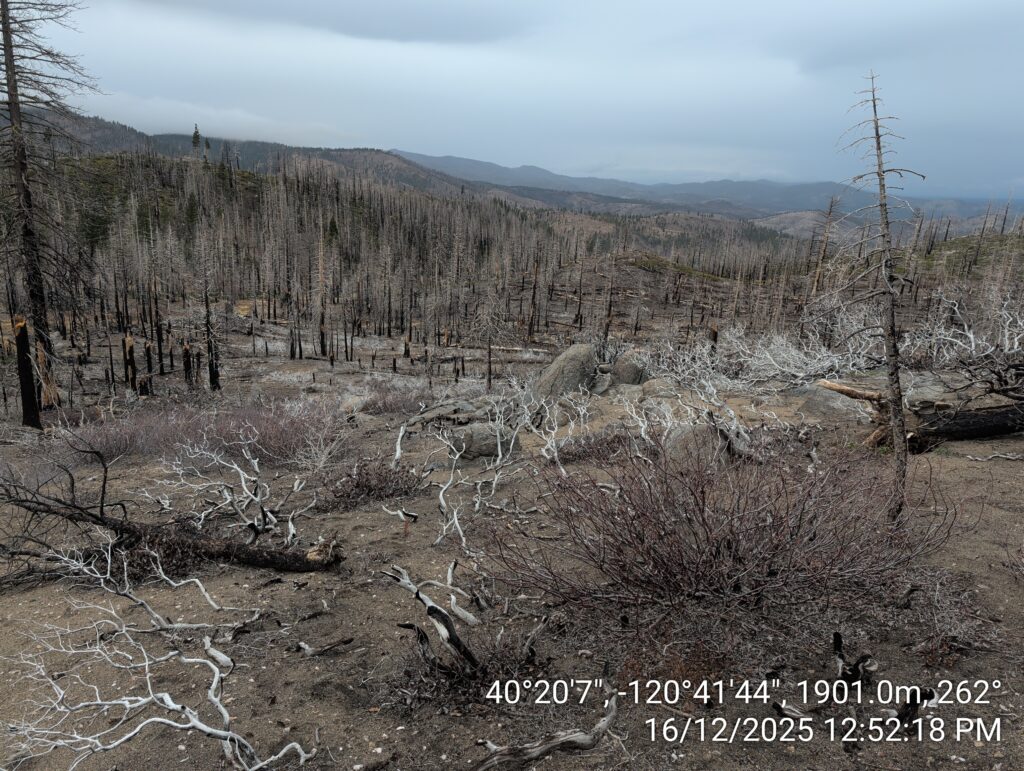
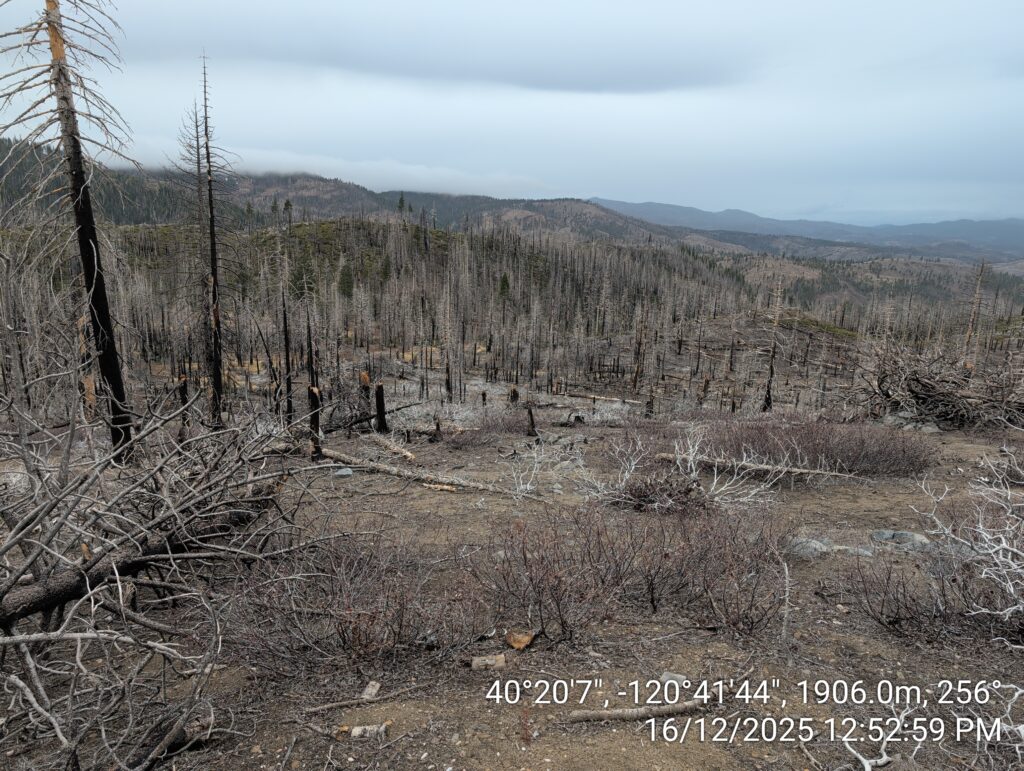
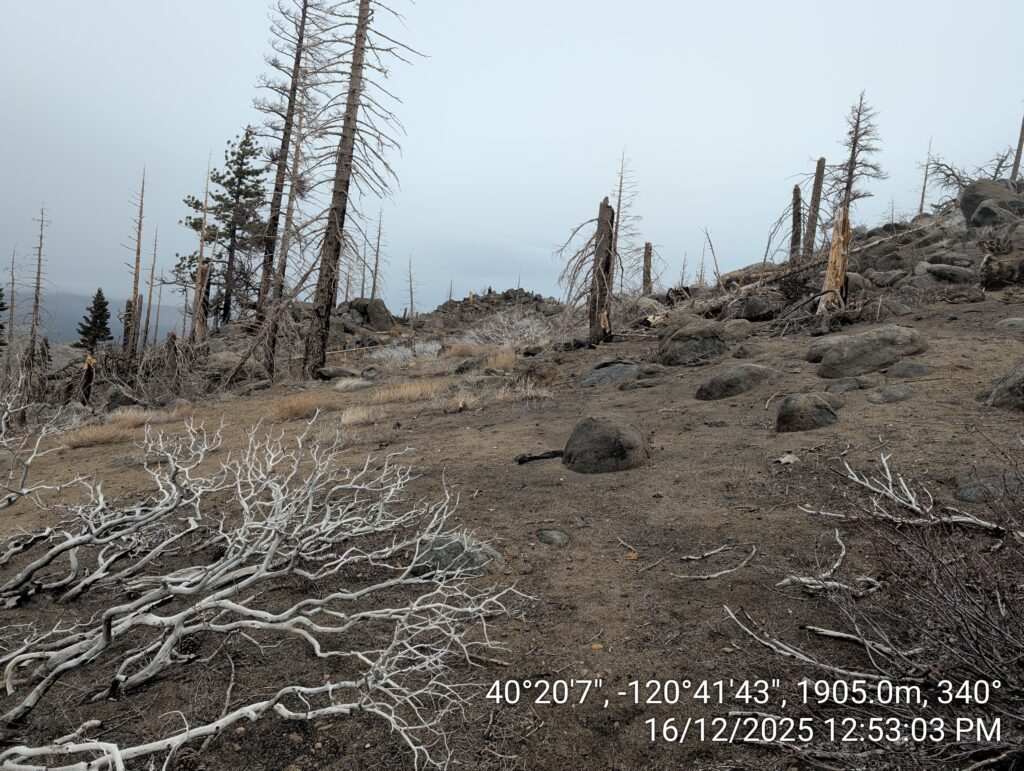
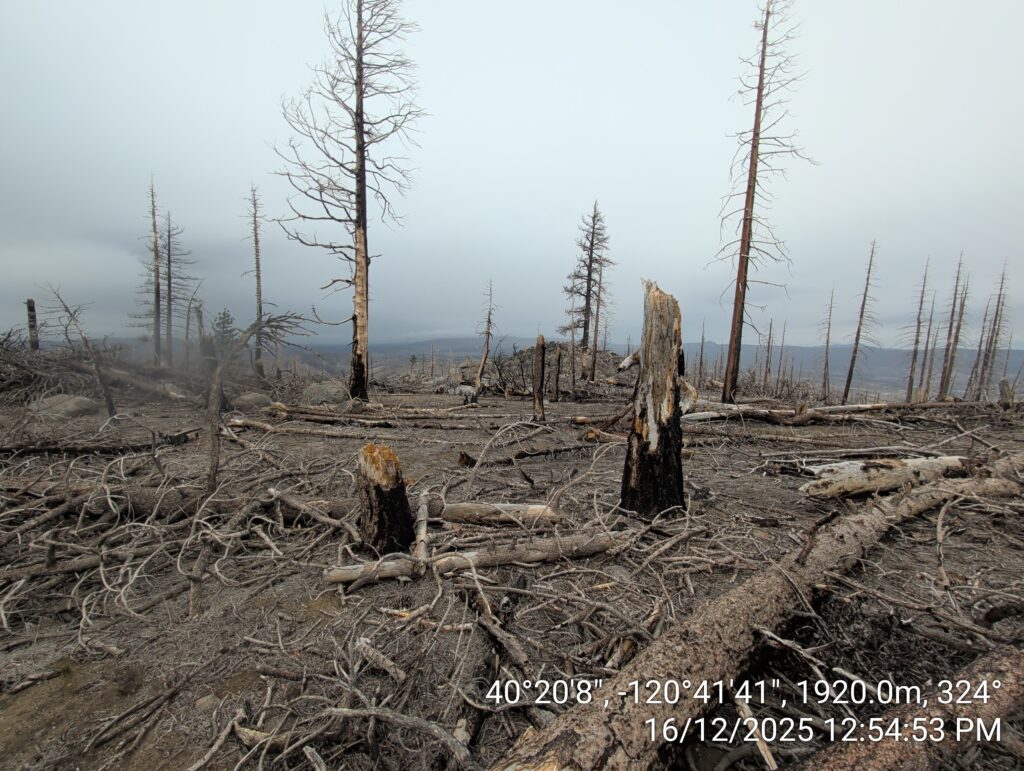
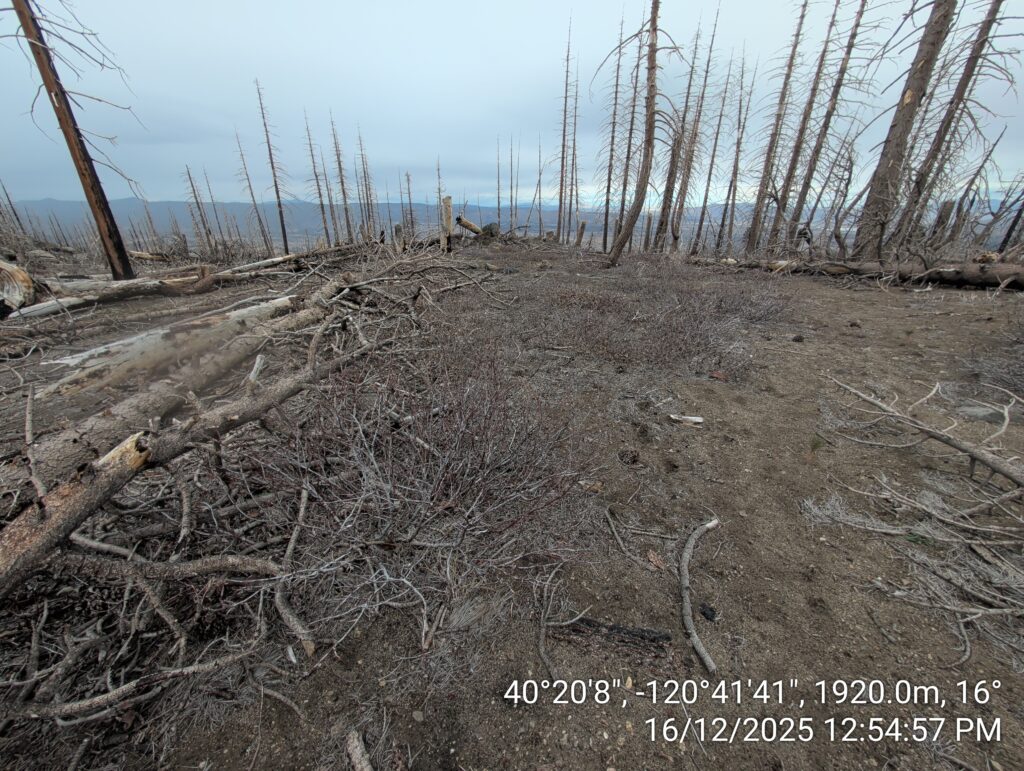
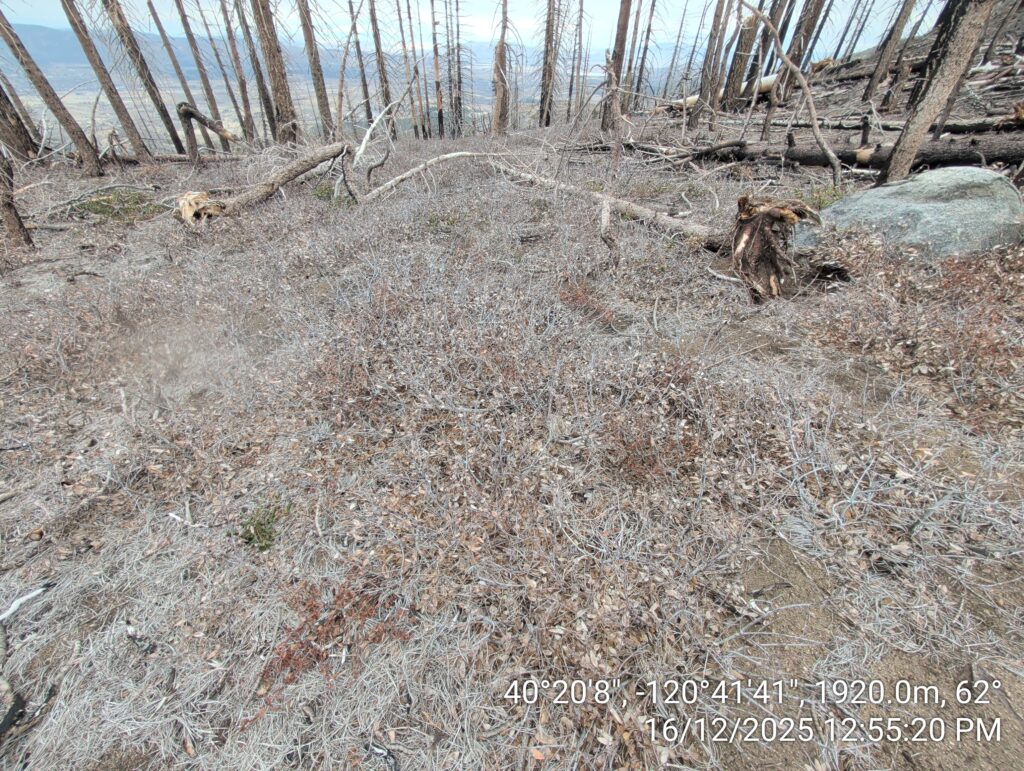
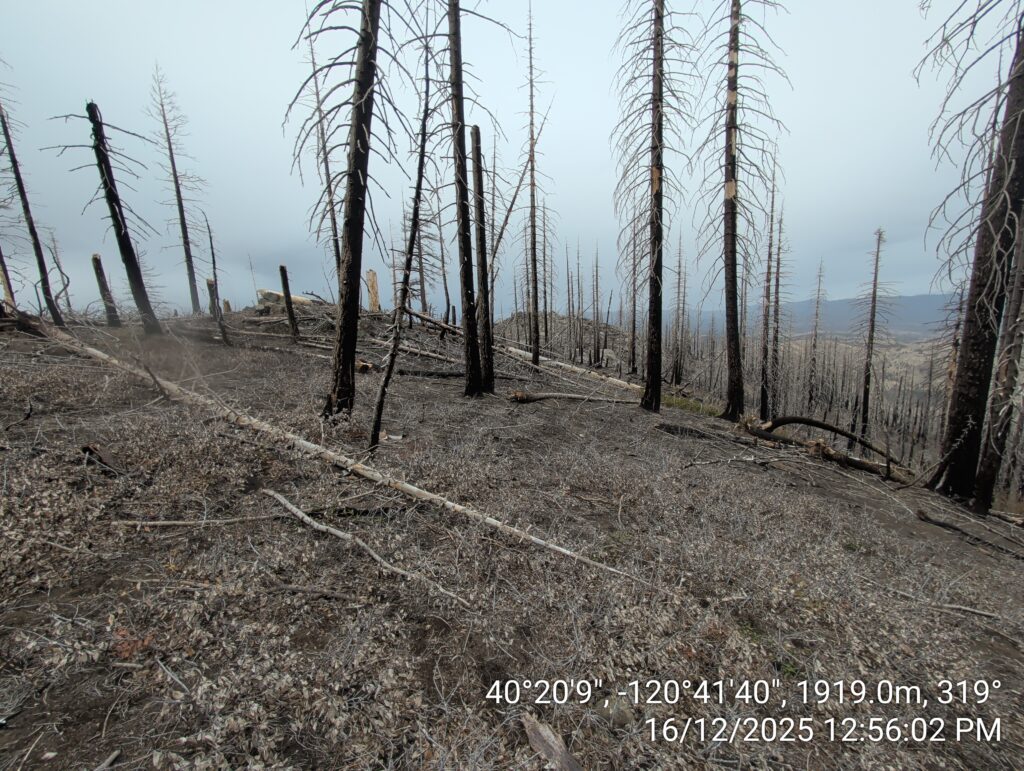
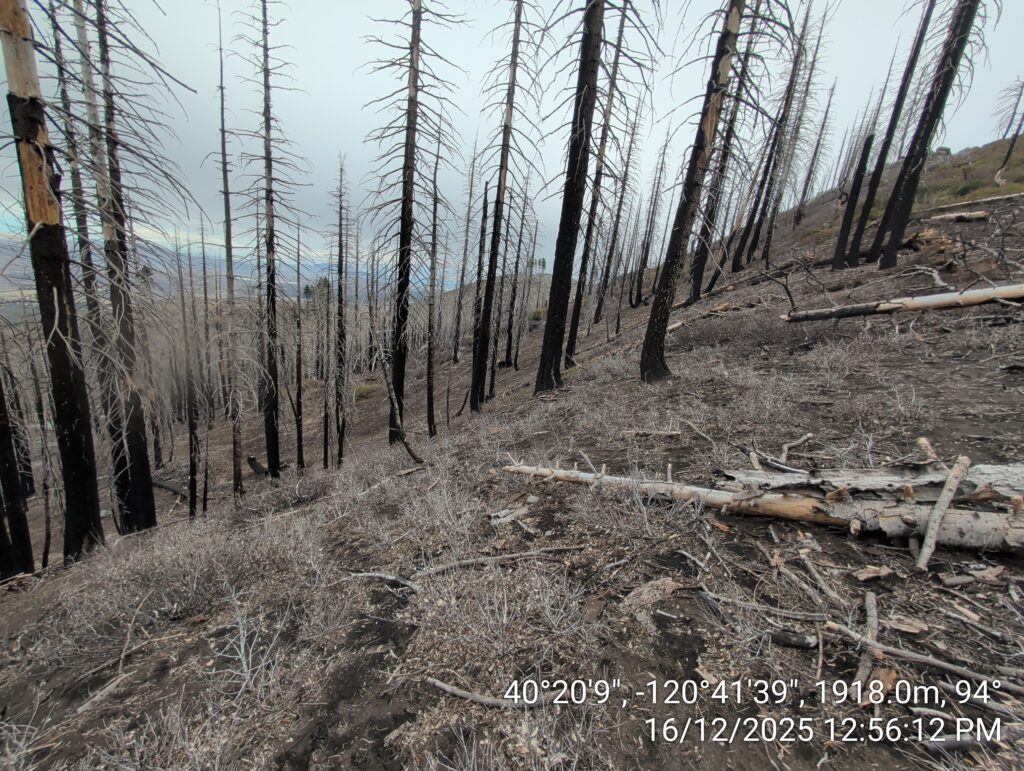
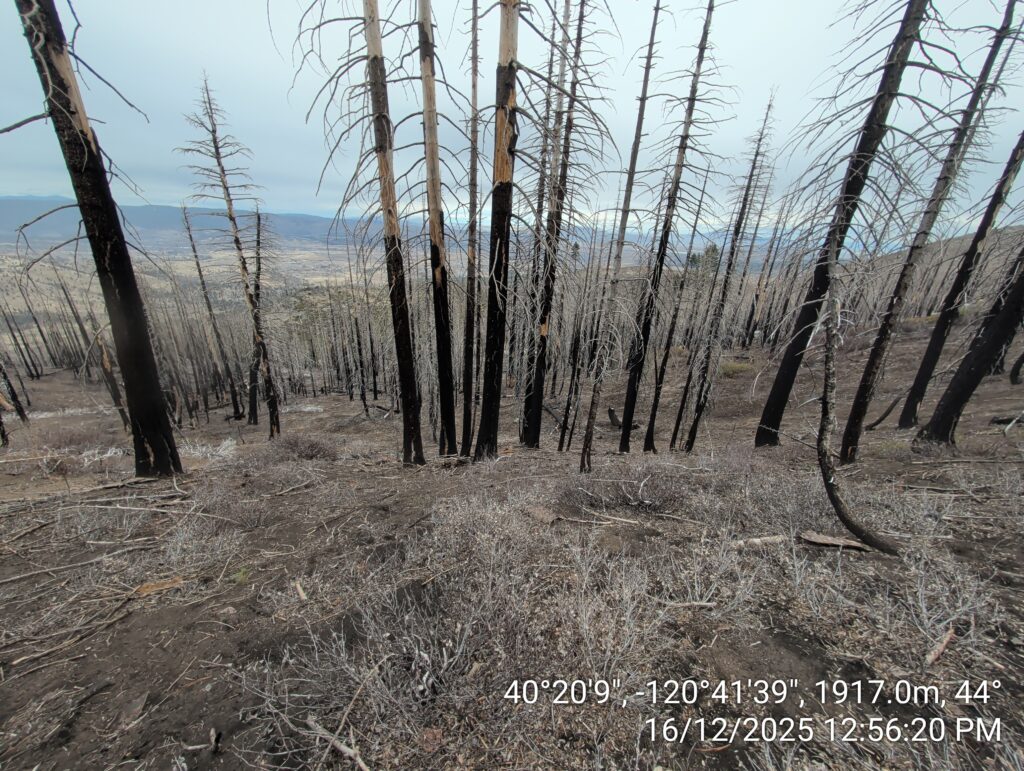
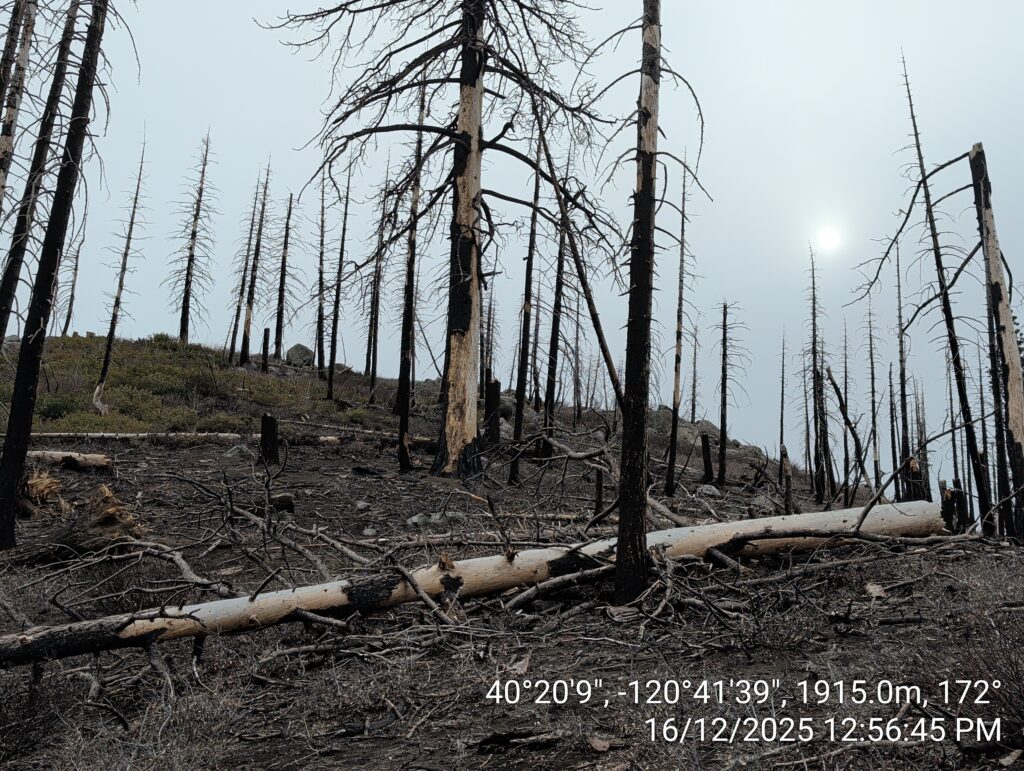
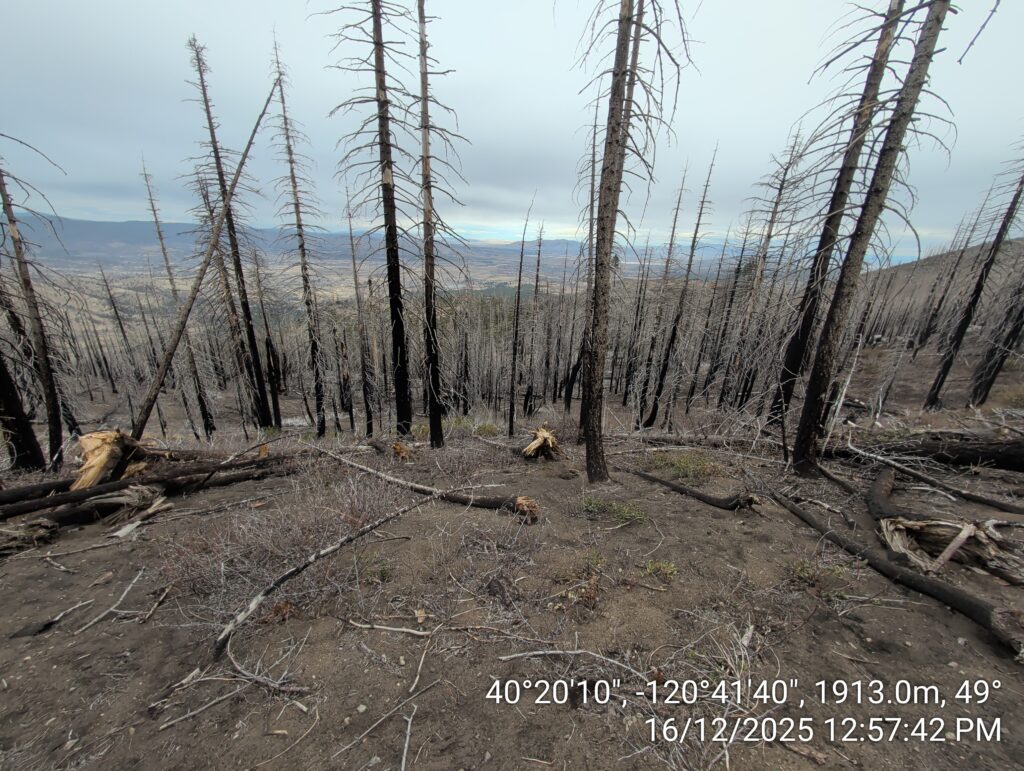
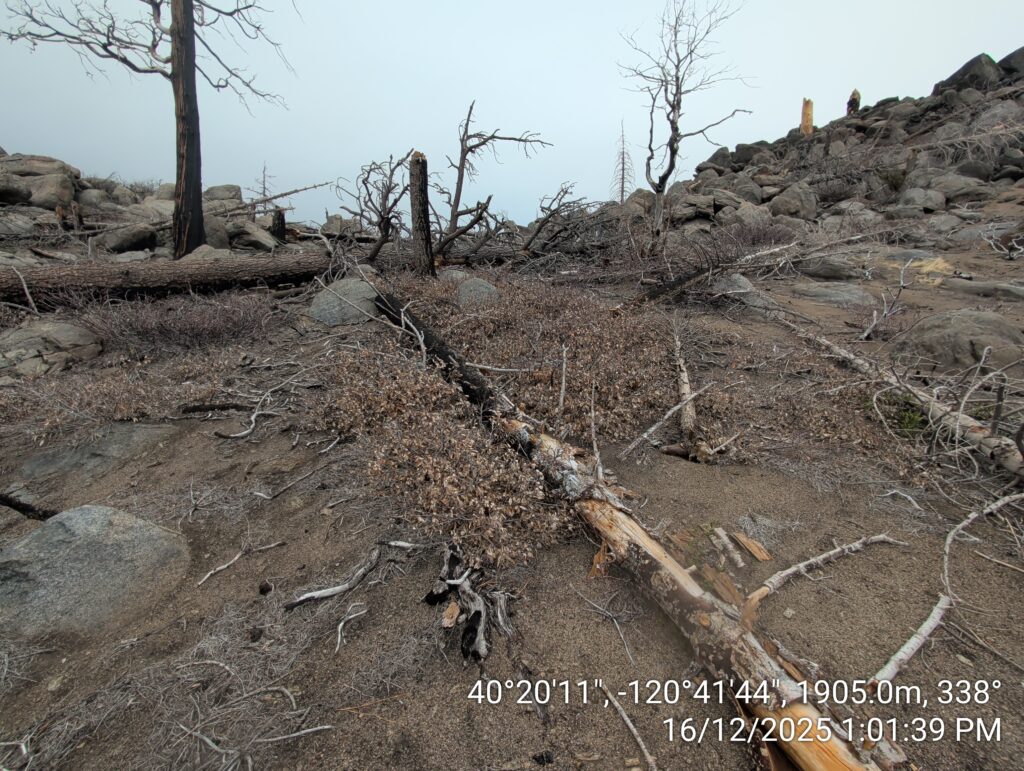
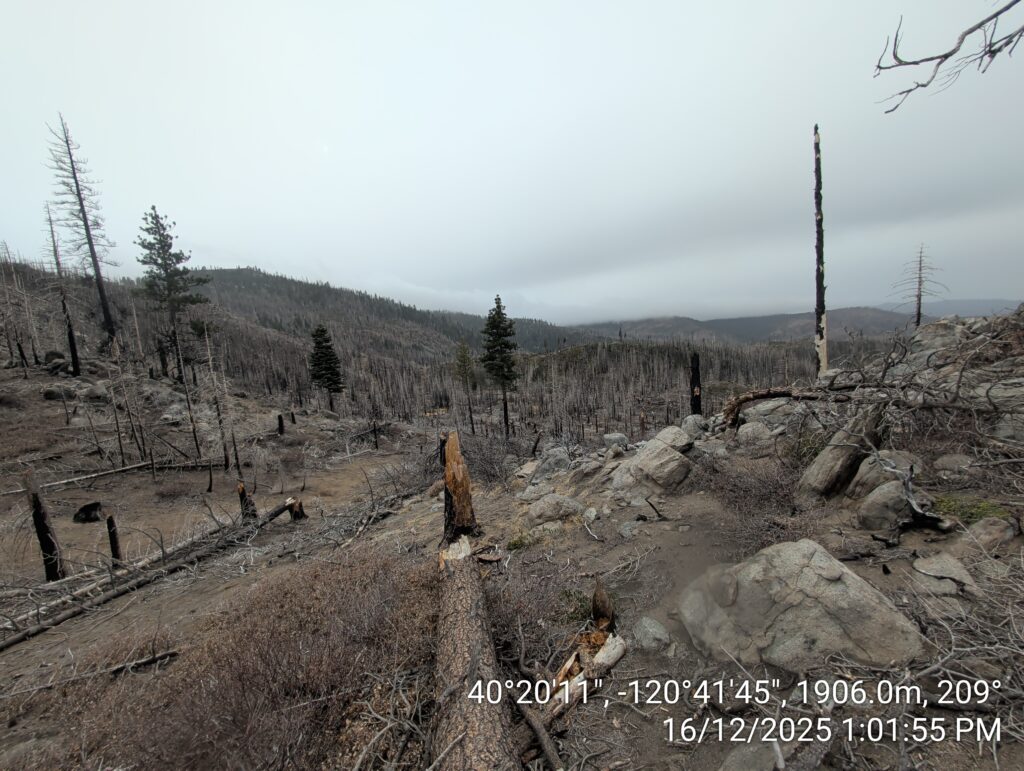
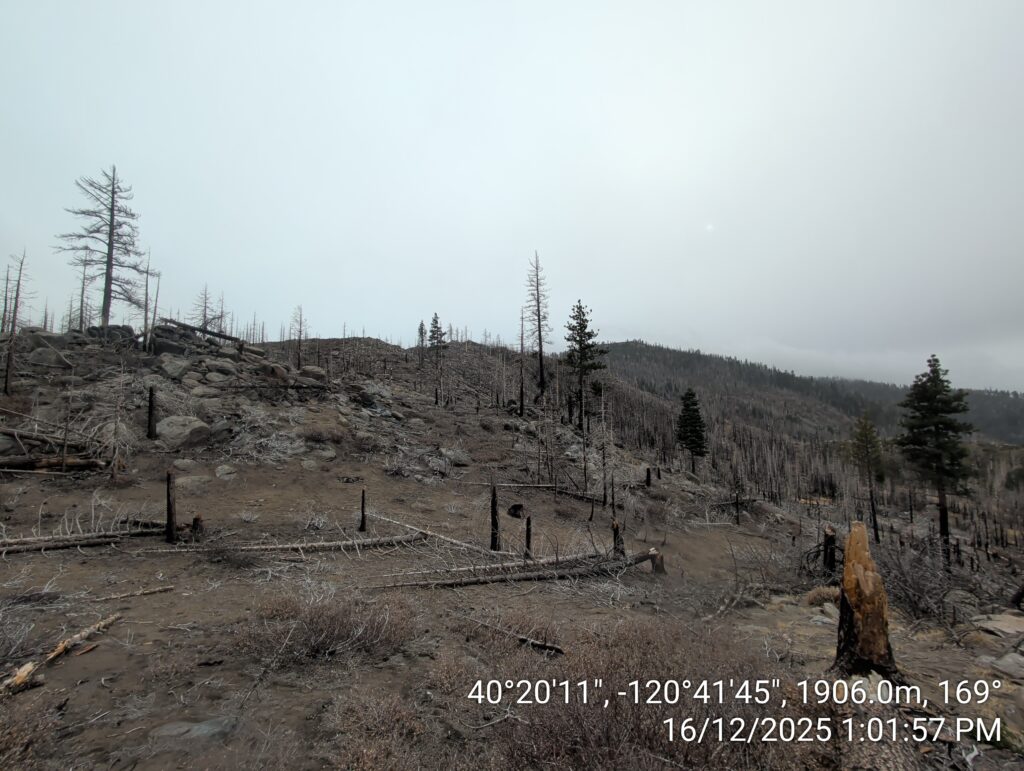
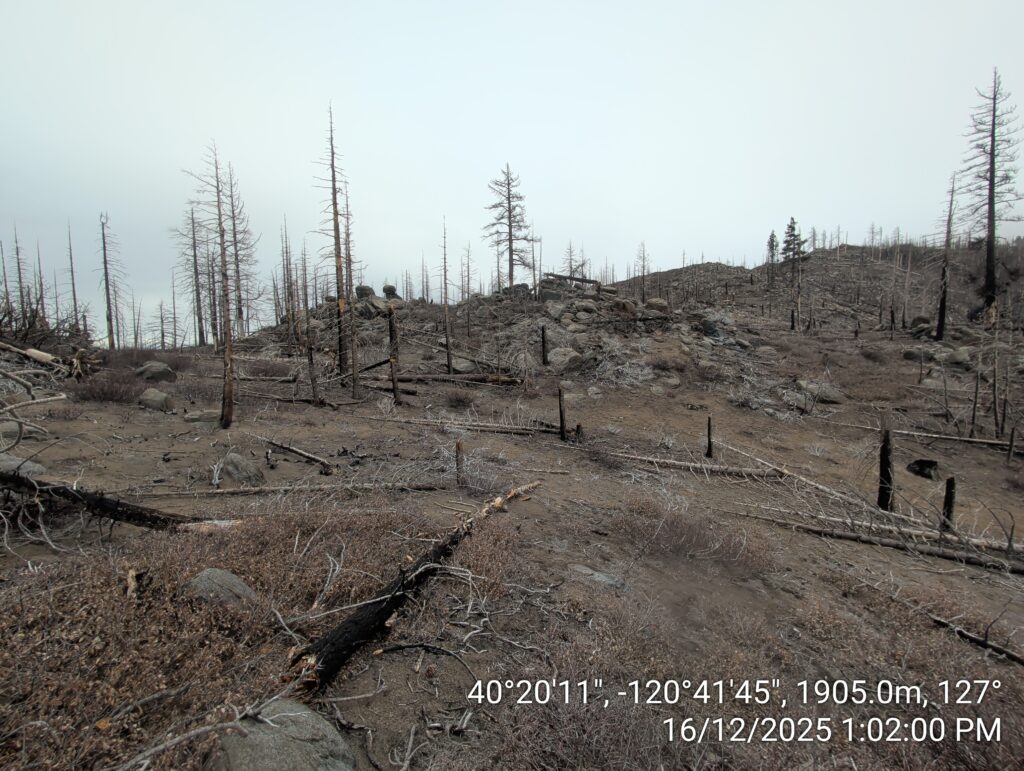
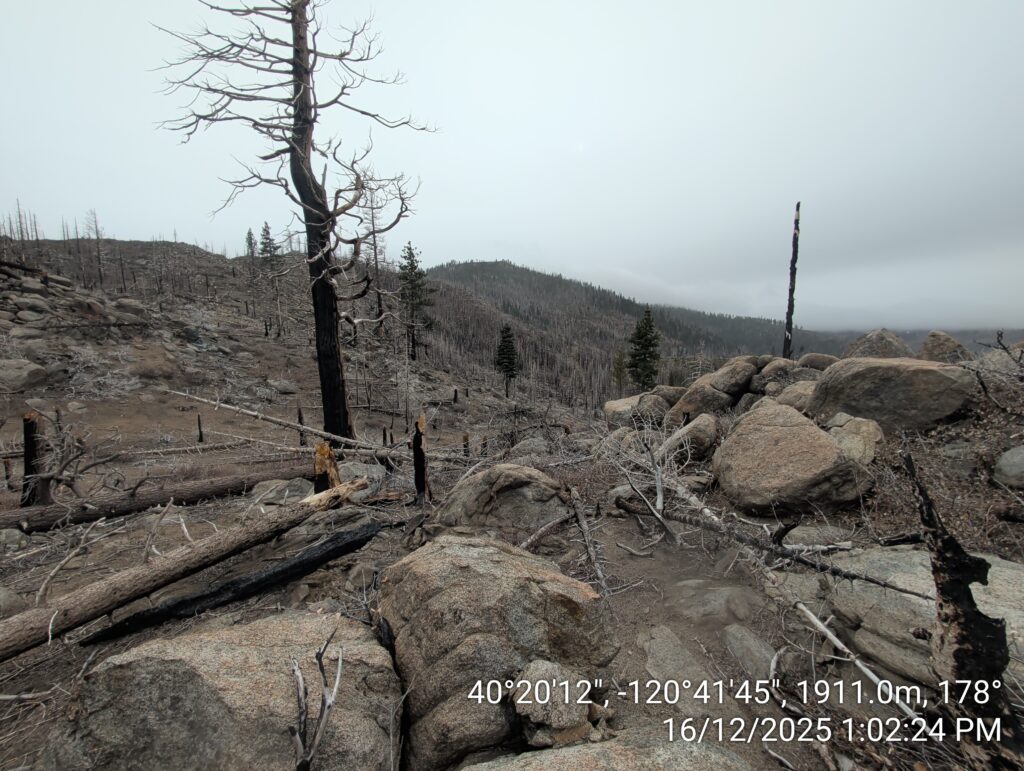
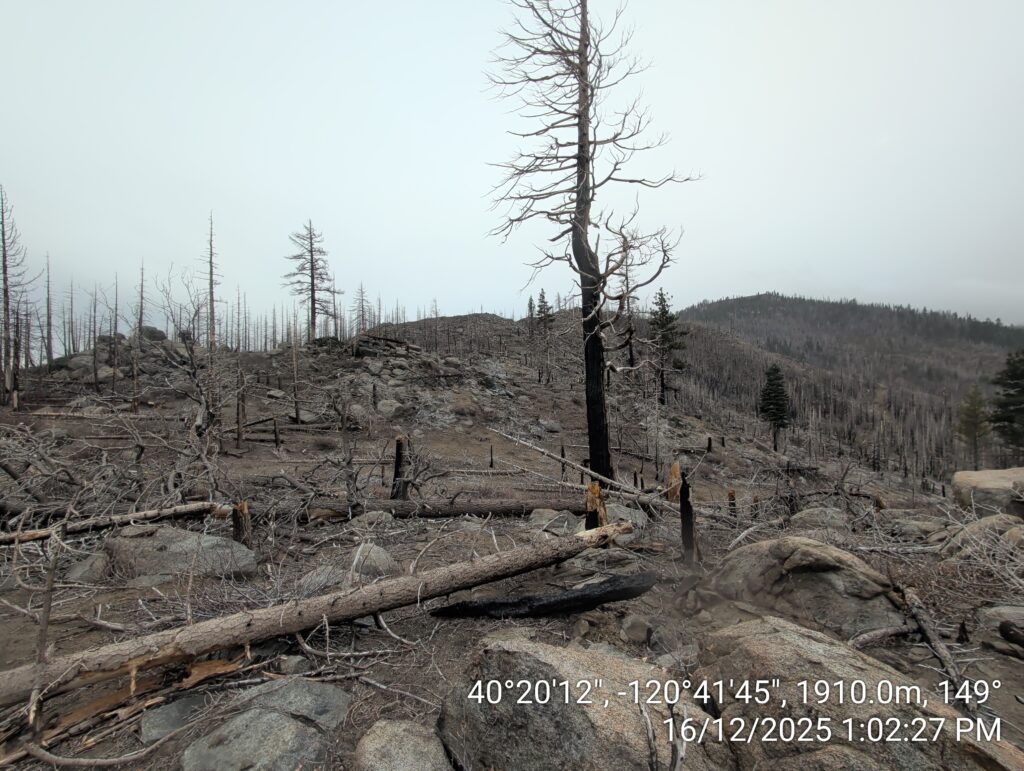
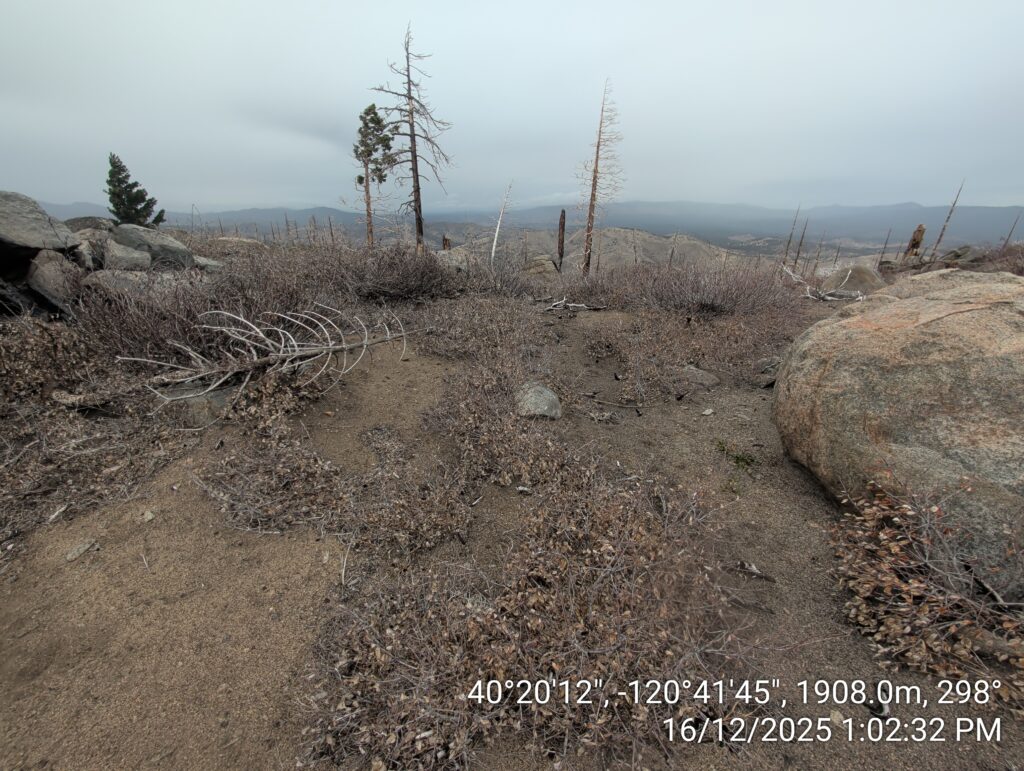
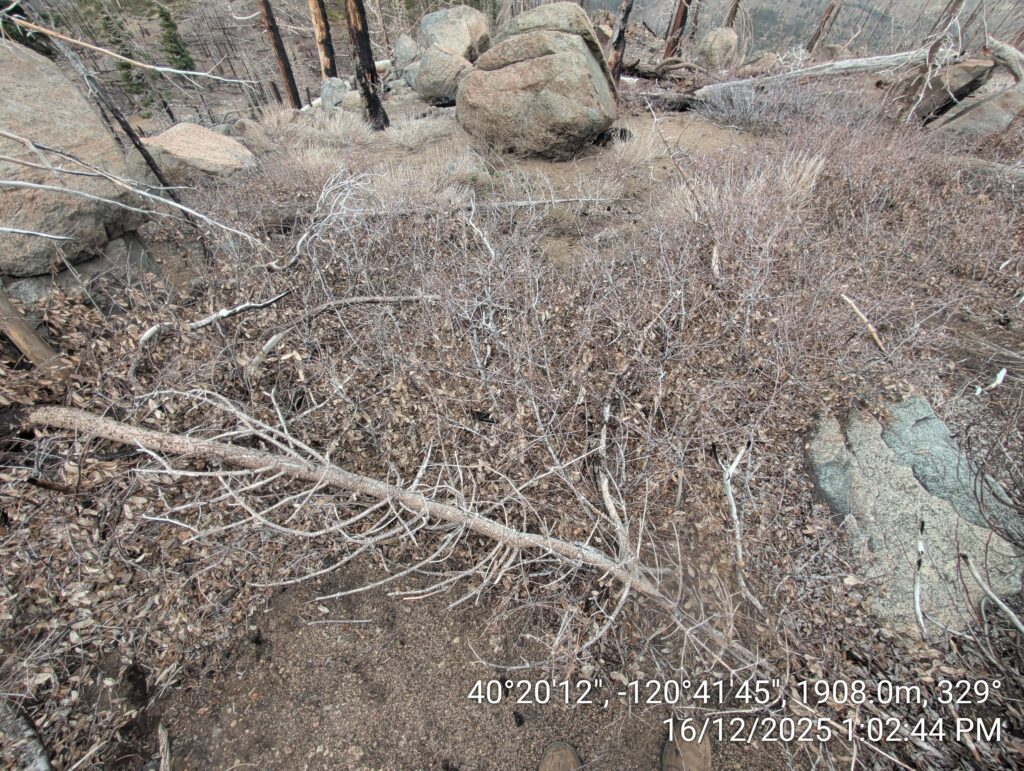
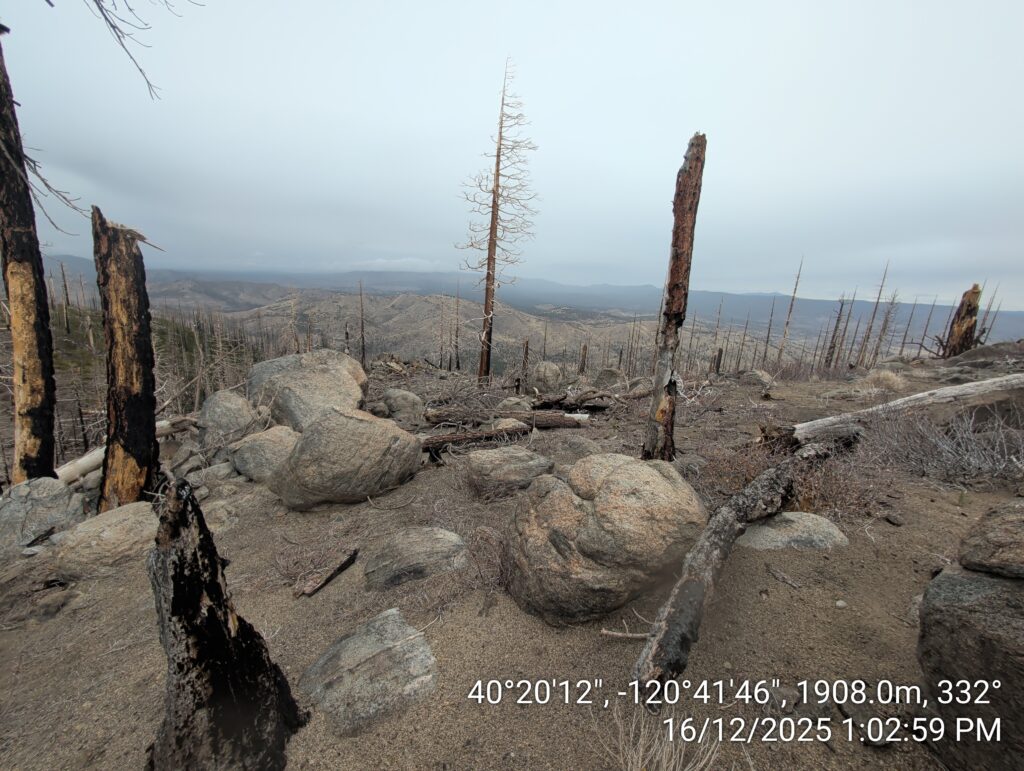
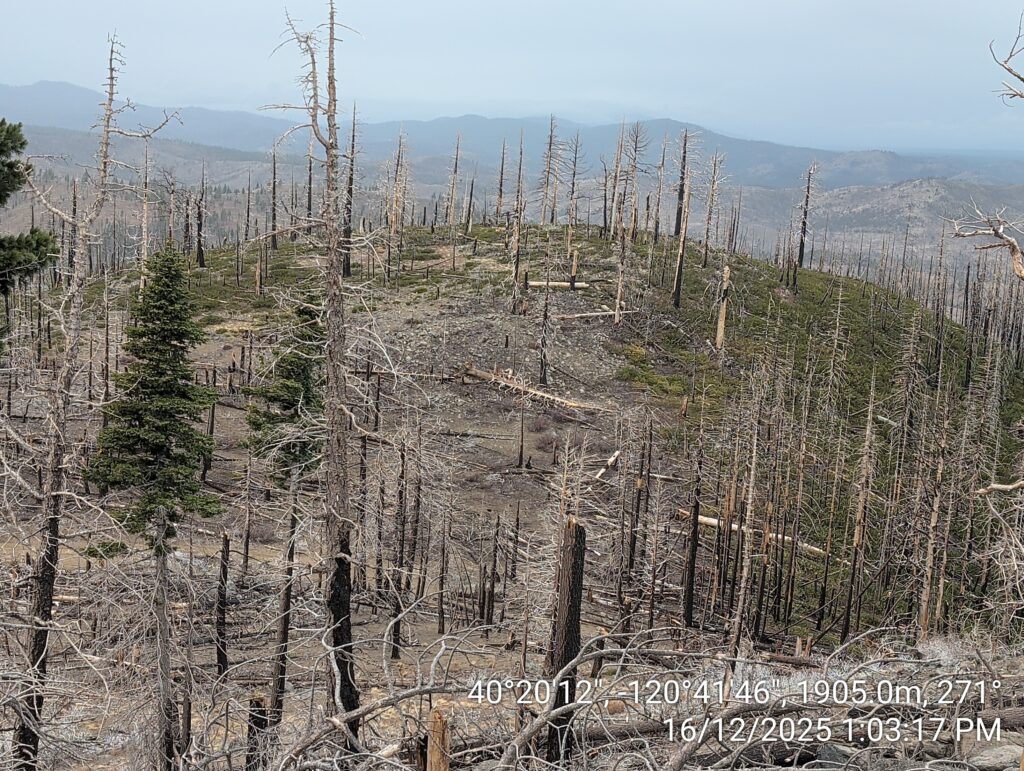
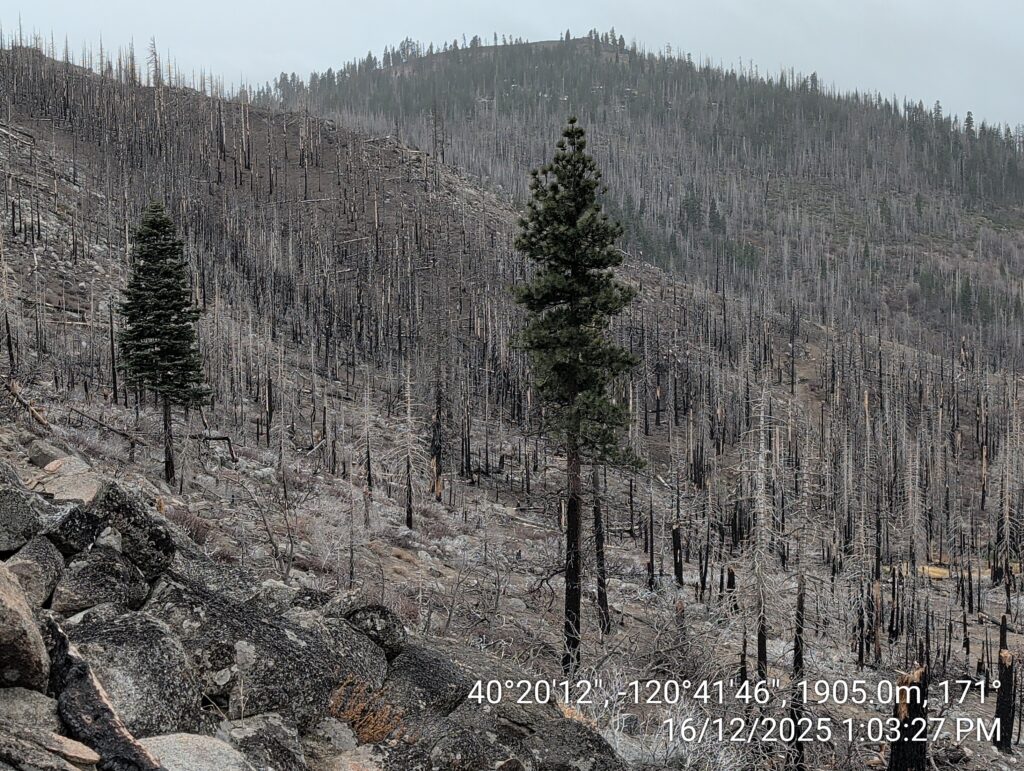
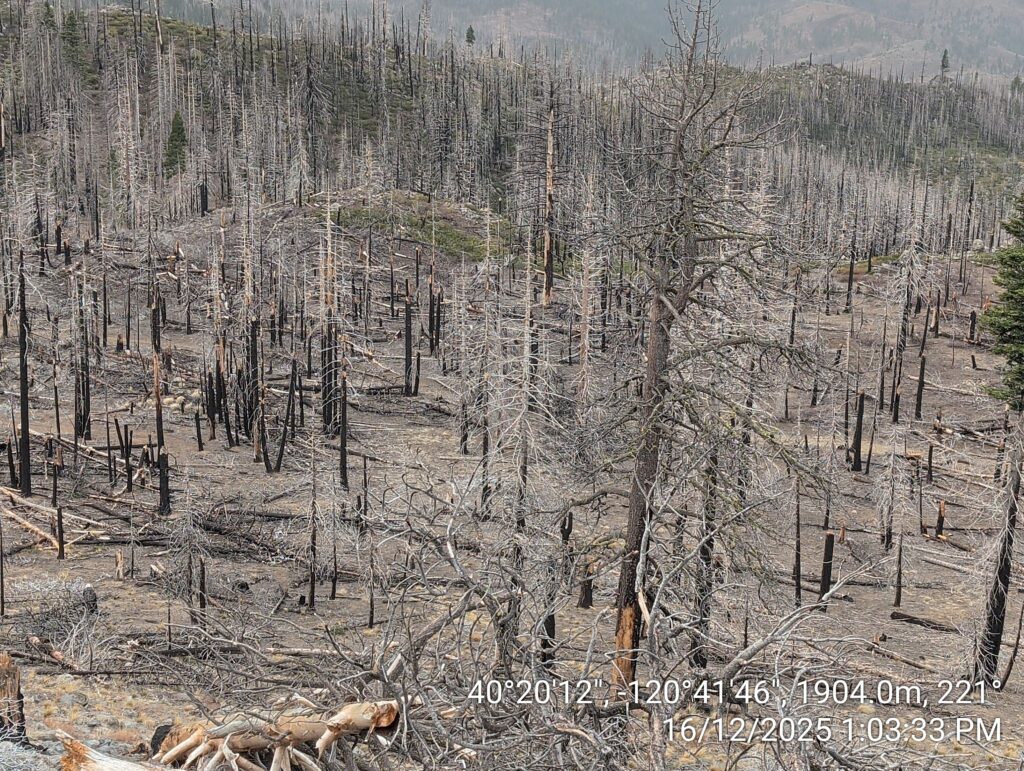
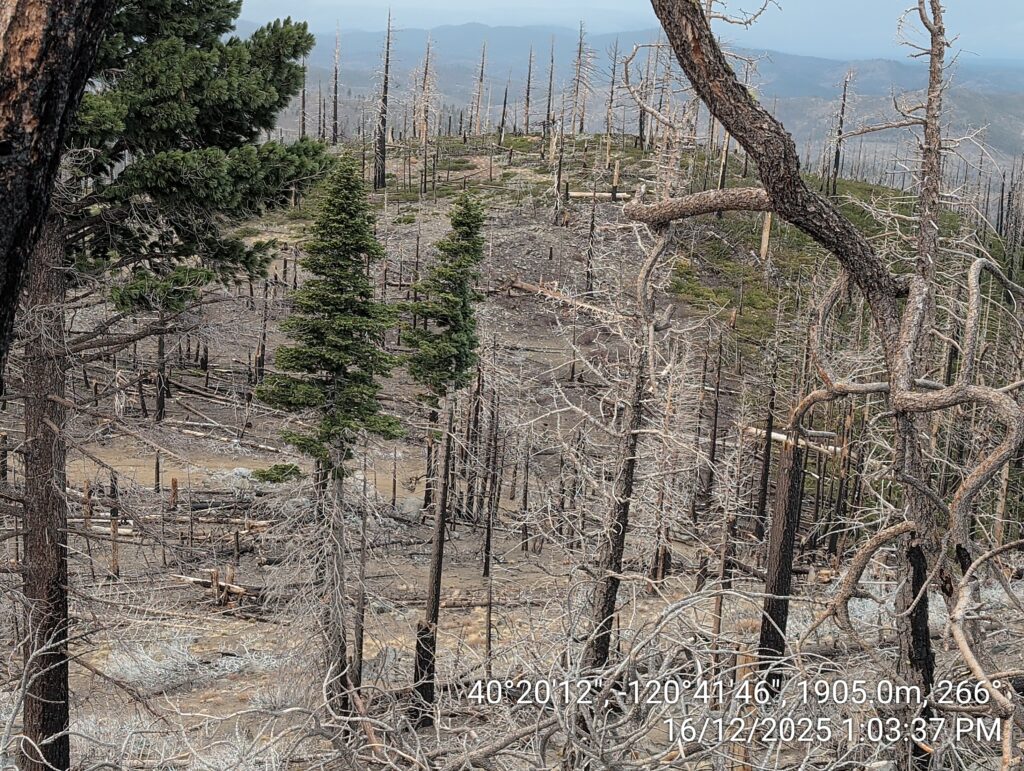
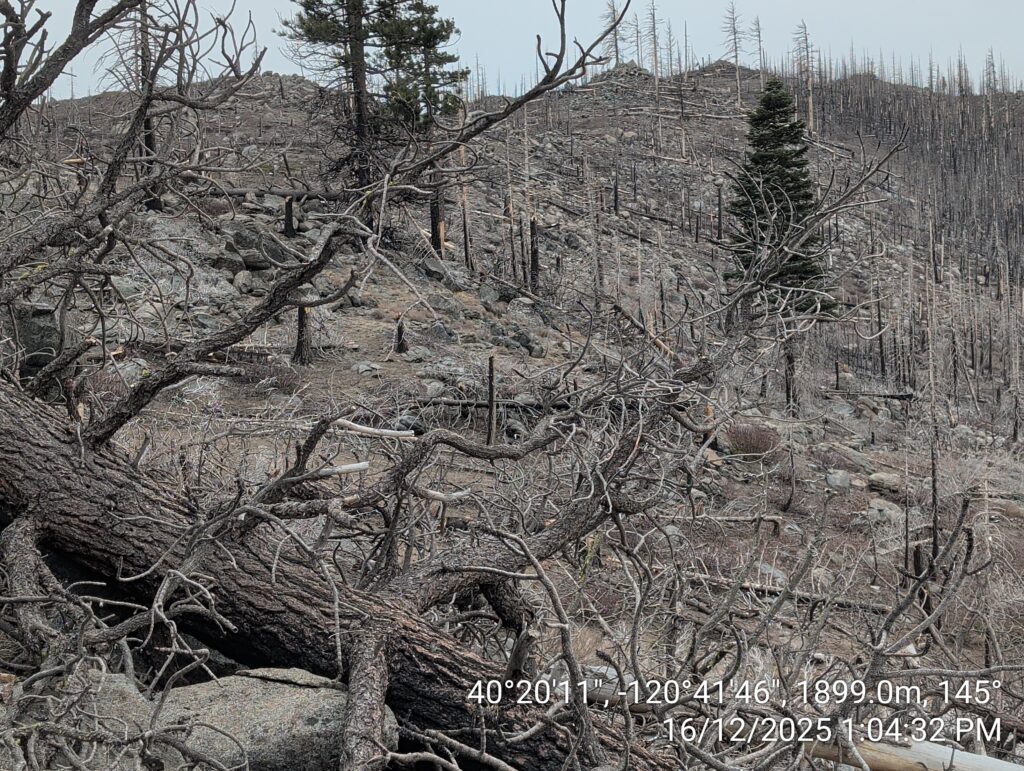
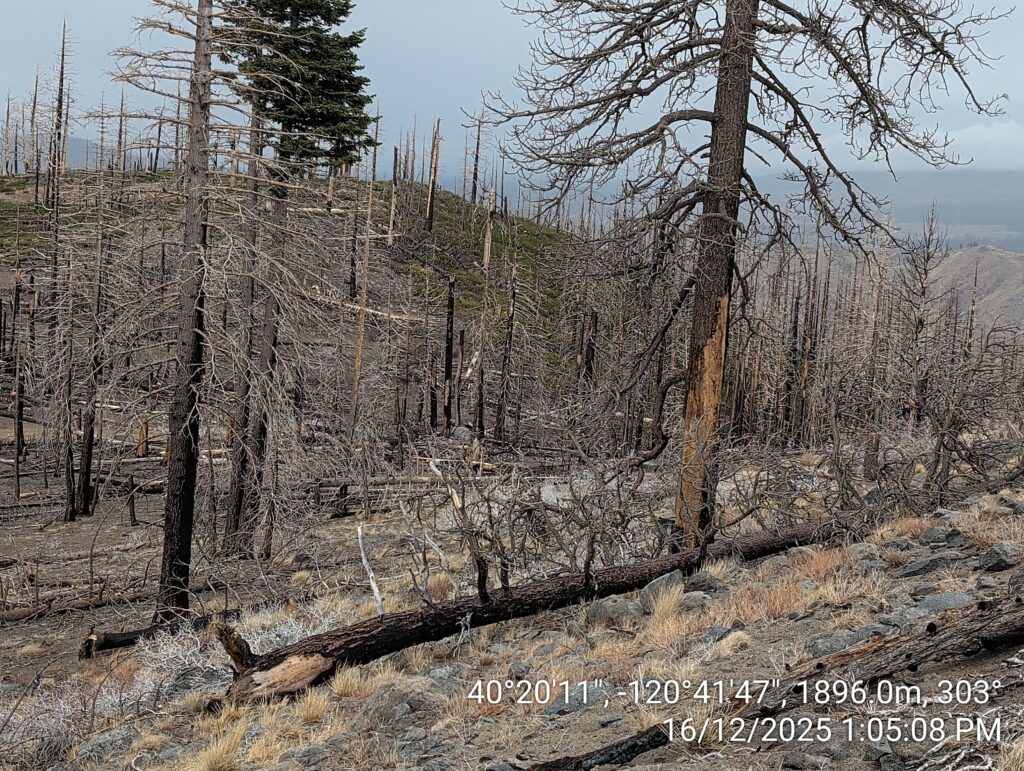
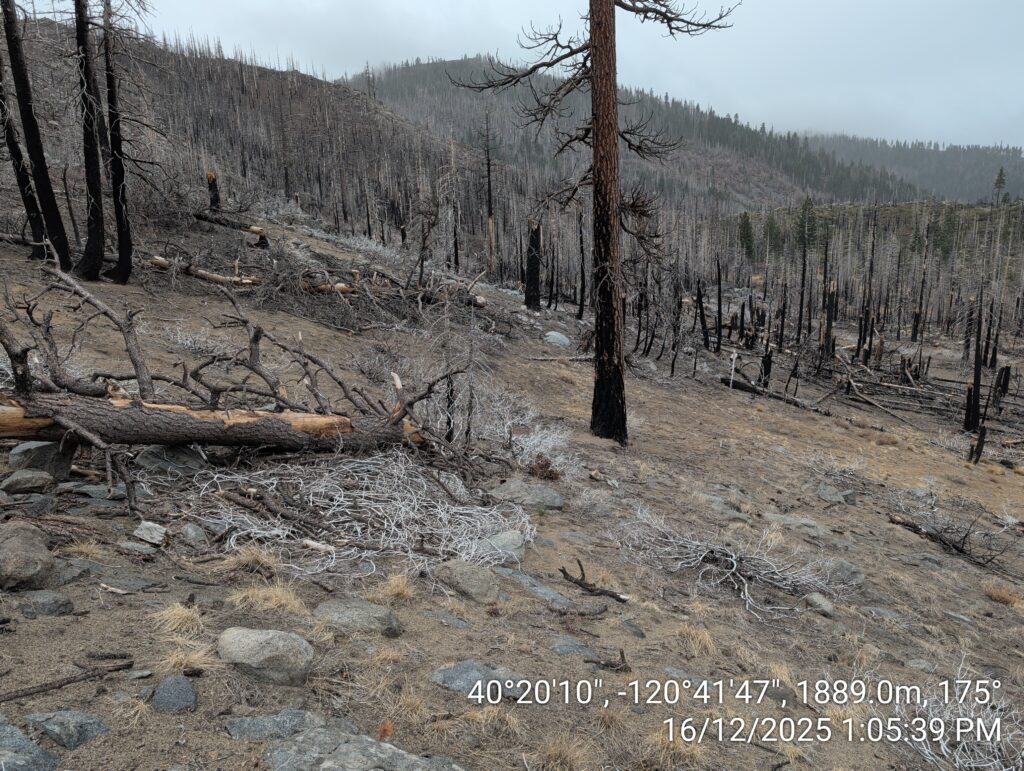
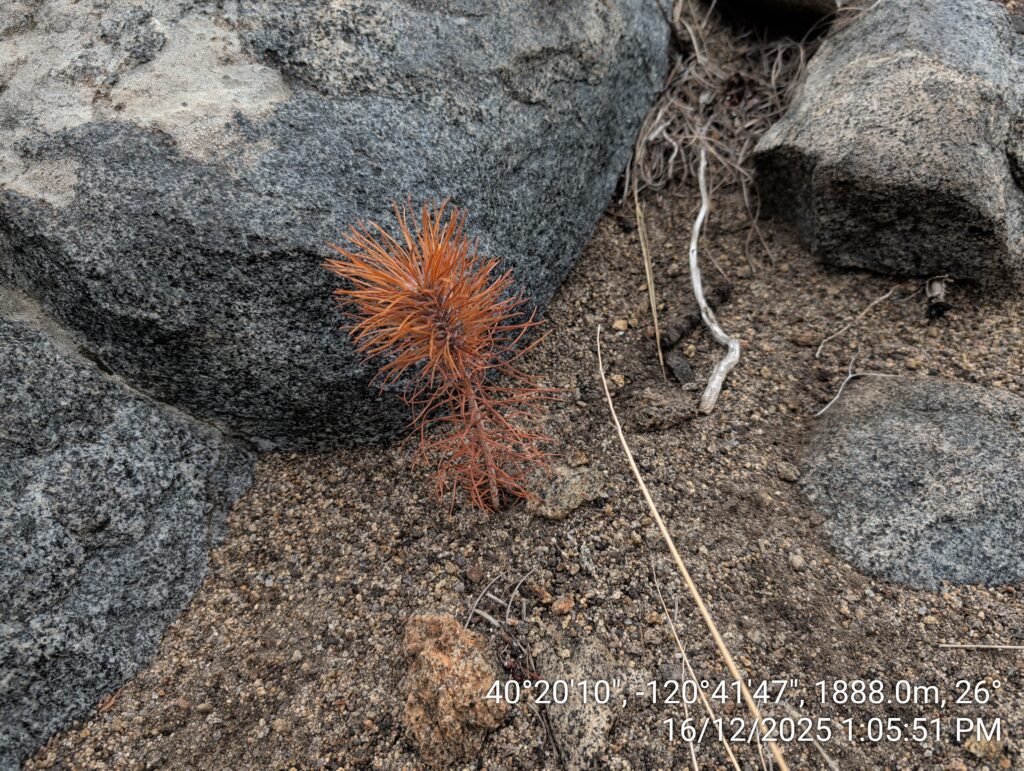
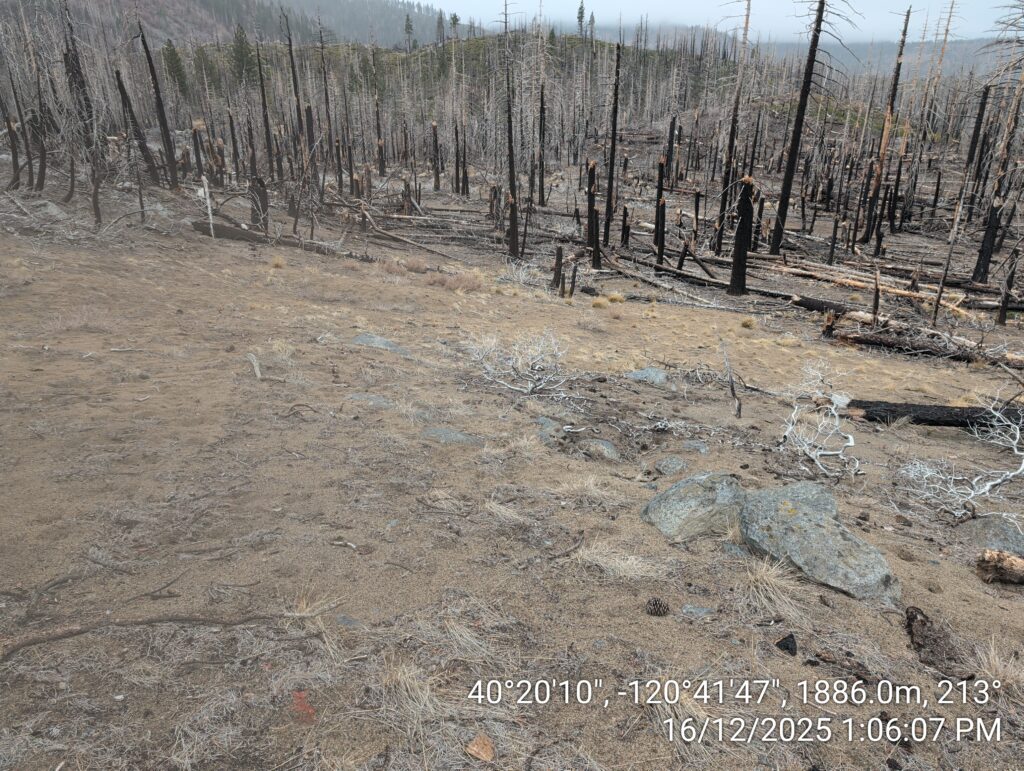
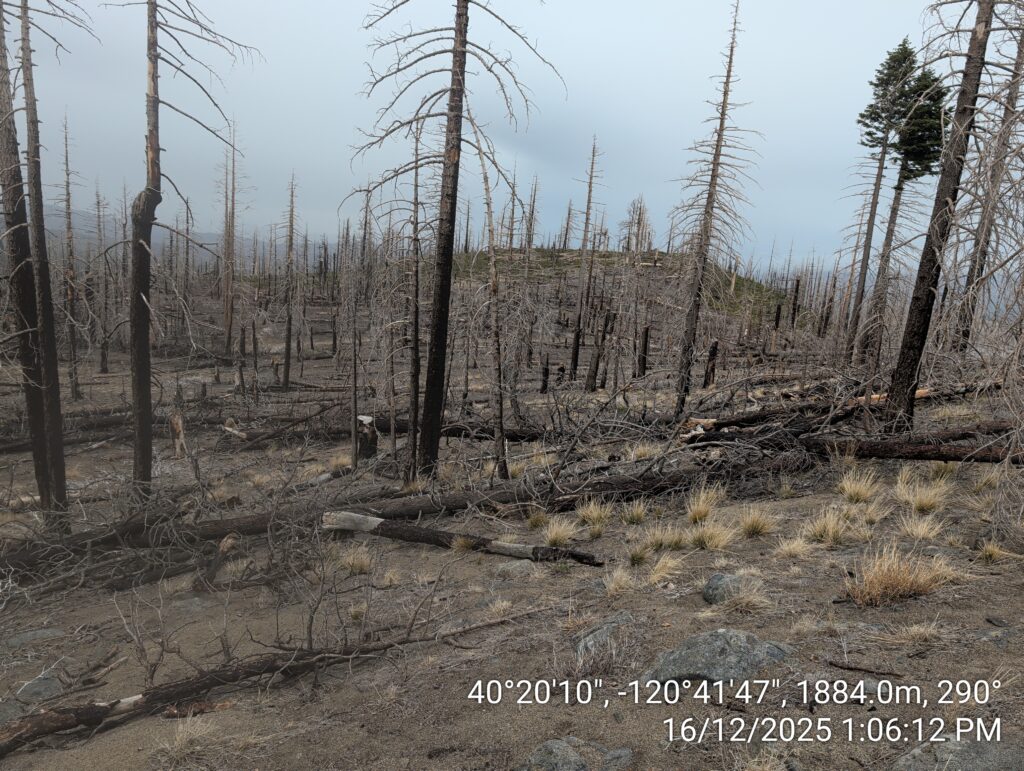
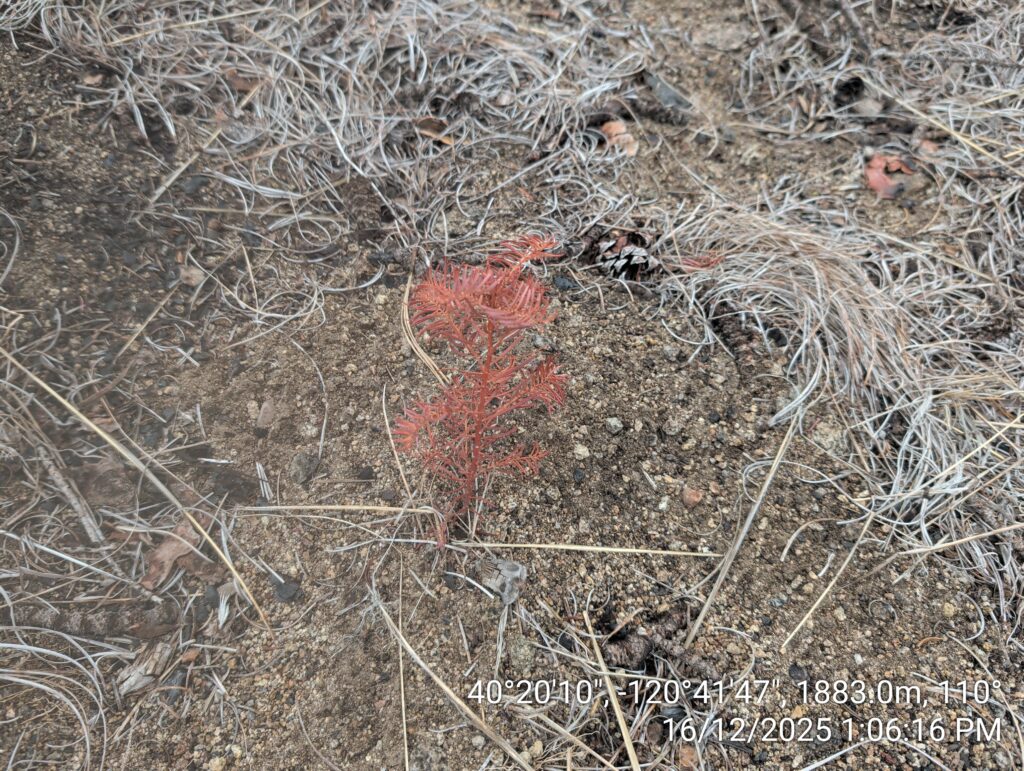
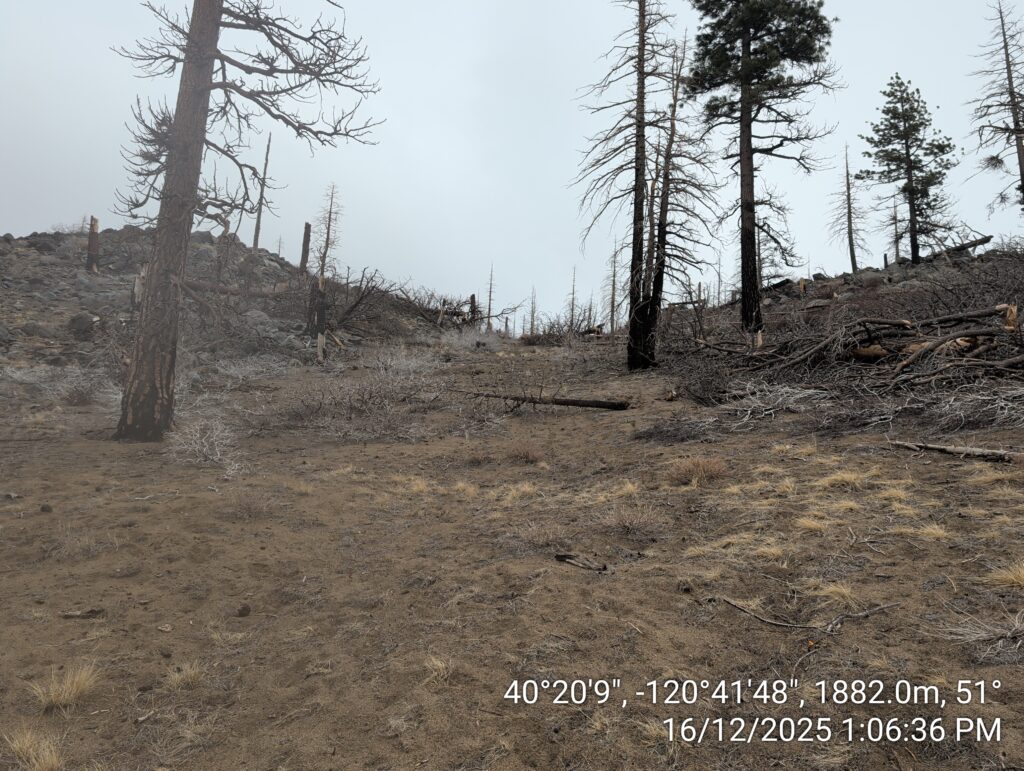
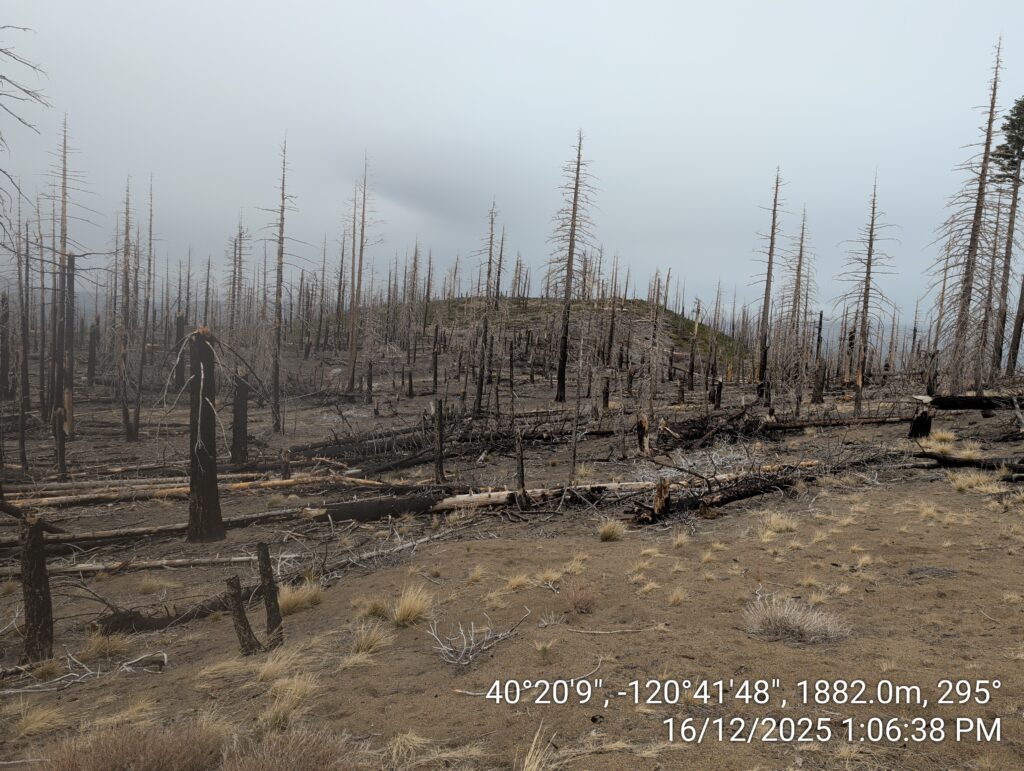
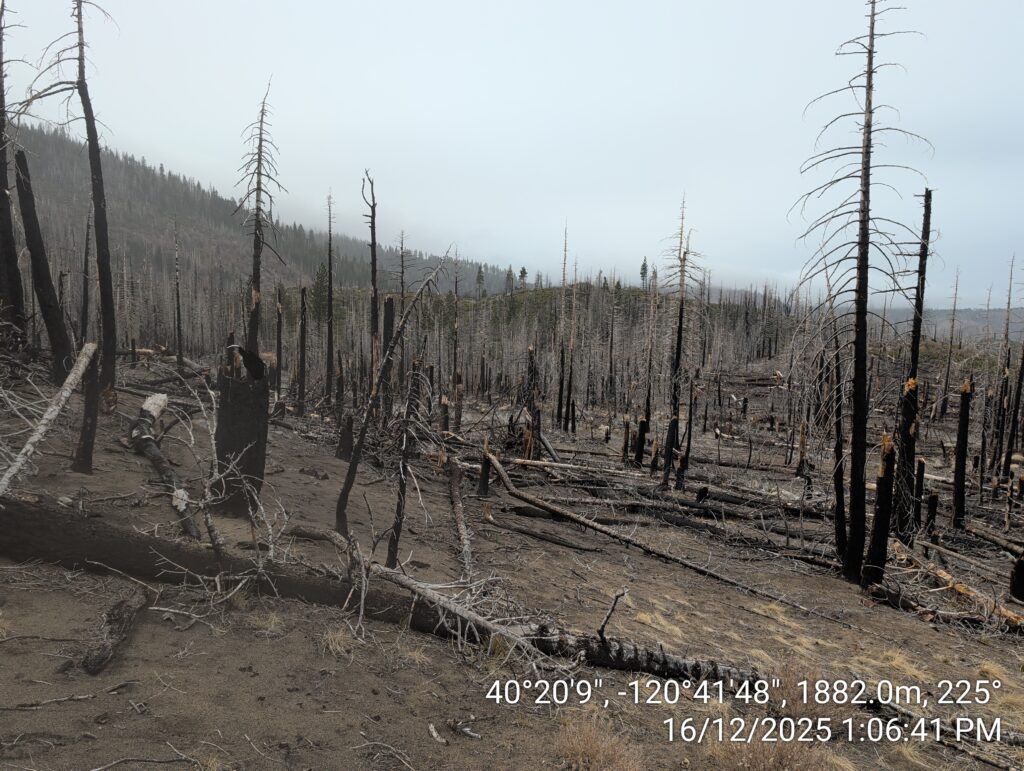
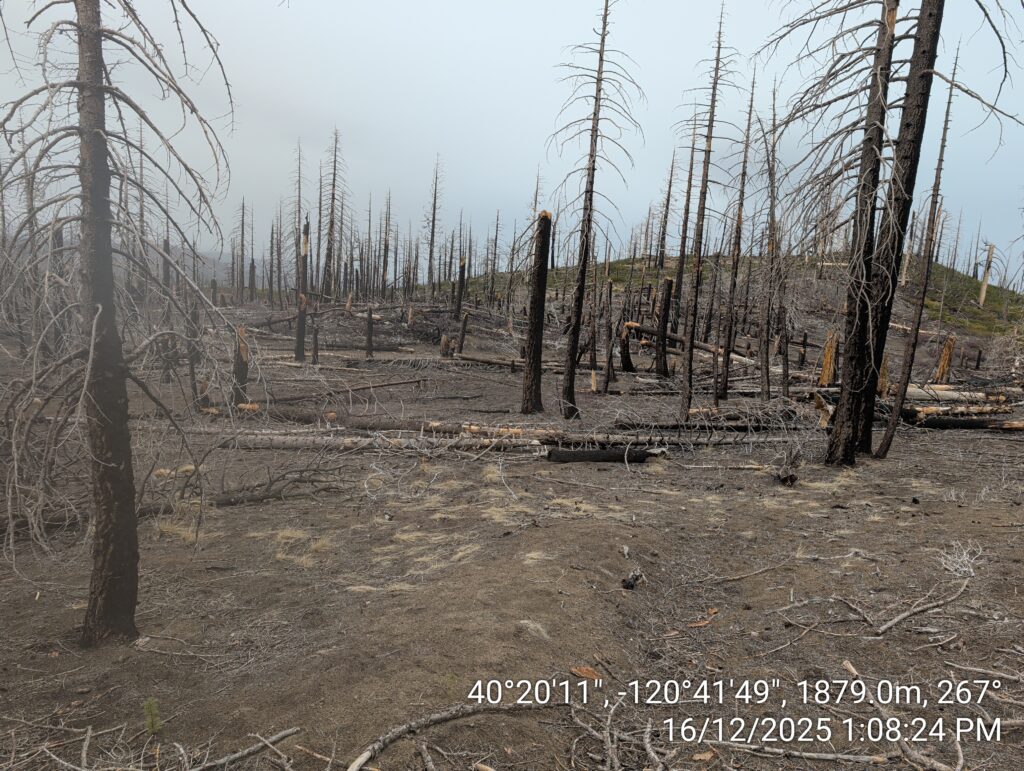
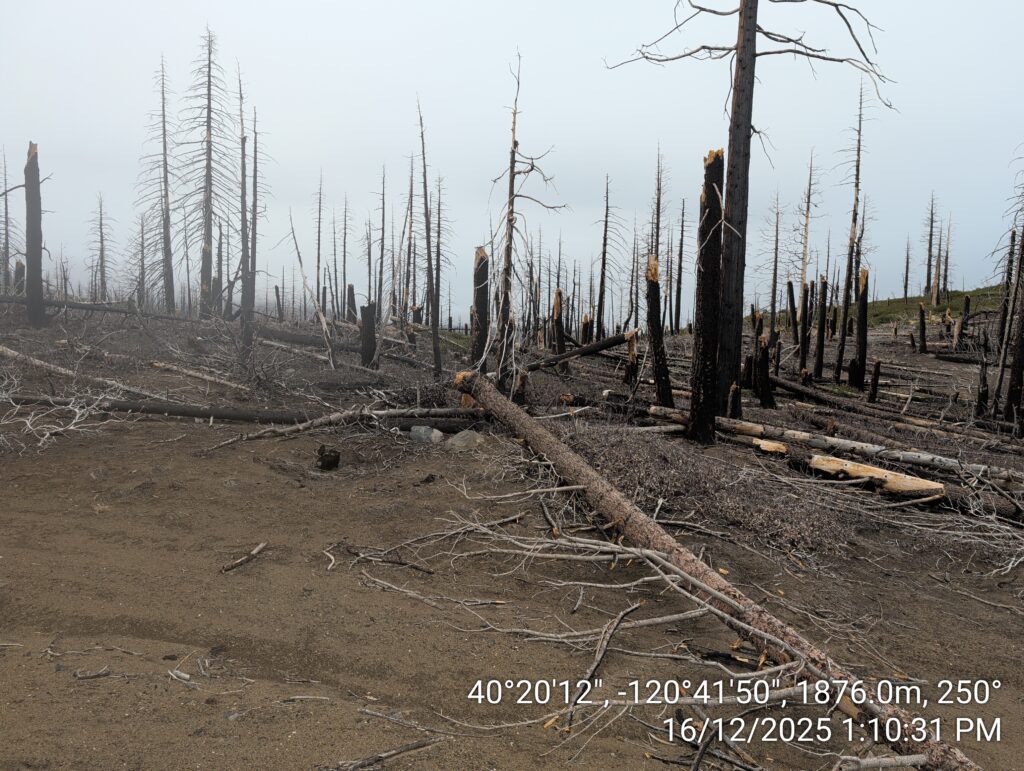
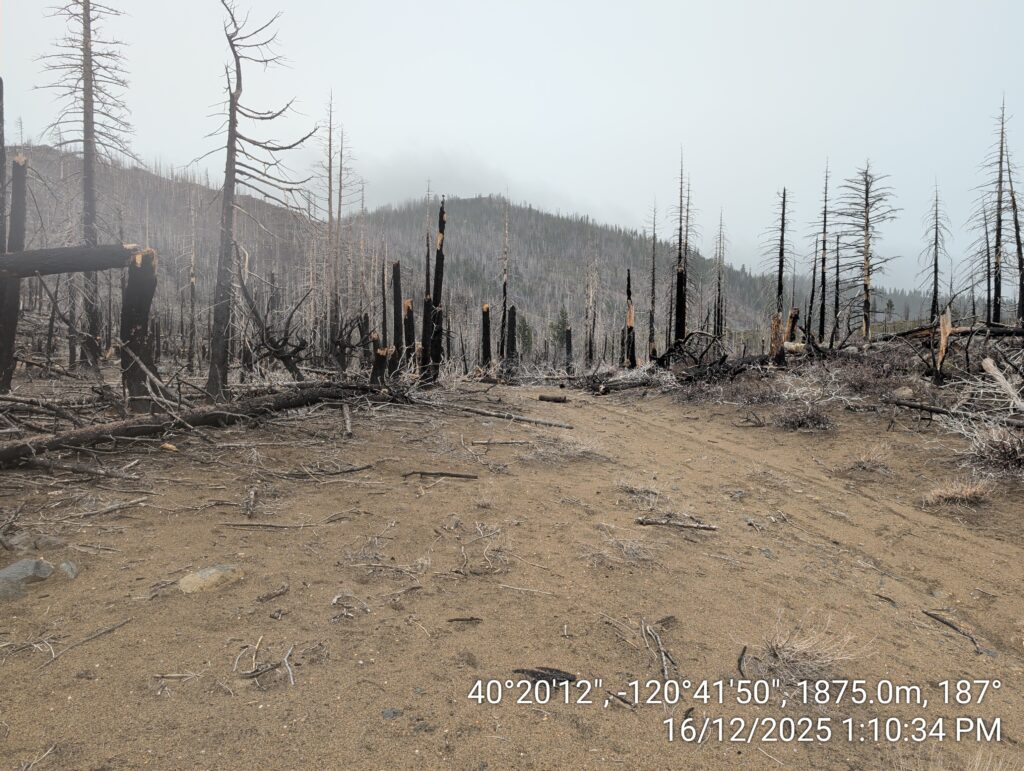
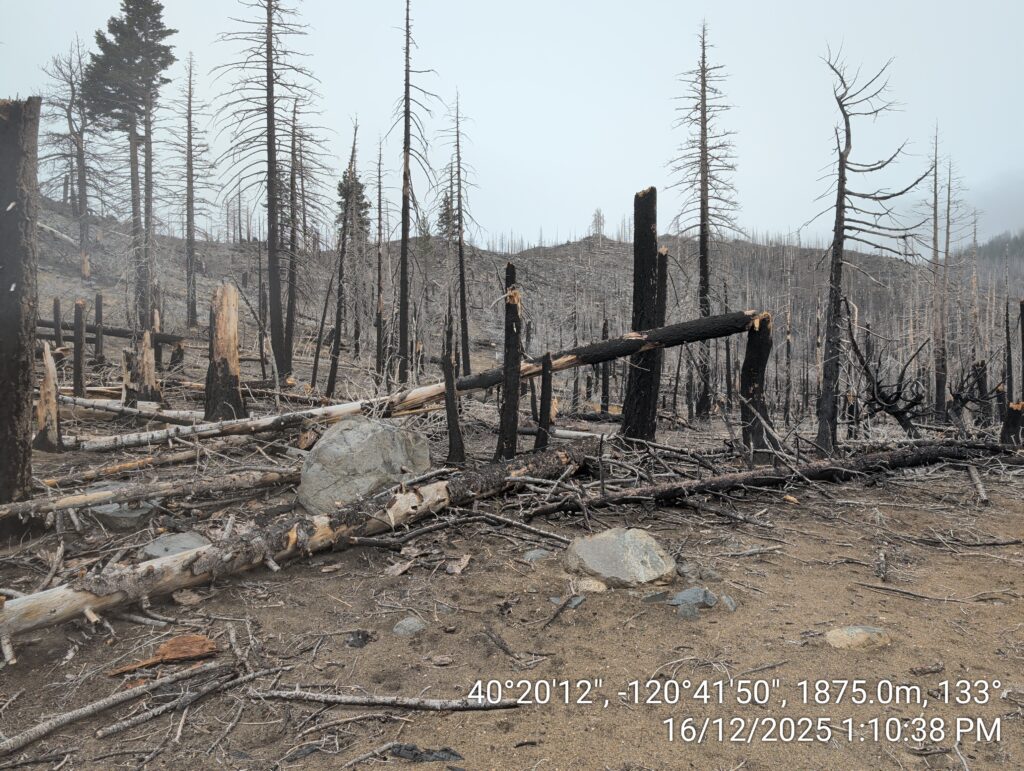
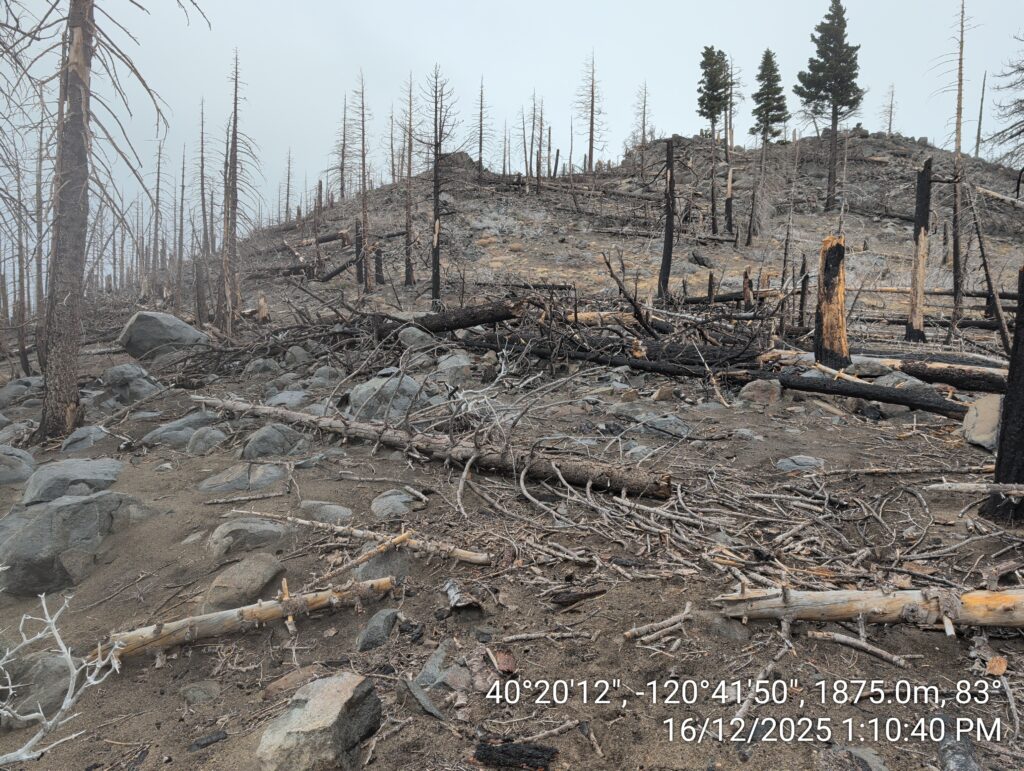
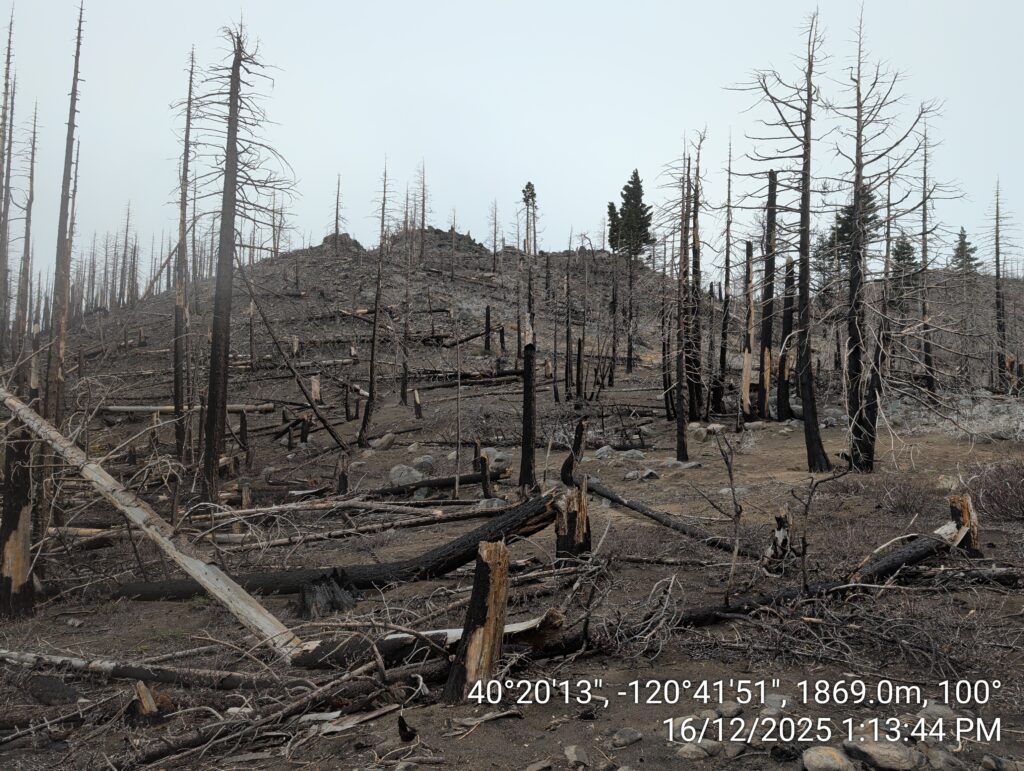
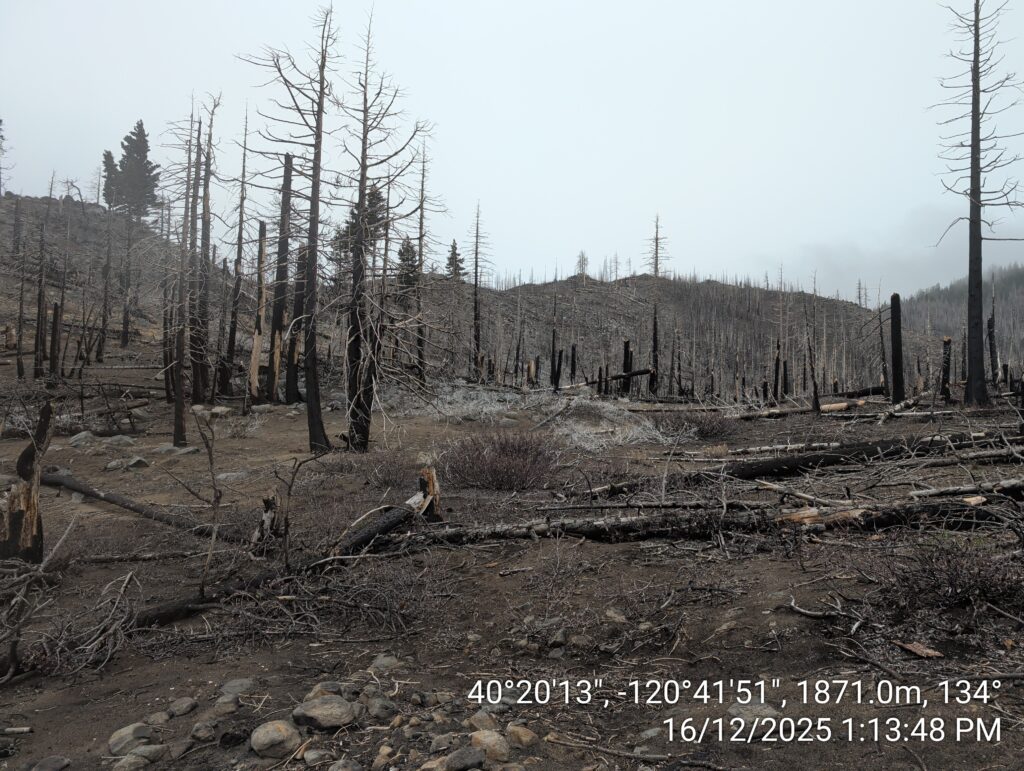
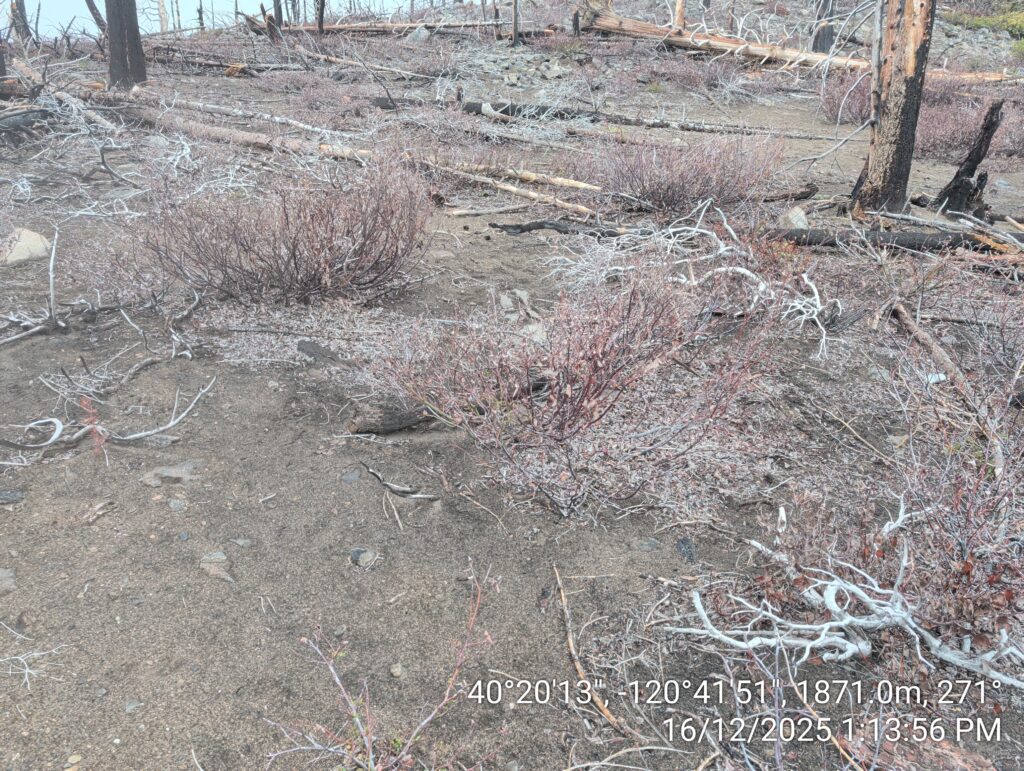
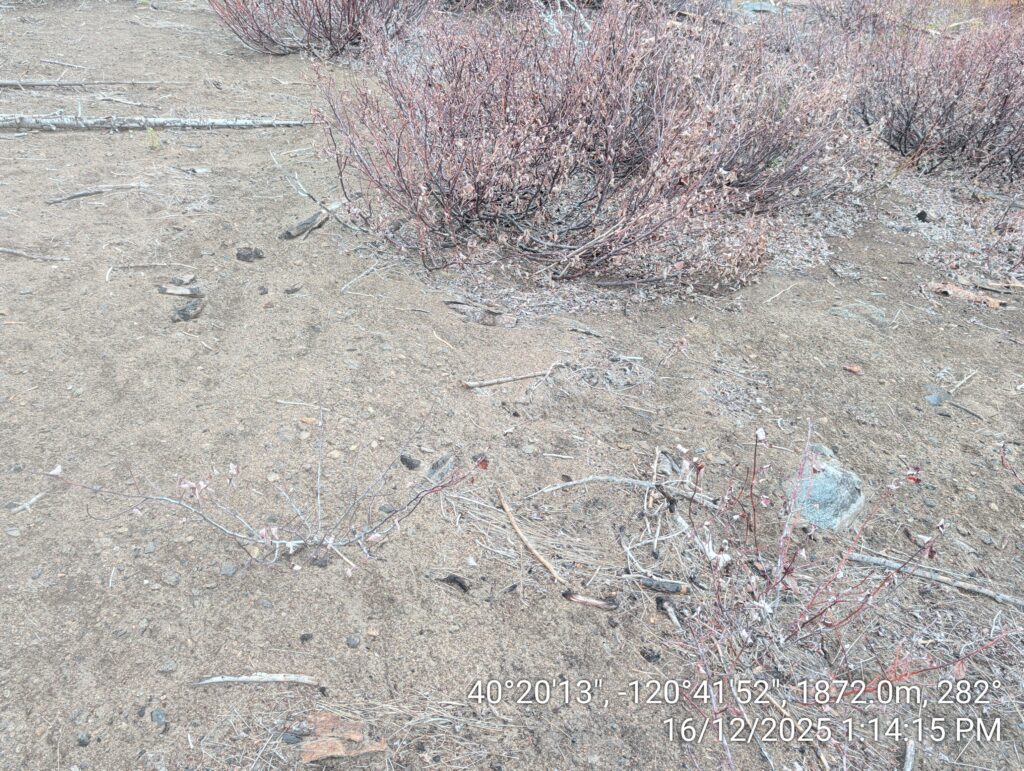
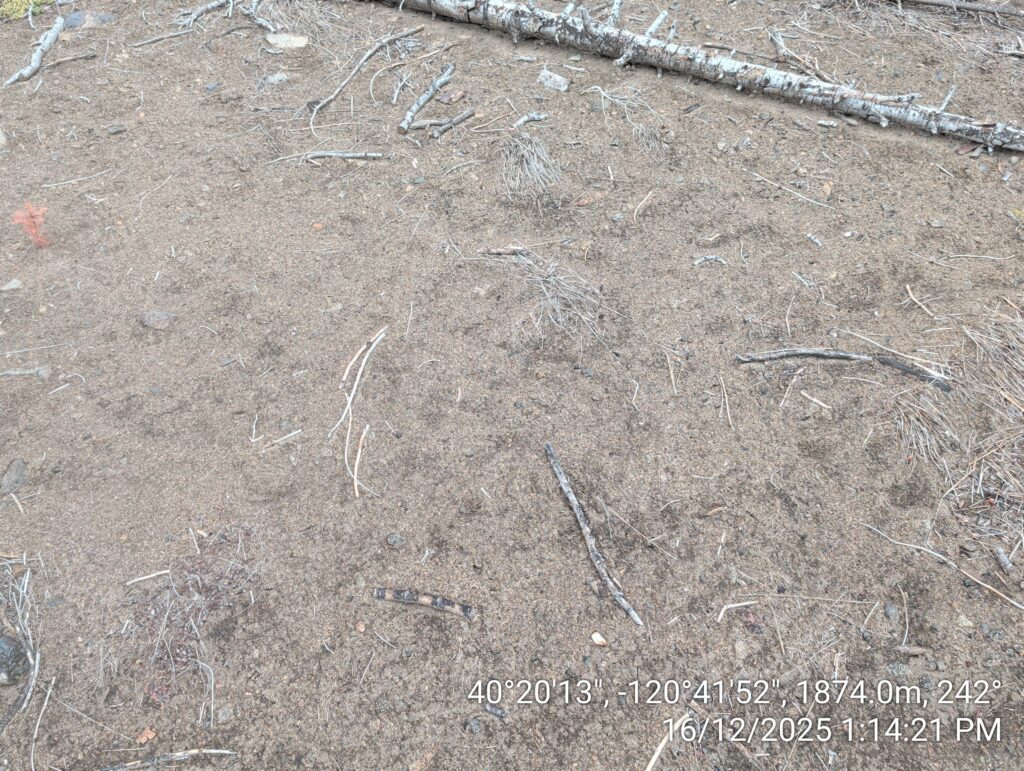
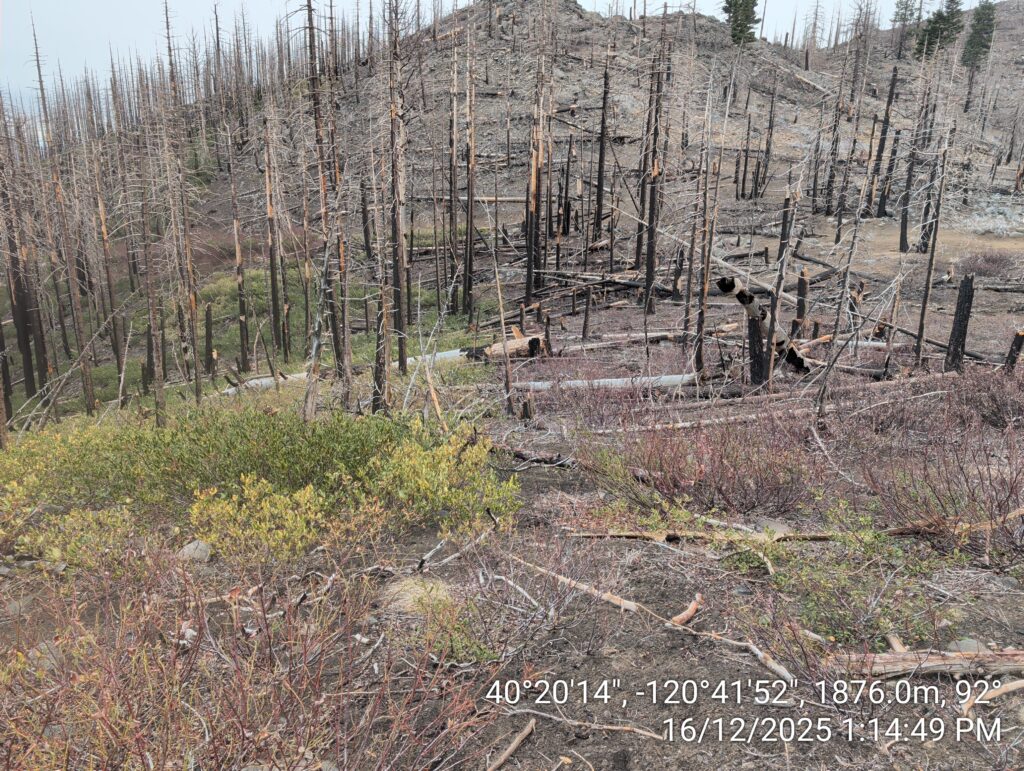
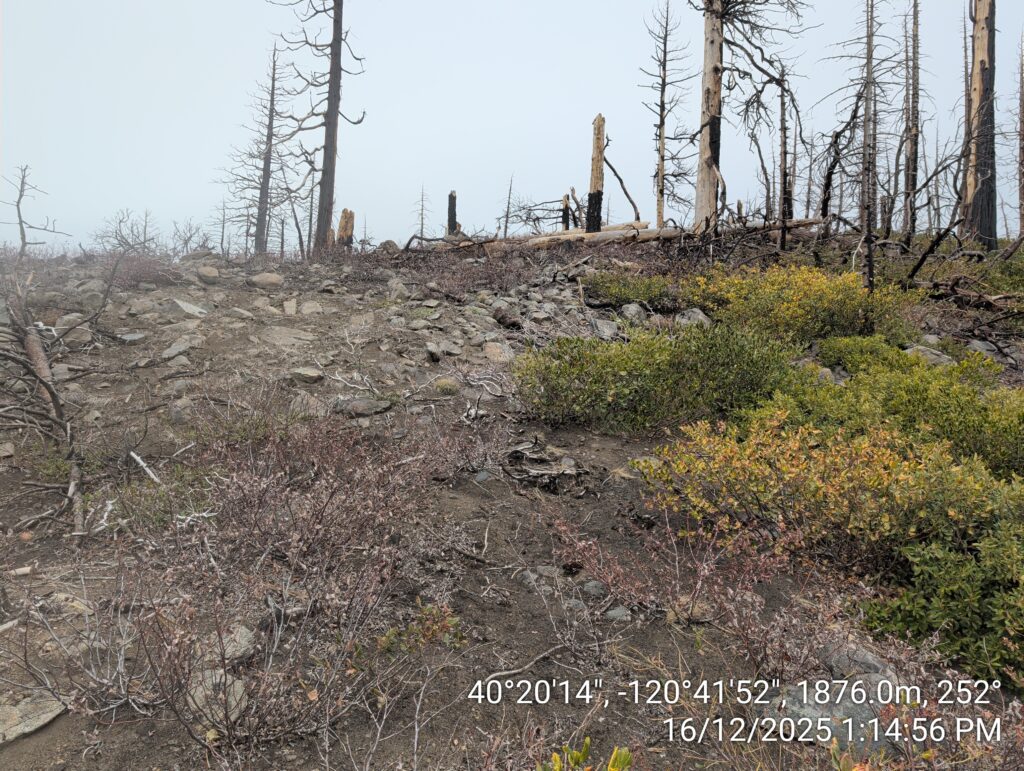
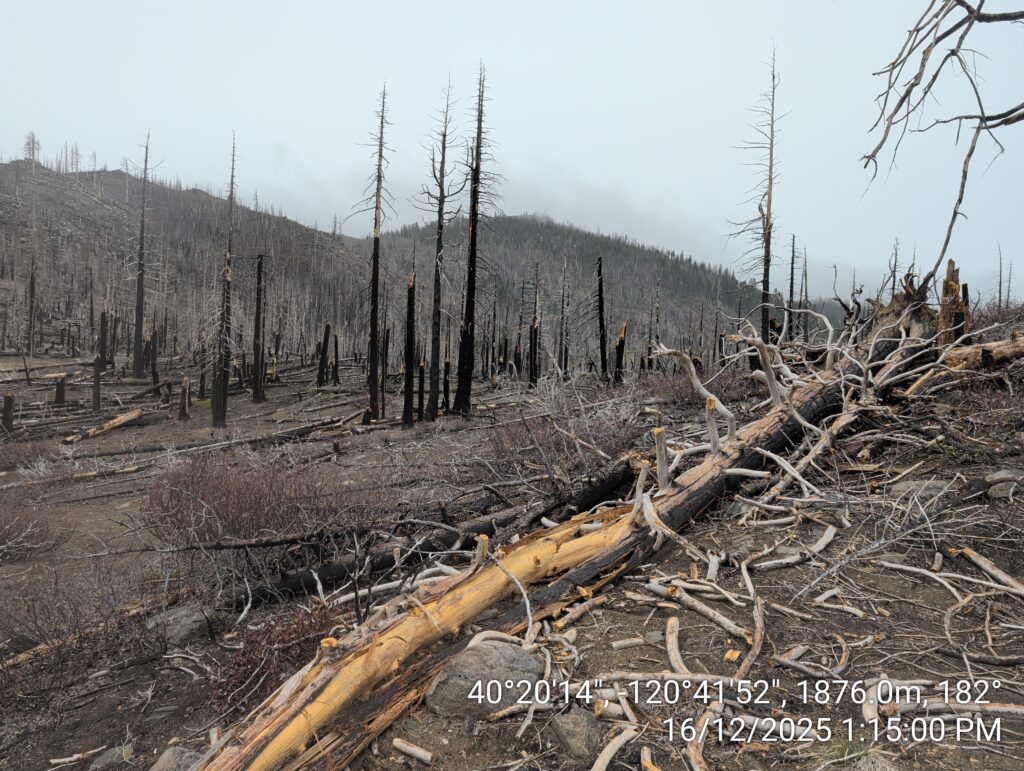
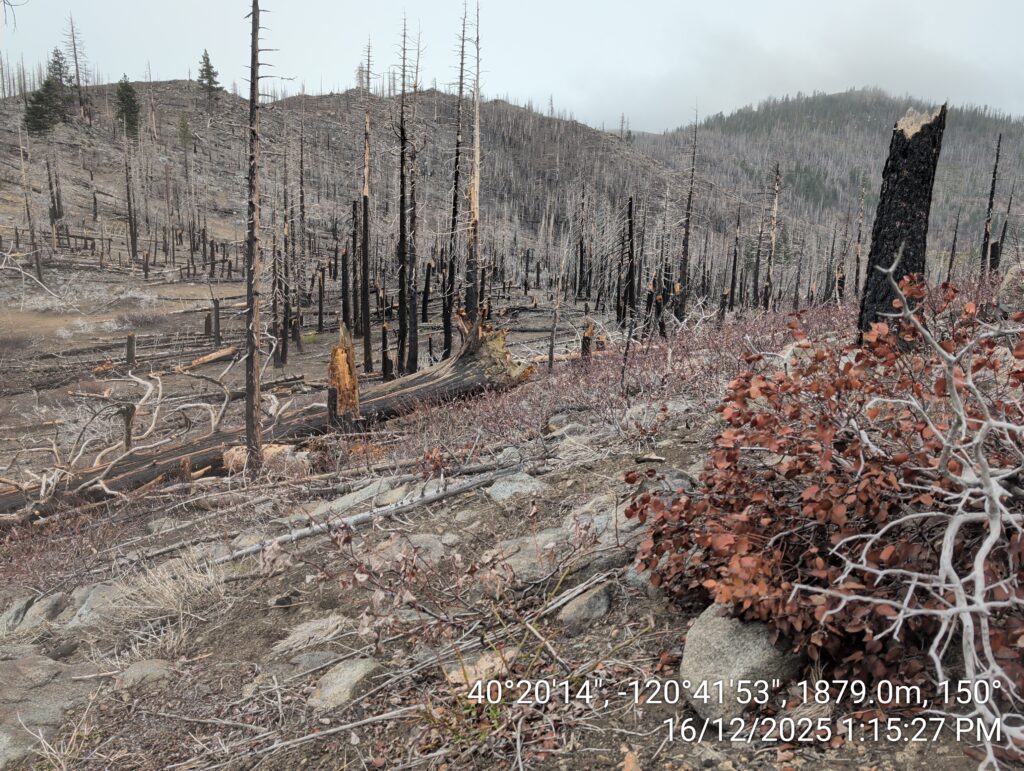
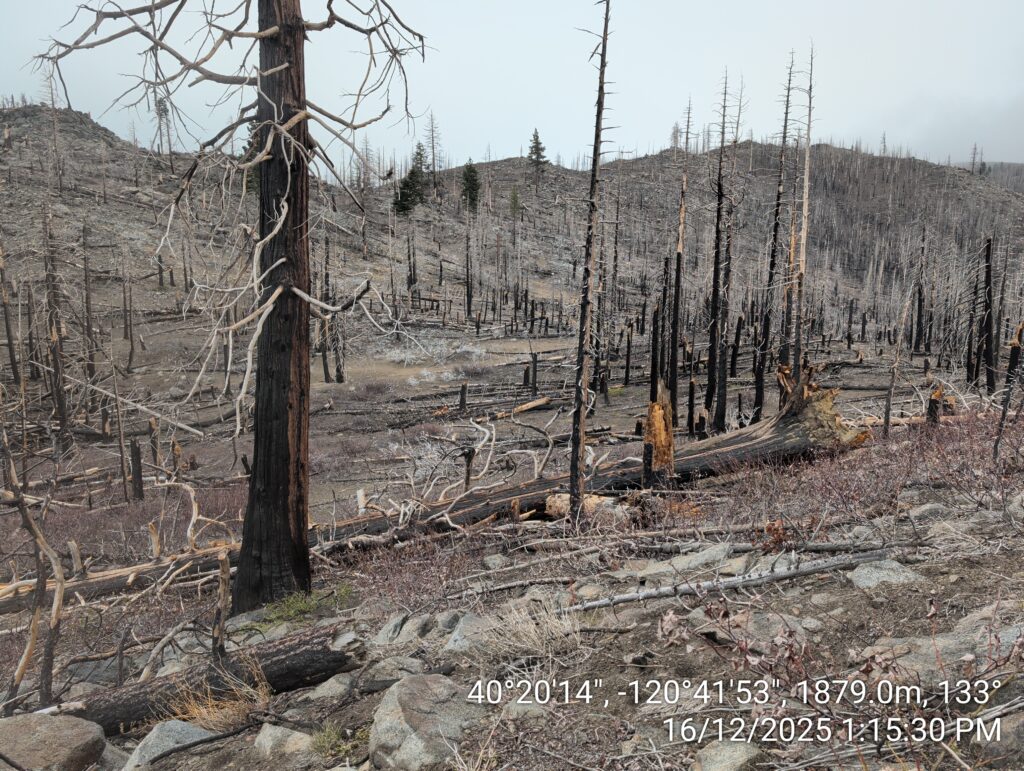
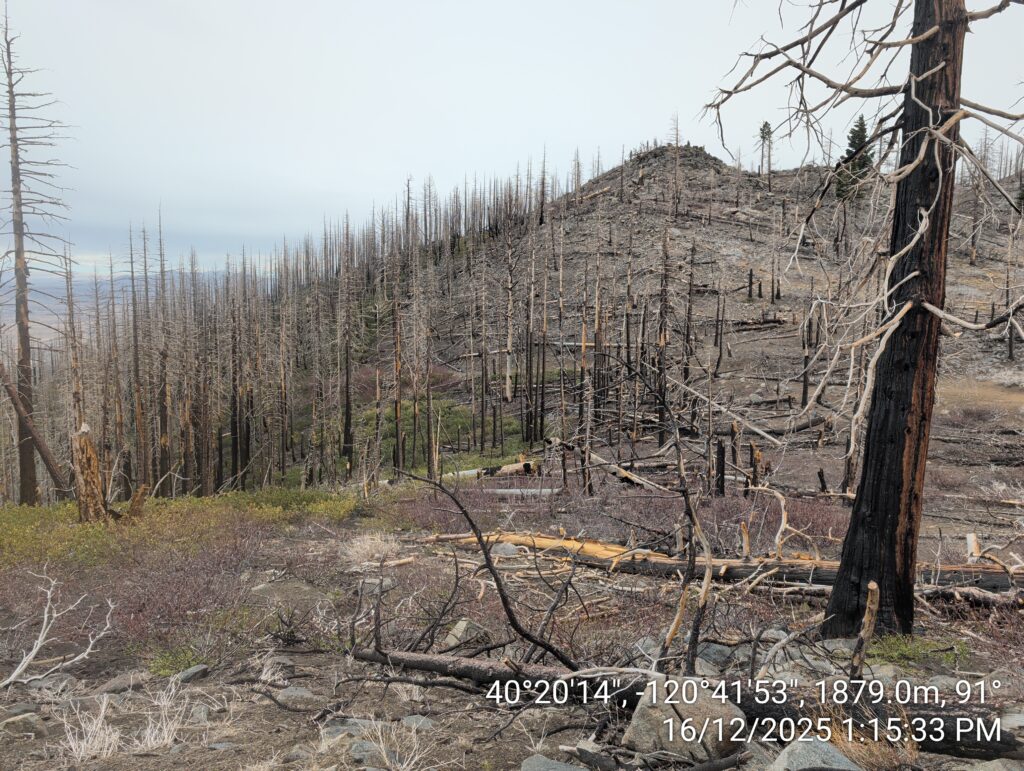
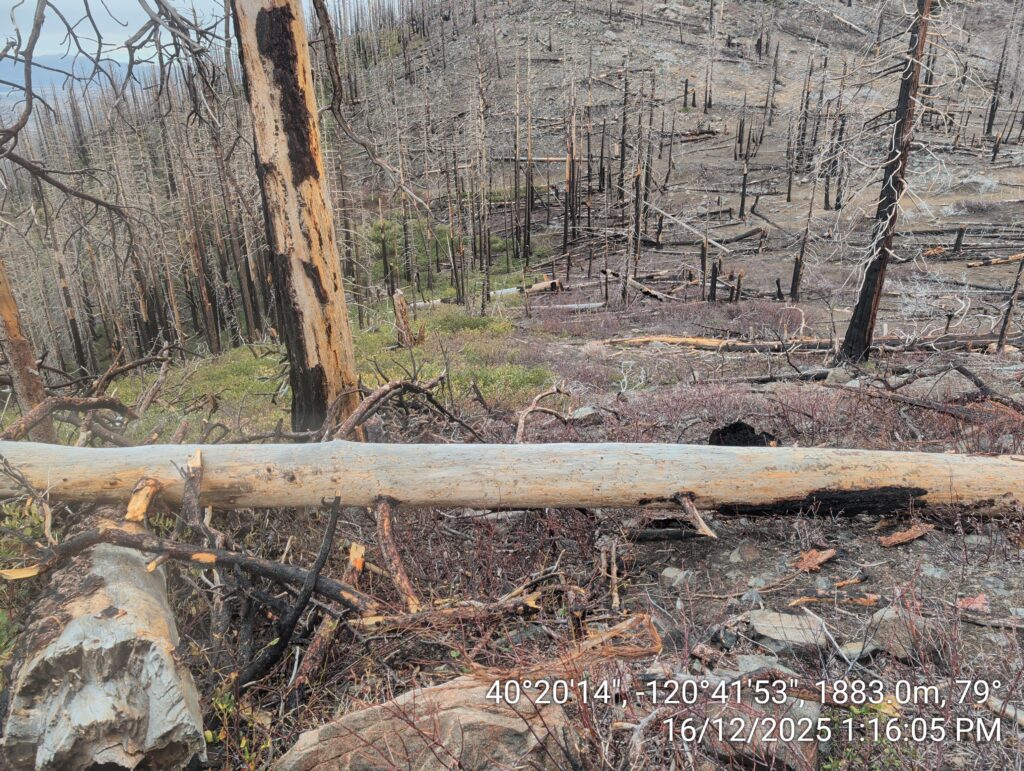
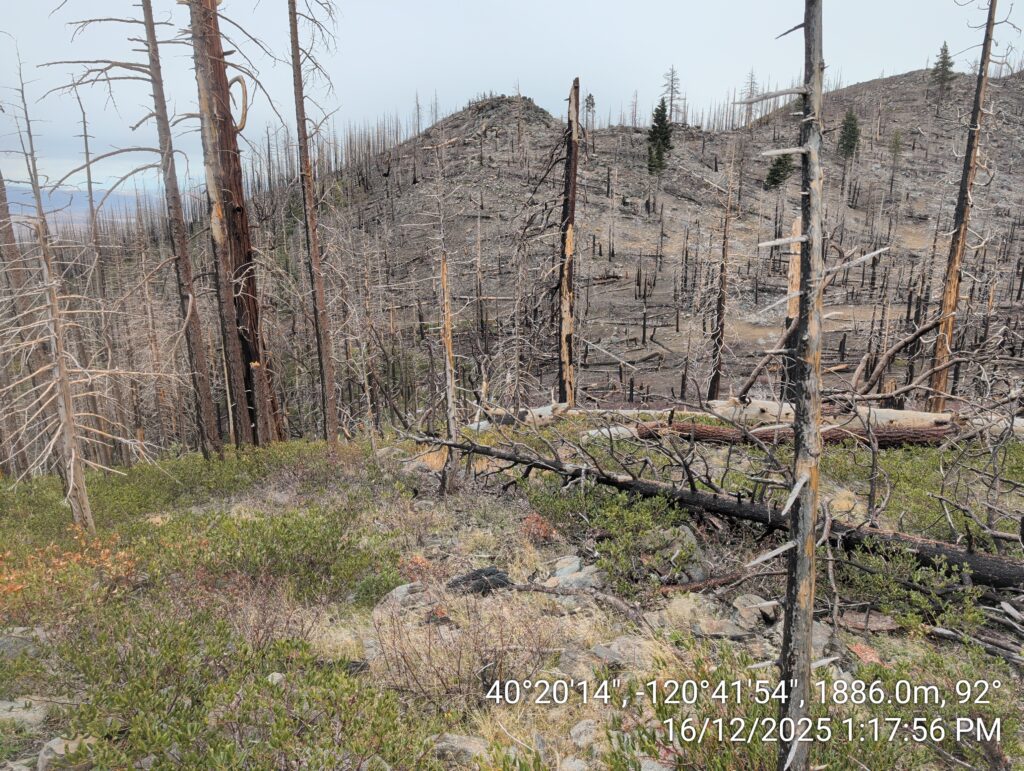
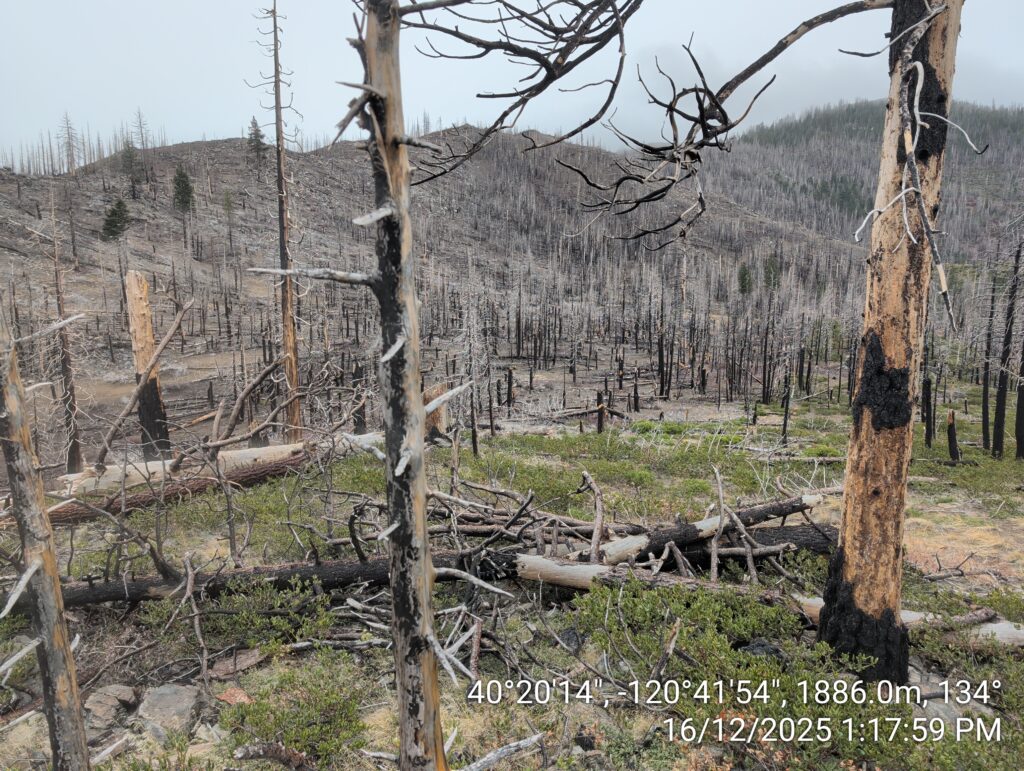
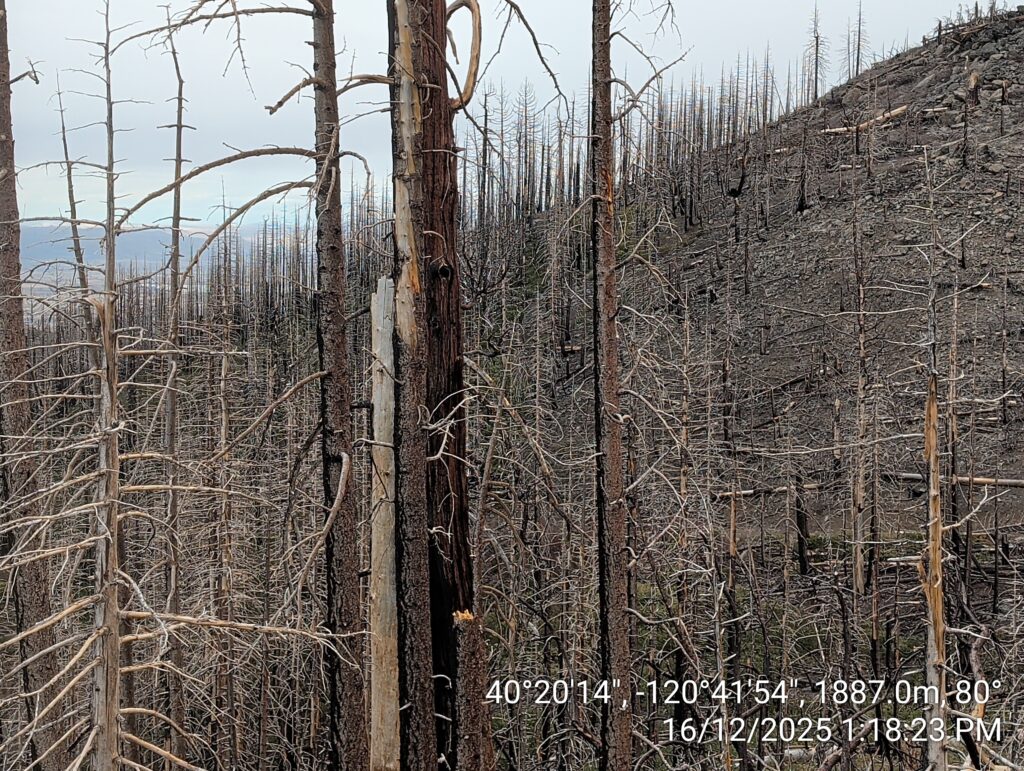
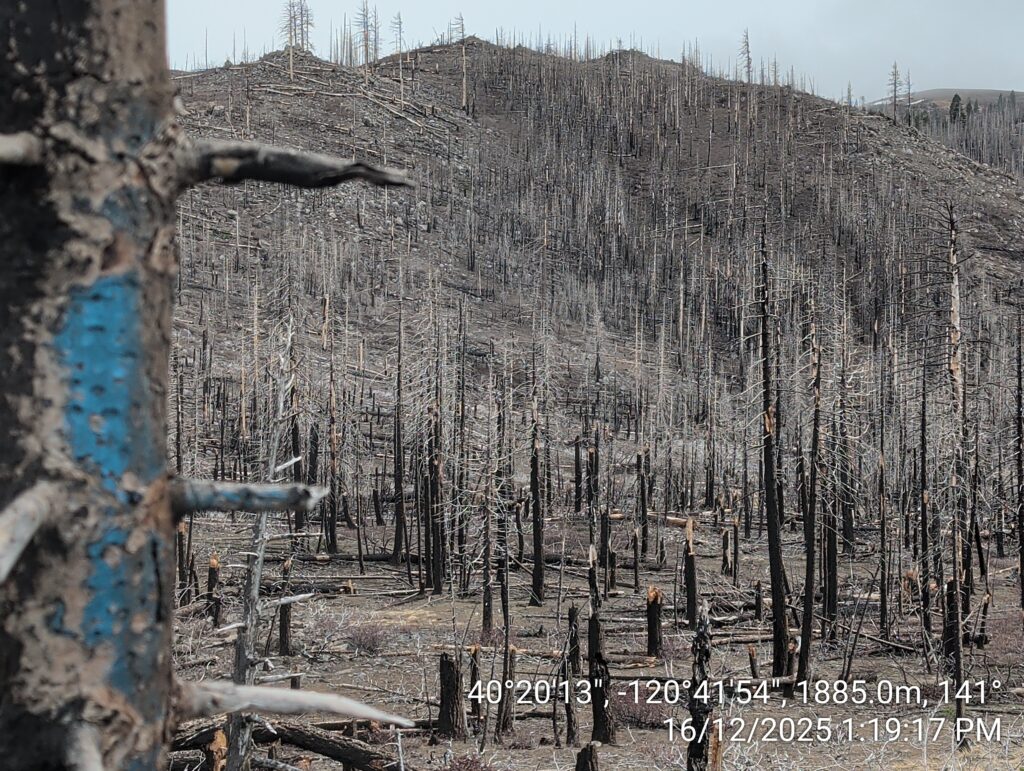
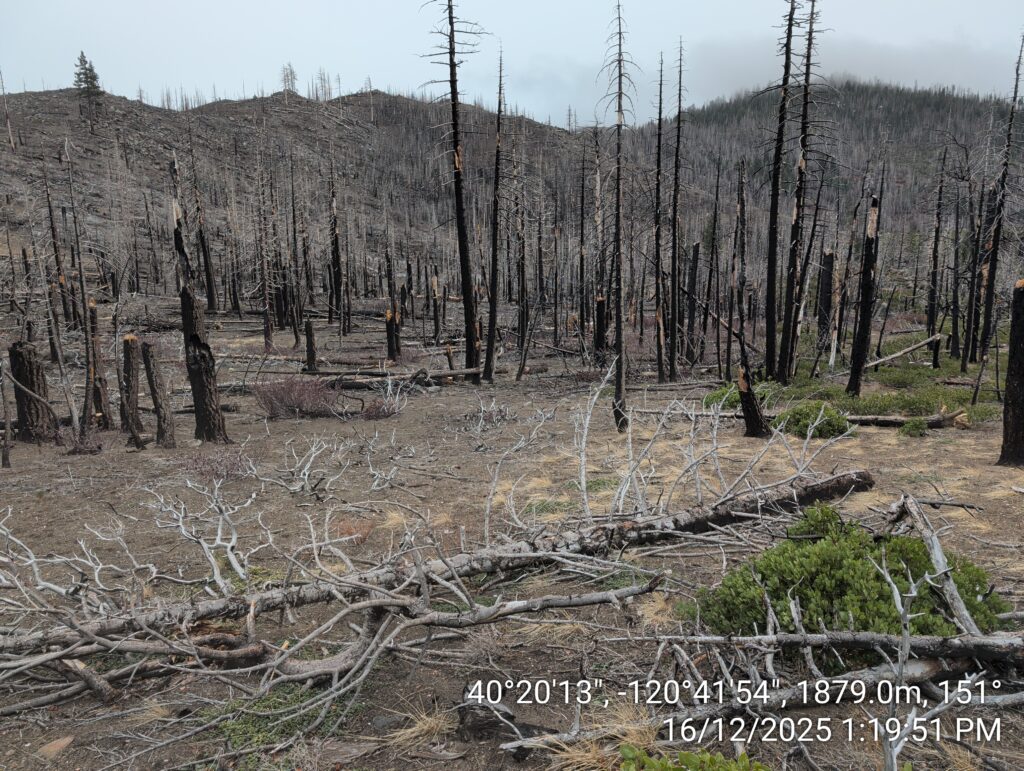
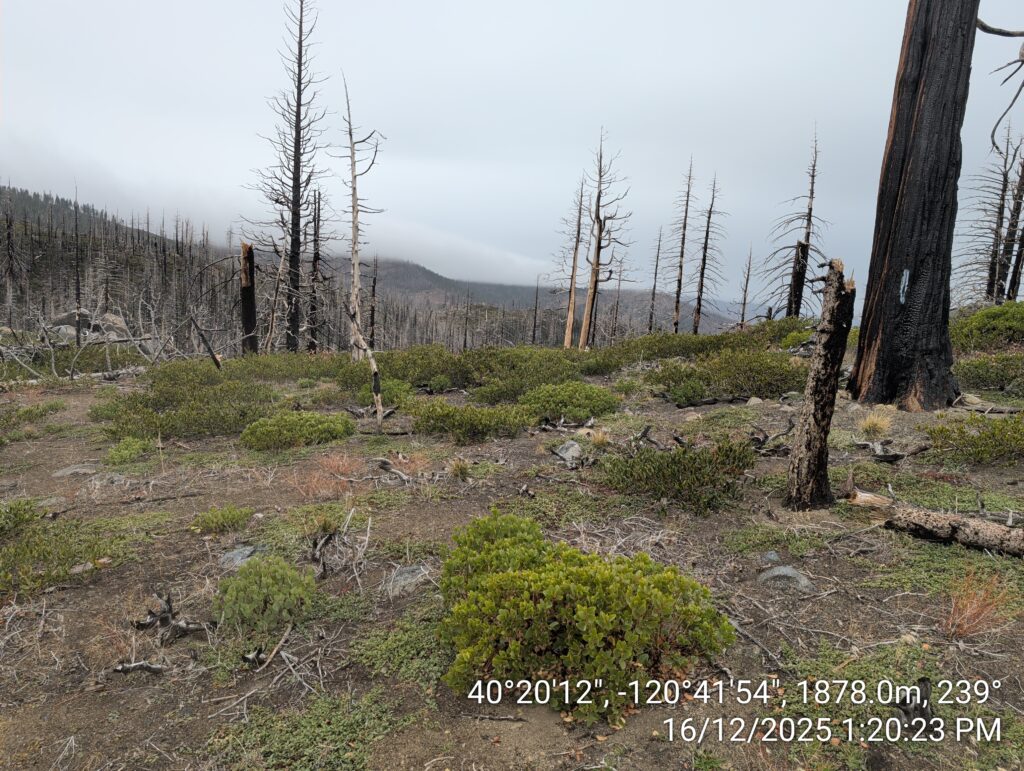
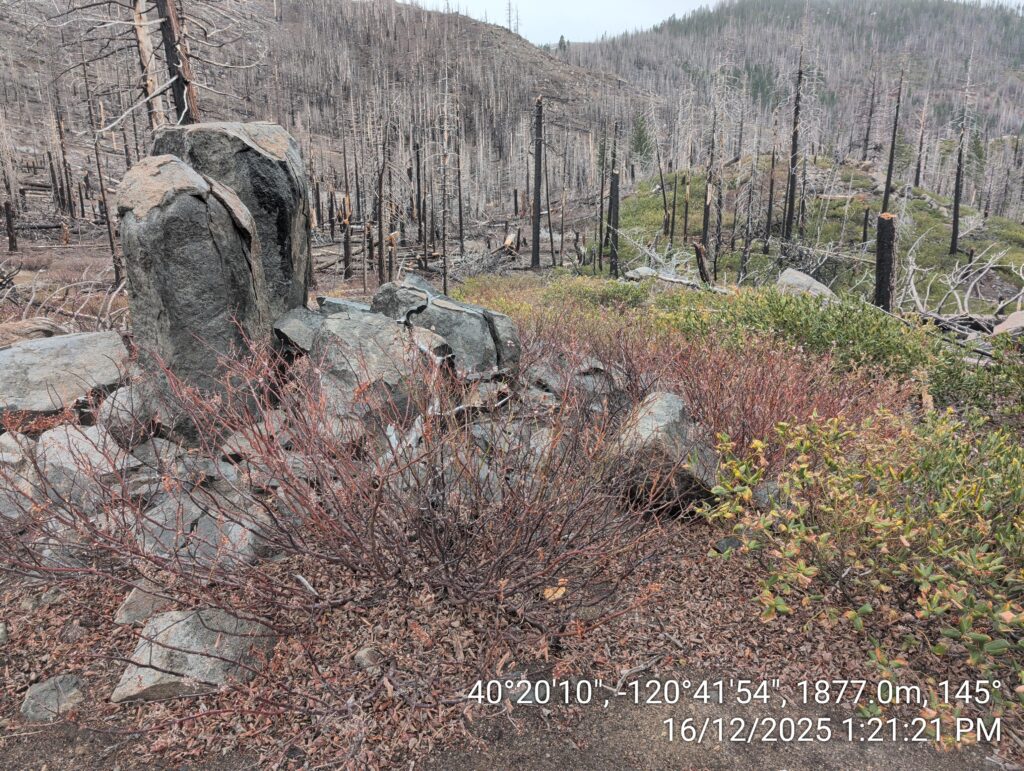
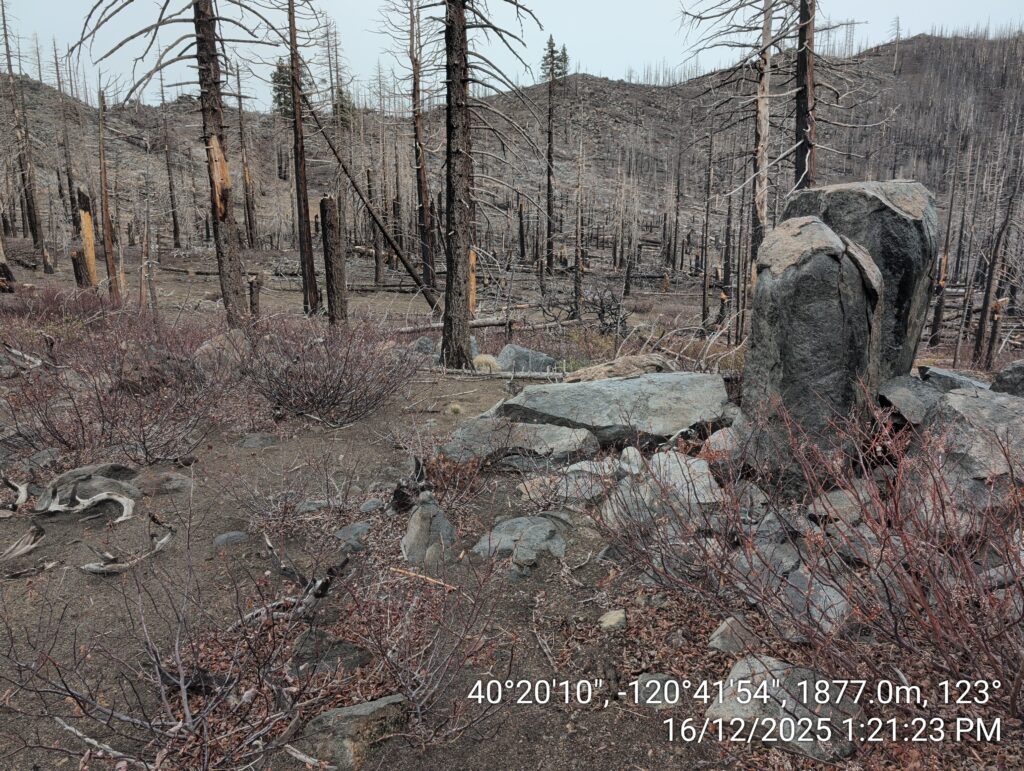
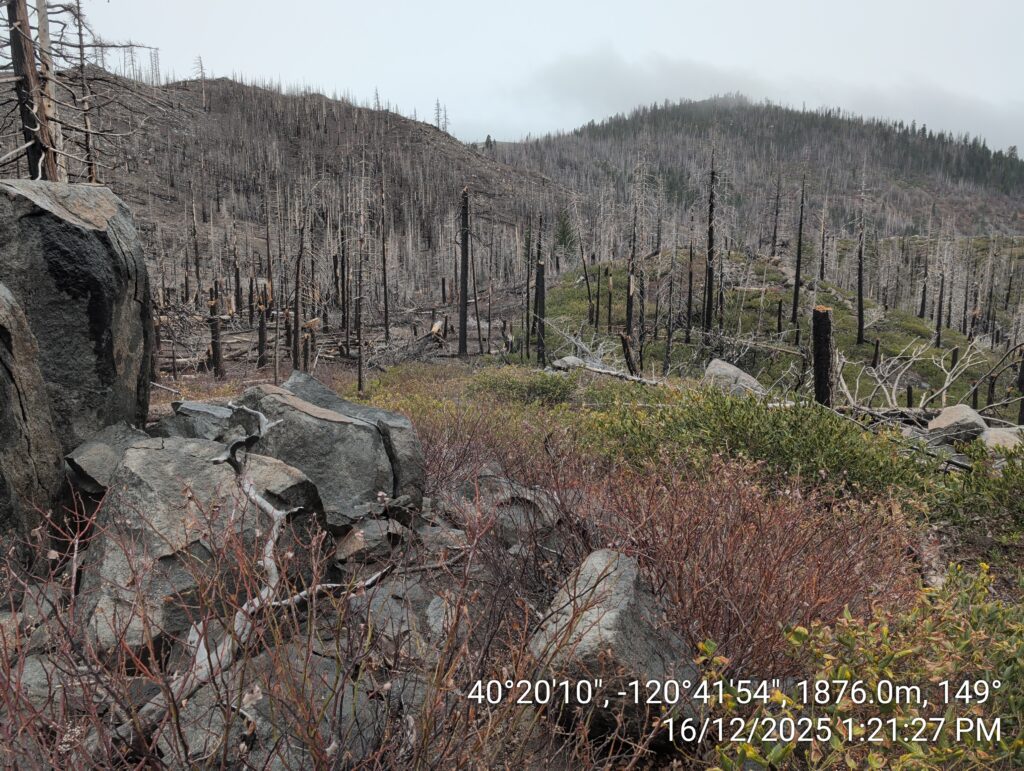
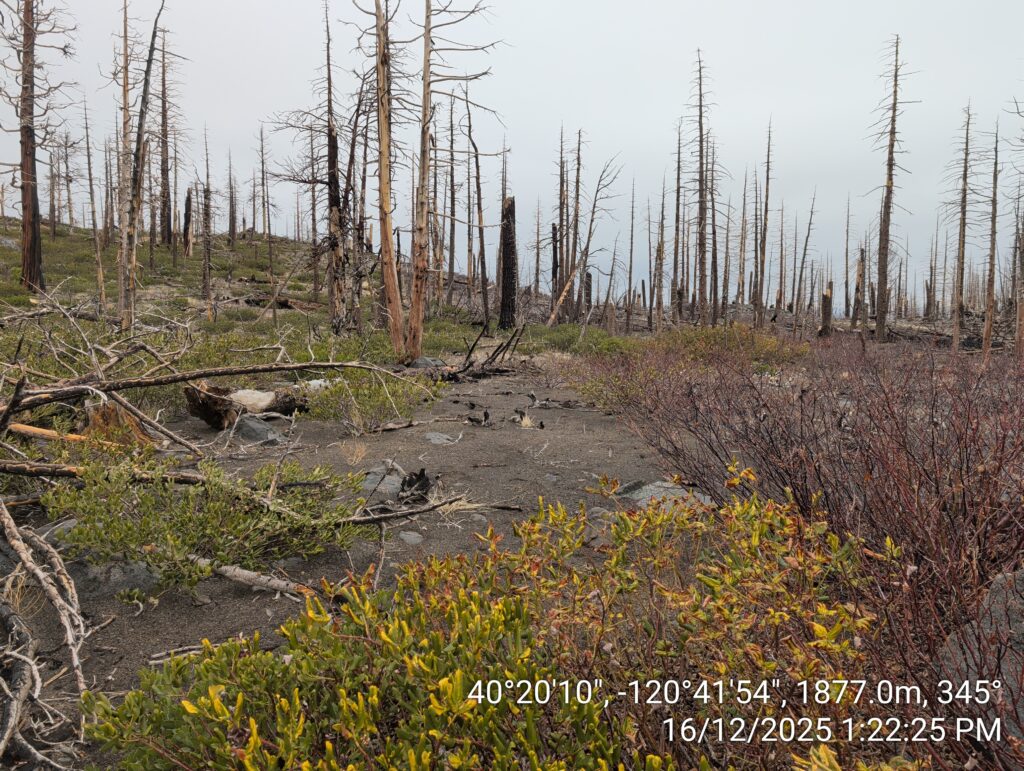
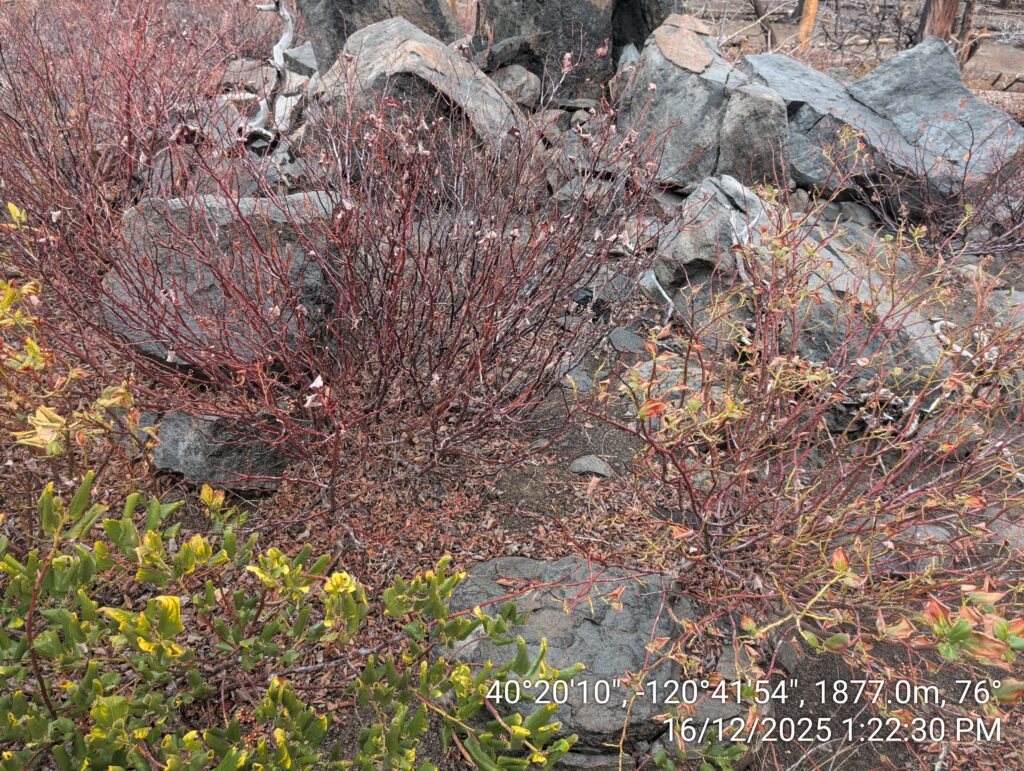
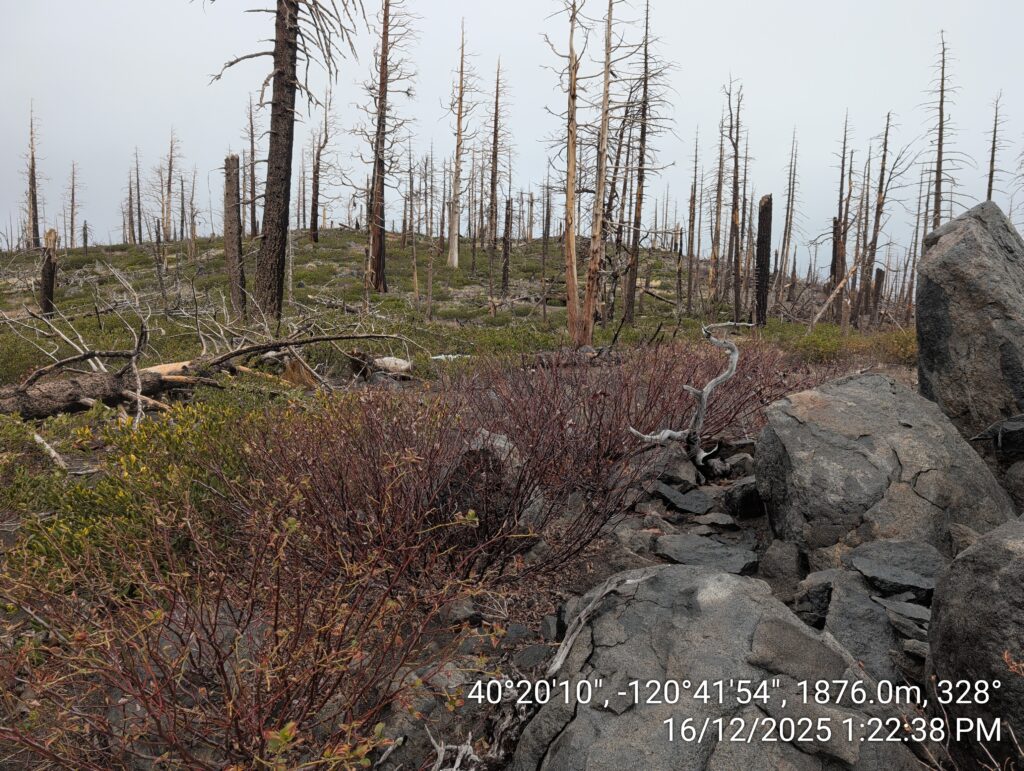
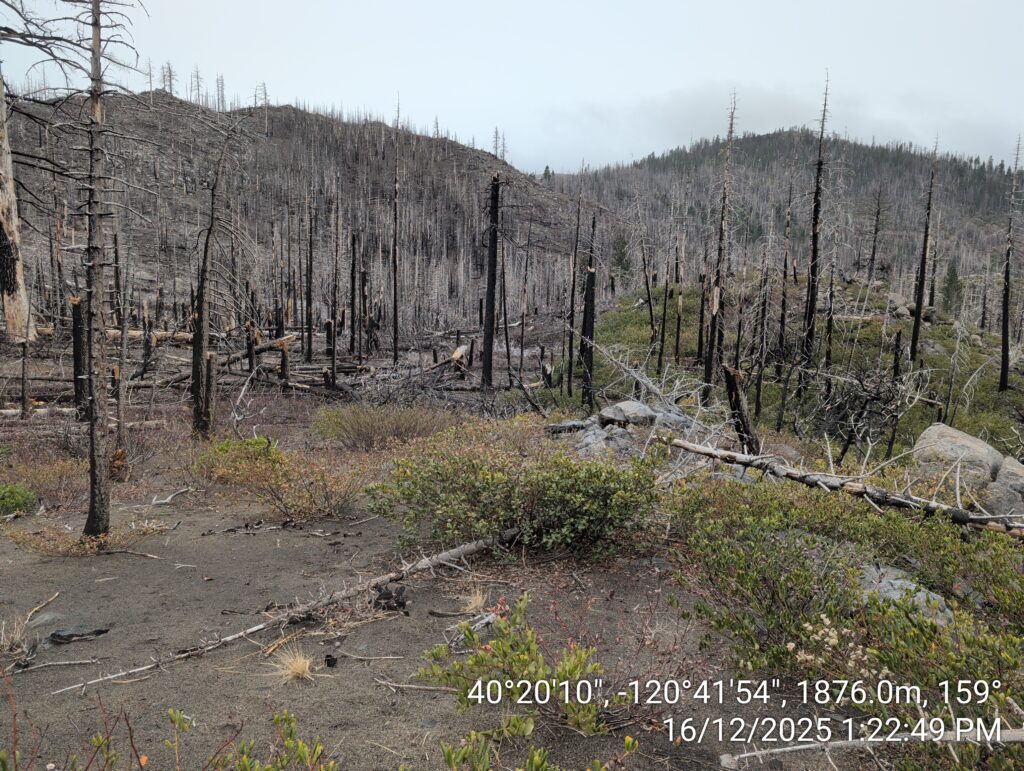
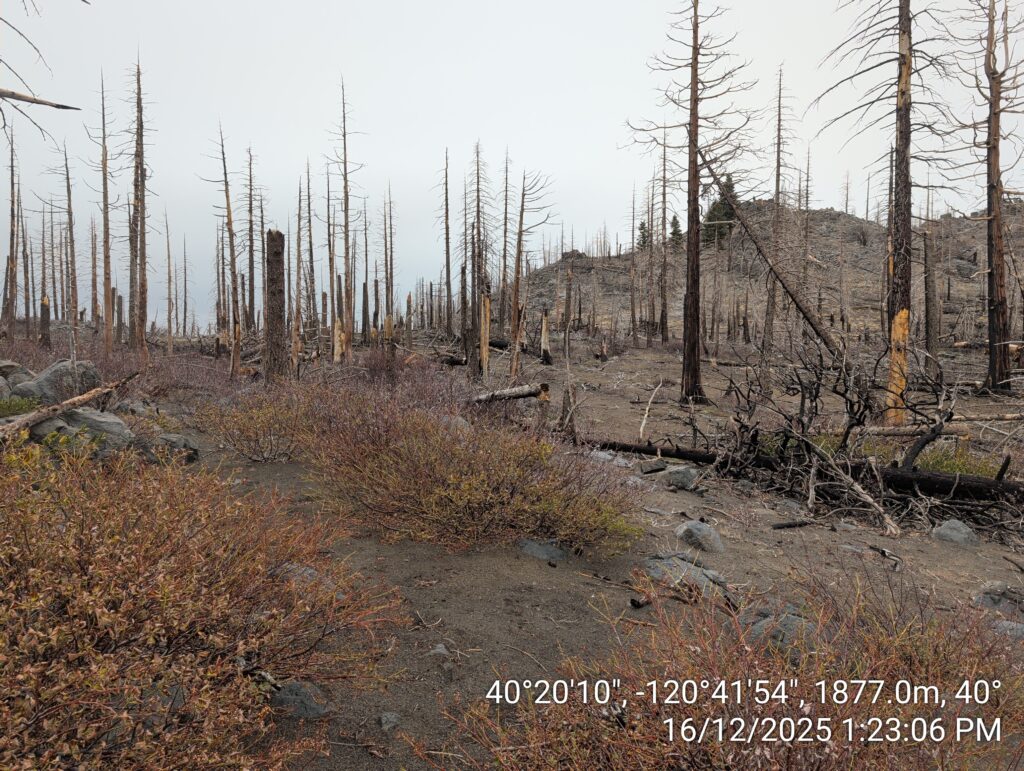
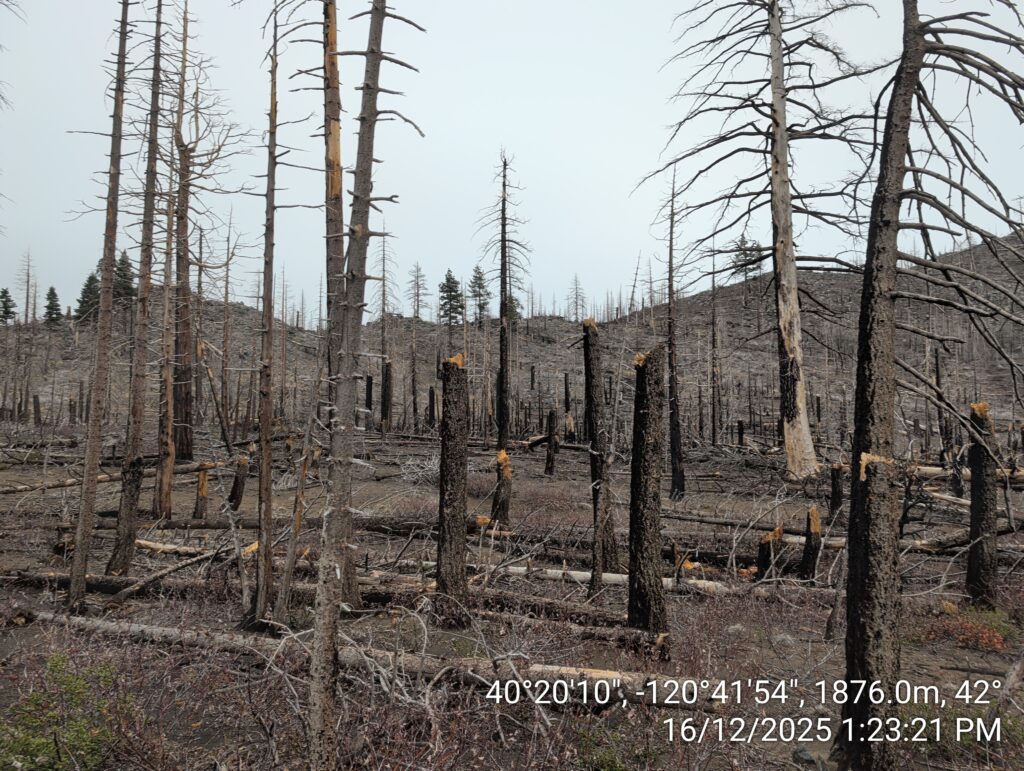
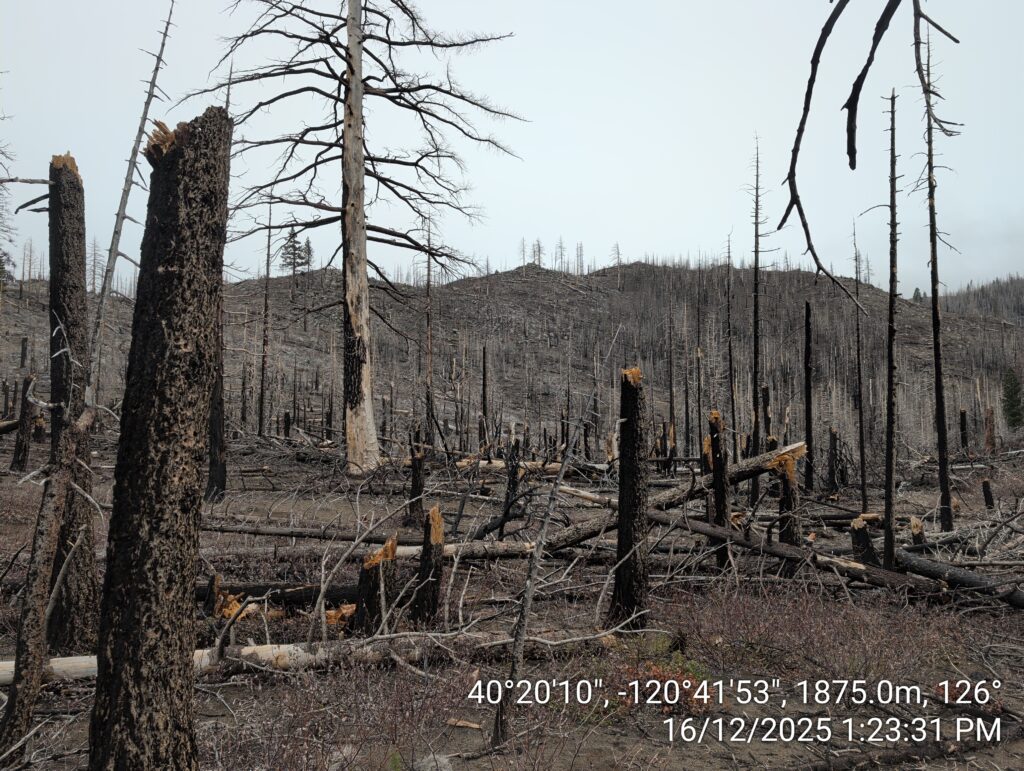
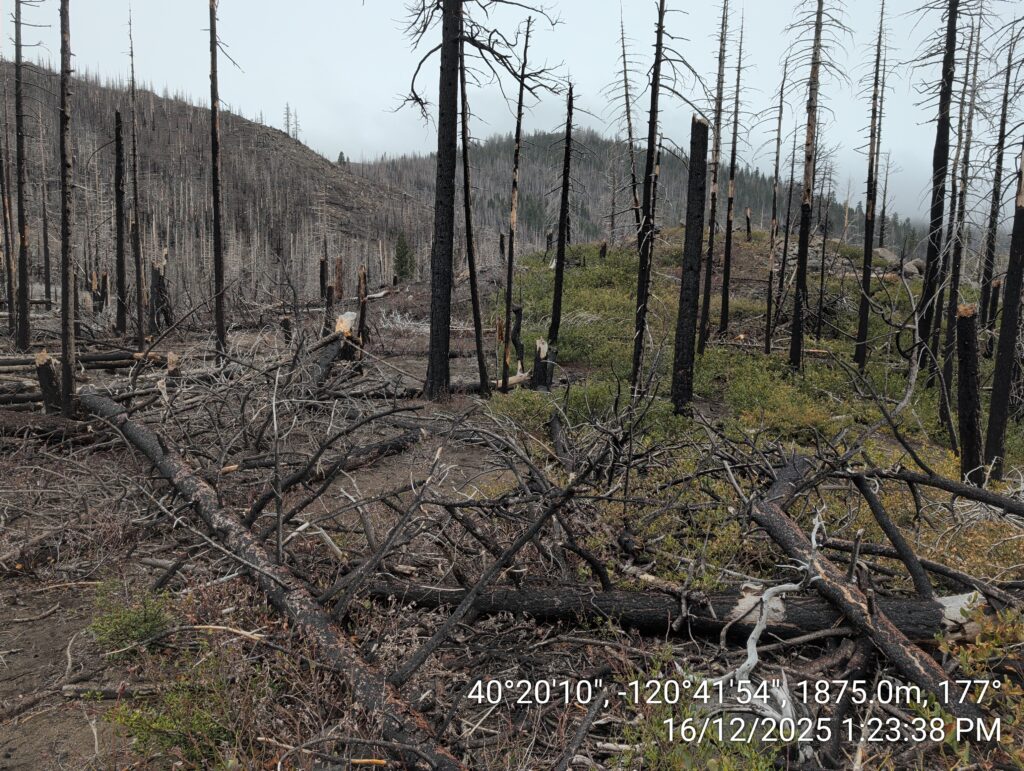
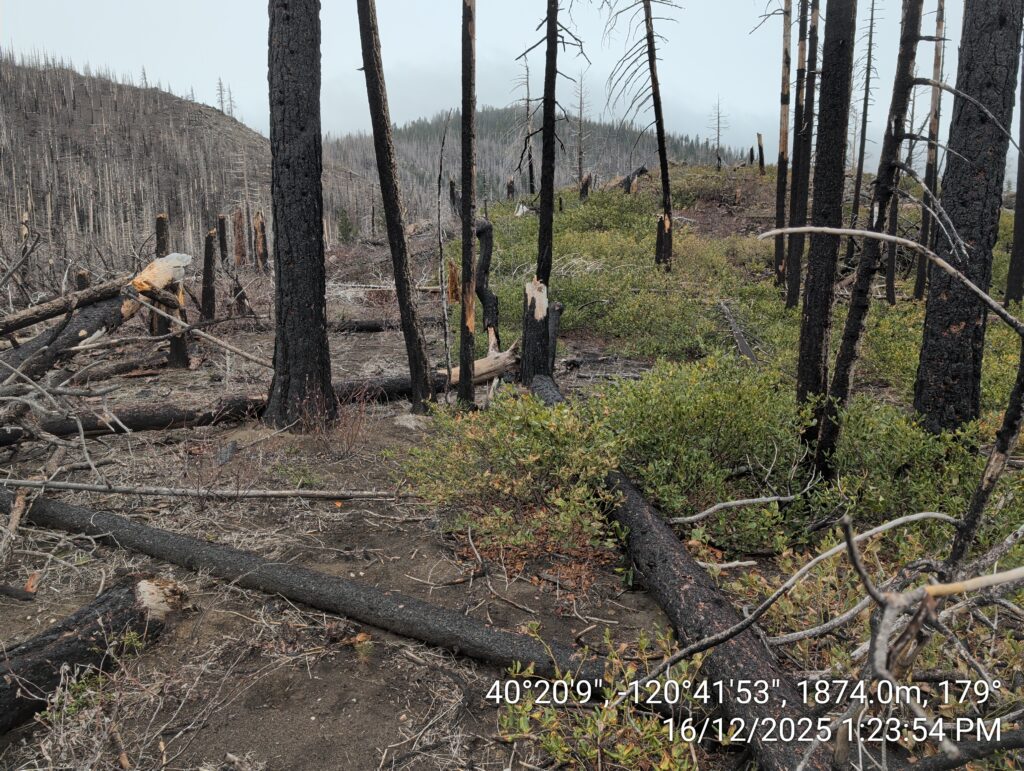
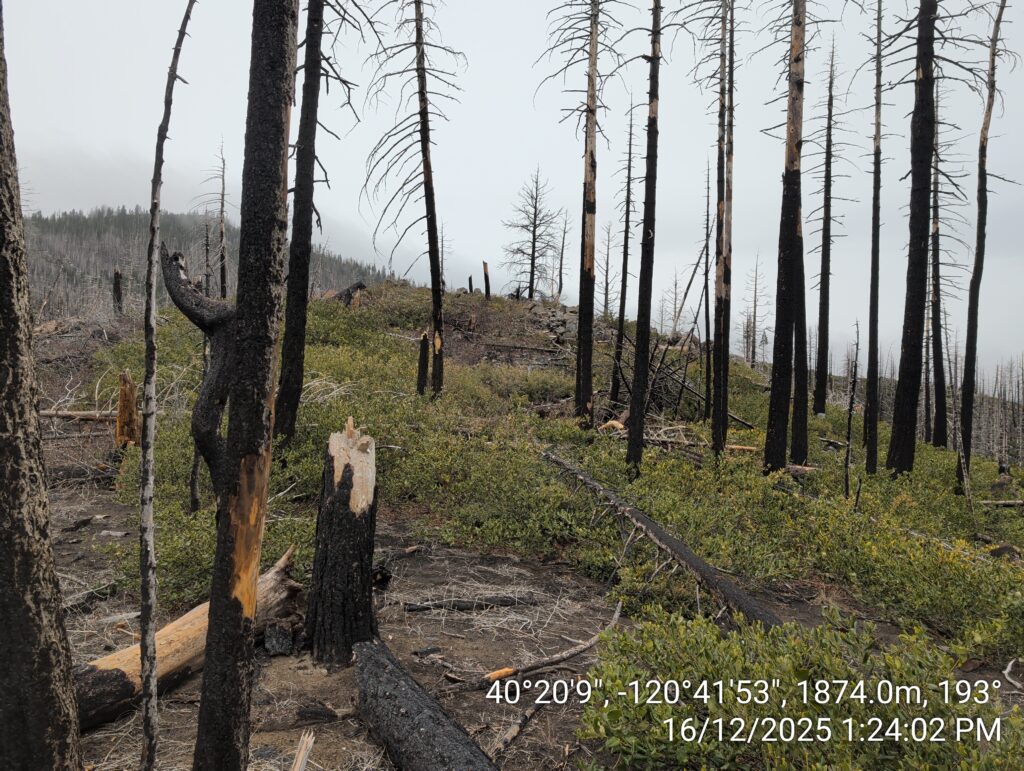
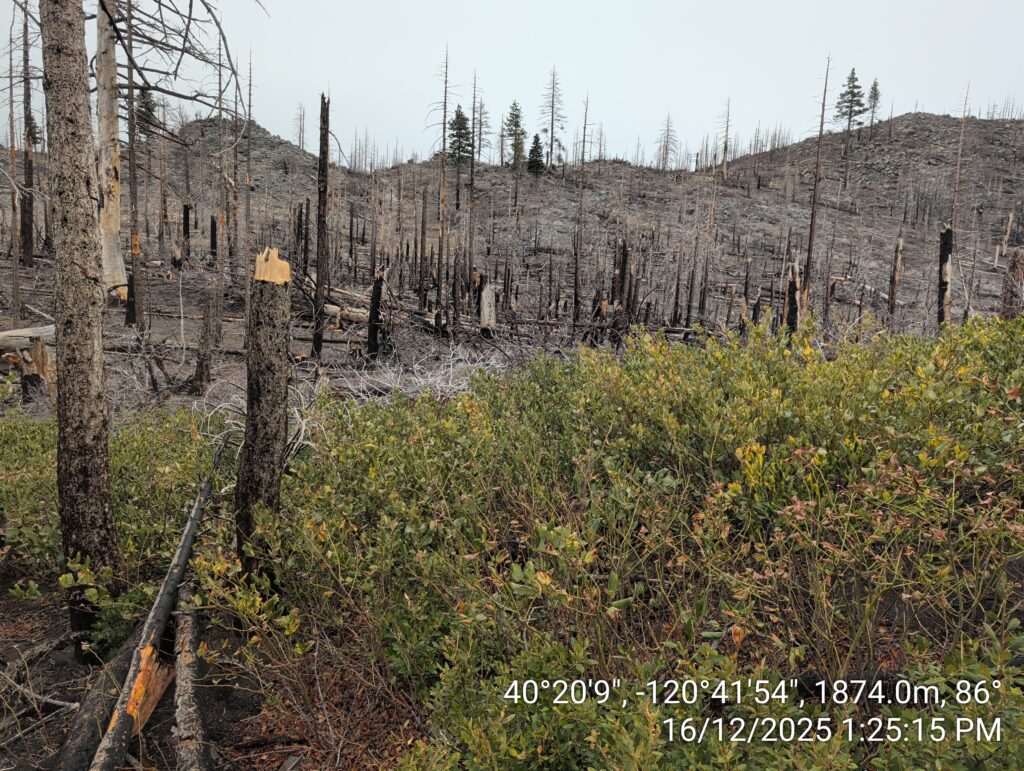
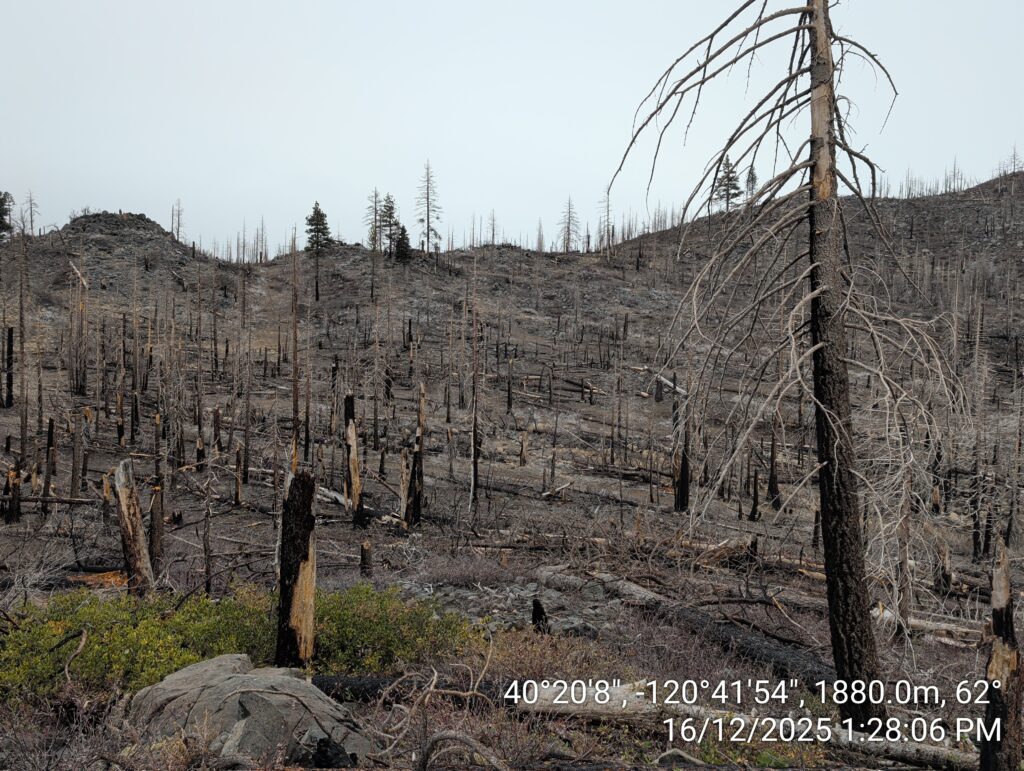
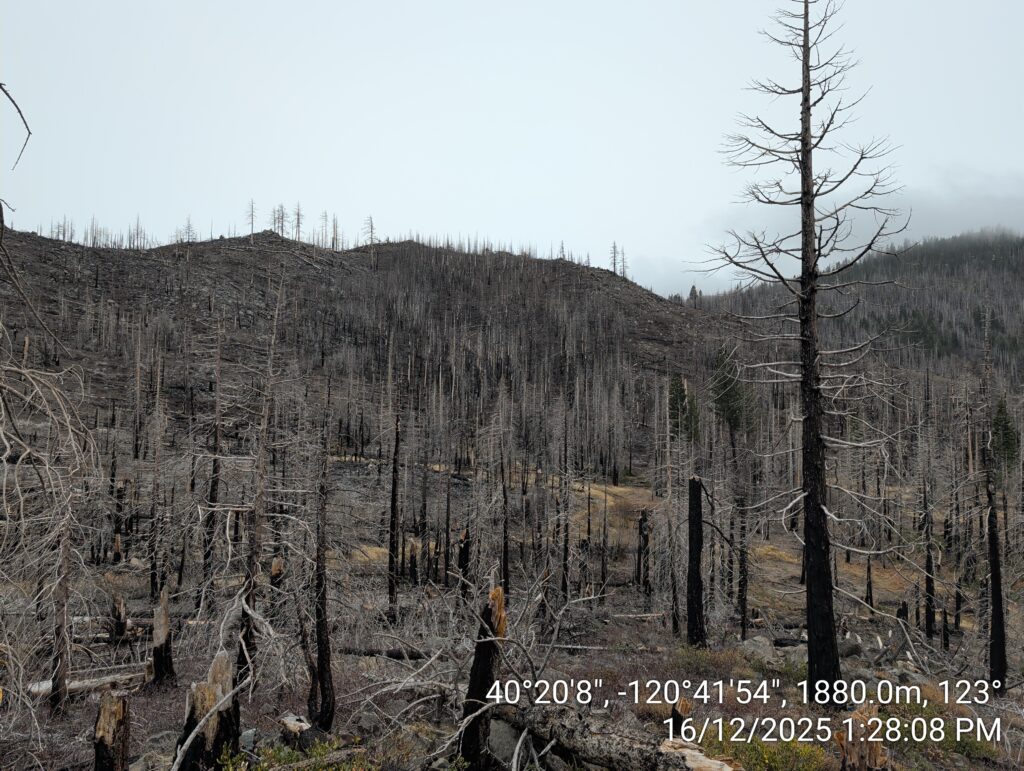
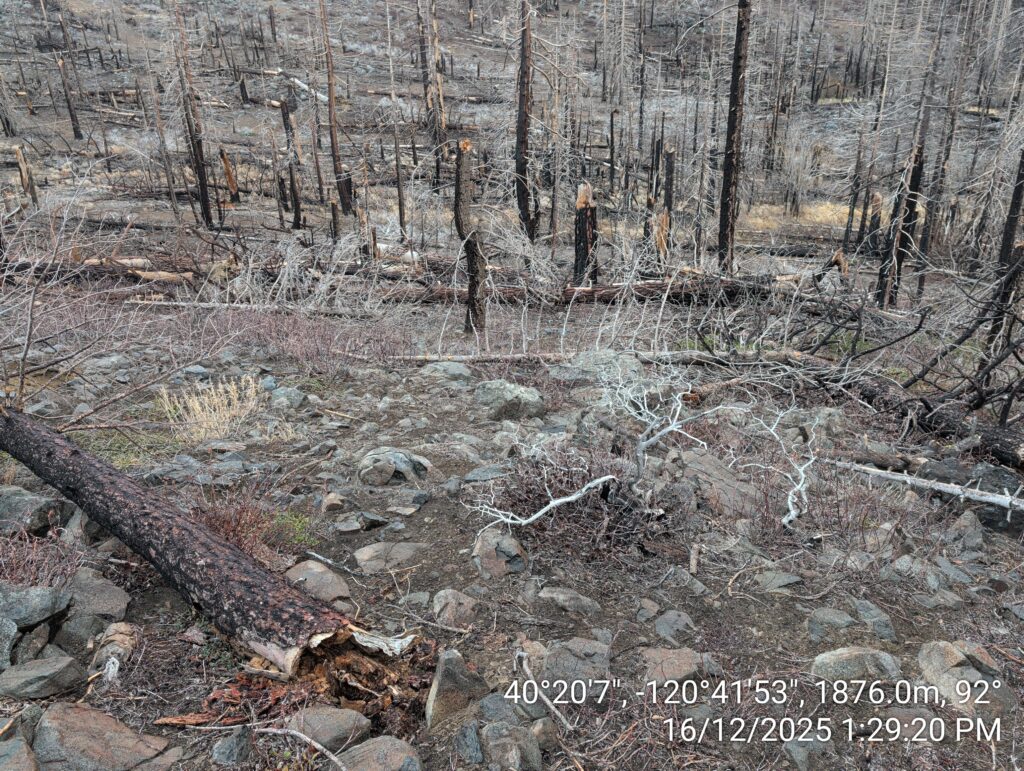
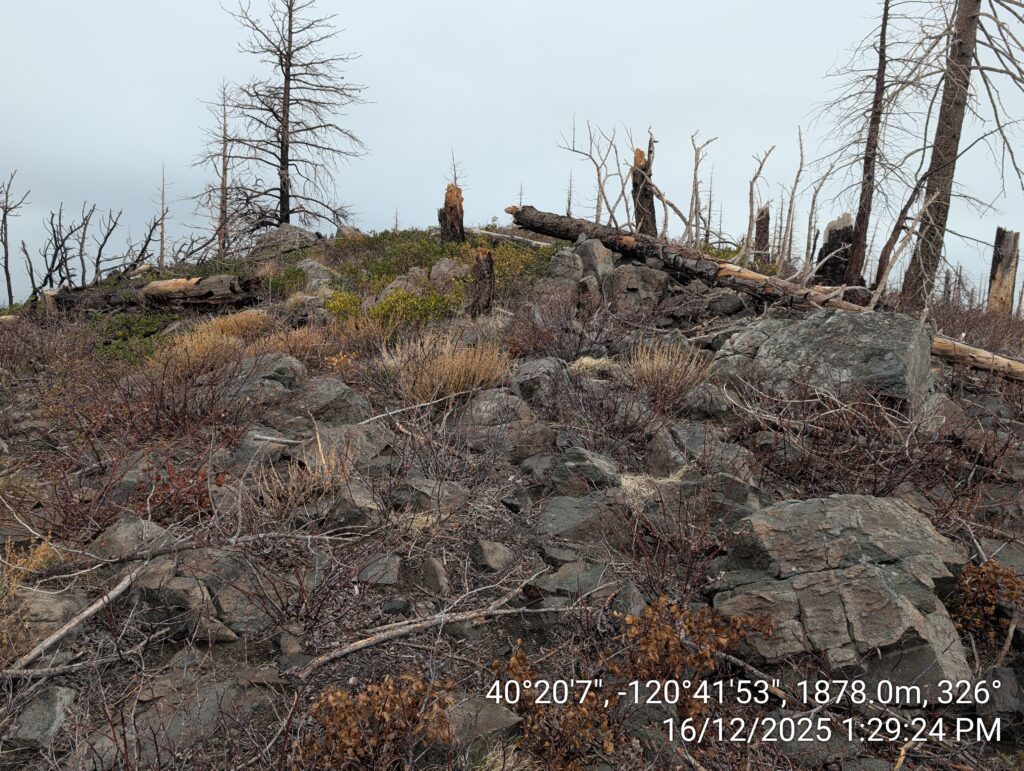
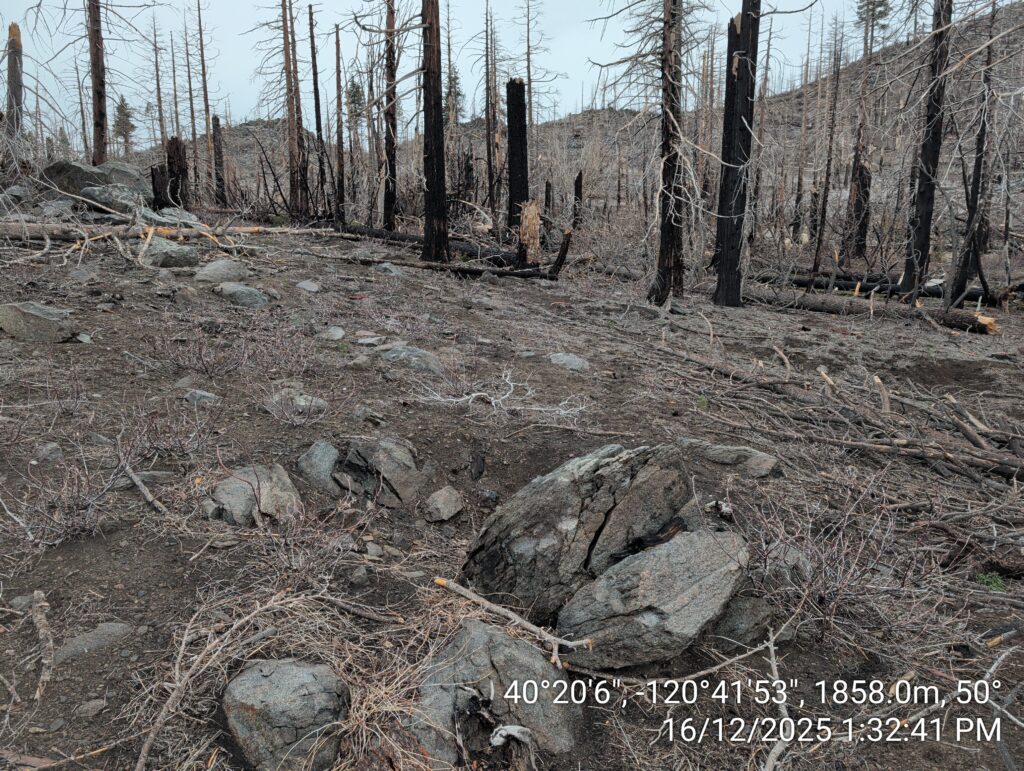
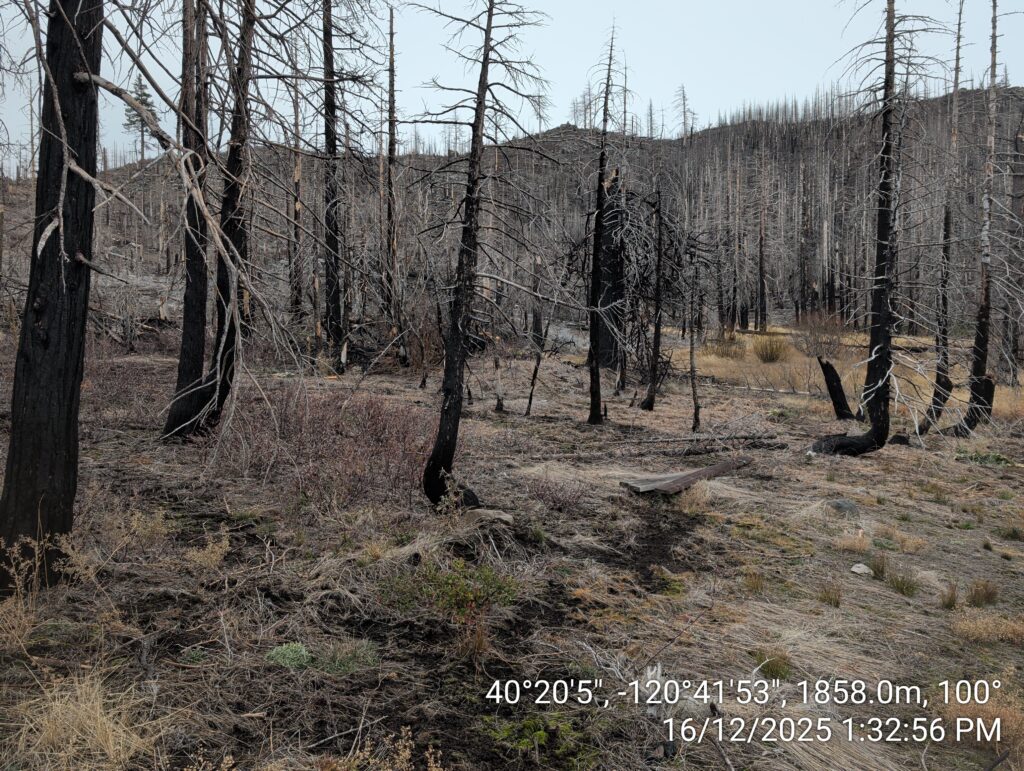
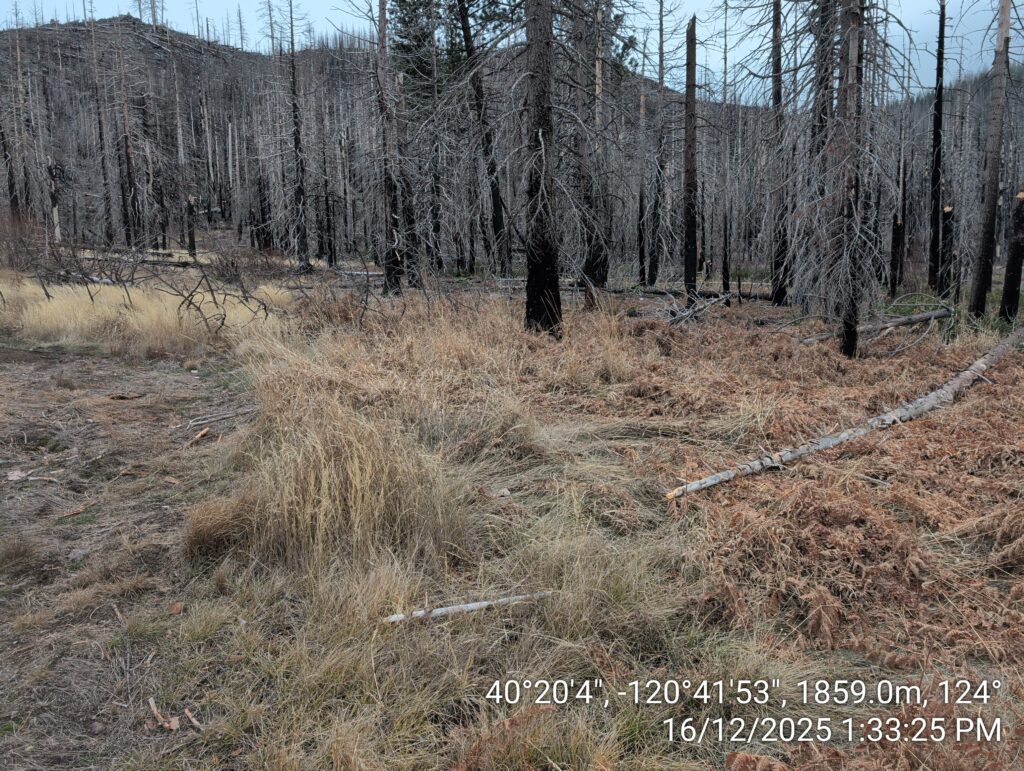
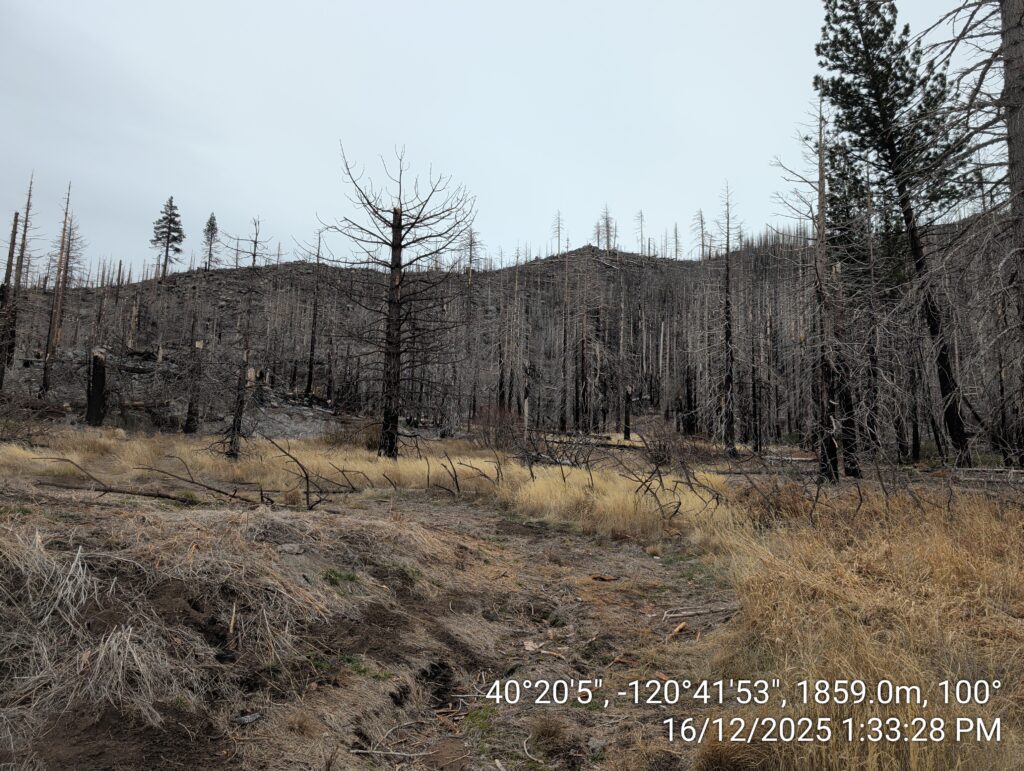
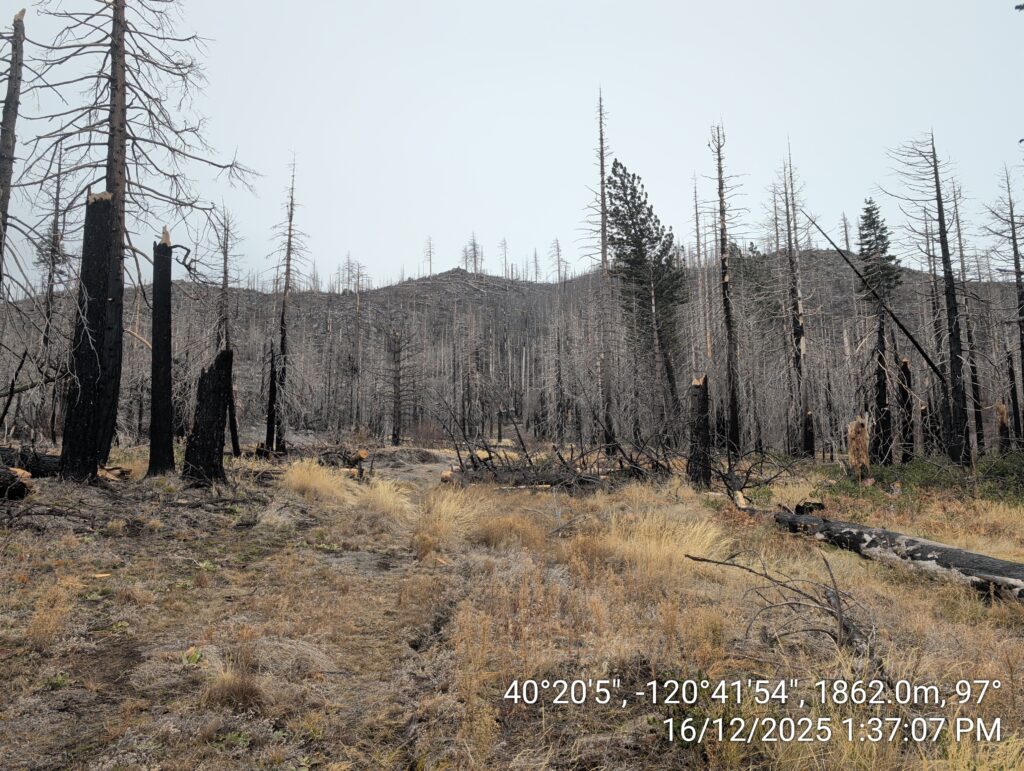
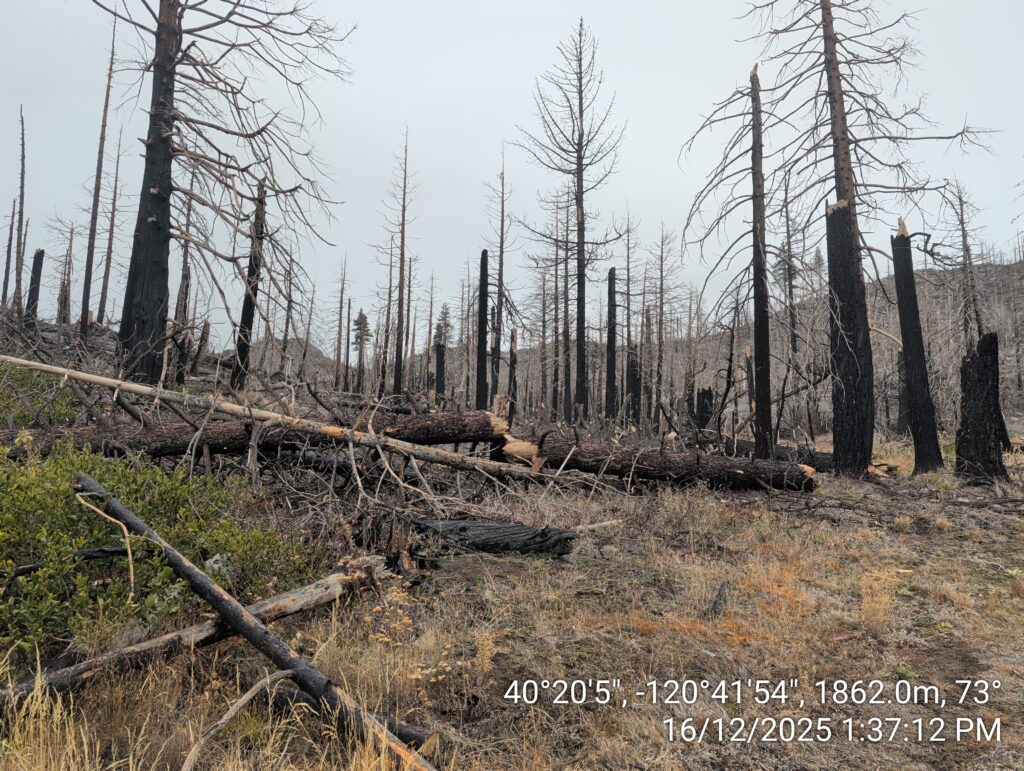
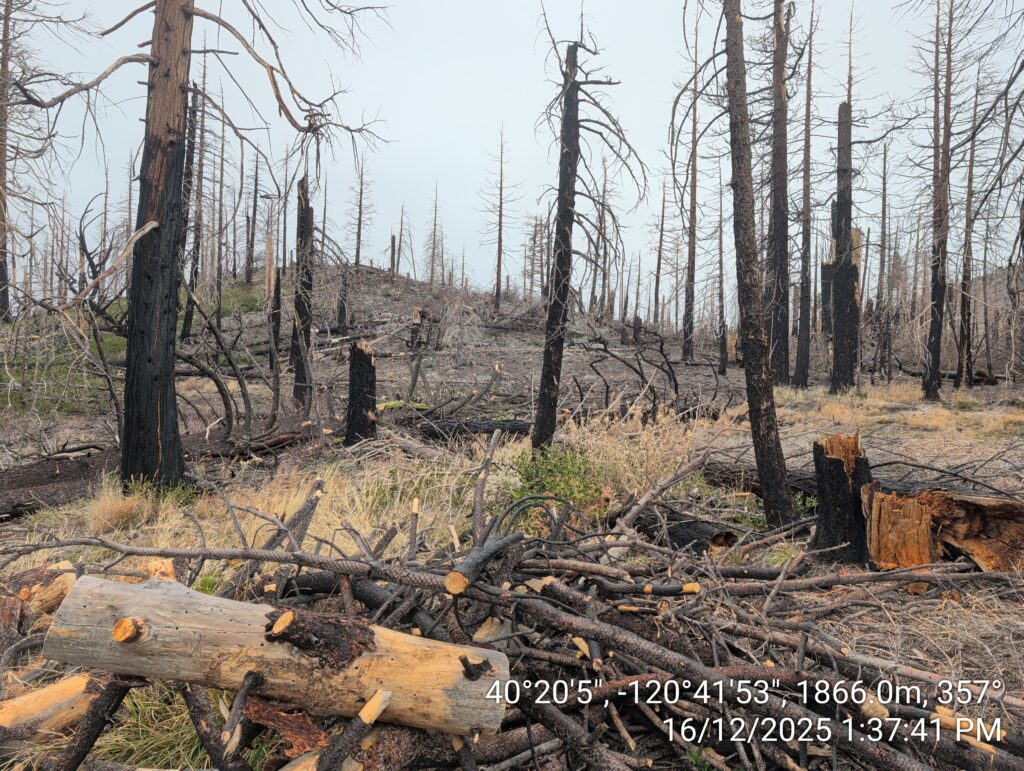
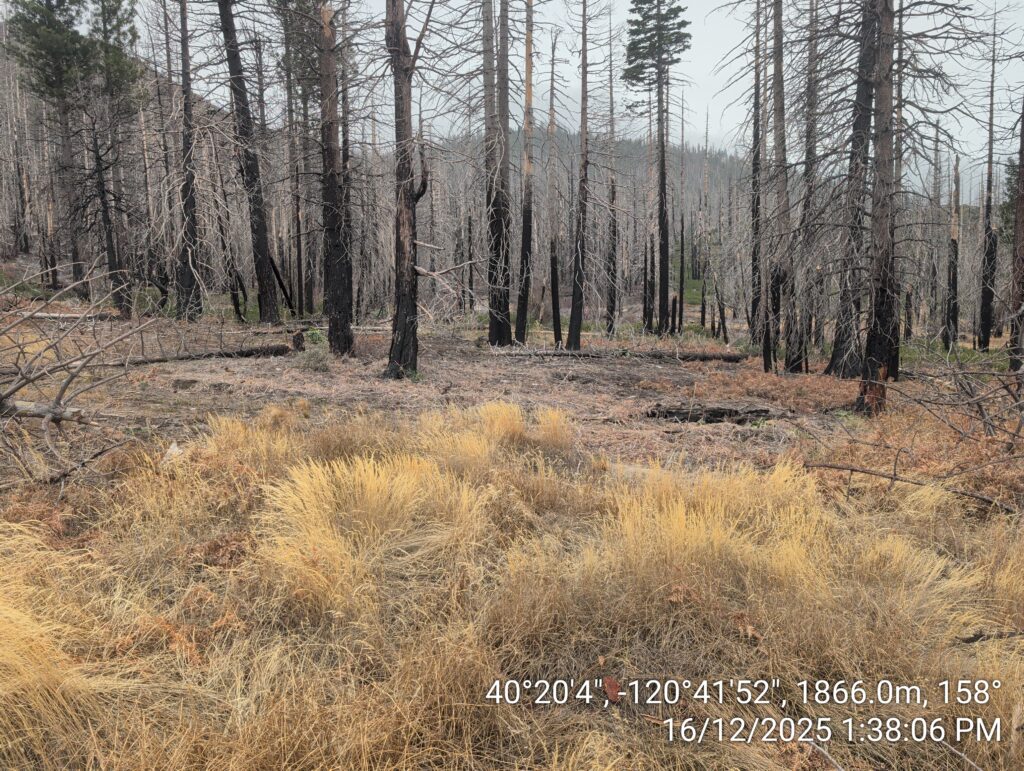
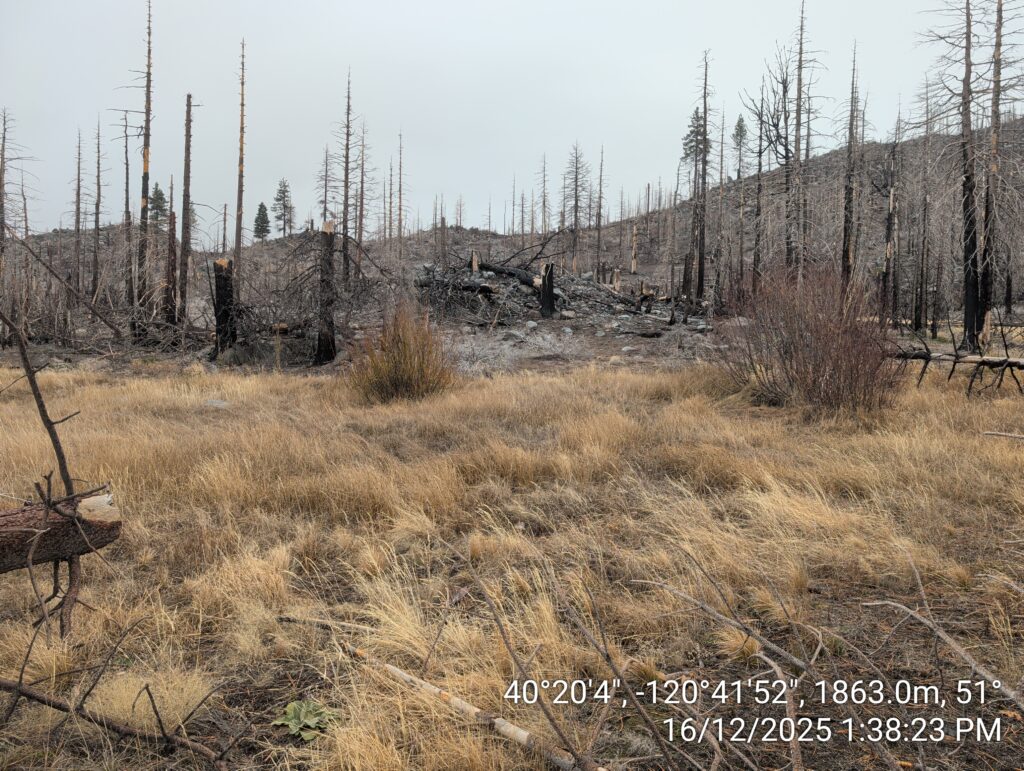
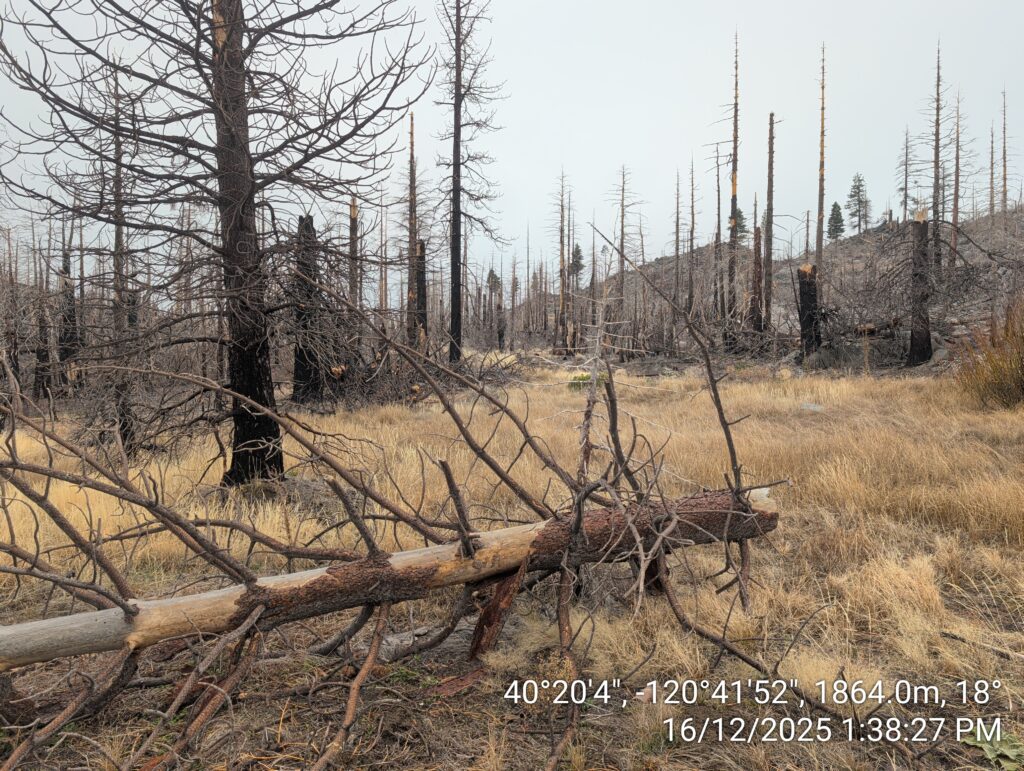
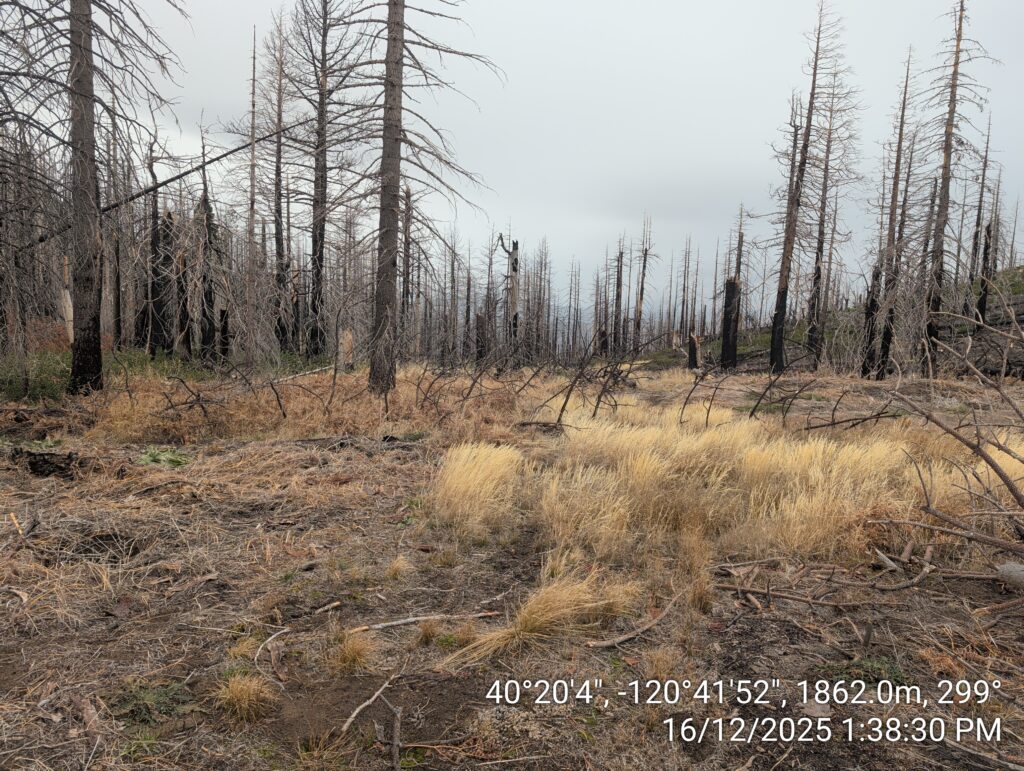
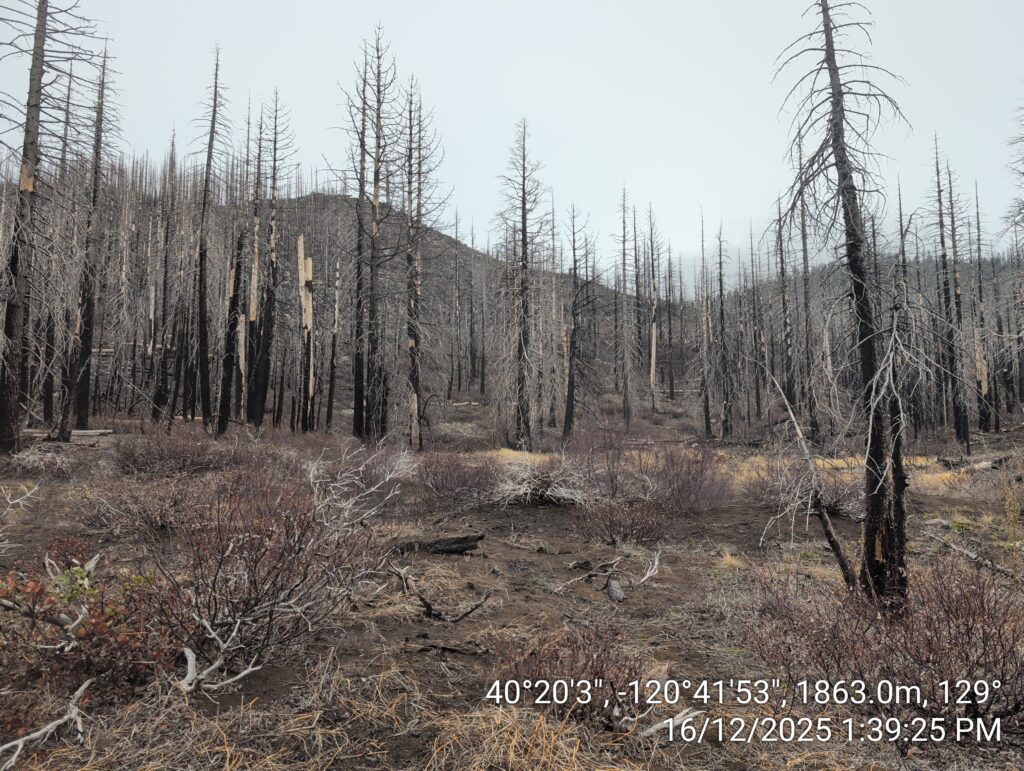
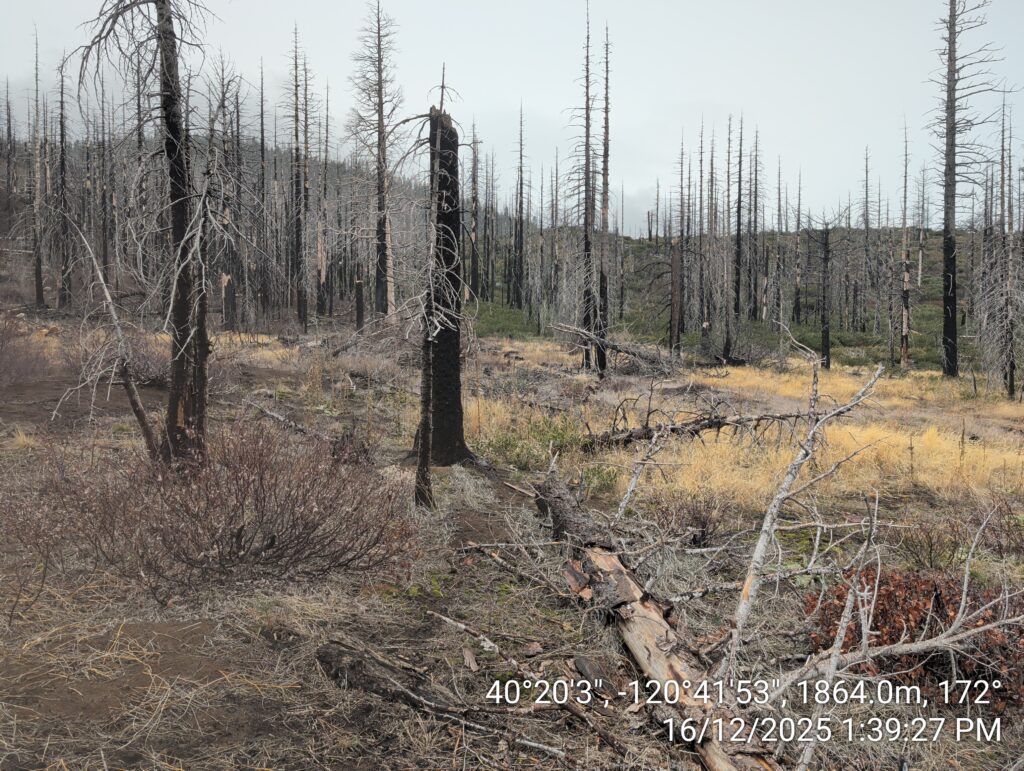
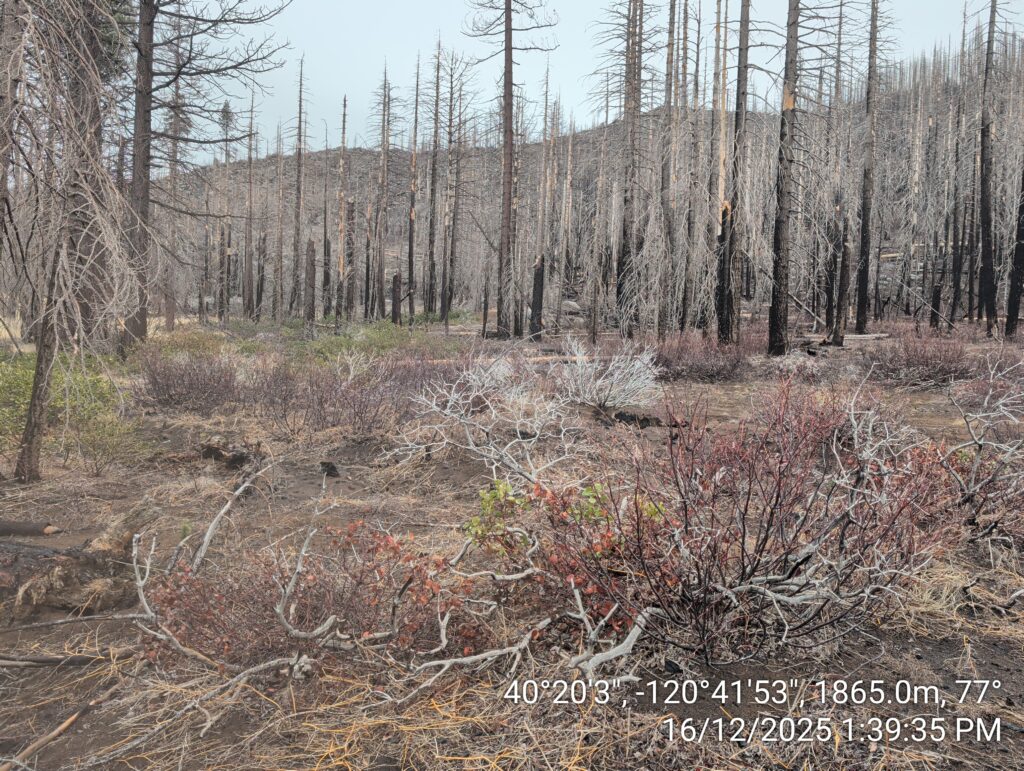
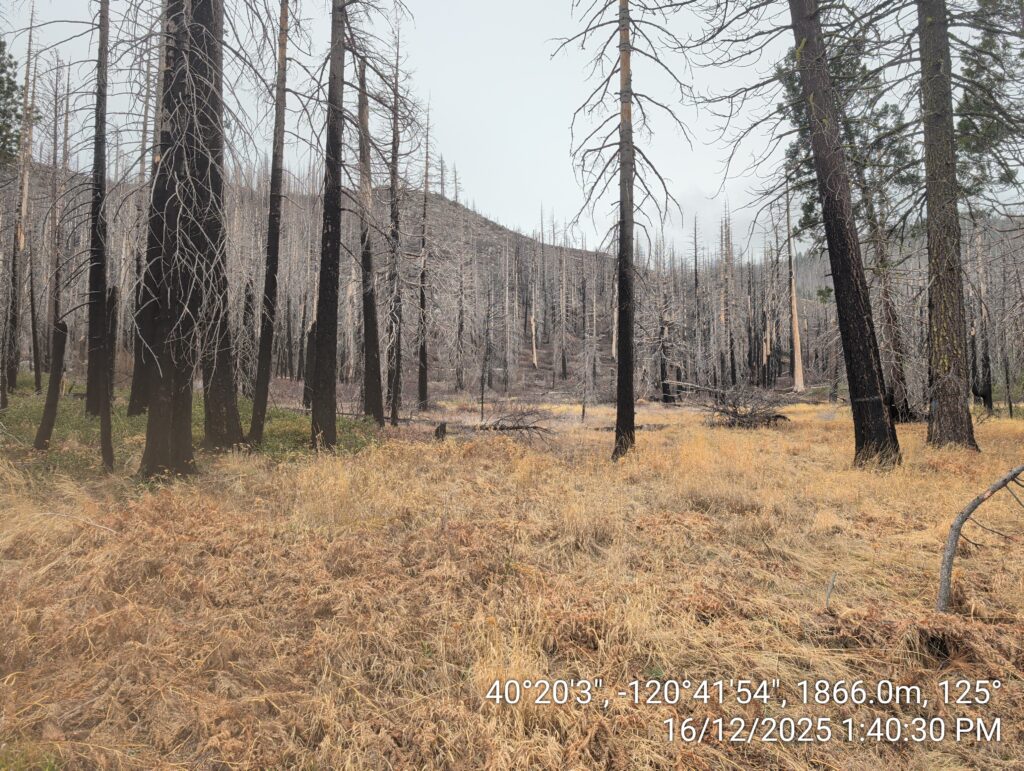
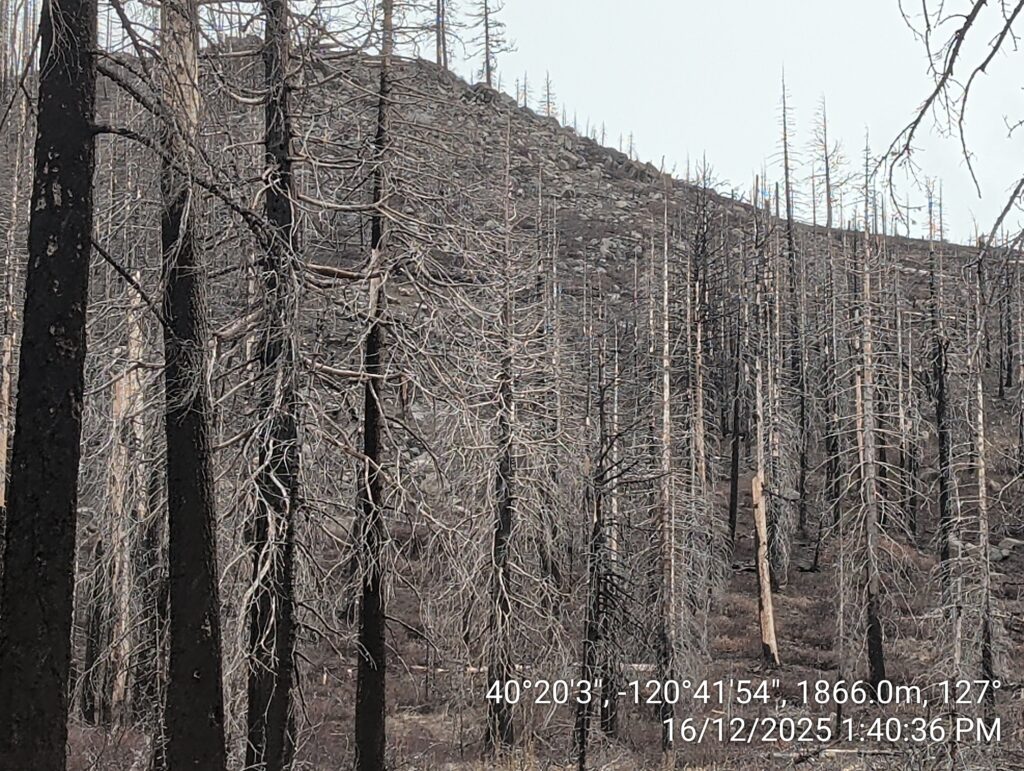
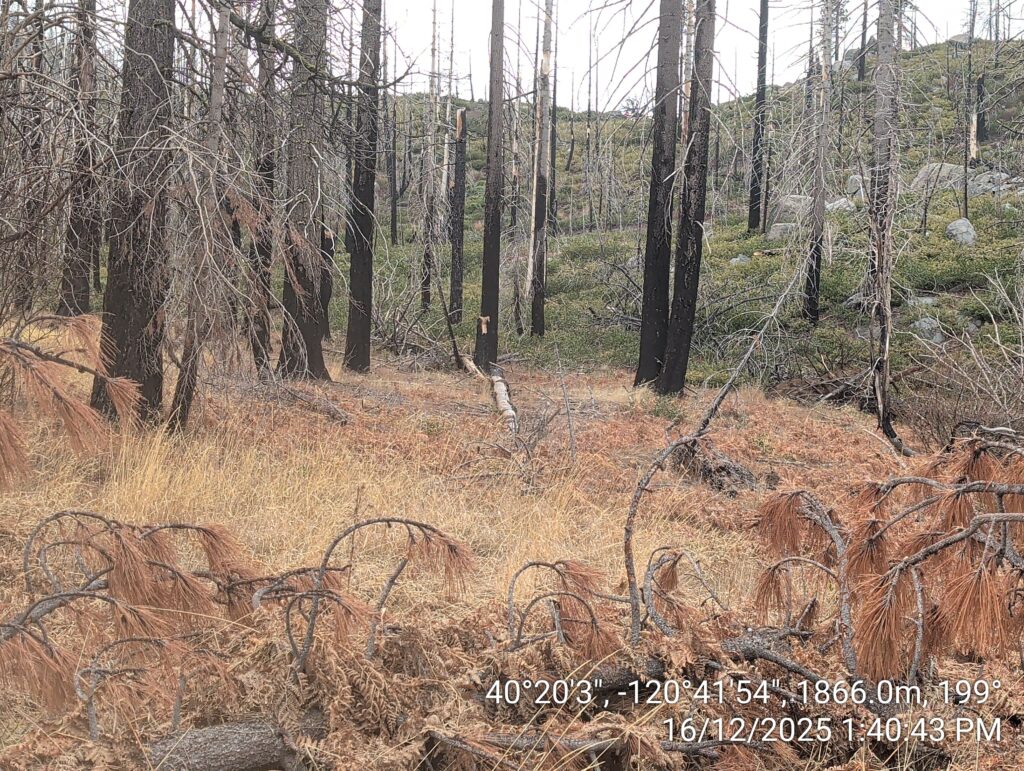
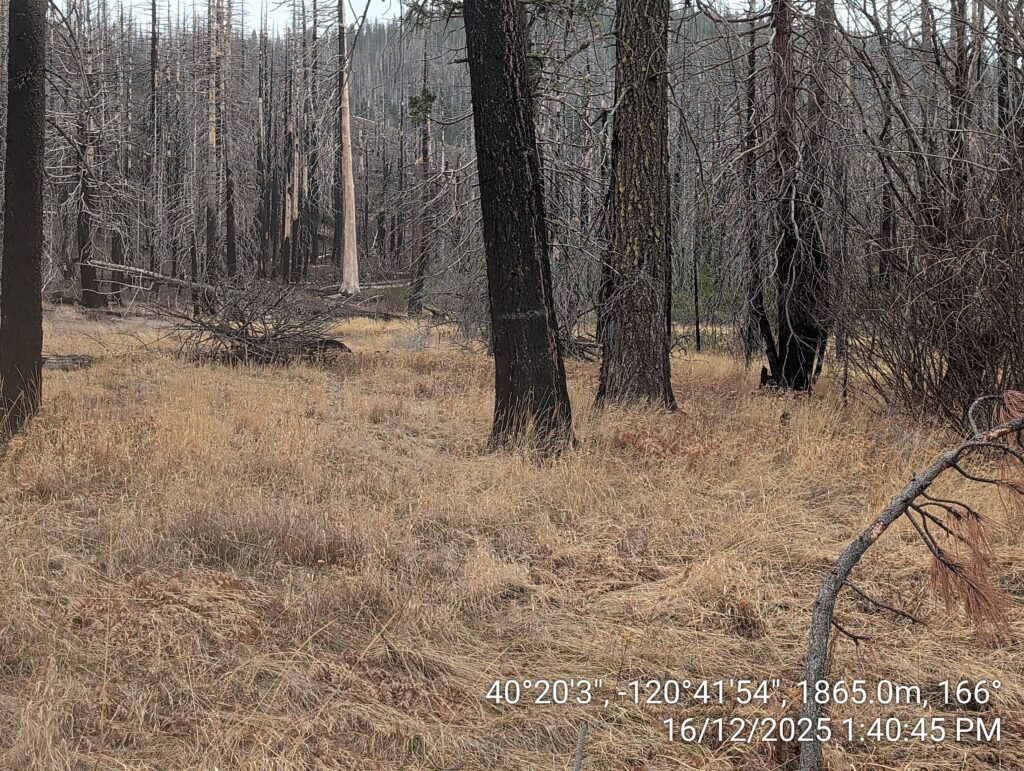
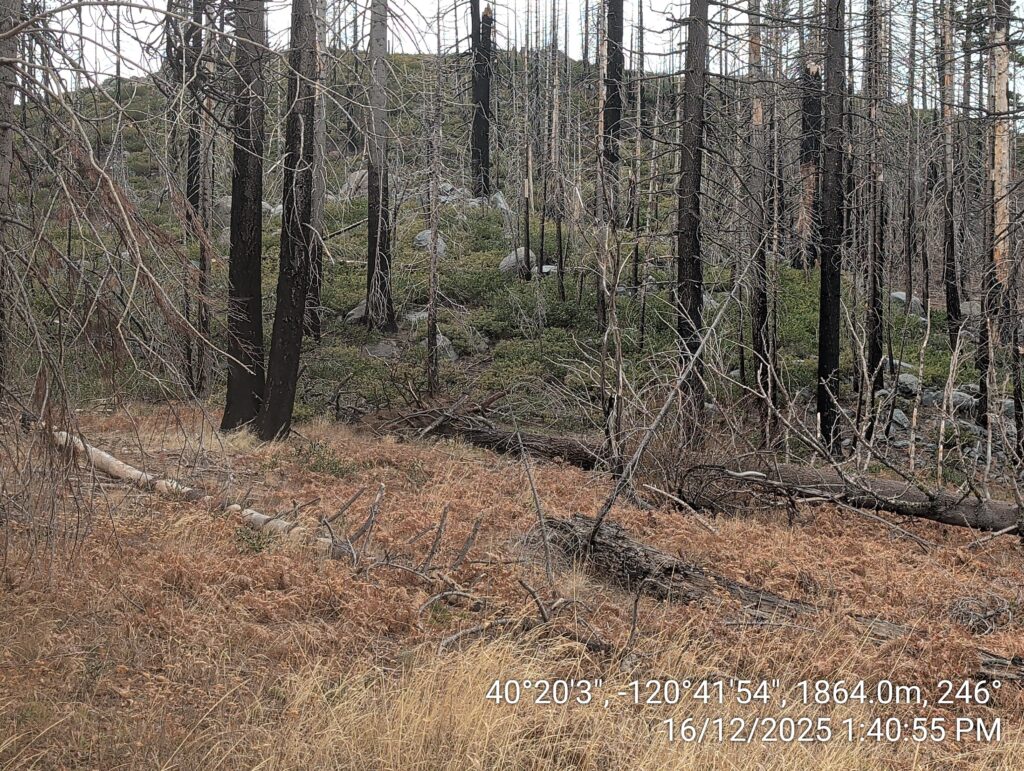
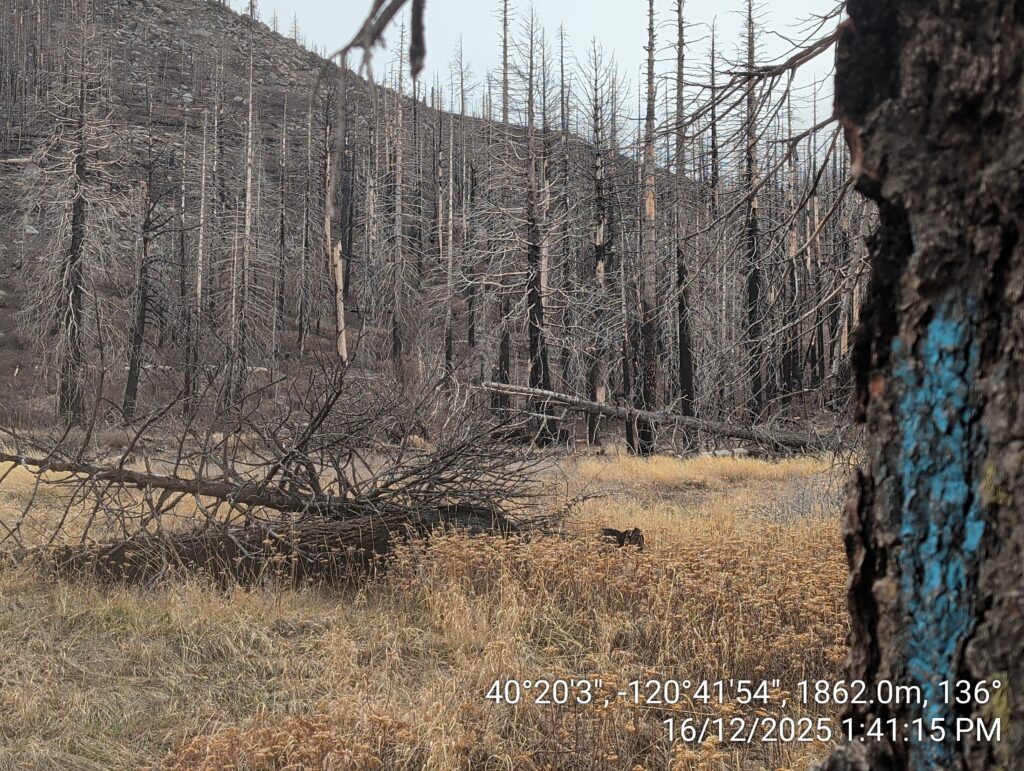
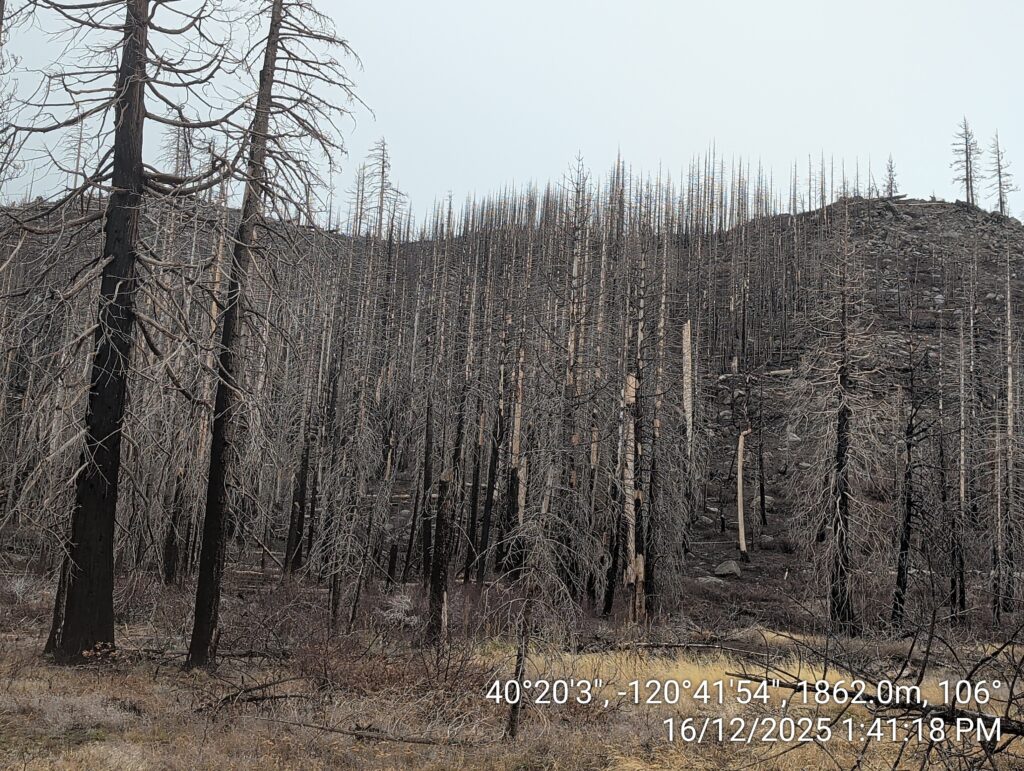
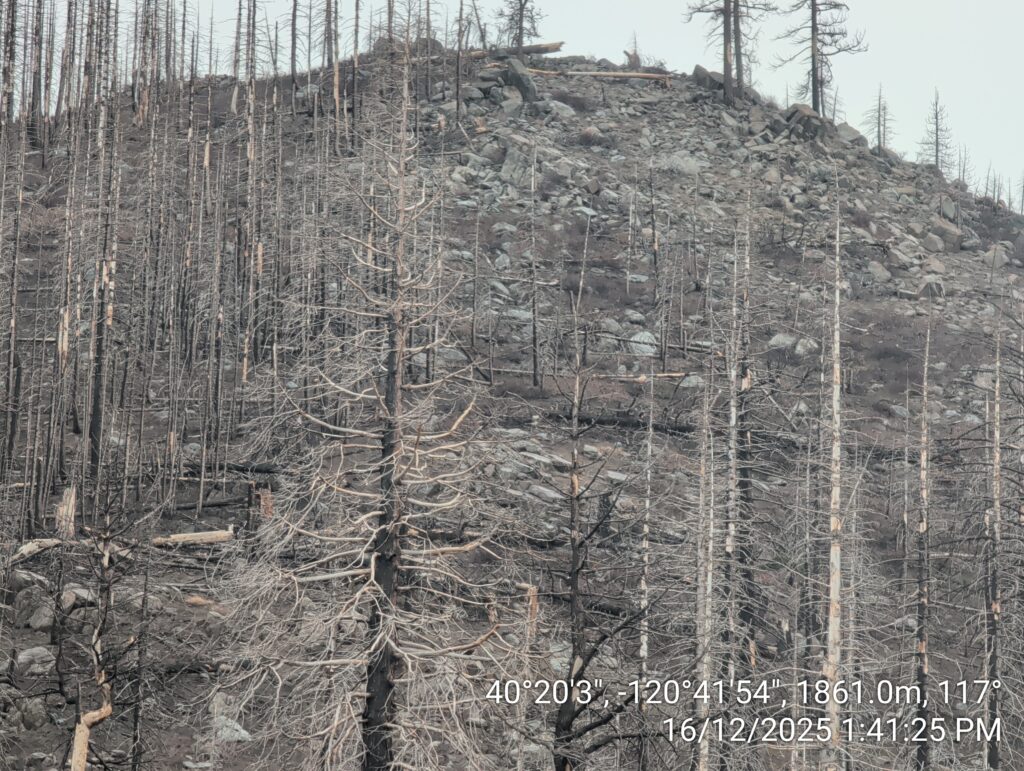
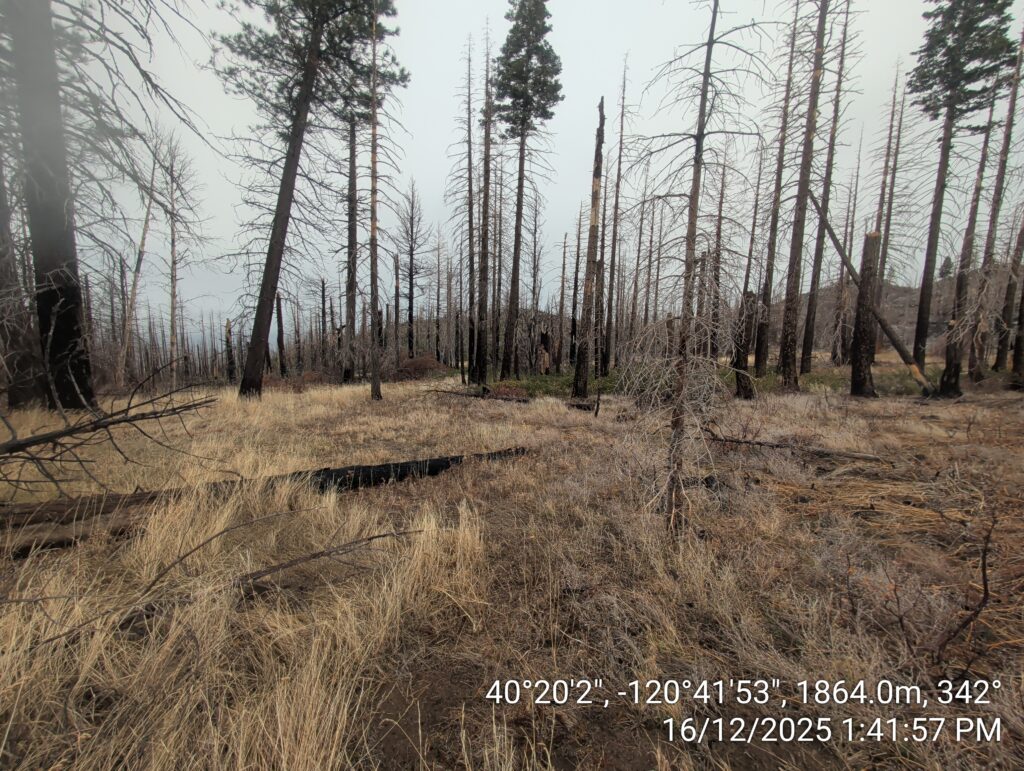
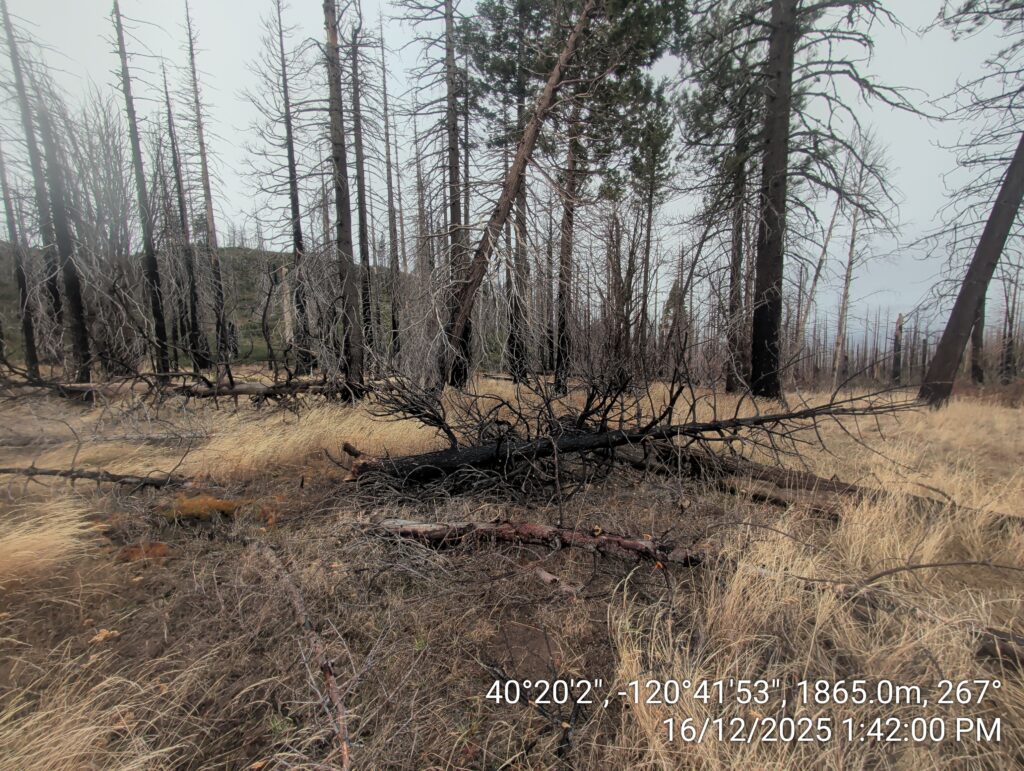
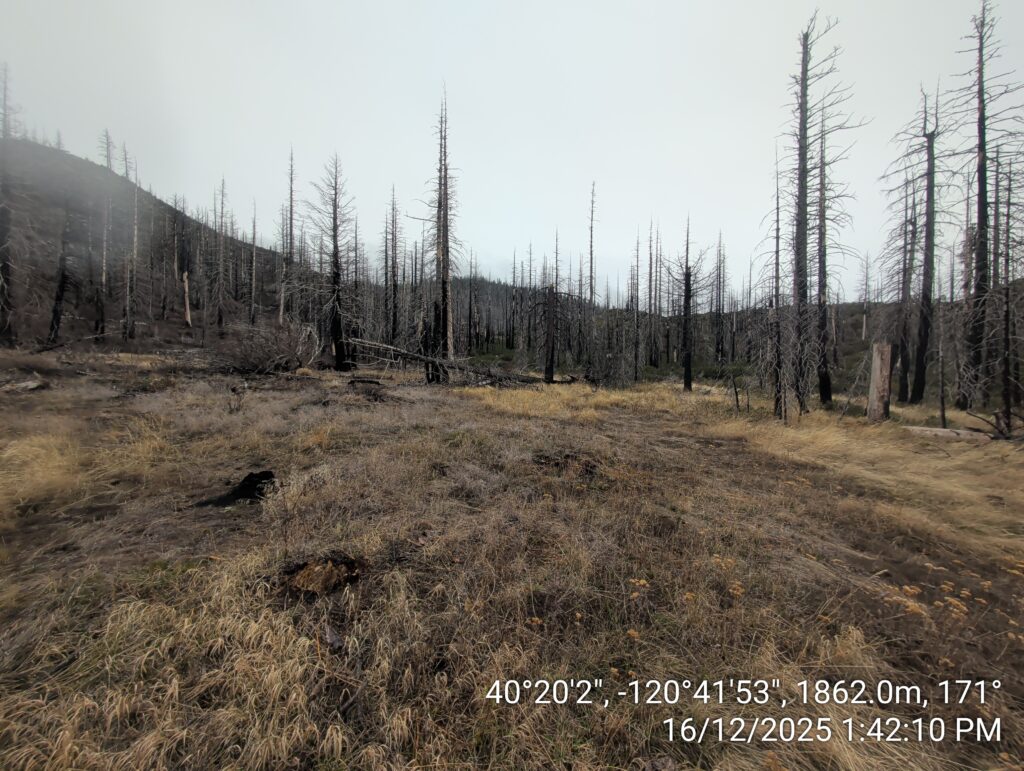
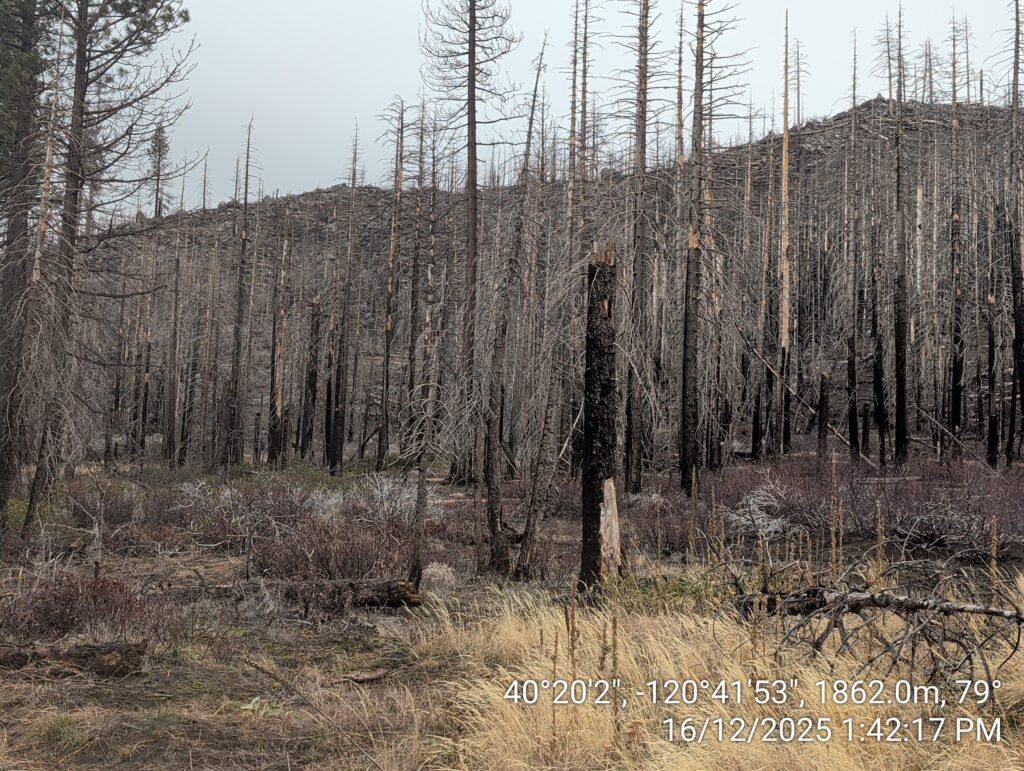
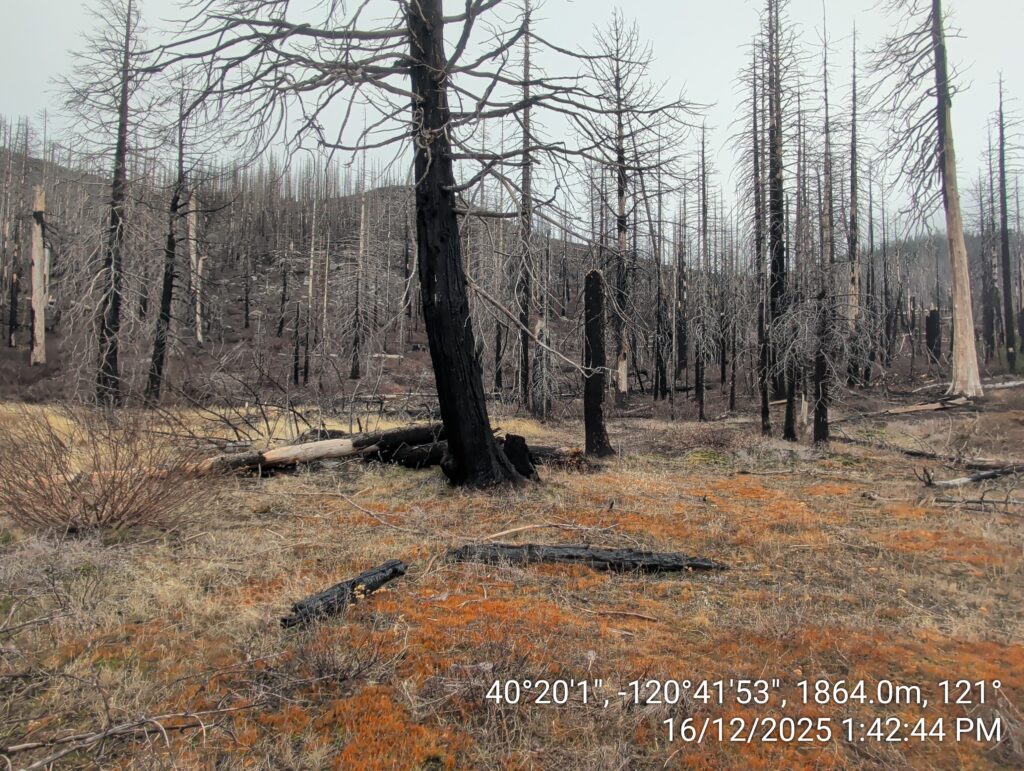
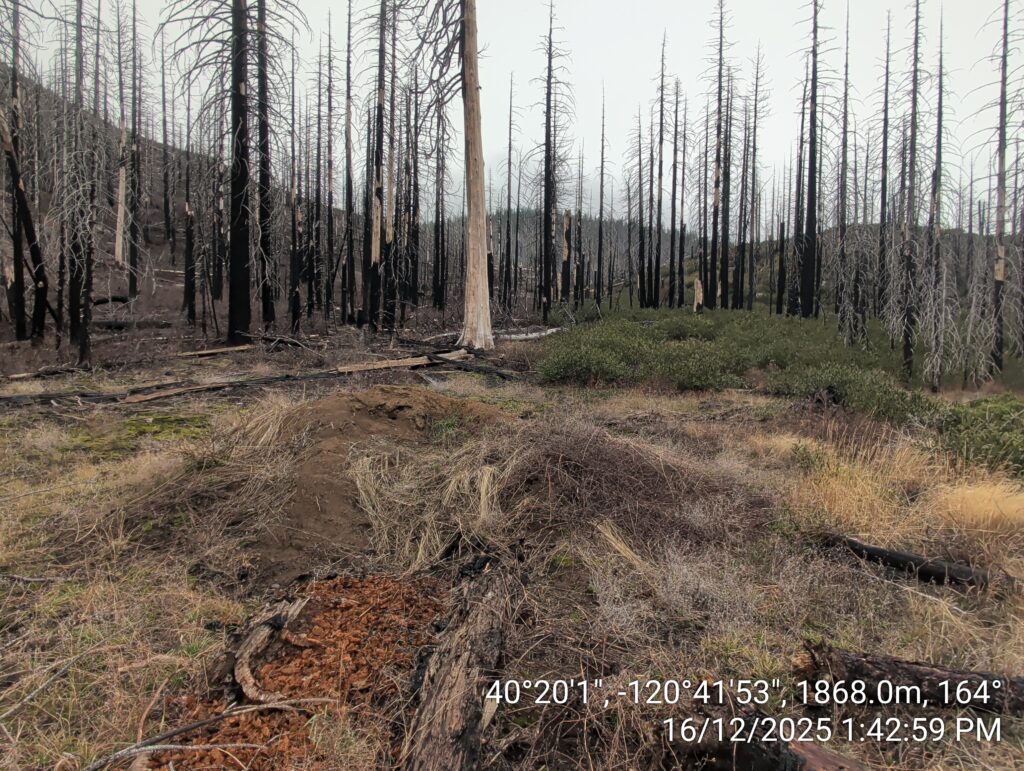
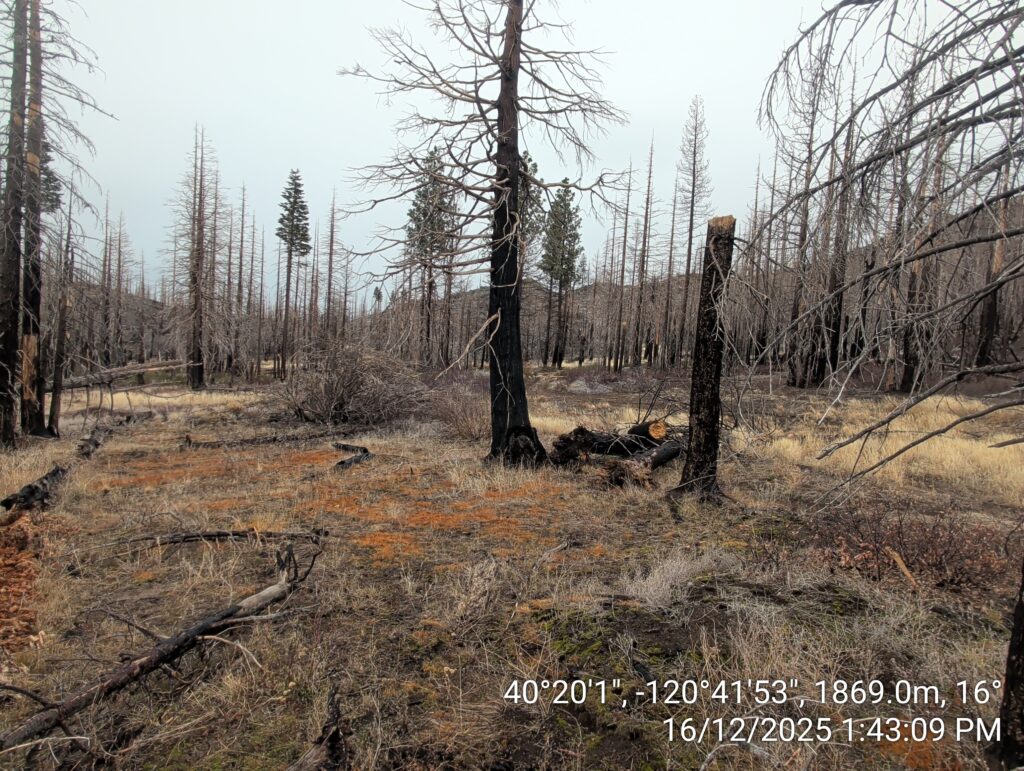
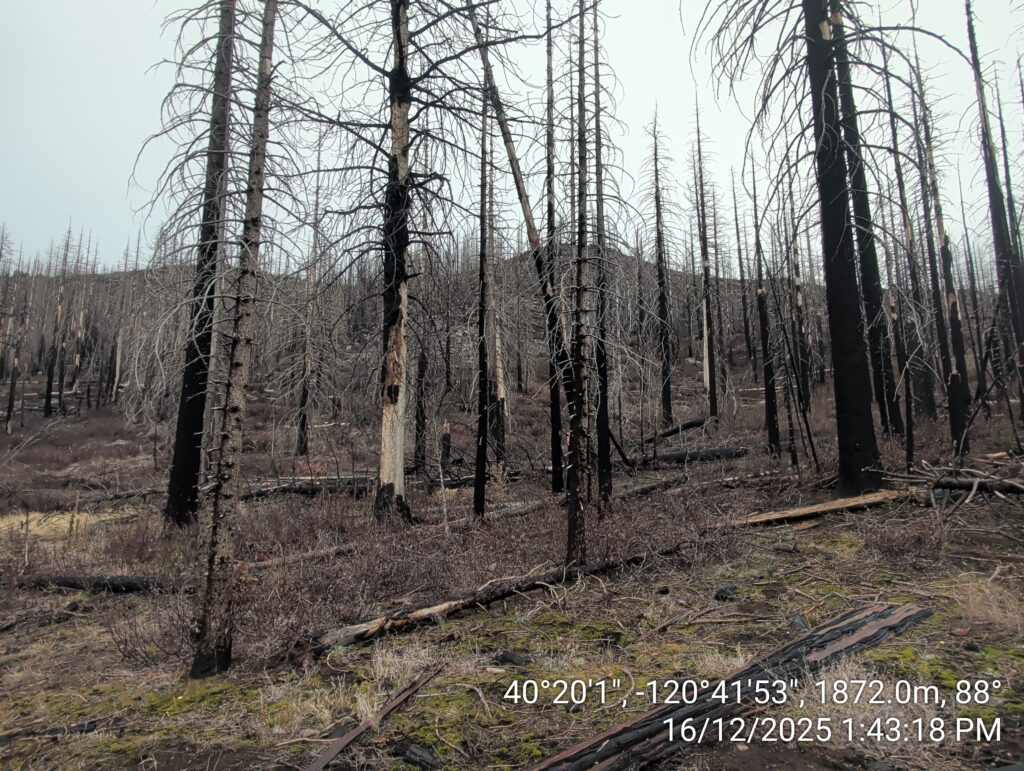
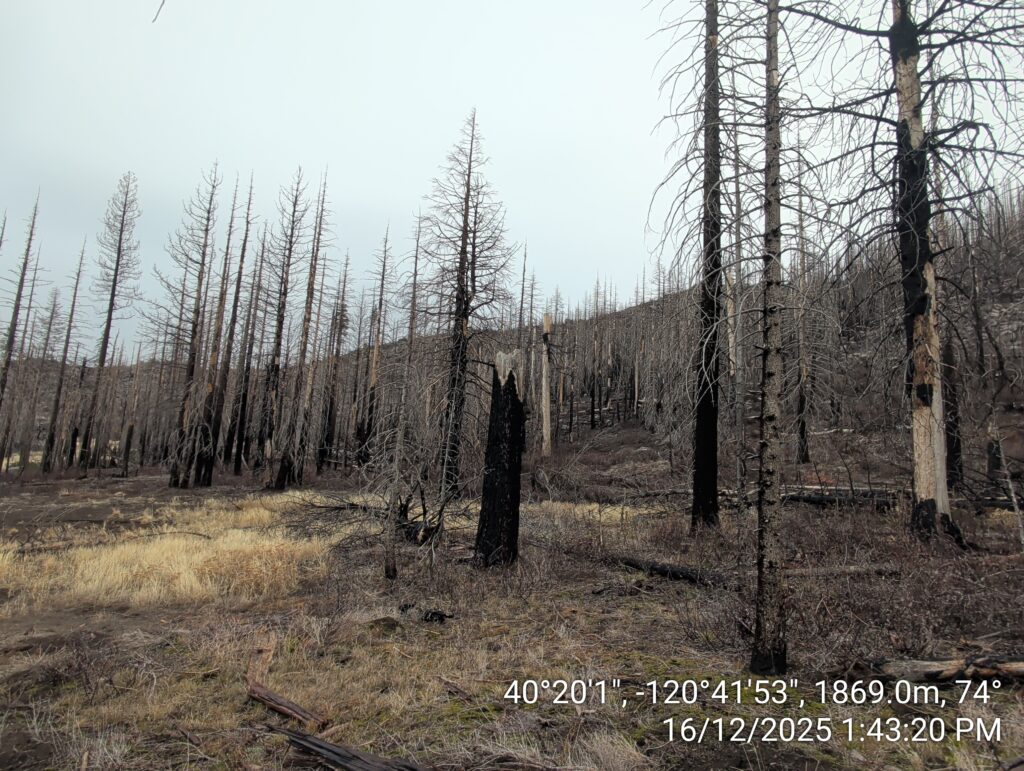
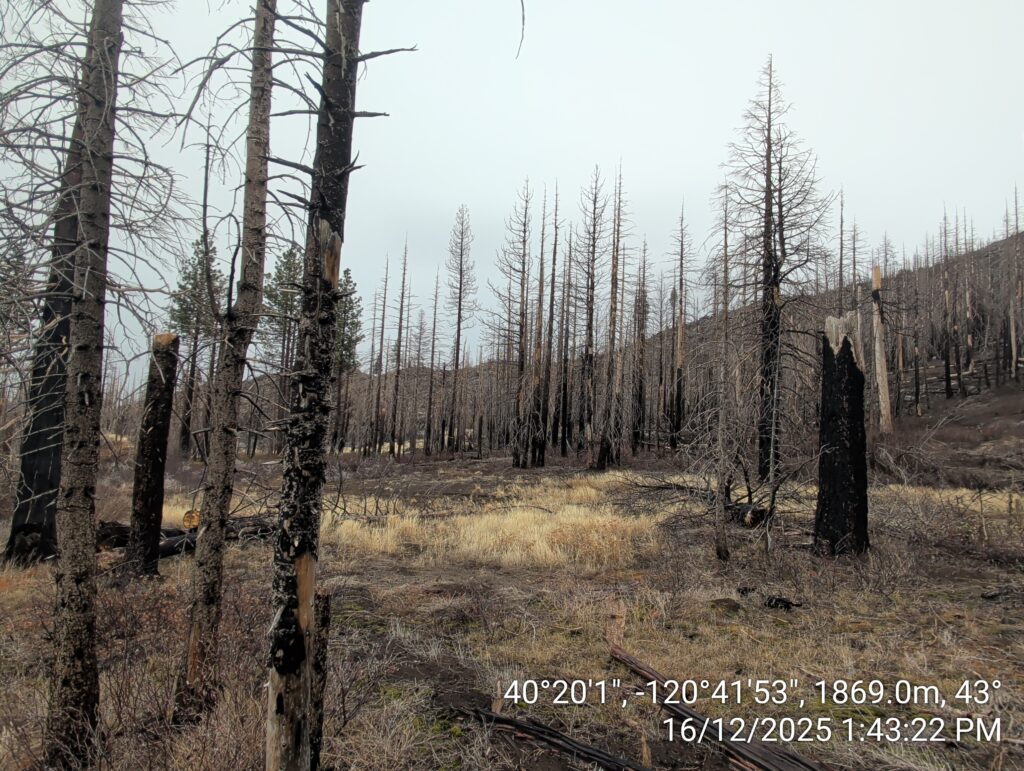
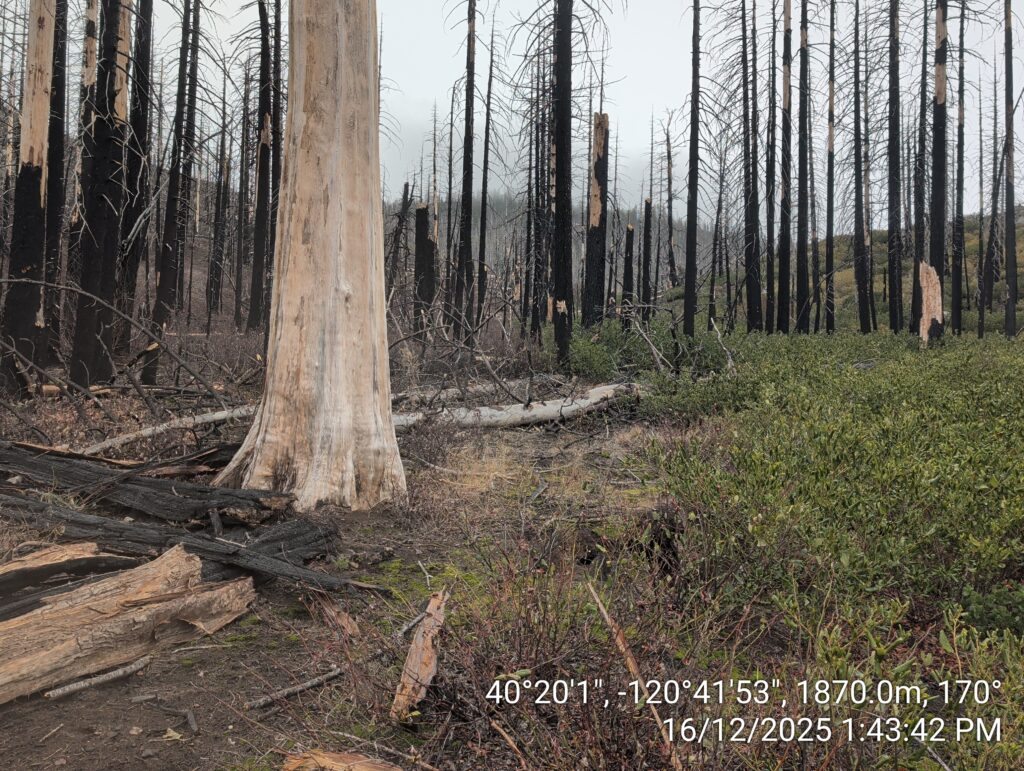
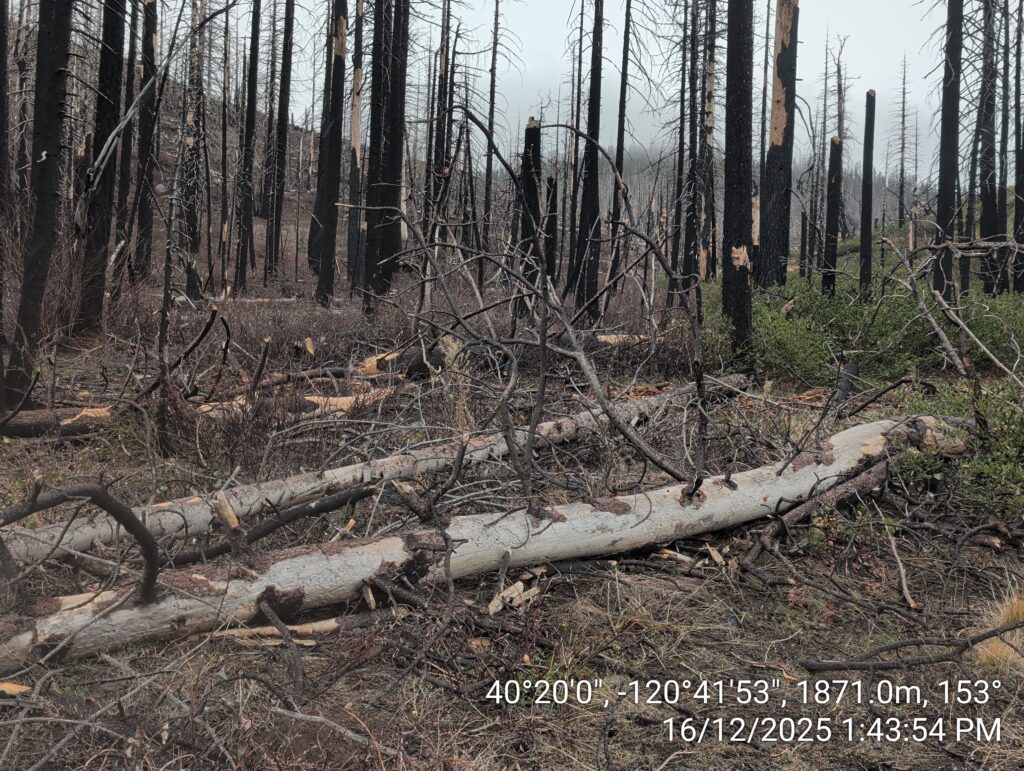
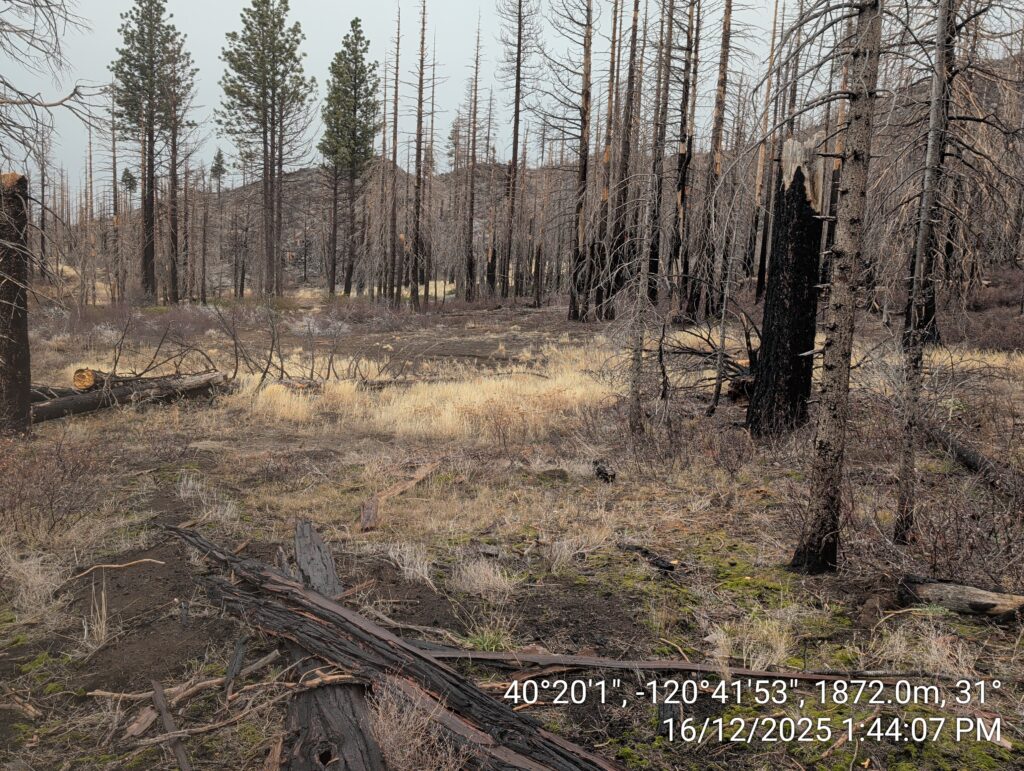
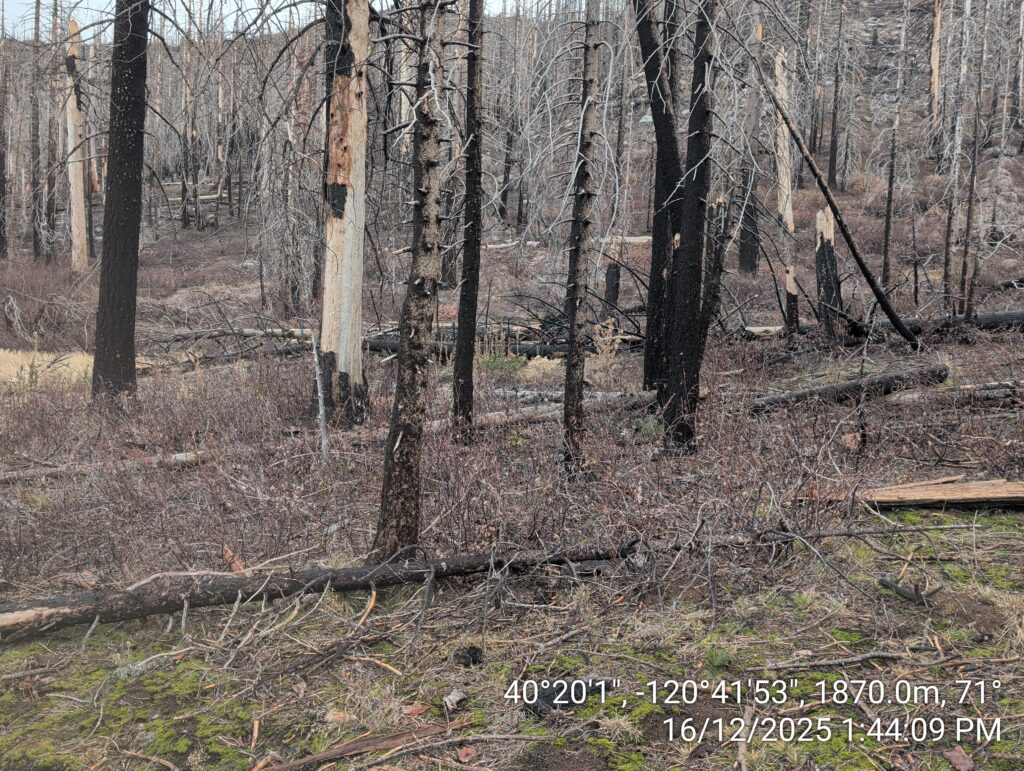
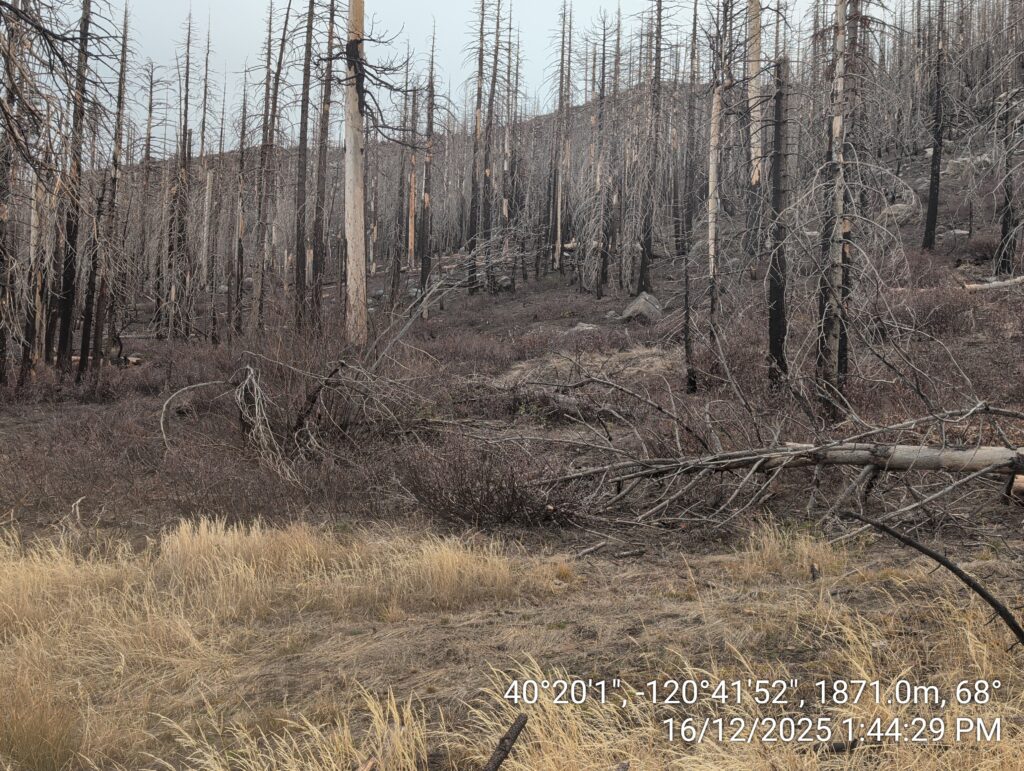
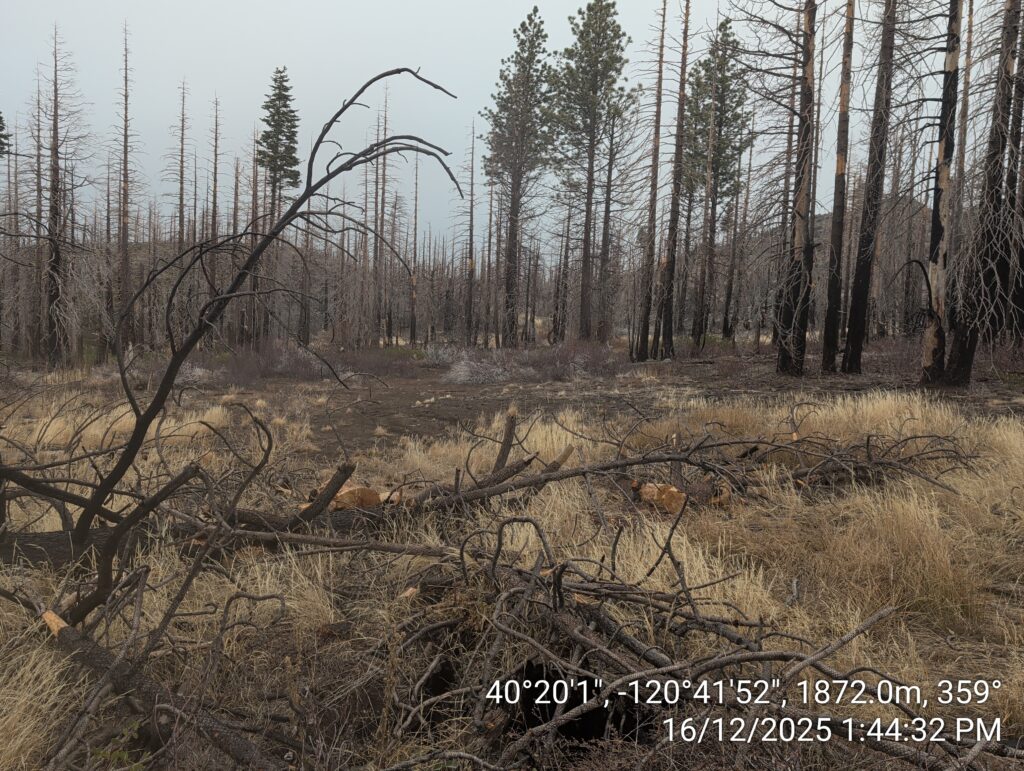
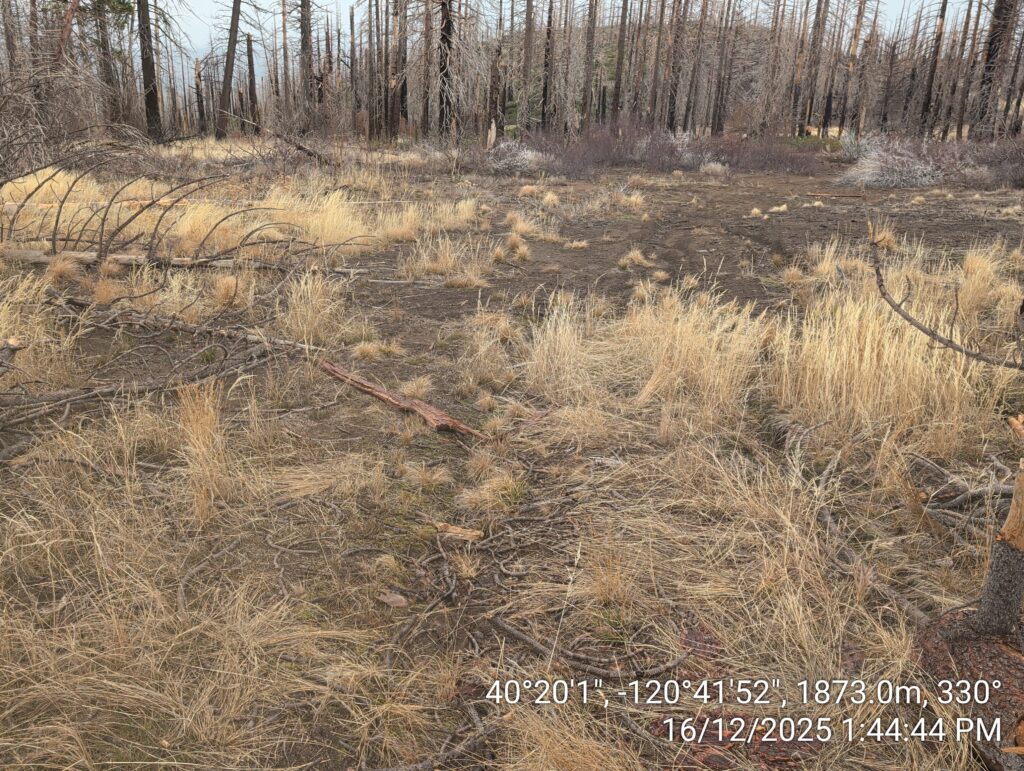
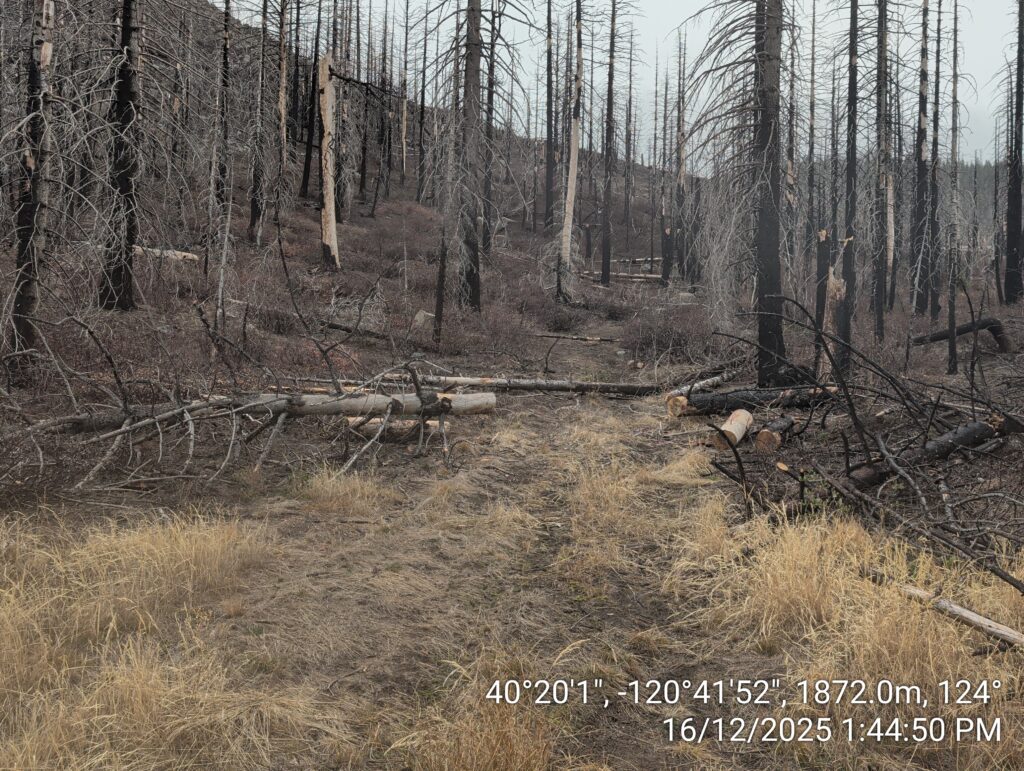
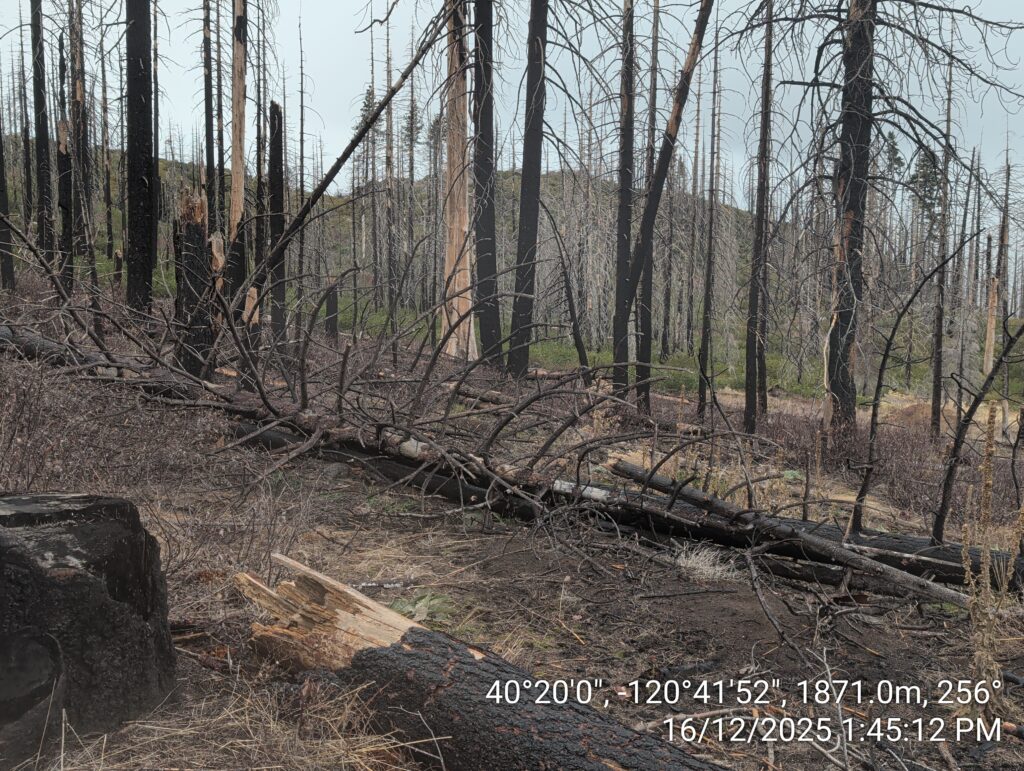
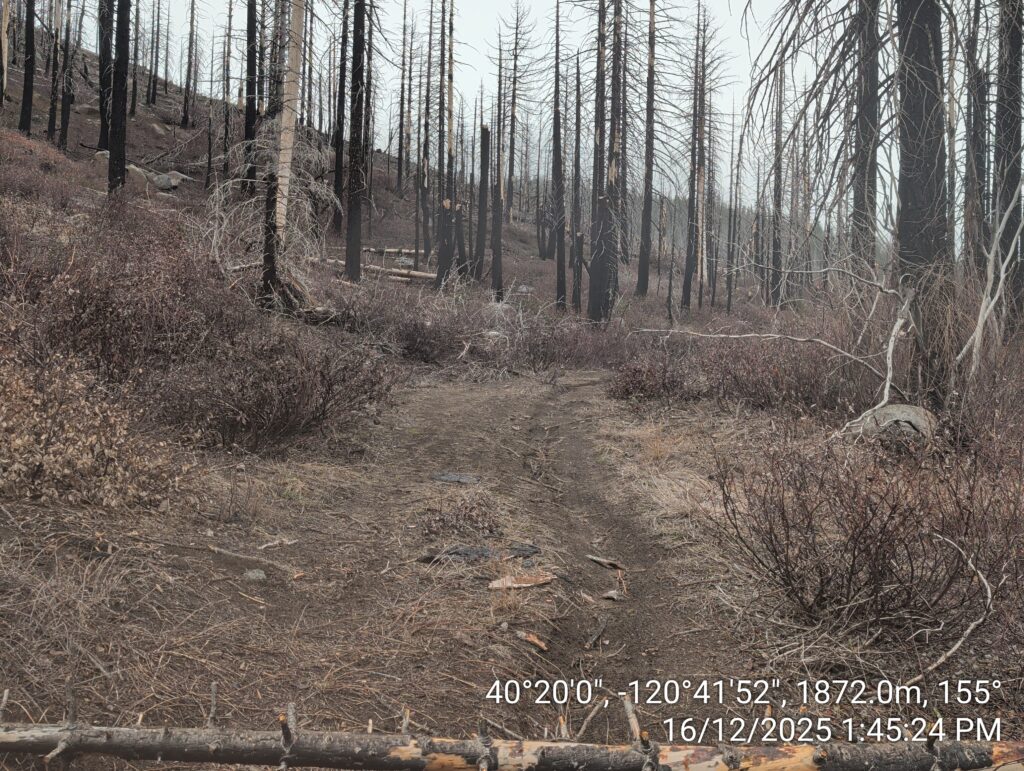
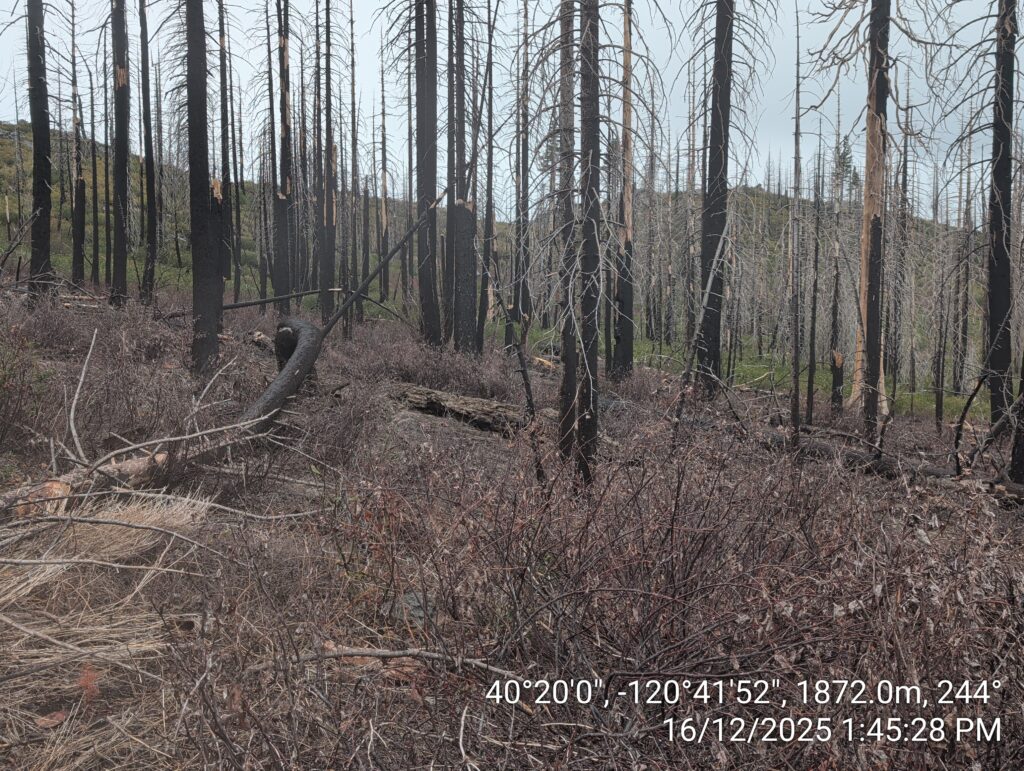
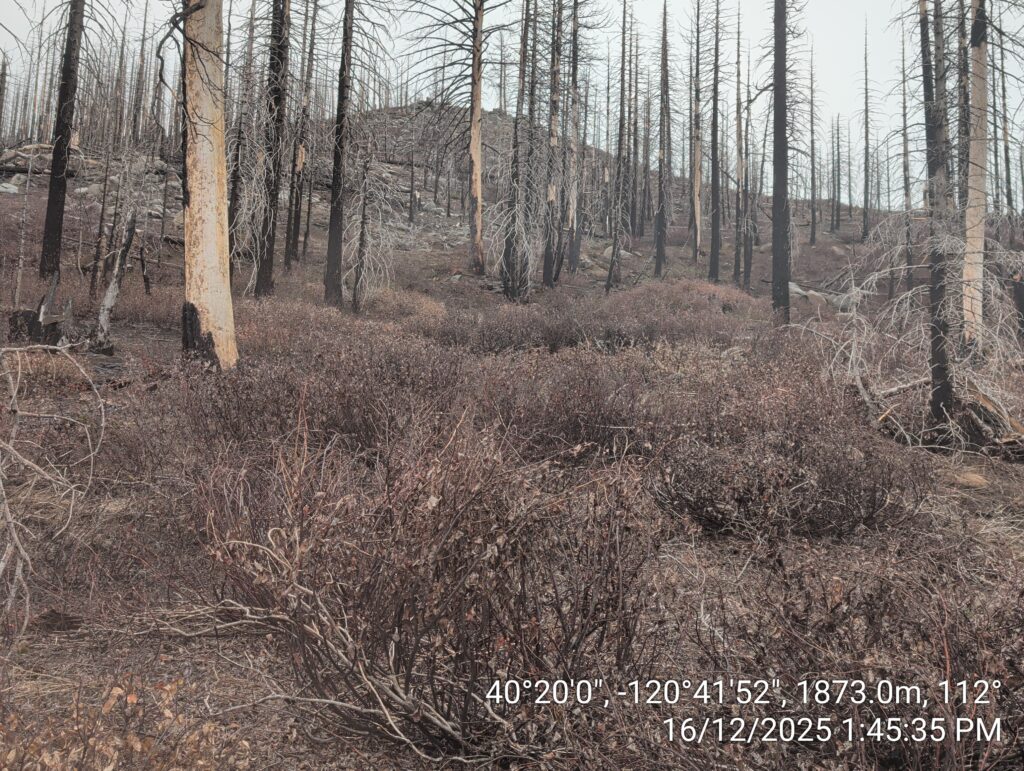
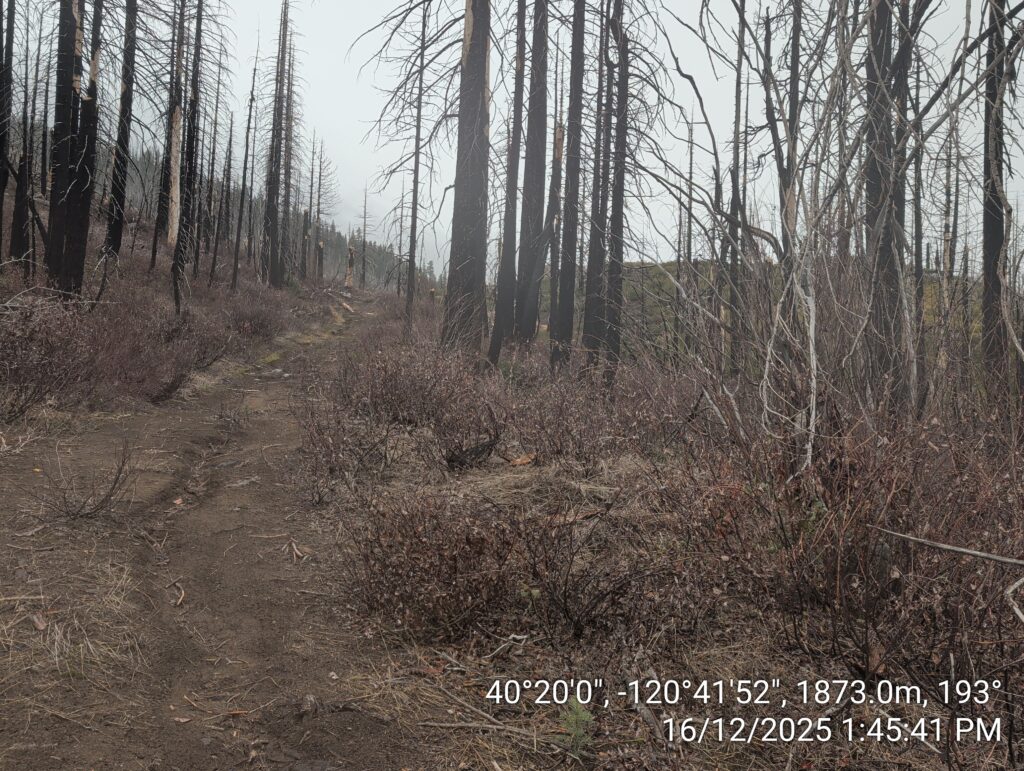
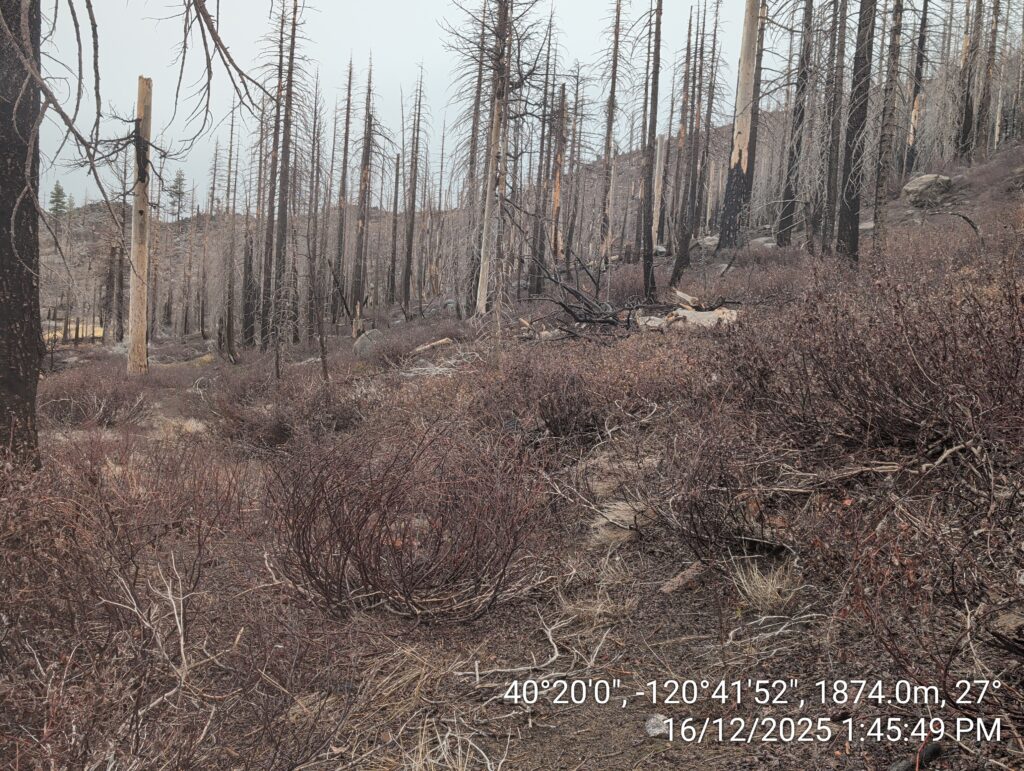
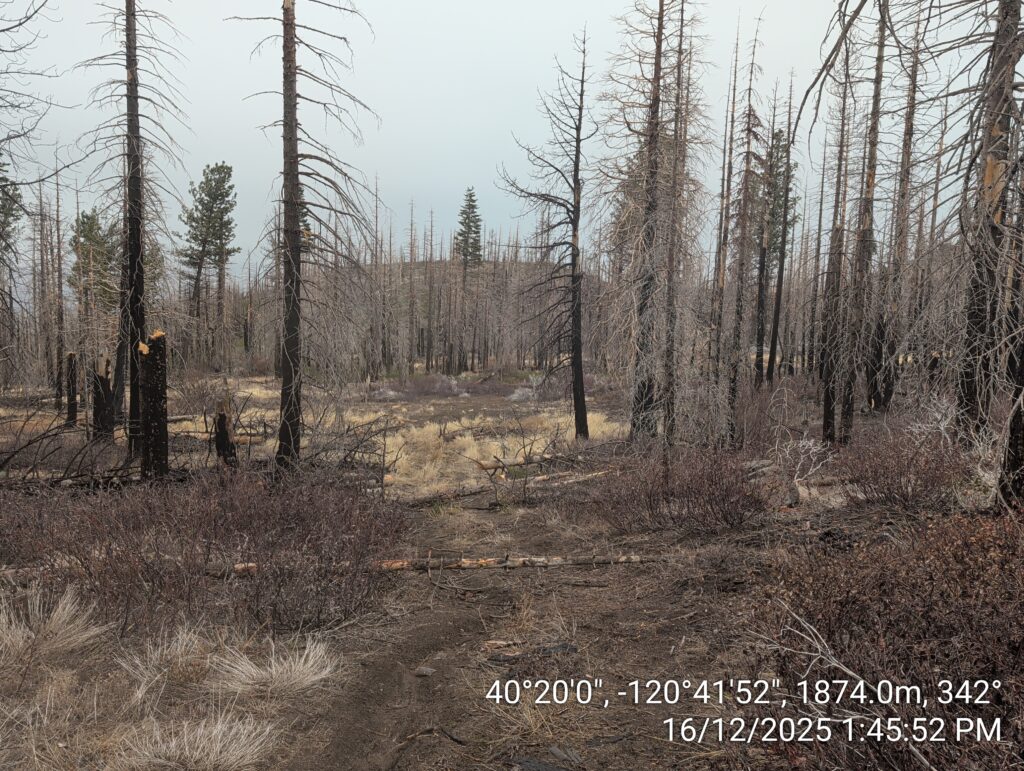
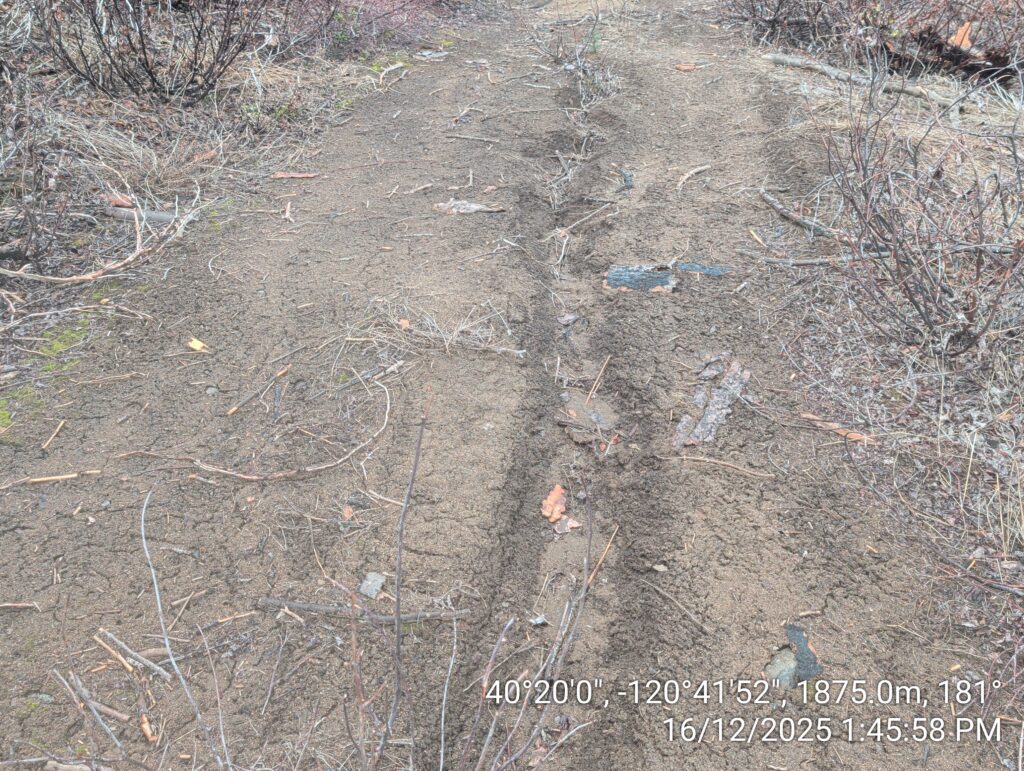
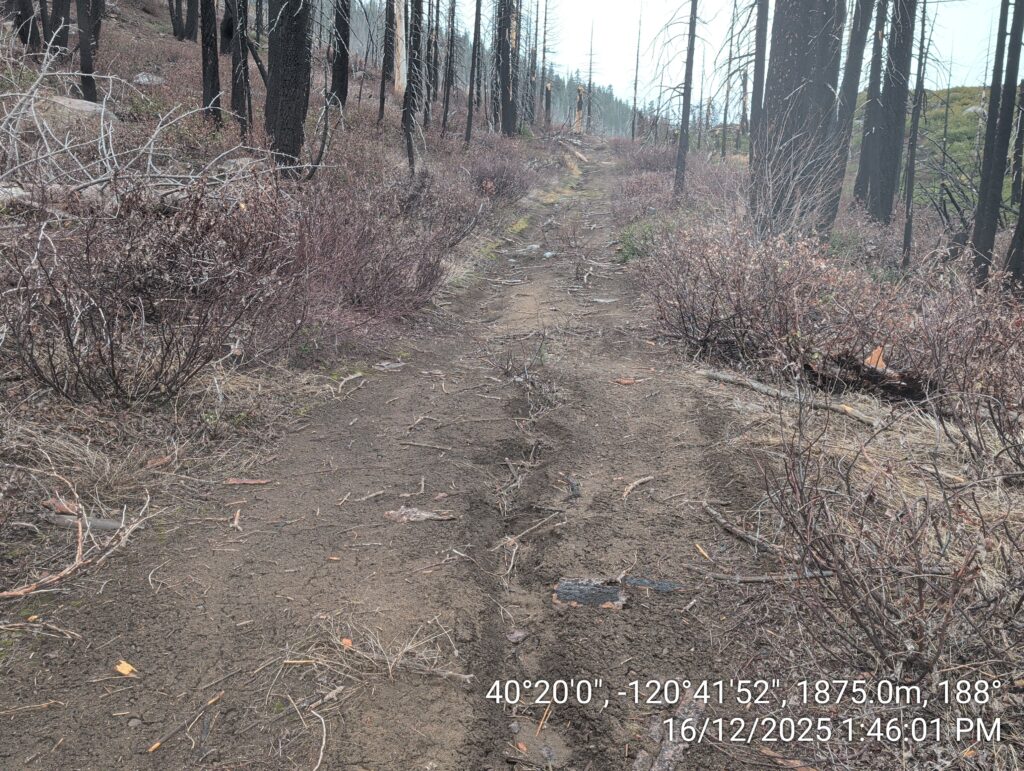
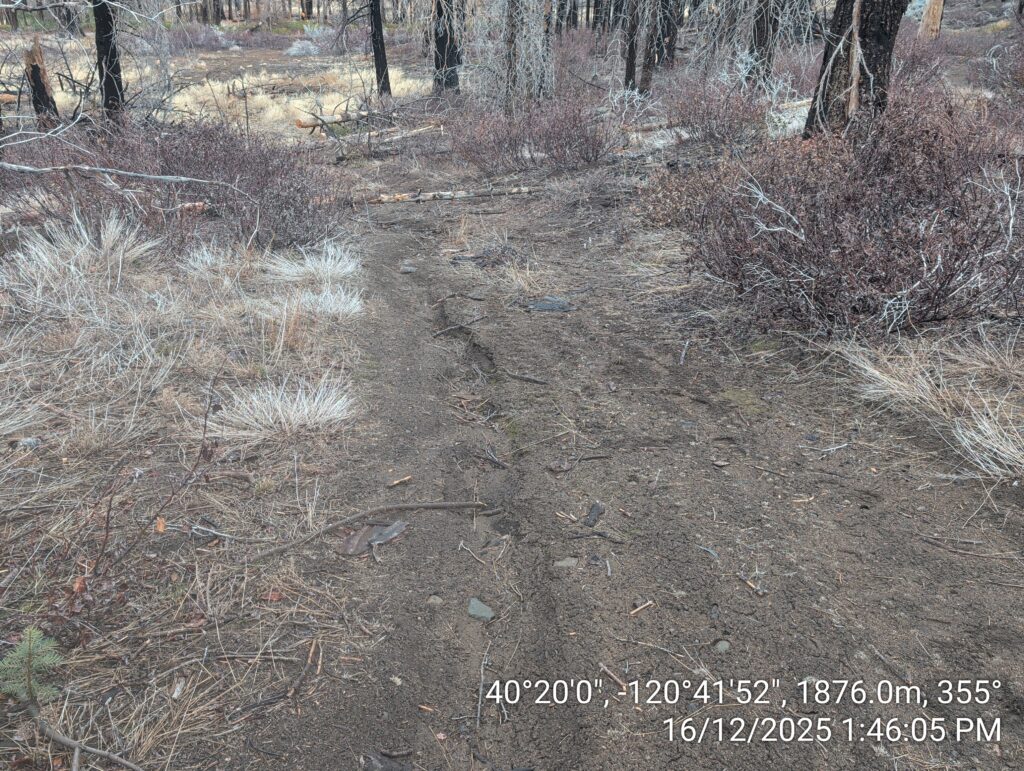
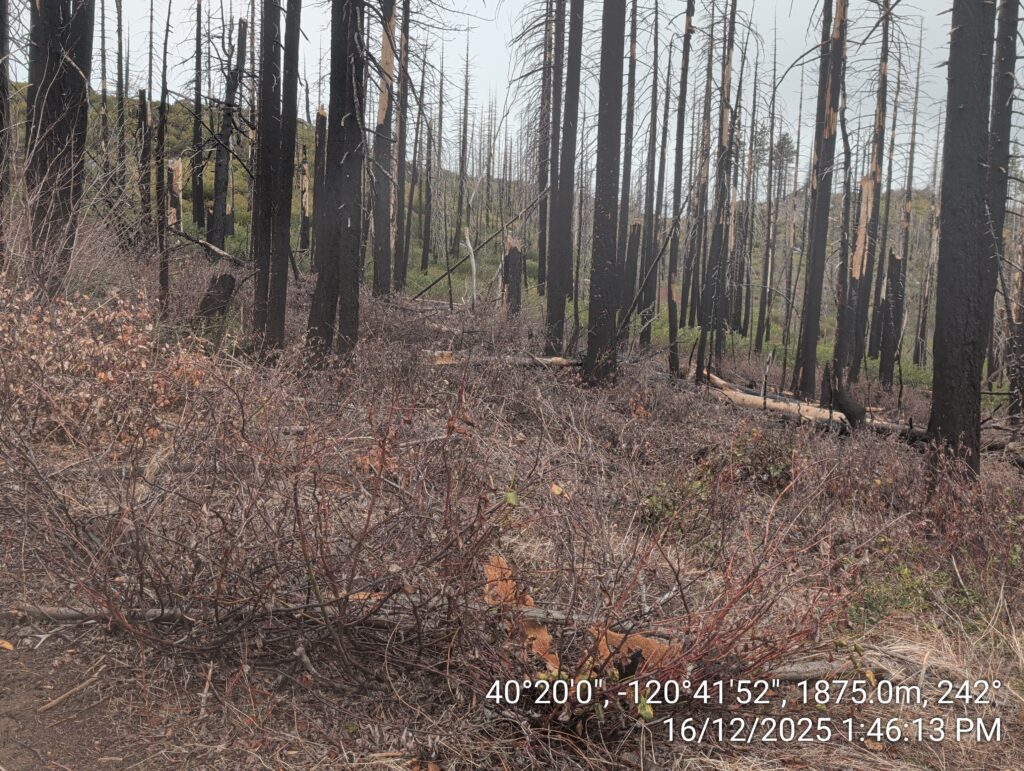
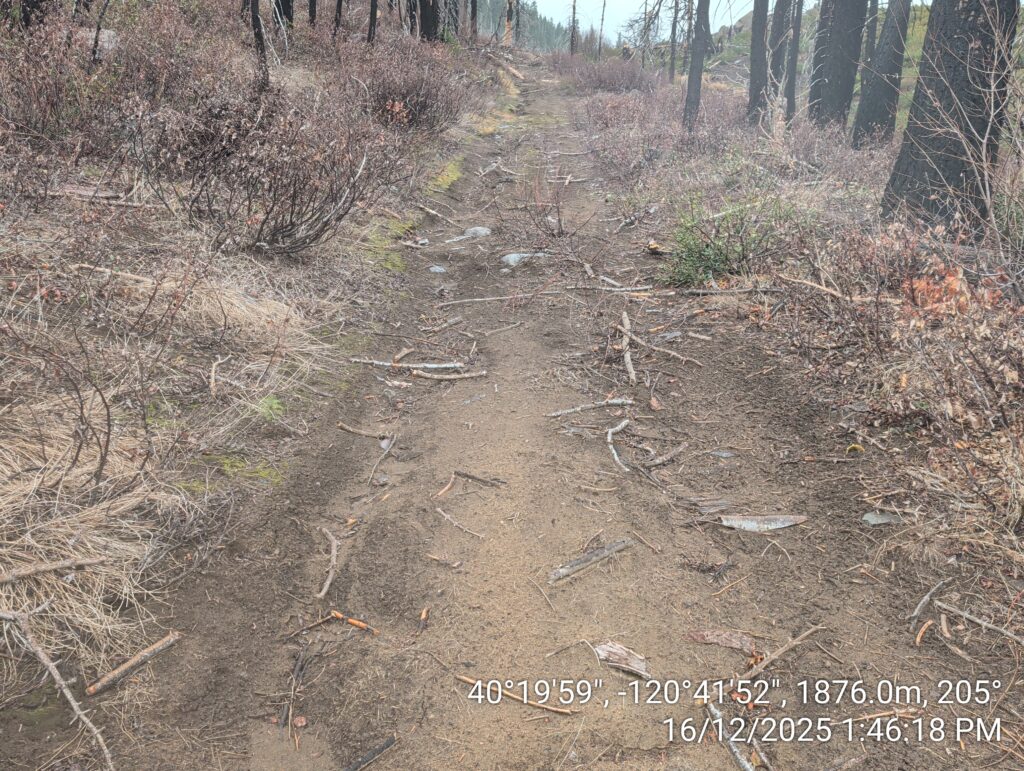
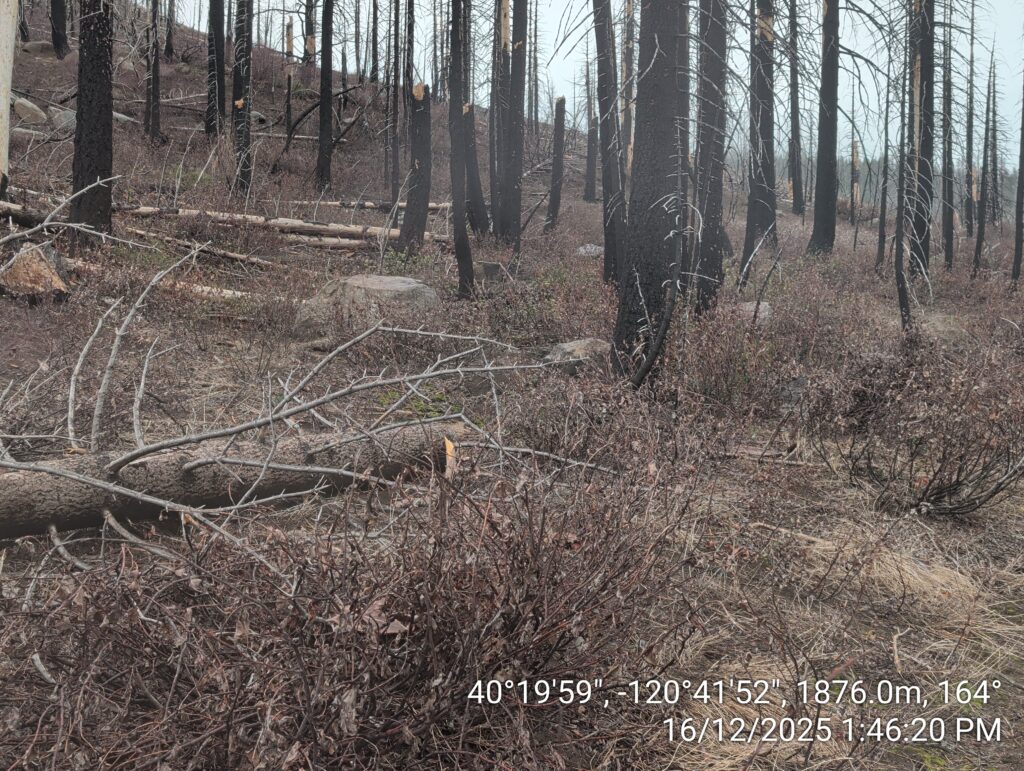
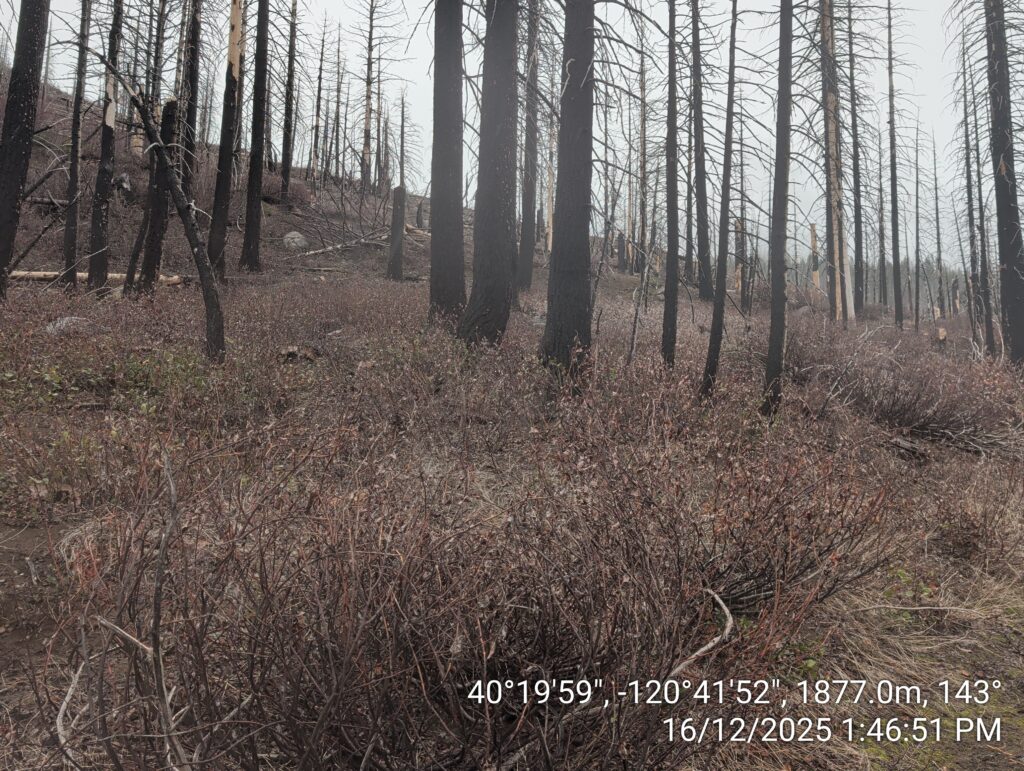
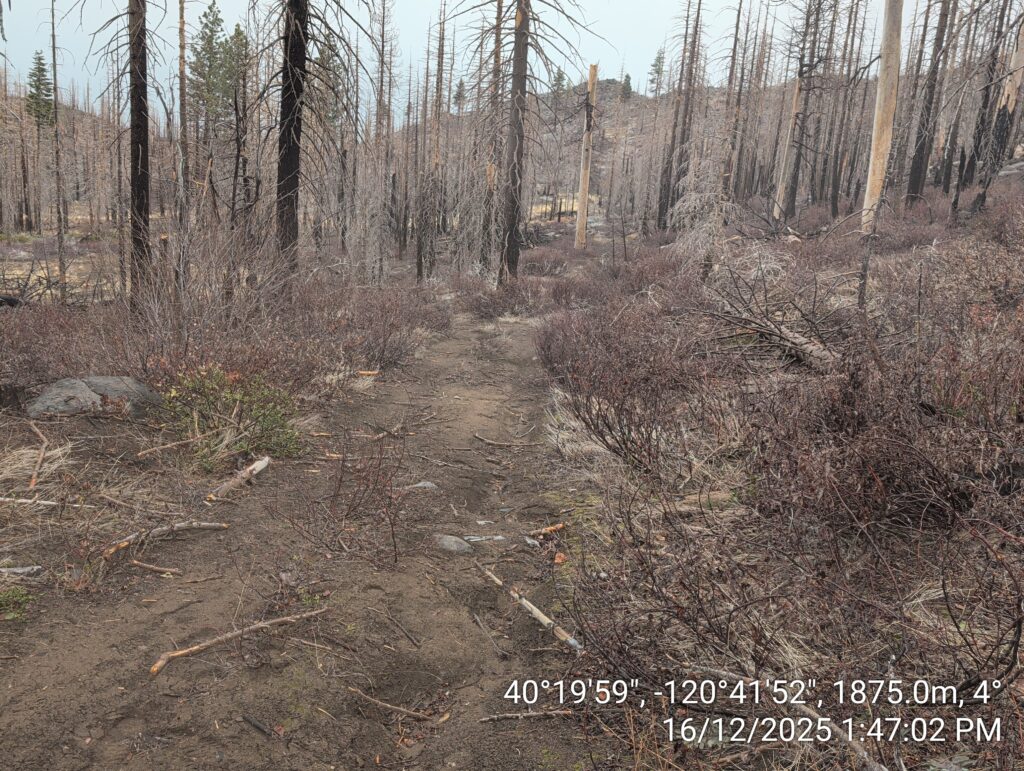
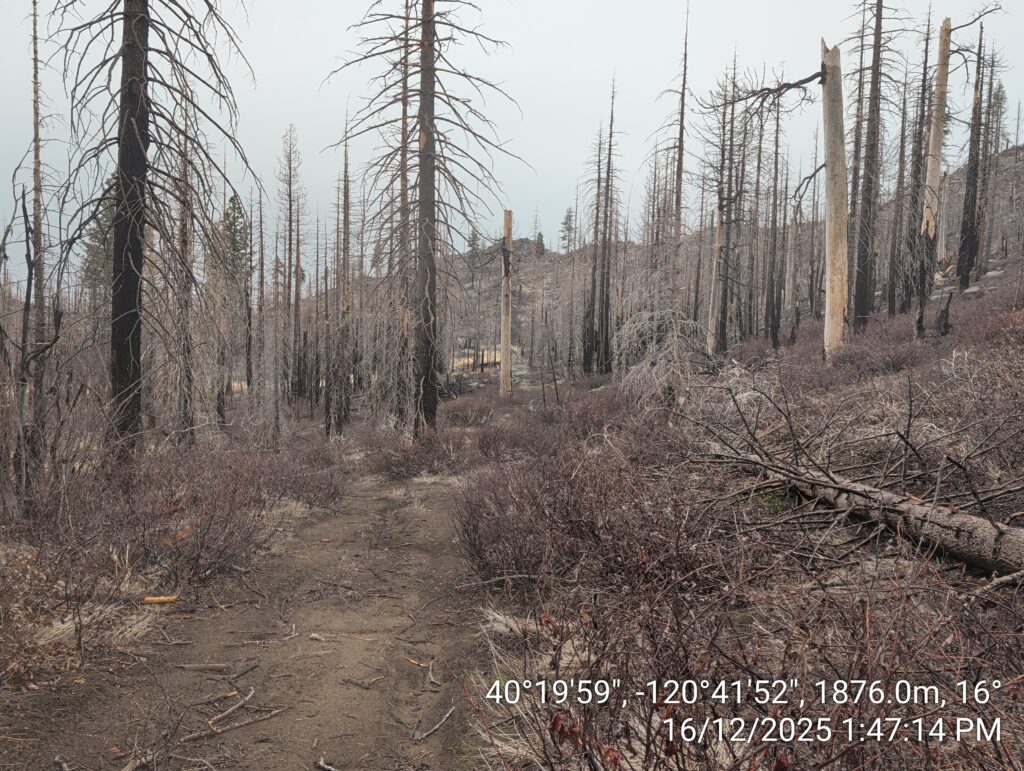
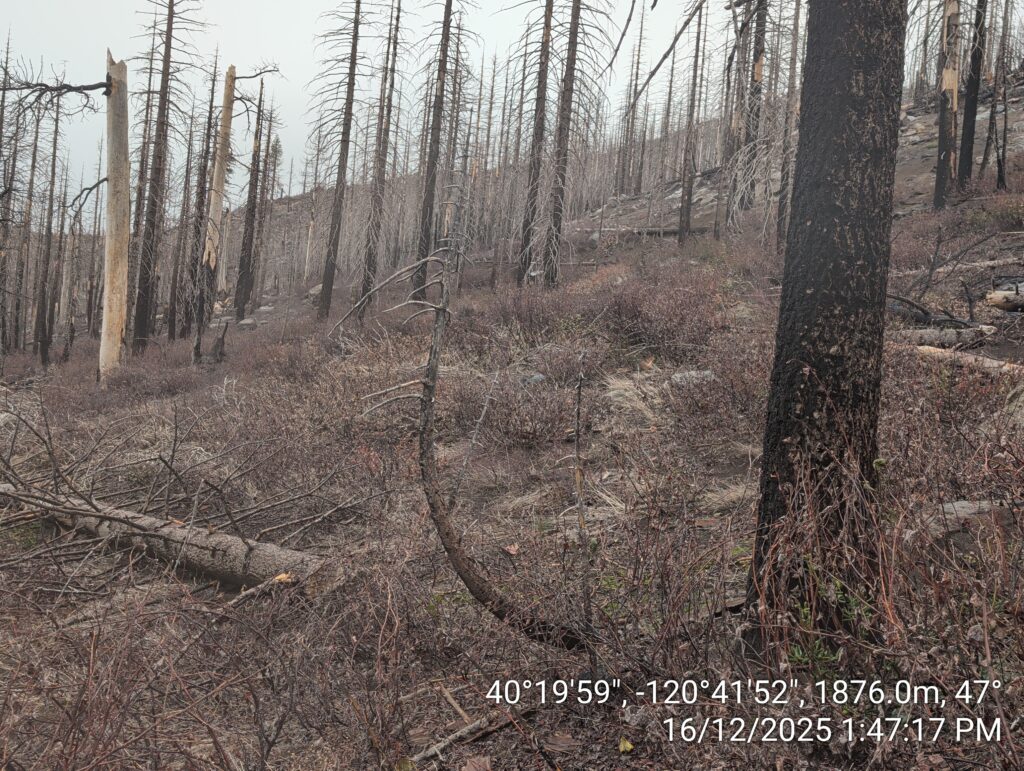
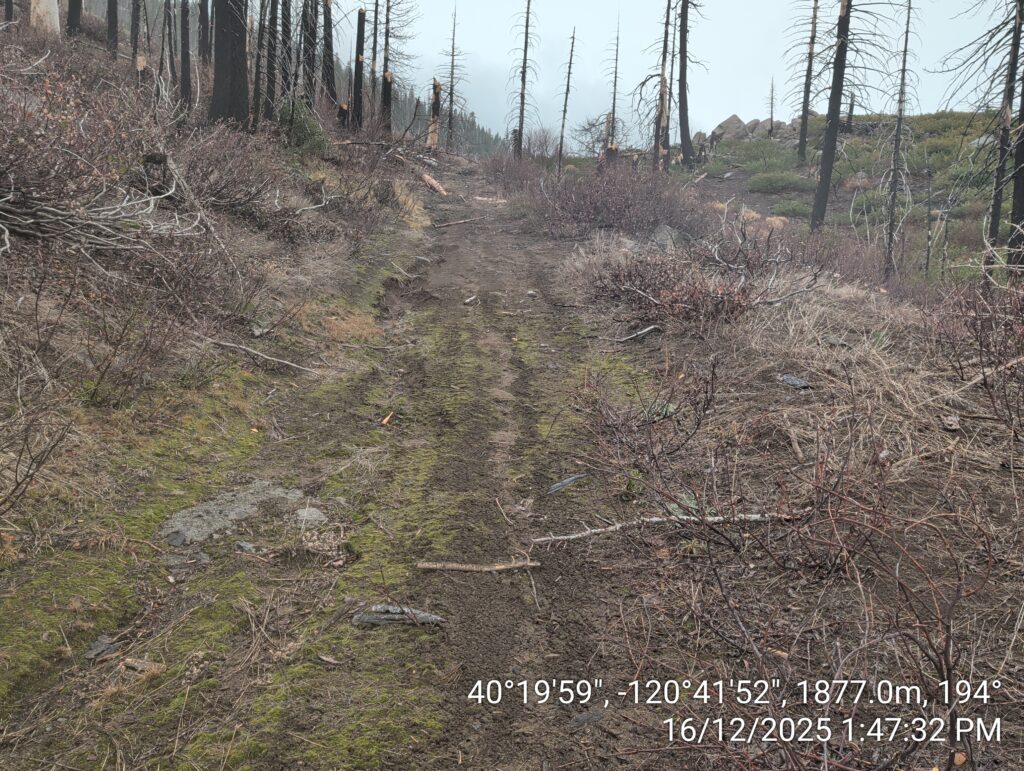
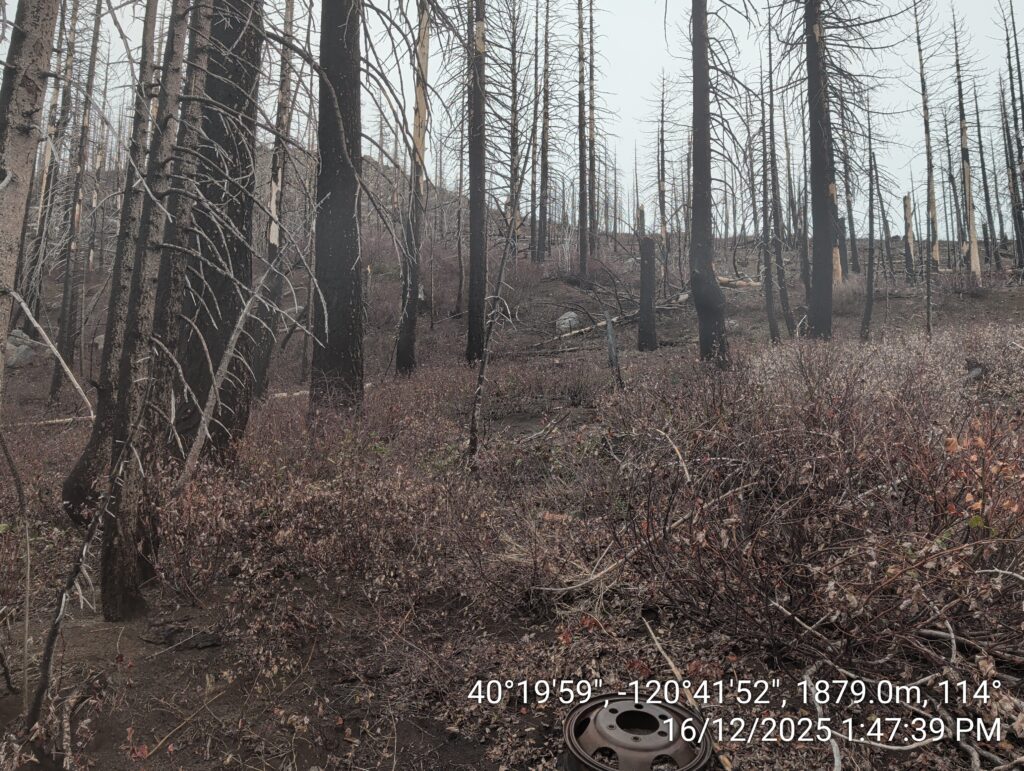
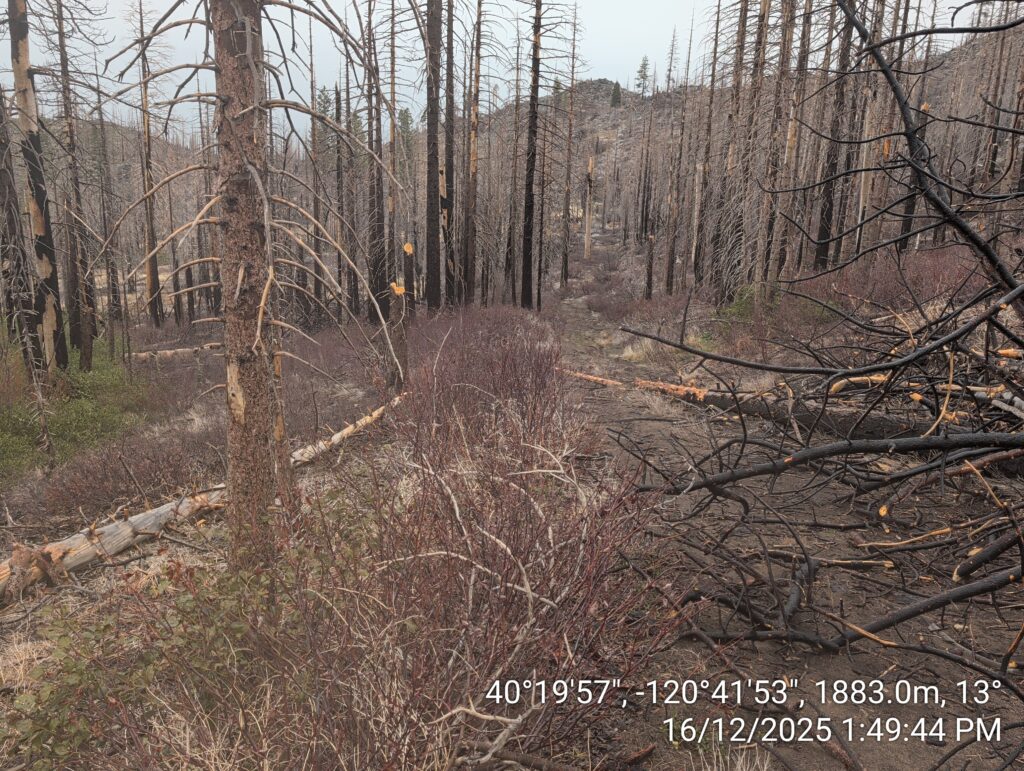
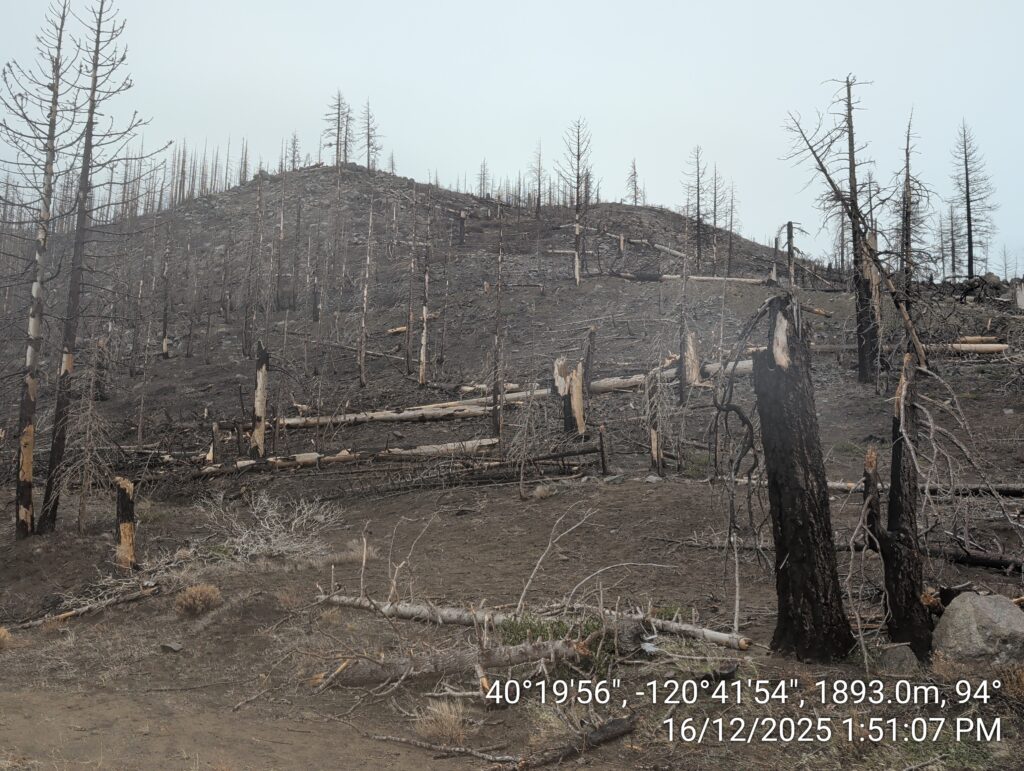
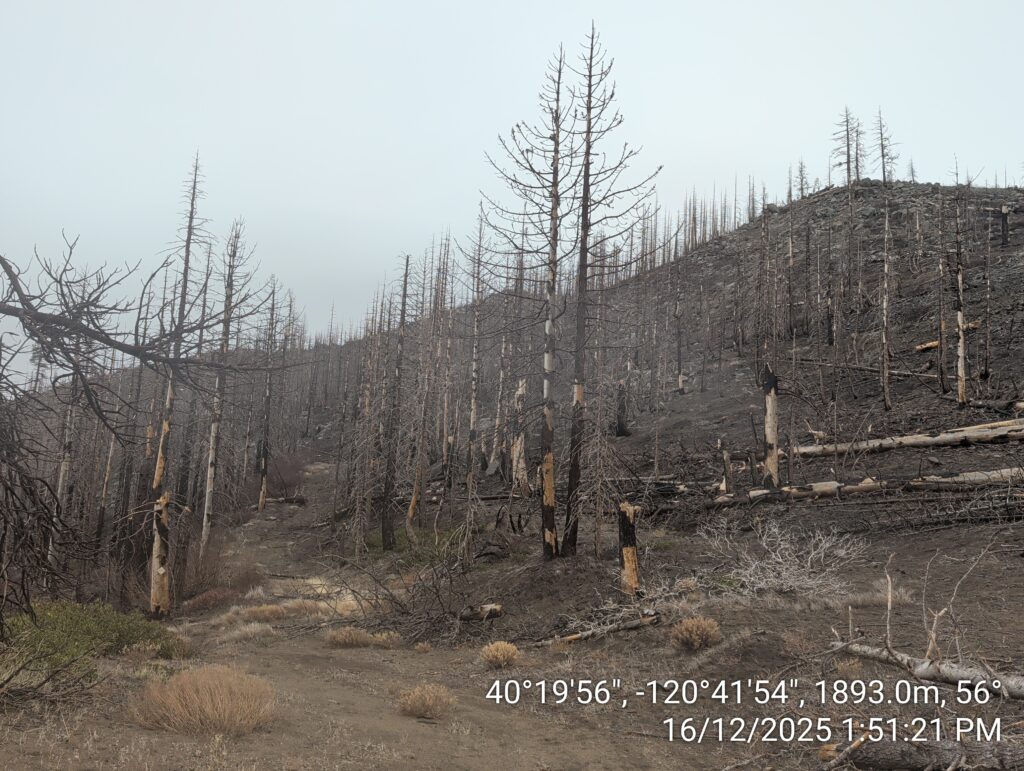
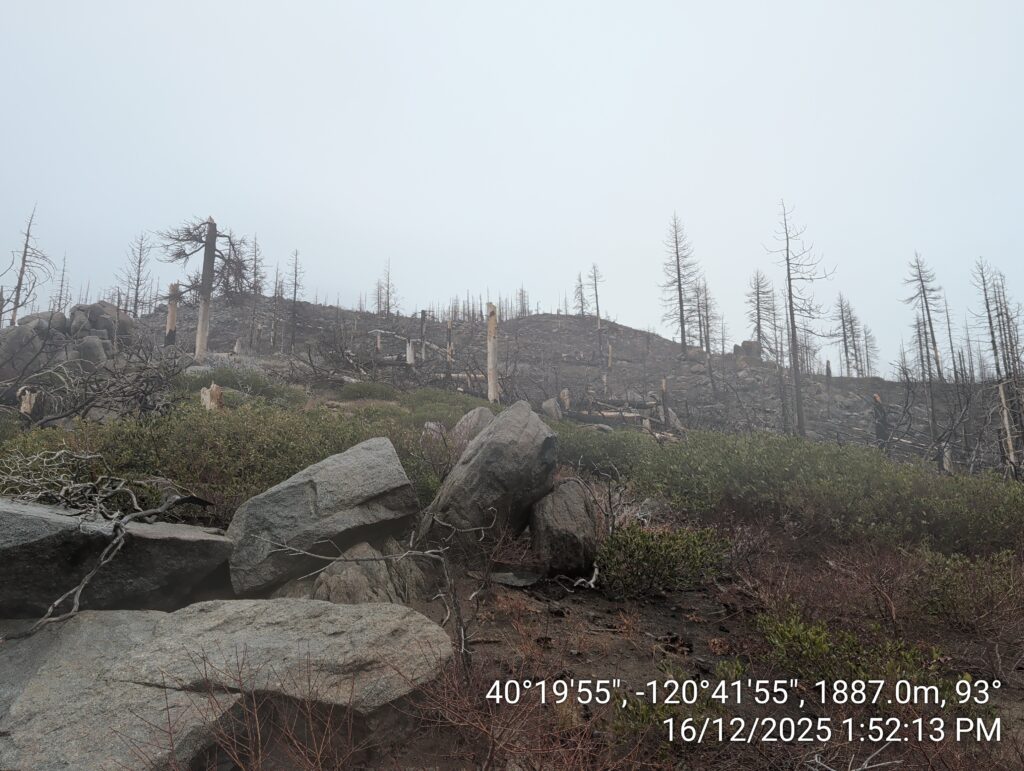
Necessity of Independent Site Documentation – Photos were taken on 12/16/25
I undertook direct site documentation of the approximately 70-plus acre illegal herbicide-treated area because the Lassen County Agricultural Department, the California Department of Pesticide Regulation, and the Lahontan Regional Water Quality Control Board have each refused to conduct an on-site inspection of that area, despite confirmed contamination by DPR laboratory analysis. While DPR did collect environmental samples on my property, DPR explicitly refused to enter or inspect the illegal 70-plus acre treatment area uphill from my land. In the absence of any agency field visit, contemporaneous inspection, or independent verification, I documented the site conditions to preserve an accurate record of observable impacts, drainage pathways, and the absence of required protective measures.
This documentation was necessary in light of written assertions made by Lahontan Assistant Executive Officer Jan M. Zimmerman in her November 21, 2025 letter. In that correspondence, Ms. Zimmerman asserted that herbicide application occurring “in the area of concern” in 2024 was associated with and permitted under the Motor Sheep Biomass project, while providing no map, amendment, revised acreage, or enrollment document demonstrating that the documented 70-plus acre area falls within the approved 328-acre project boundary. To date, Lahontan has produced no Timber Waiver enrollment map depicting this area as covered, no amendment or boundary expansion approval, and no documentation reconciling the additional treated acreage with the approved project footprint.
Ms. Zimmerman further asserted that photographs taken months after application are insufficient to evaluate best management practice implementation and suggested that some images depict “typical forestry management BMPs,” while simultaneously acknowledging that no inspection occurred during or immediately following project implementation. These positions are internally inconsistent. Structural and operational BMPs required under the Timber Waiver, such as erosion controls, sediment barriers, and watercourse protections, leave observable physical evidence if installed. Their complete absence across the documented area is itself probative.
Given the agencies’ refusal to visit the site and Lahontan’s reliance on unsupported assumptions rather than field verification, independent photographic documentation was required to establish site conditions, preserve evidence, and counter claims that the unpermitted treatment area is either covered or compliant despite the absence of maps, inspections, or records substantiating those claims. I have further sworn under penalty of perjury that I personally observed no best management practices anywhere within the illegal 70-plus acre treatment area that would have restricted or prevented the flow of herbicides downslope onto my property. Lahontan has been aware of the existence and location of this illegal treatment area since early June 2025 and has nevertheless refused to conduct an on-site inspection.
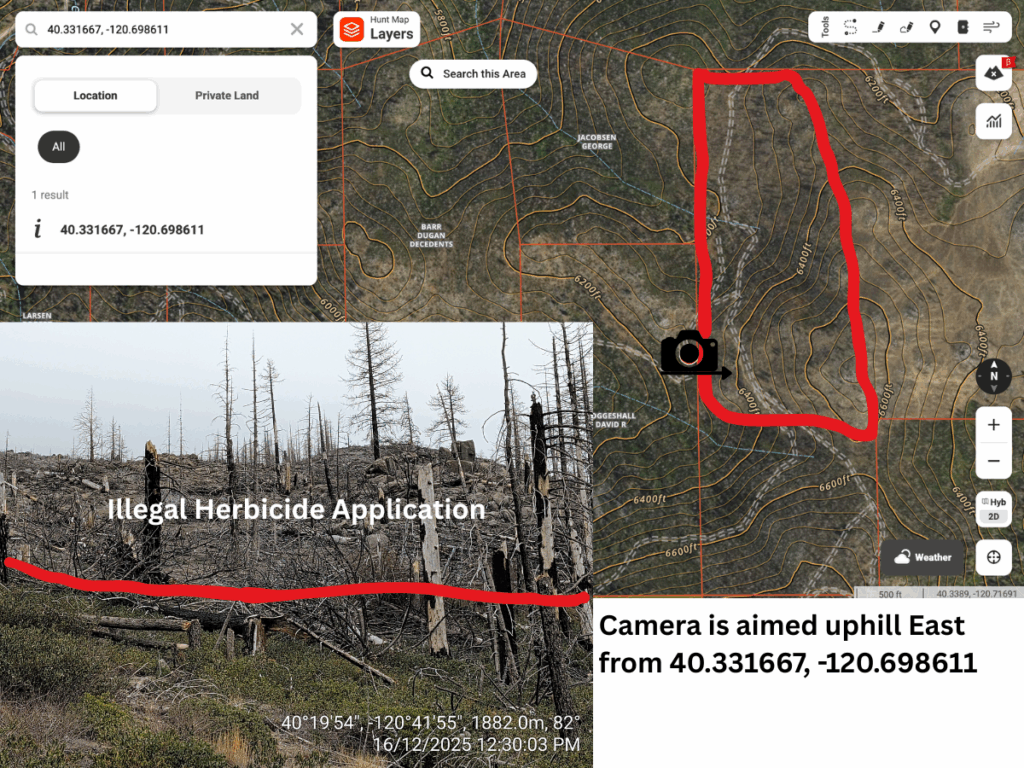
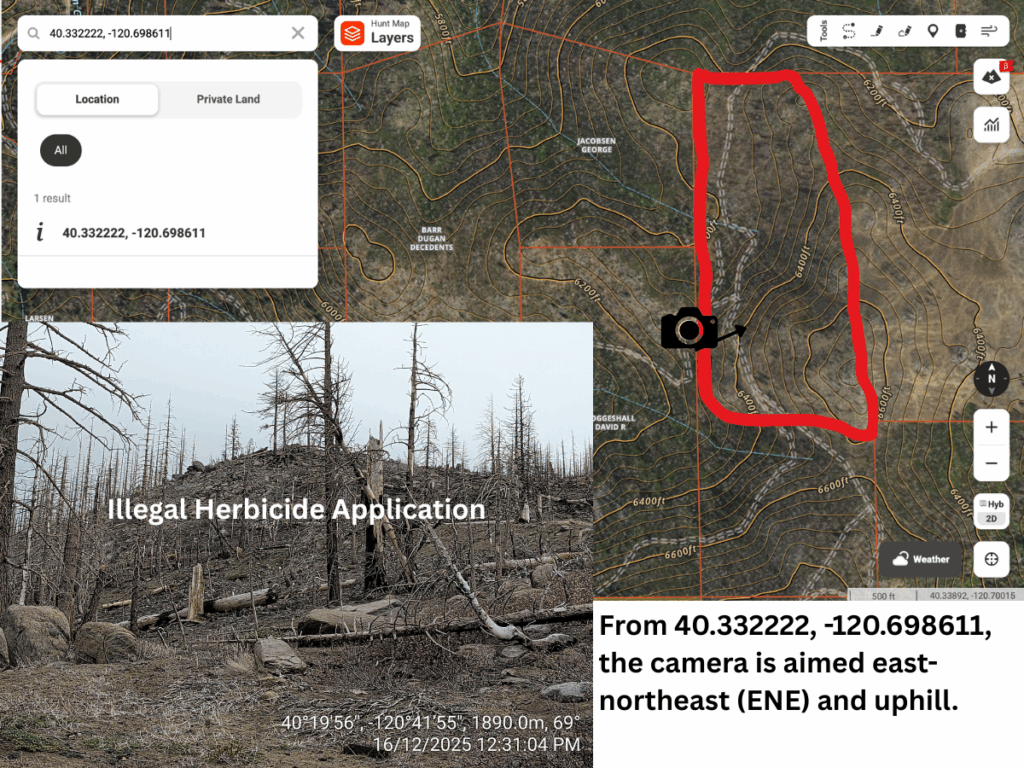
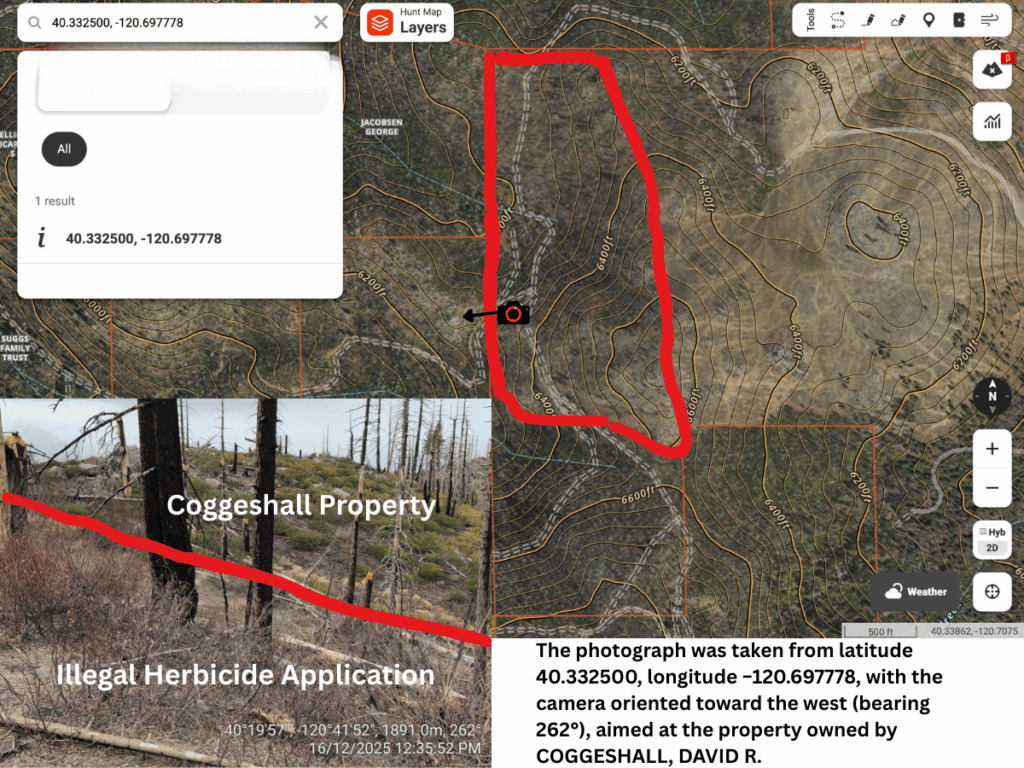
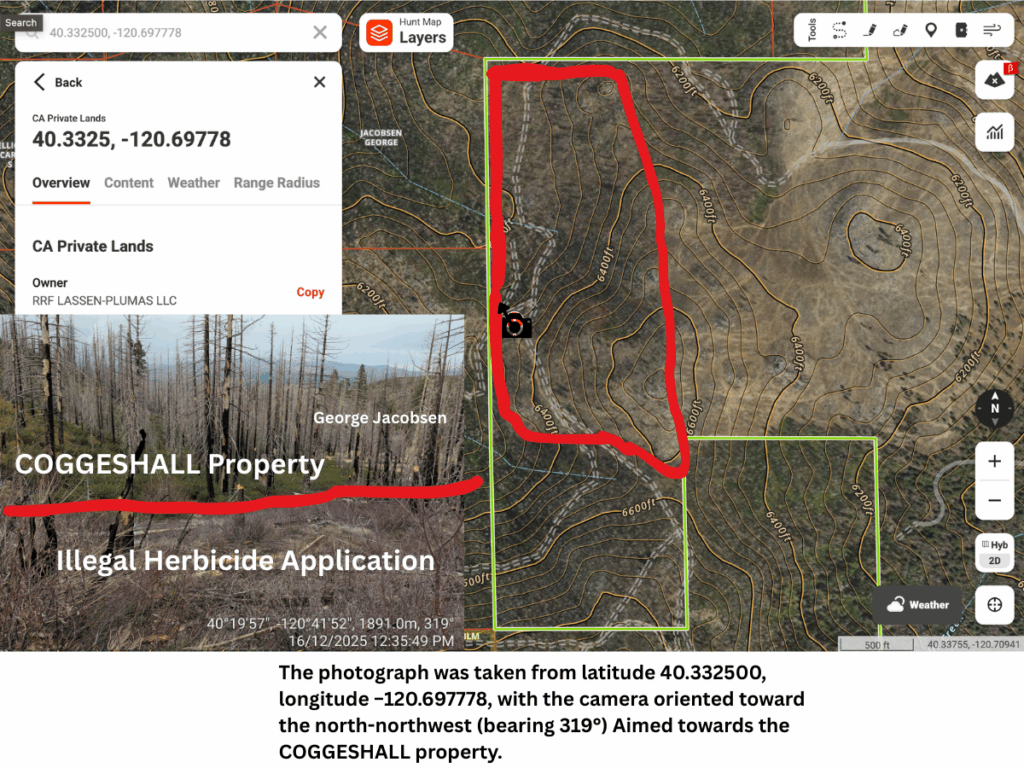
360-Degree Video Inside the Illegal 70-Plus-Acre Herbicide Treatment Area Taken on 12/16/25
None of This Land Is Within the Motor Sheep Biomass Project Boundary and No BMPs Are Present
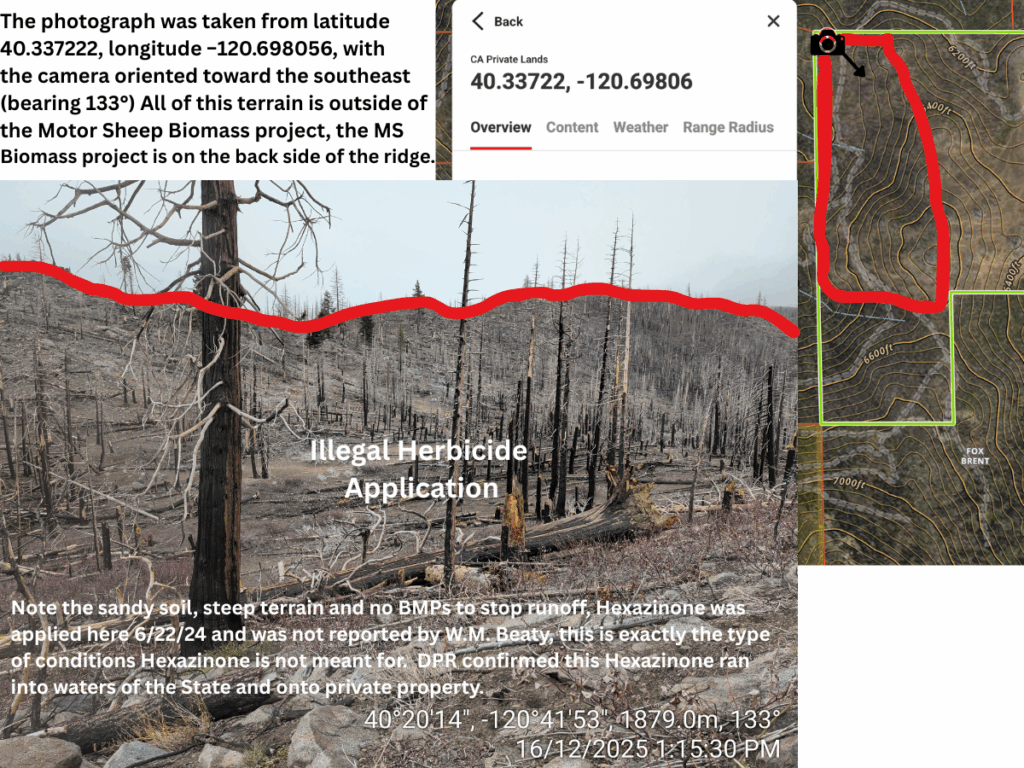
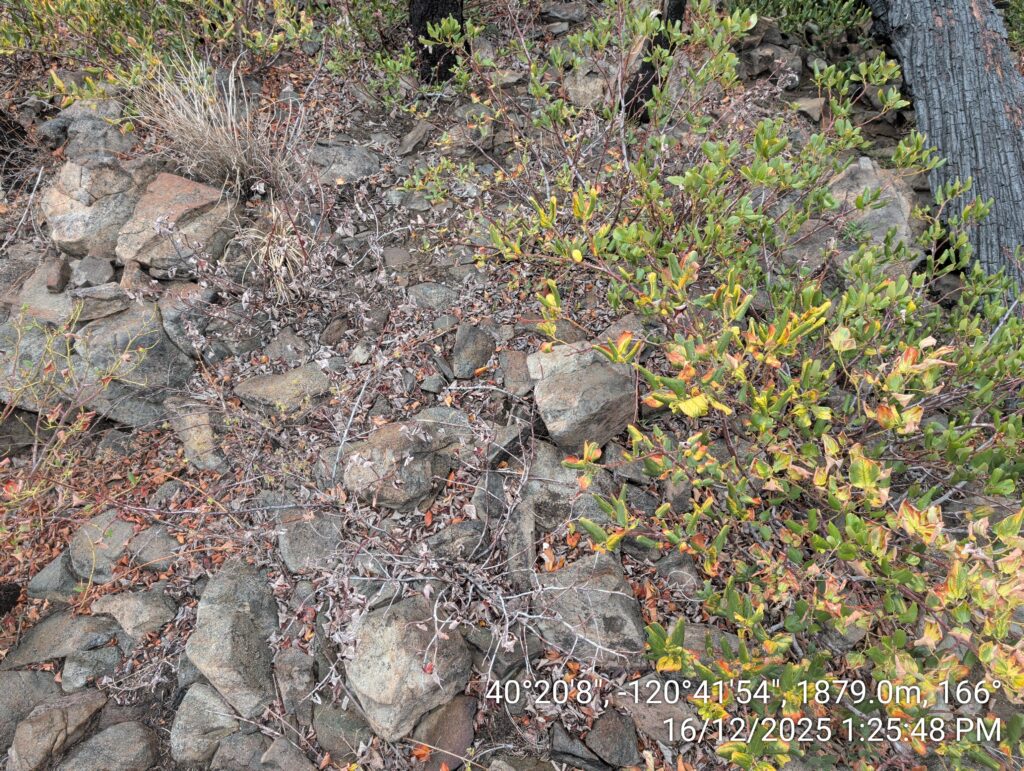
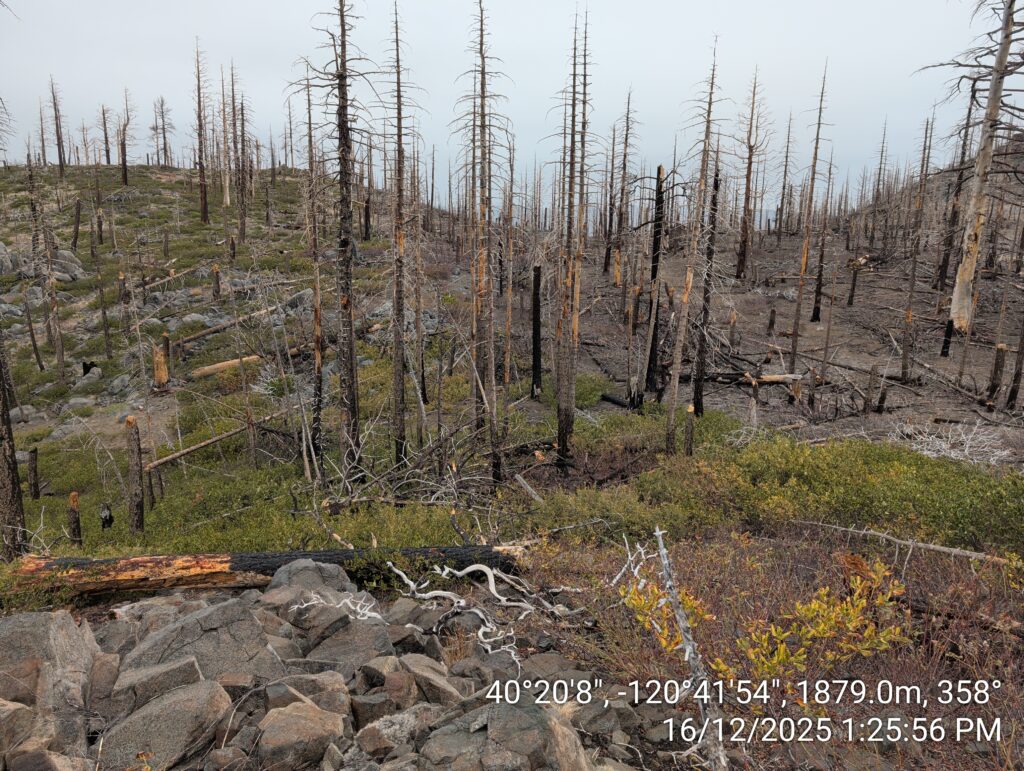
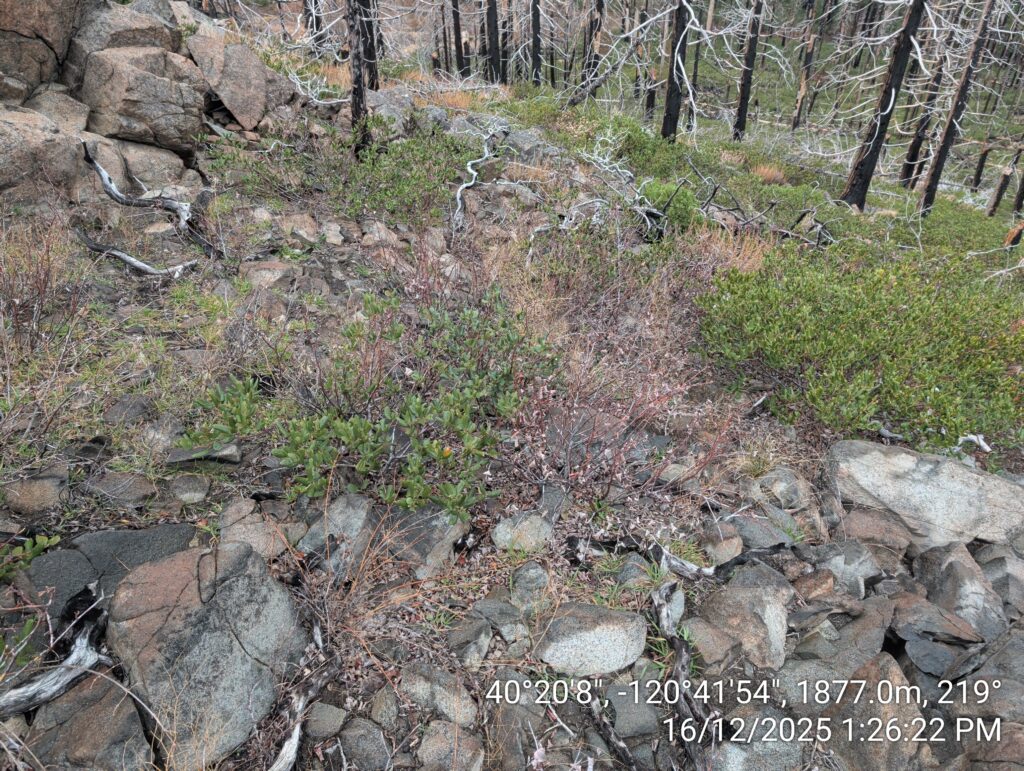
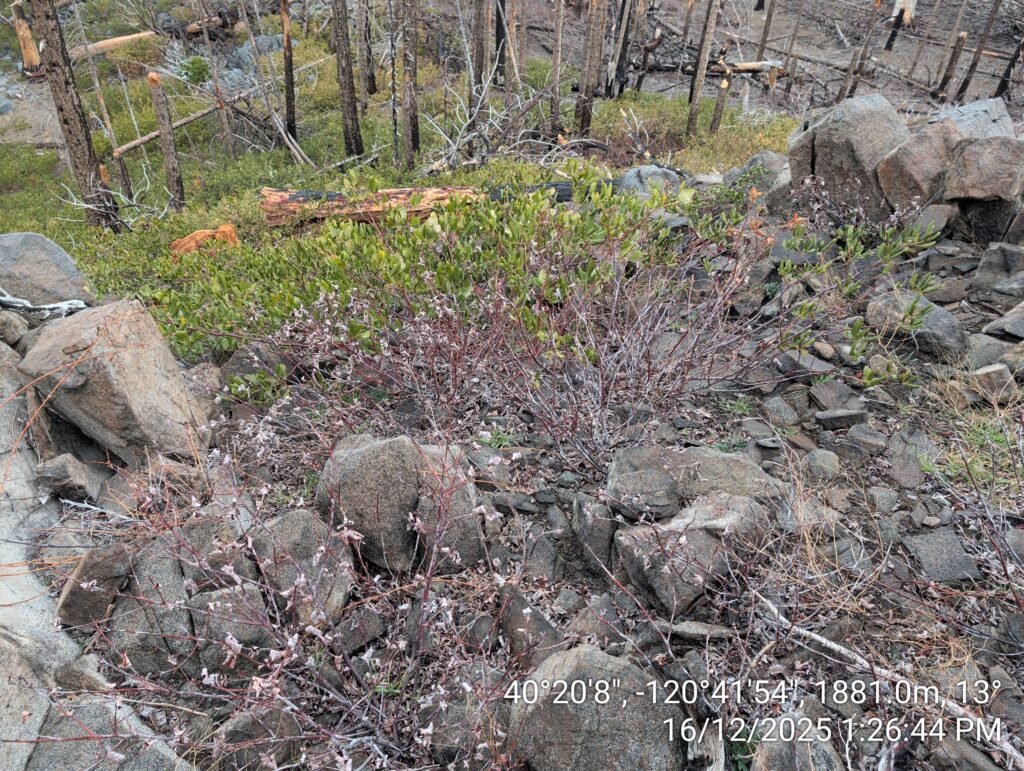
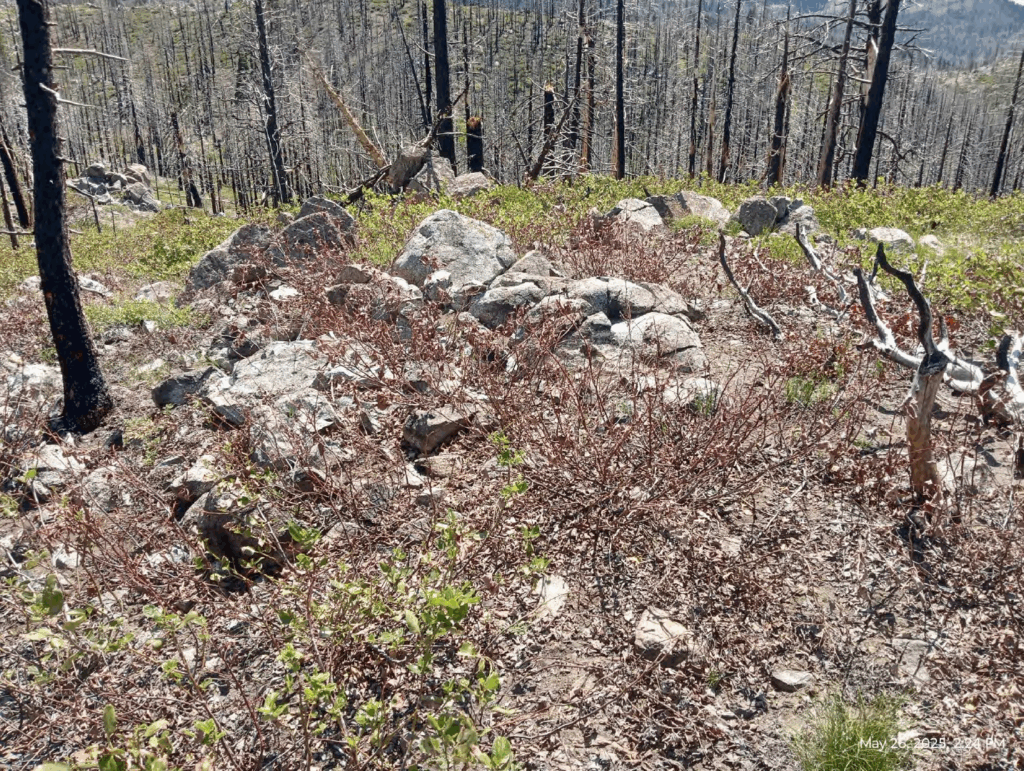
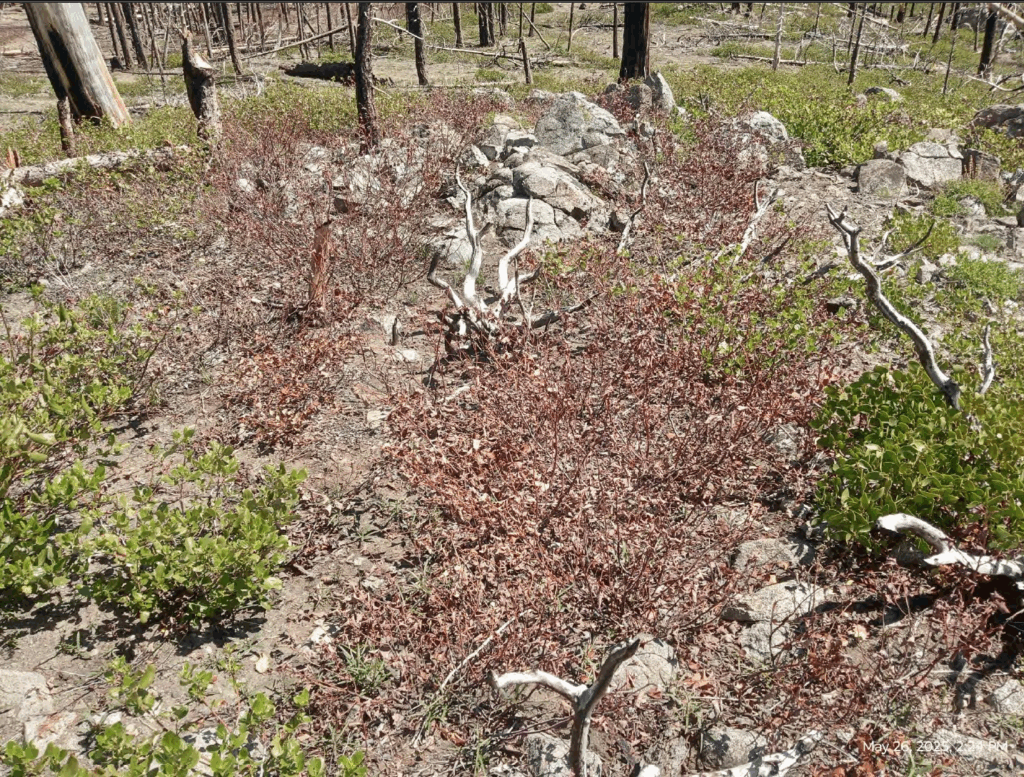
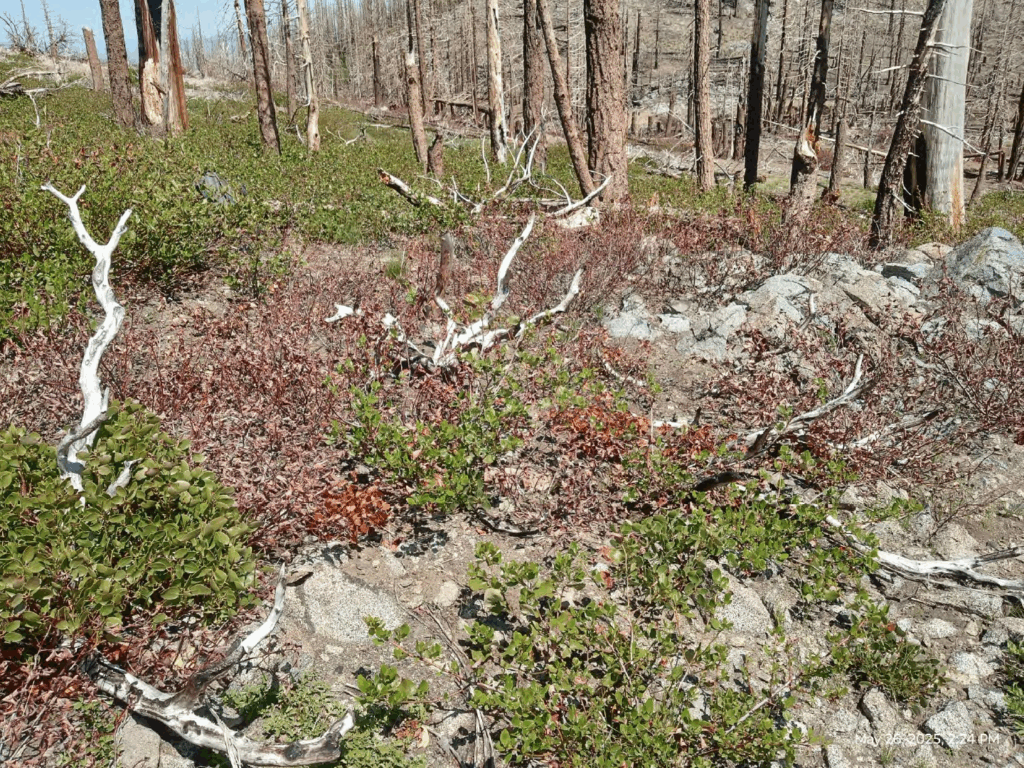
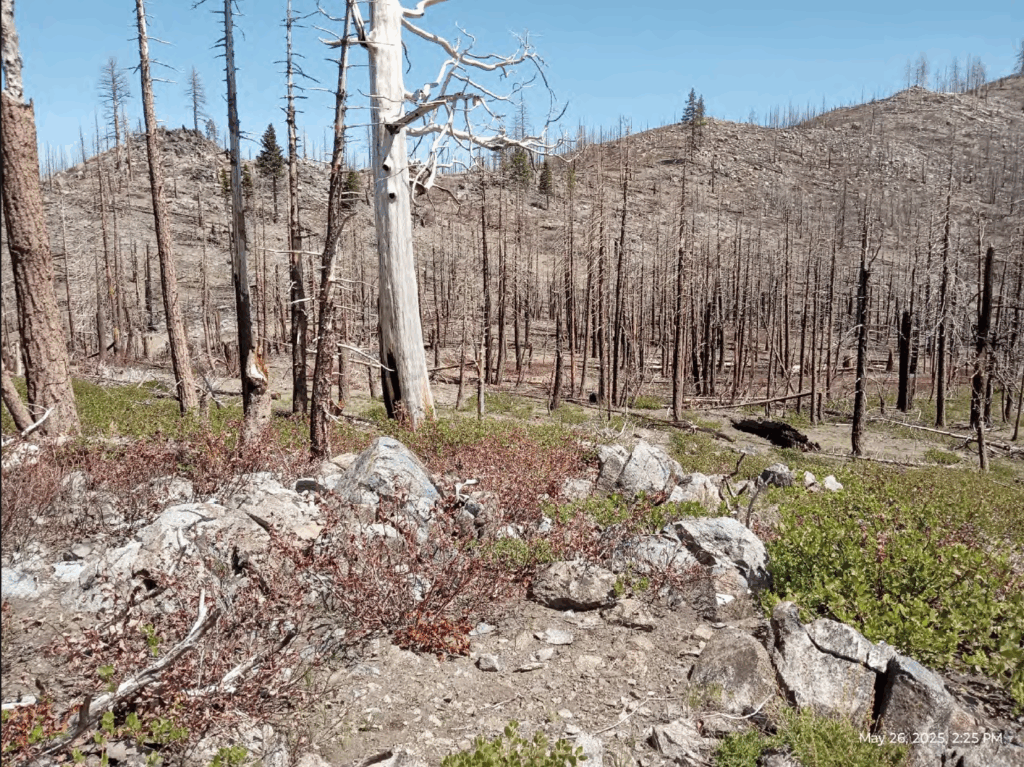
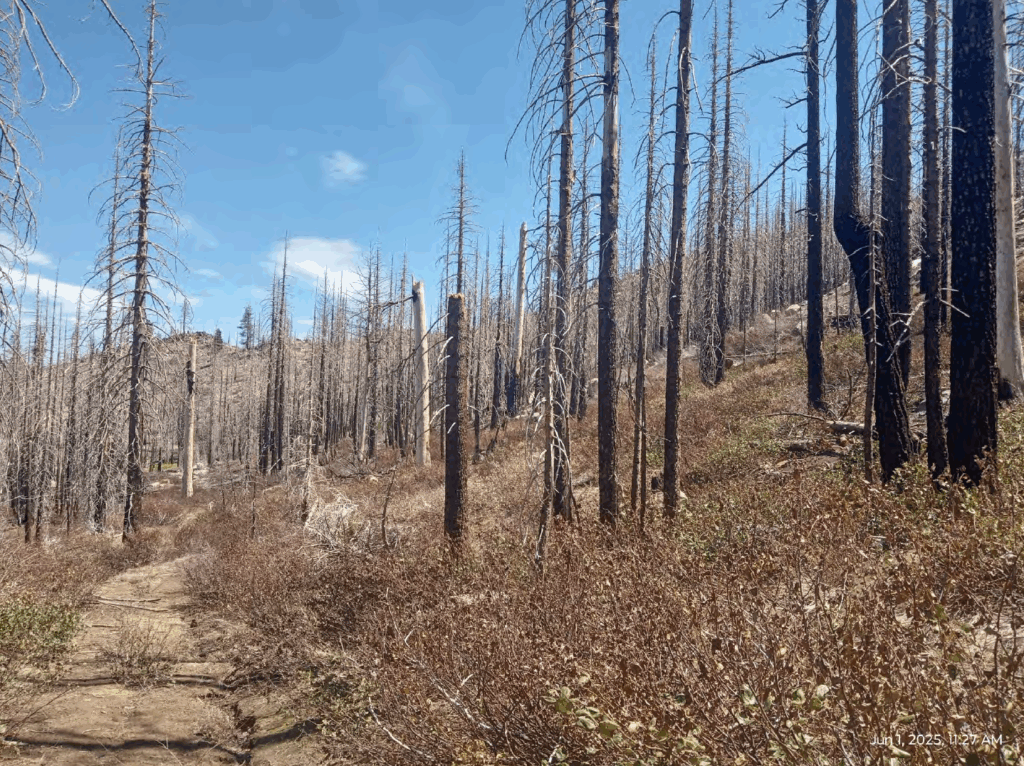
The two videos document site conditions within the unauthorized herbicide treatment area that are fundamentally inconsistent with lawful hexazinone application. The footage shows exposed, sandy soils with little to no organic material, a substrate type for which hexazinone application is expressly contraindicated due to its high mobility and runoff potential. The terrain shown is steep and unstable, with visible downslope movement of sand and soil following the loss of vegetation. This condition is directly attributable to the June 22, 2024 herbicide application by Shane Compton and W.M. Beaty & Associates, which eliminated native plant cover that would otherwise stabilize the slope. In contrast, adjacent untreated areas on my property support thriving native vegetation, including grasses, snowbrush, and manzanita, which effectively anchor soil and prevent erosion.
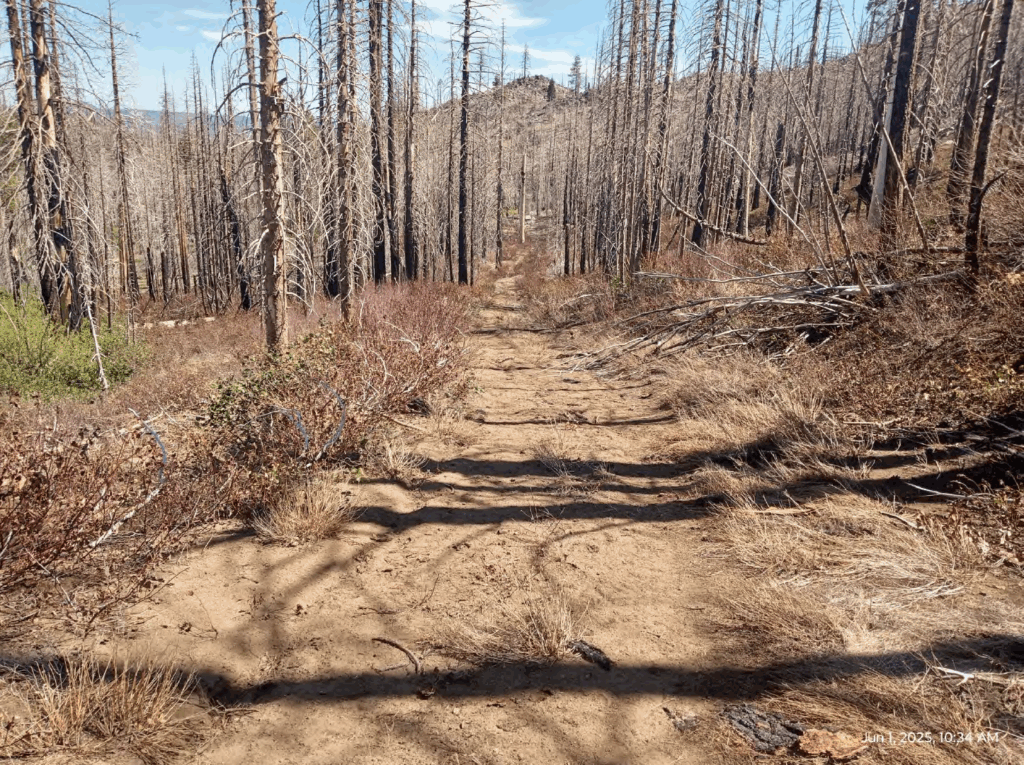
The videos further show an extensive network of logging roads across the treated area. None of these roads contain berms, rolling dips, water bars, or any other design features intended to intercept, slow, or redirect snowmelt and spring rainfall. As a result, these roads function as direct drainage channels, conveying runoff downslope and transporting mobilized soil and herbicides far off site. This mechanism is consistent with the documented migration of contaminants onto my property below. The risk is further amplified by the fact that this area lies within a post-fire landscape, where soil structure and cohesion are already compromised. Despite these conditions, the videos show no best management practices in place to control erosion, contain runoff, or prevent off-site transport of herbicides. The resulting downhill movement of soil and chemicals into my land, my drinking water, and waters of the state has been confirmed by laboratory testing conducted by the California Department of Pesticide Regulation.
Photographic Metadata Verification of the Illegal Herbicide Treatment Area
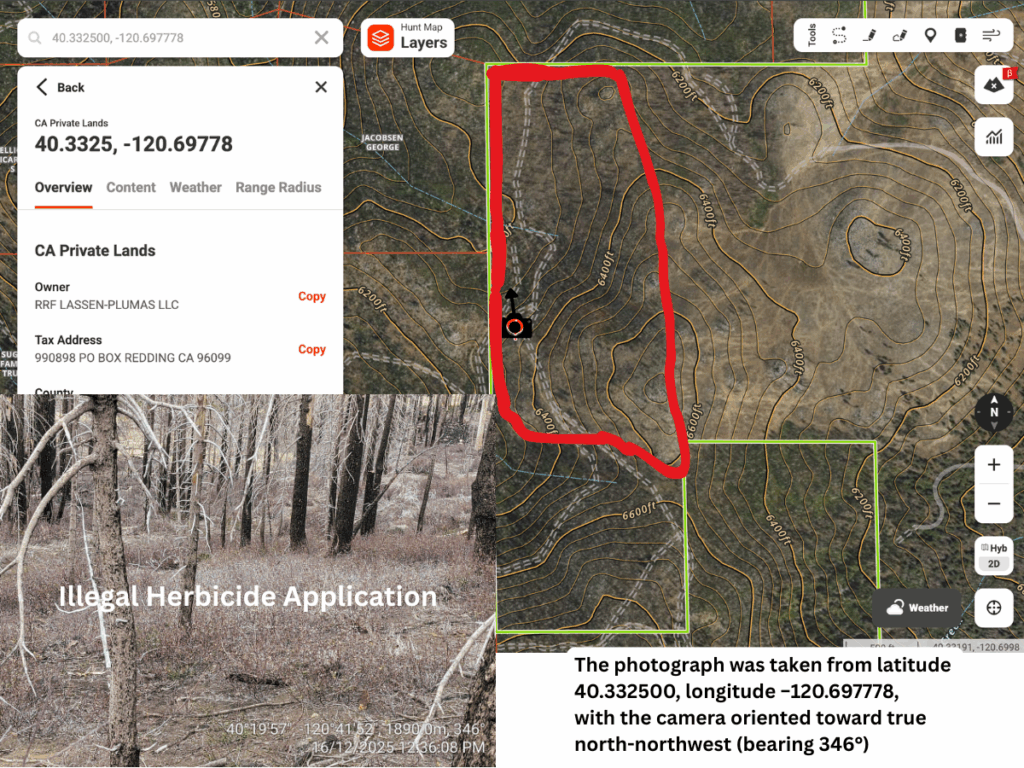
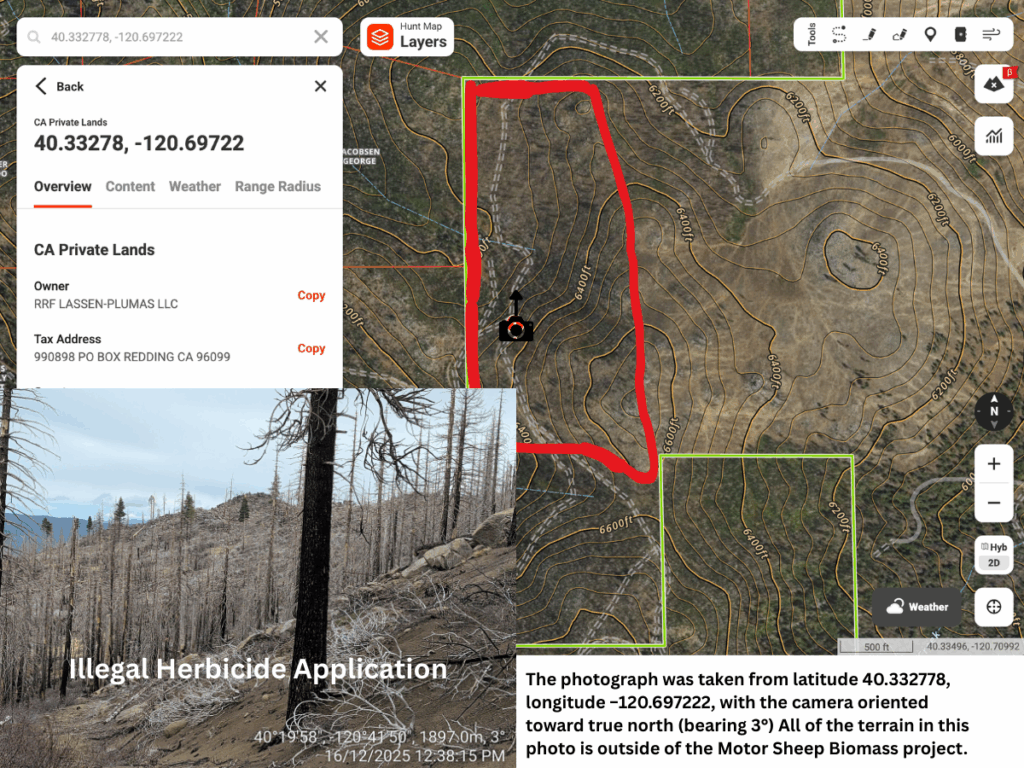
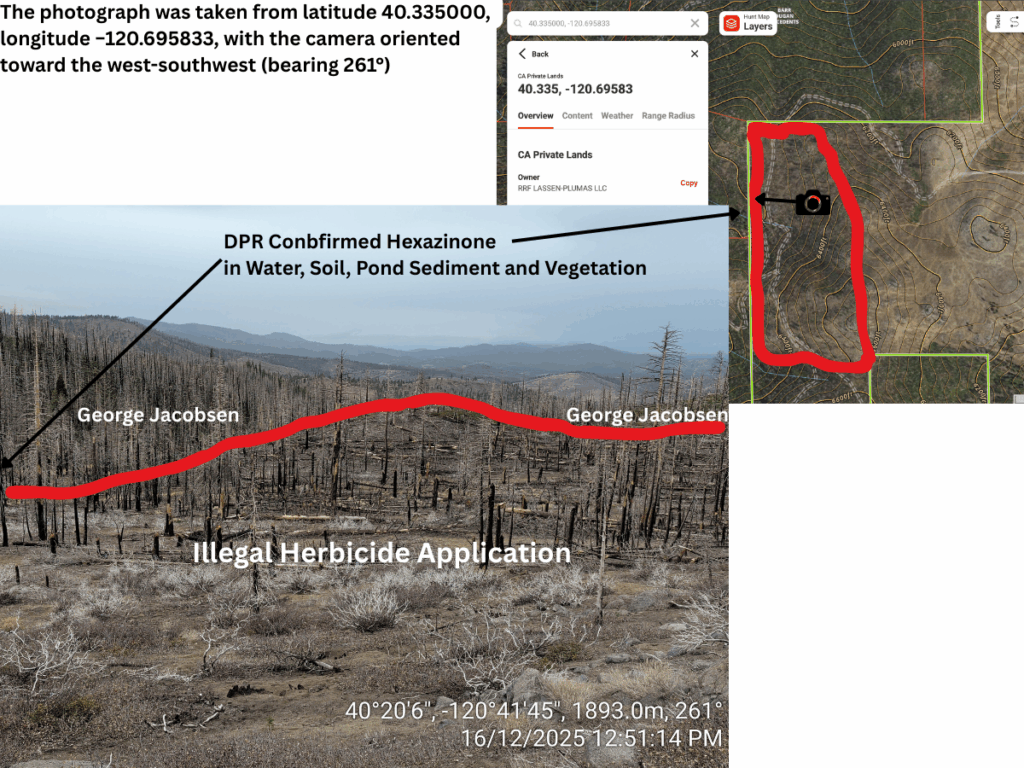
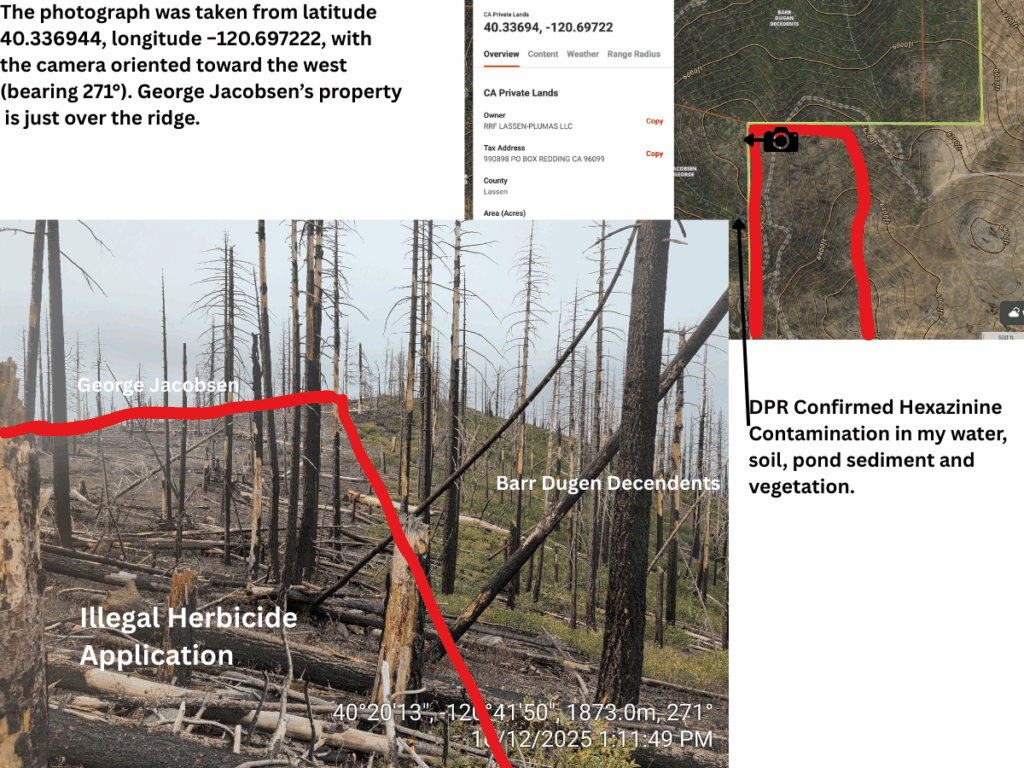
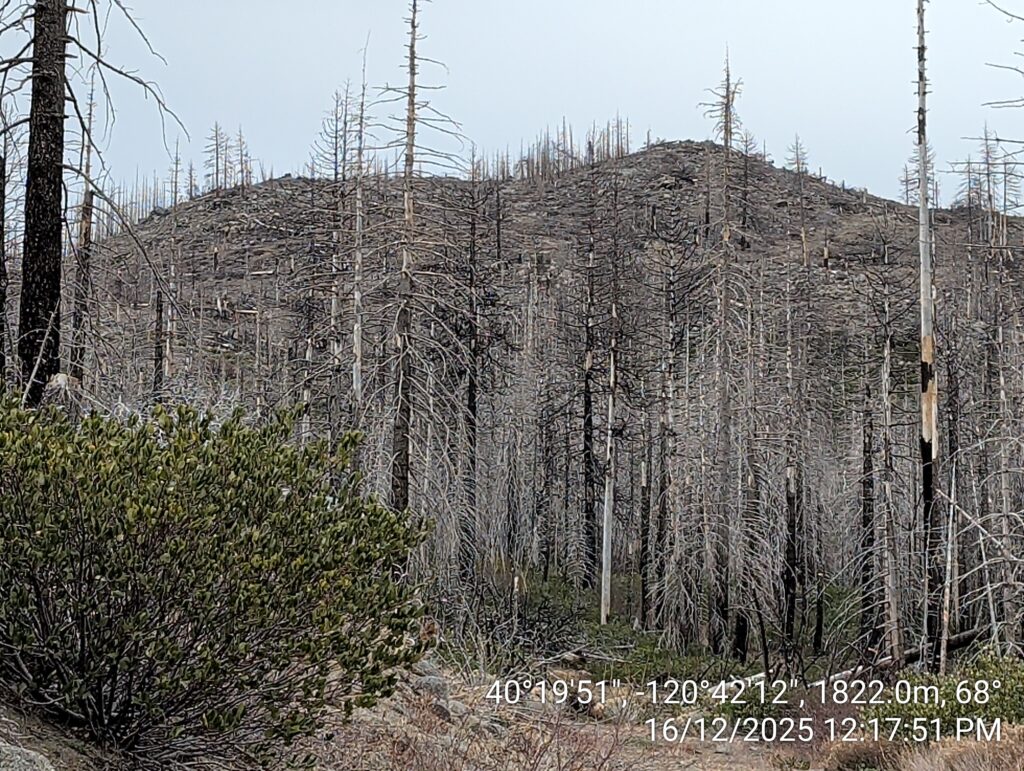
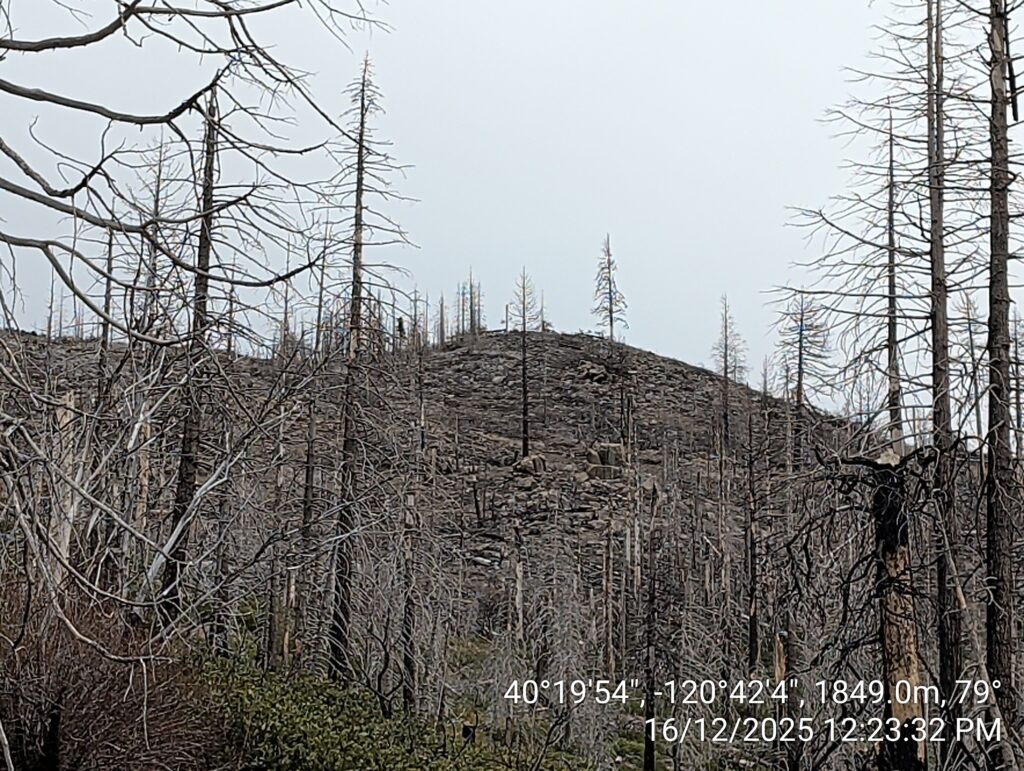
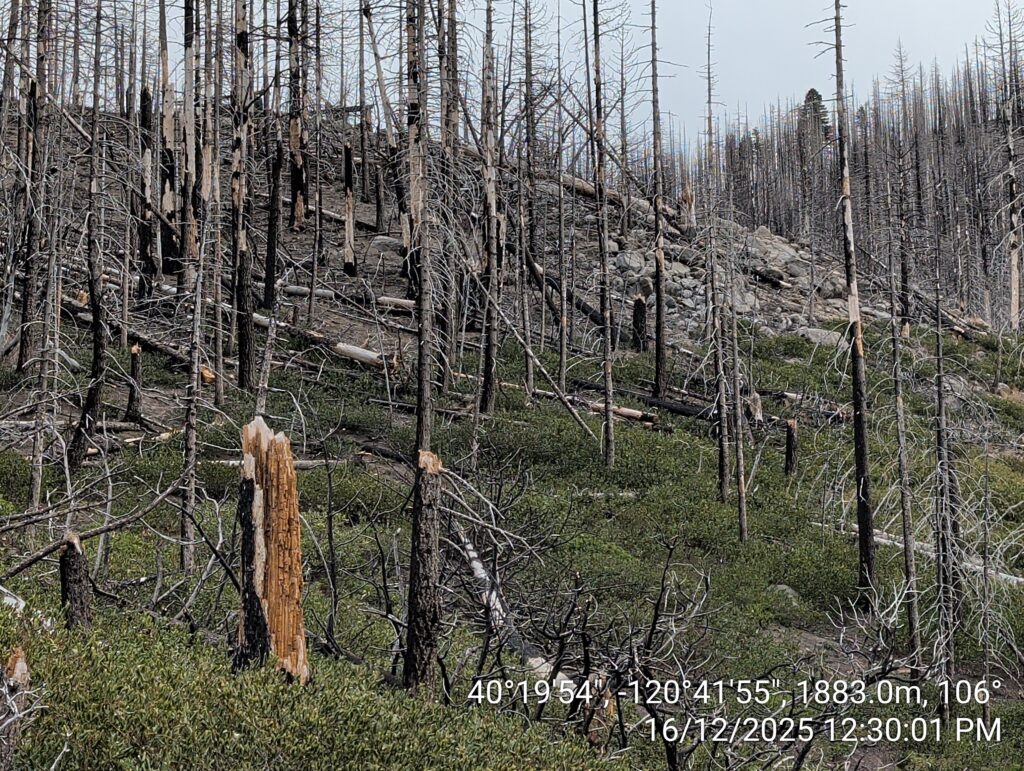
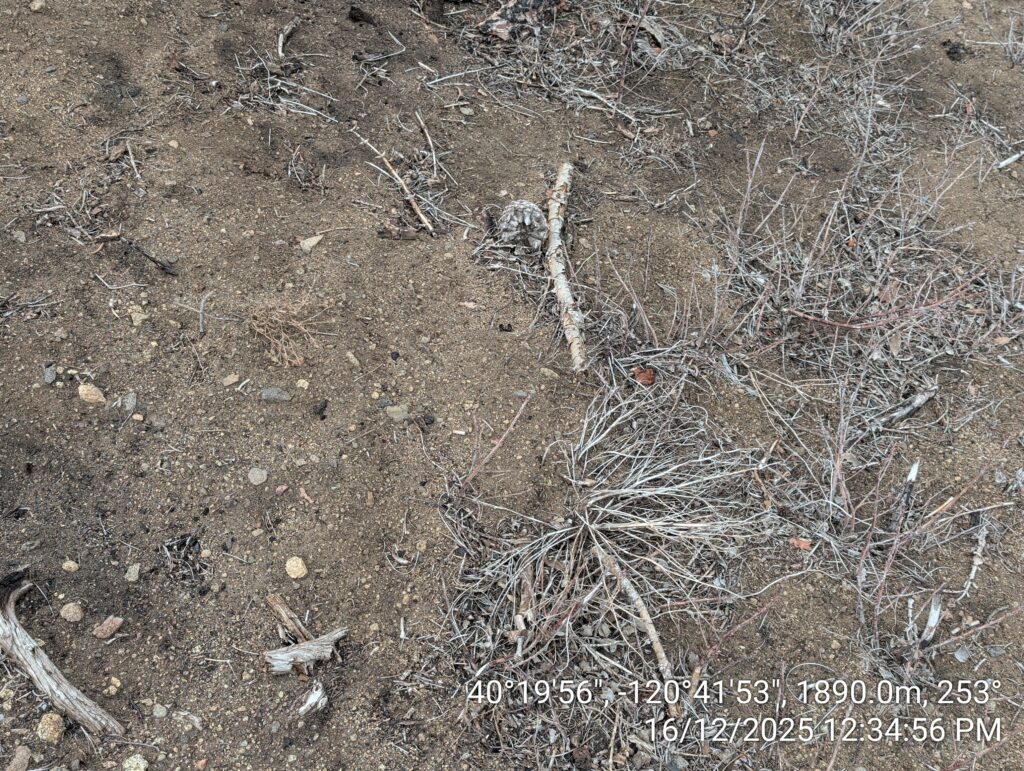
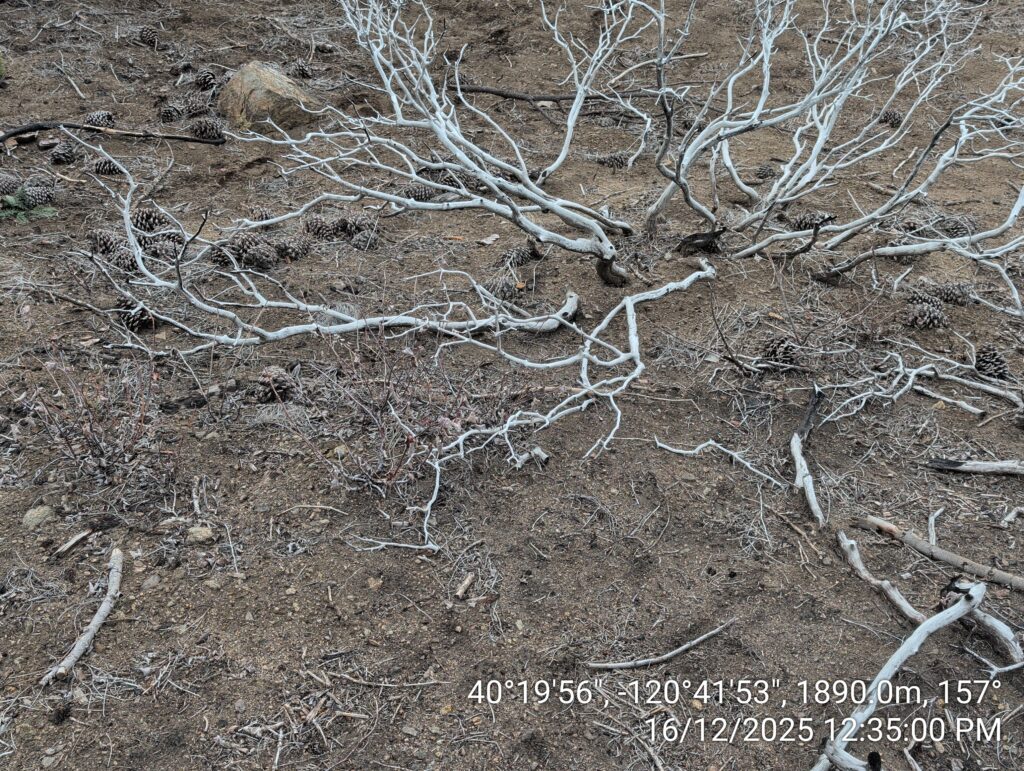
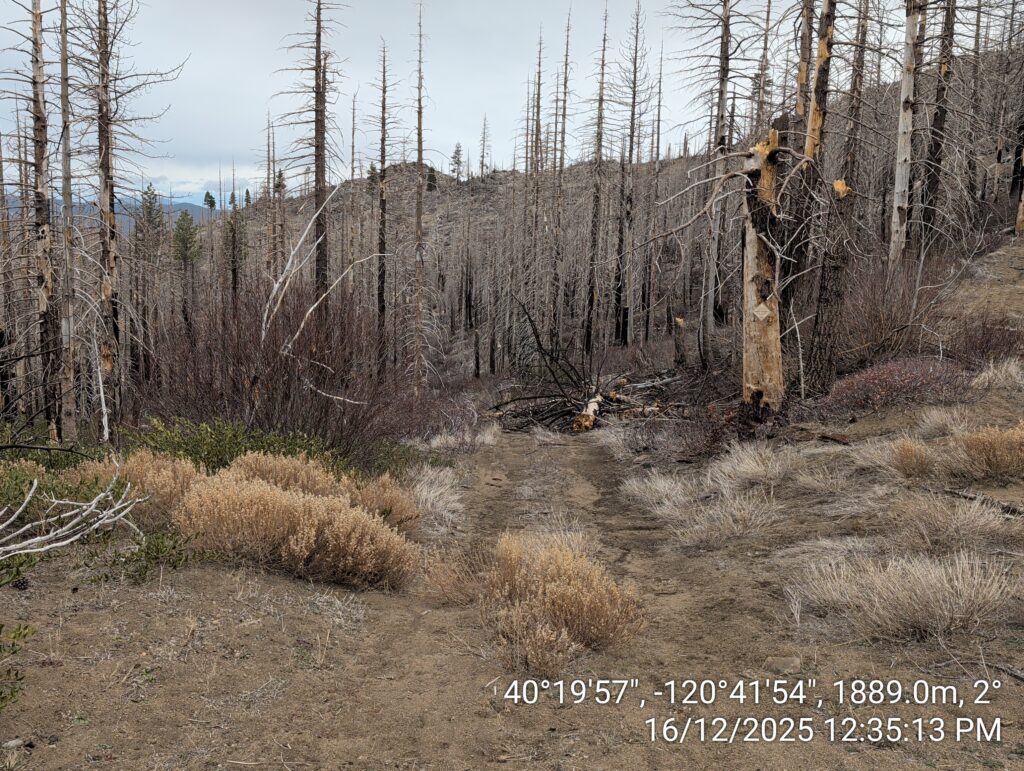
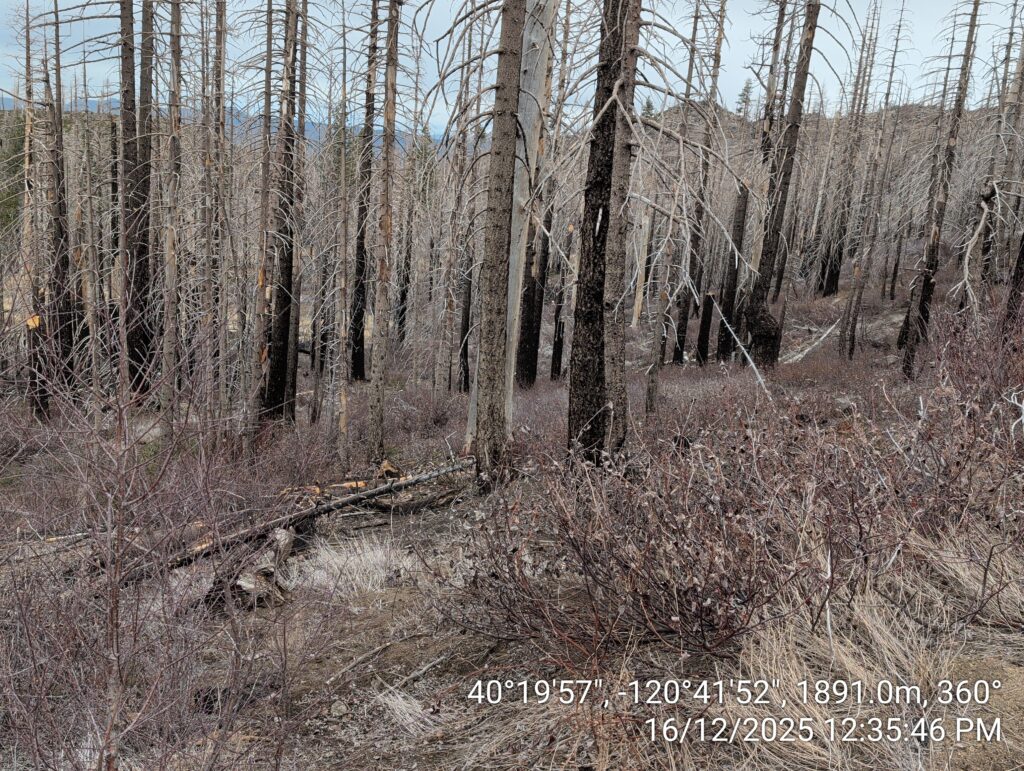
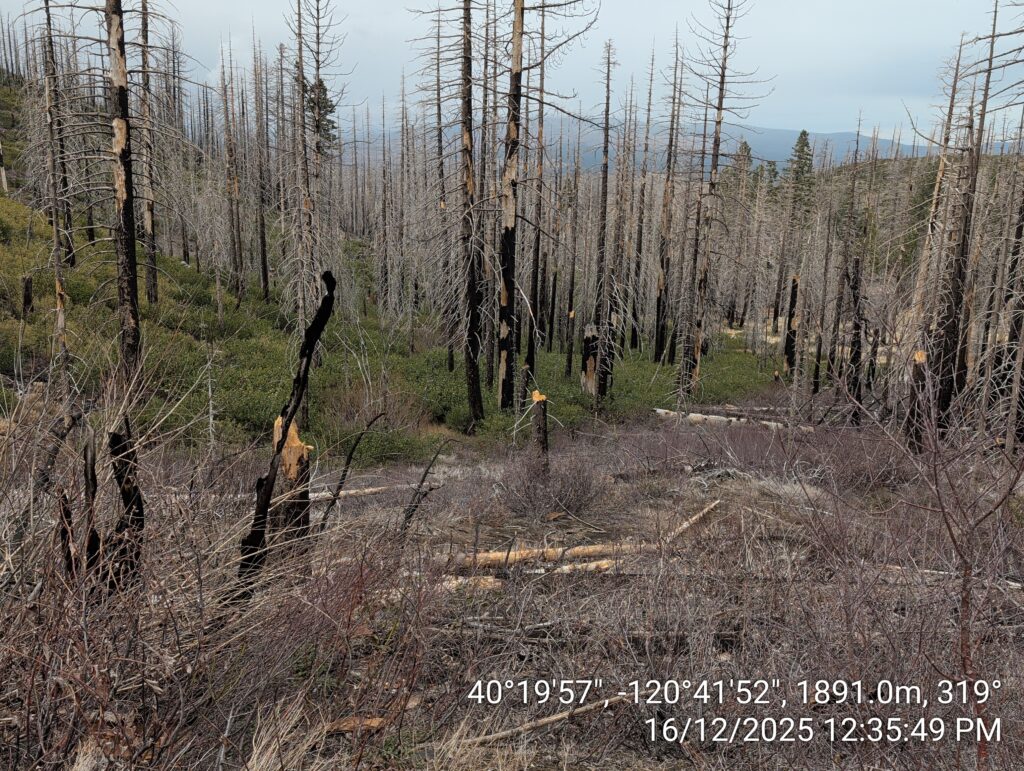
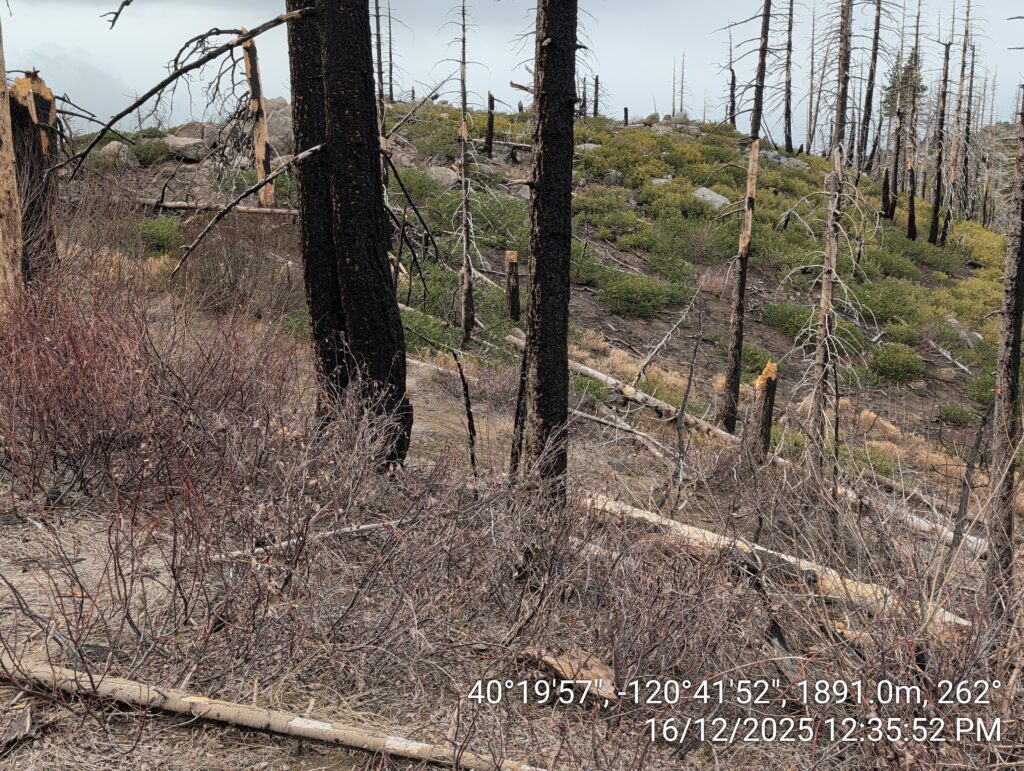
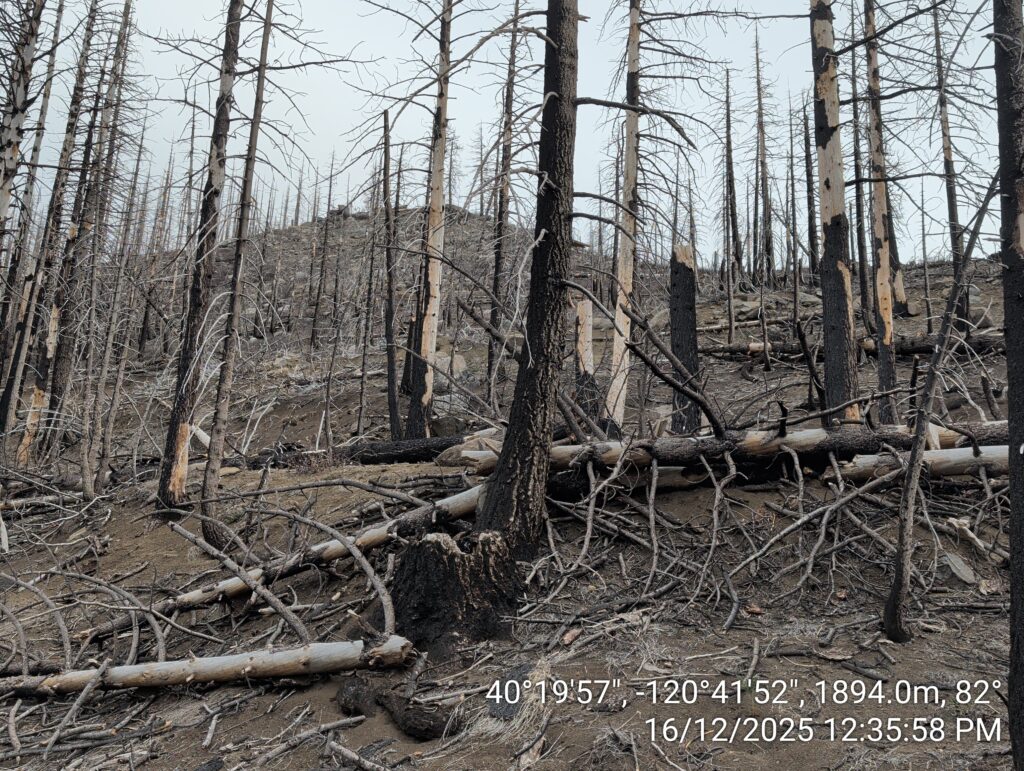
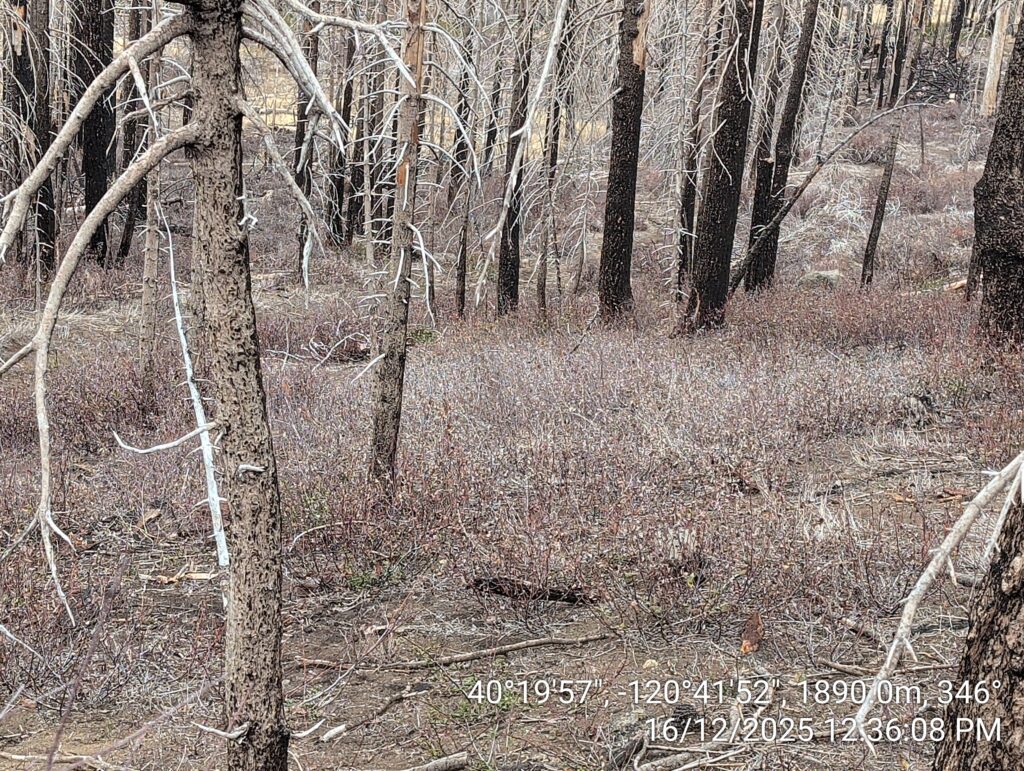
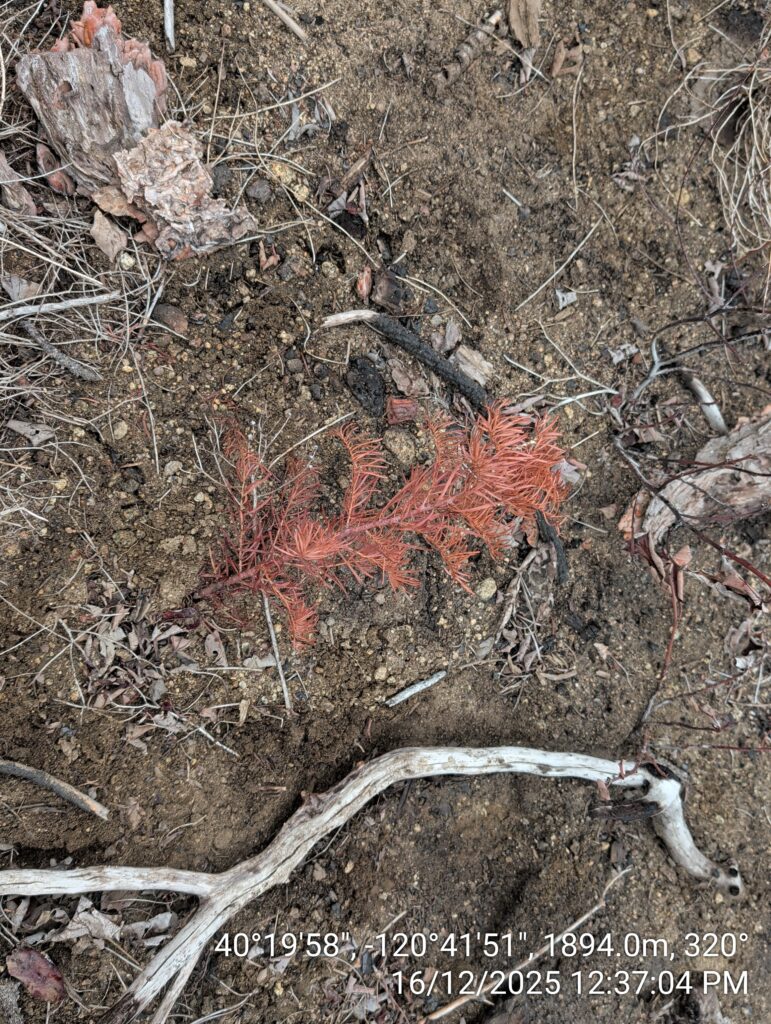
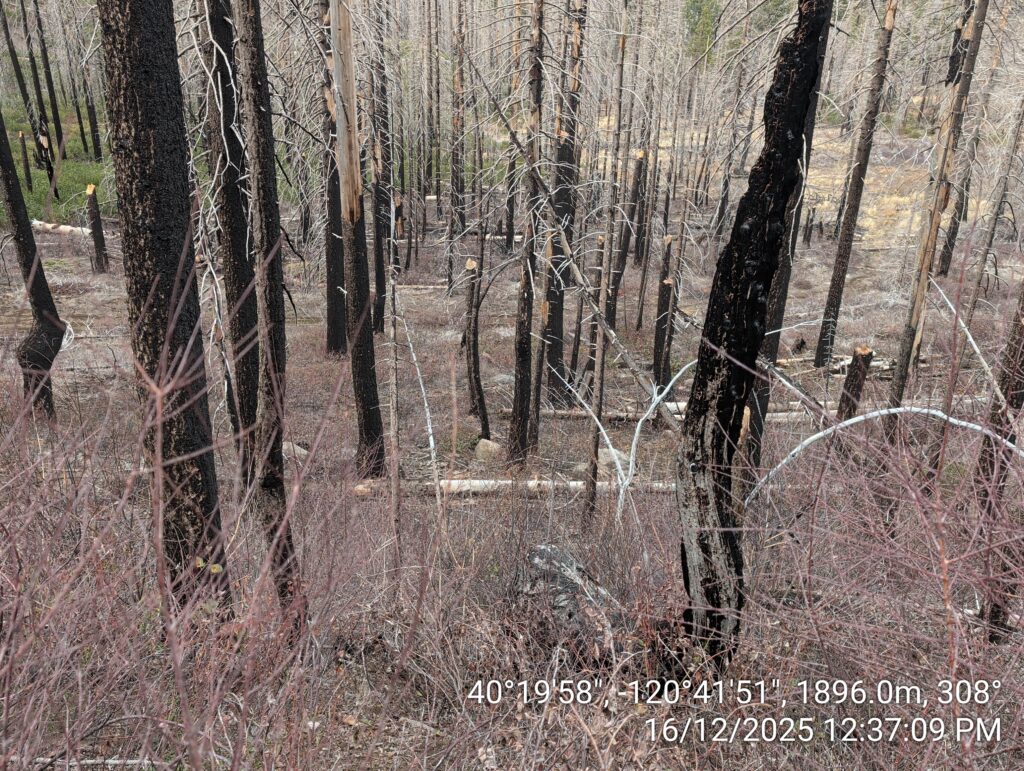
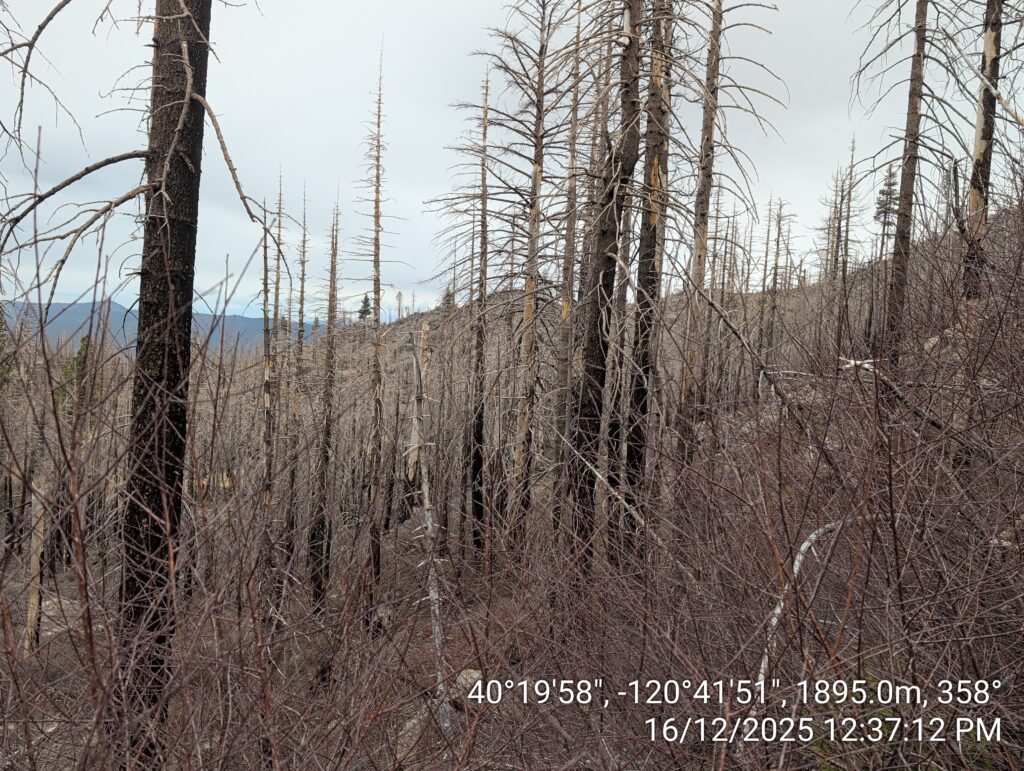
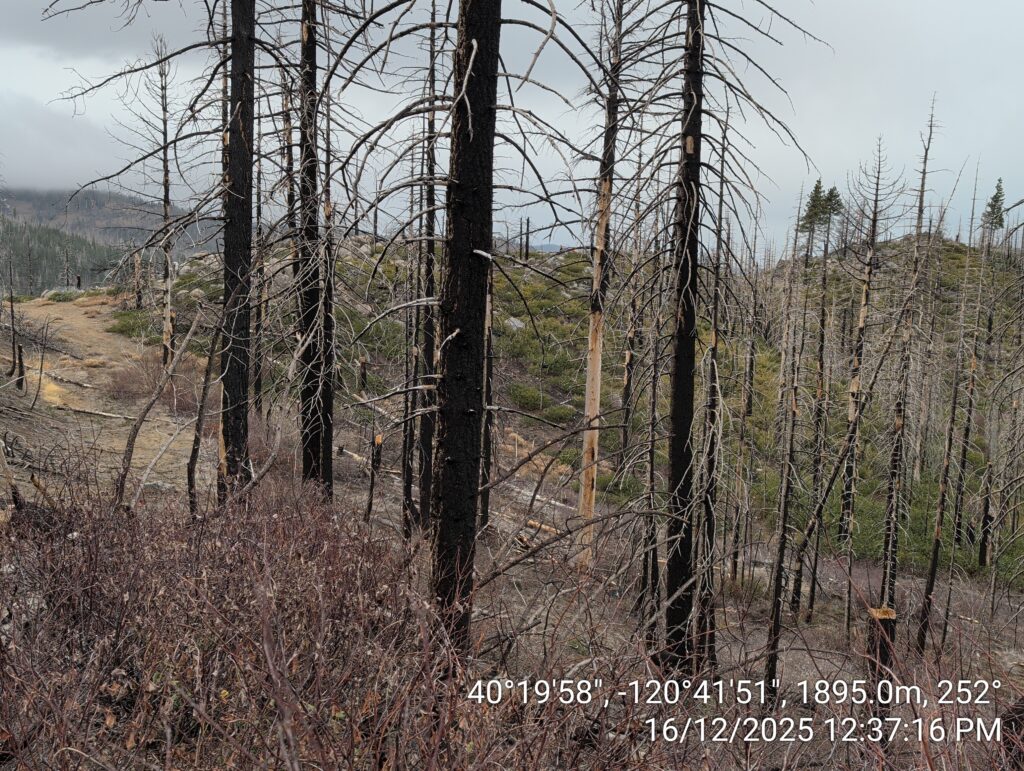
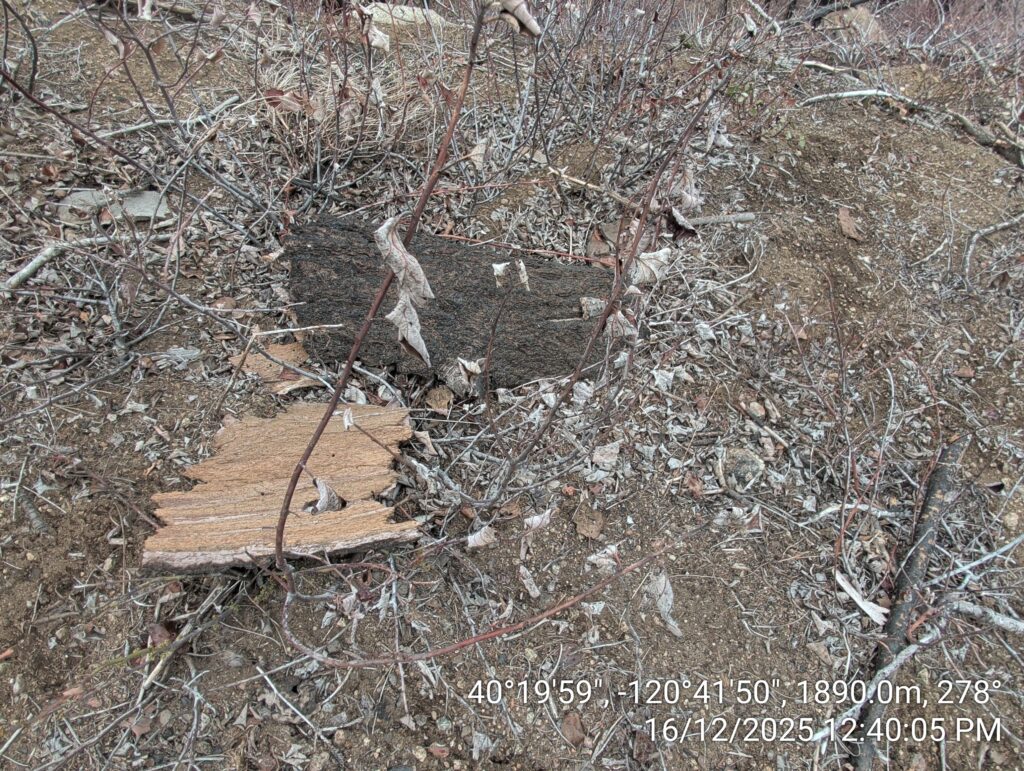
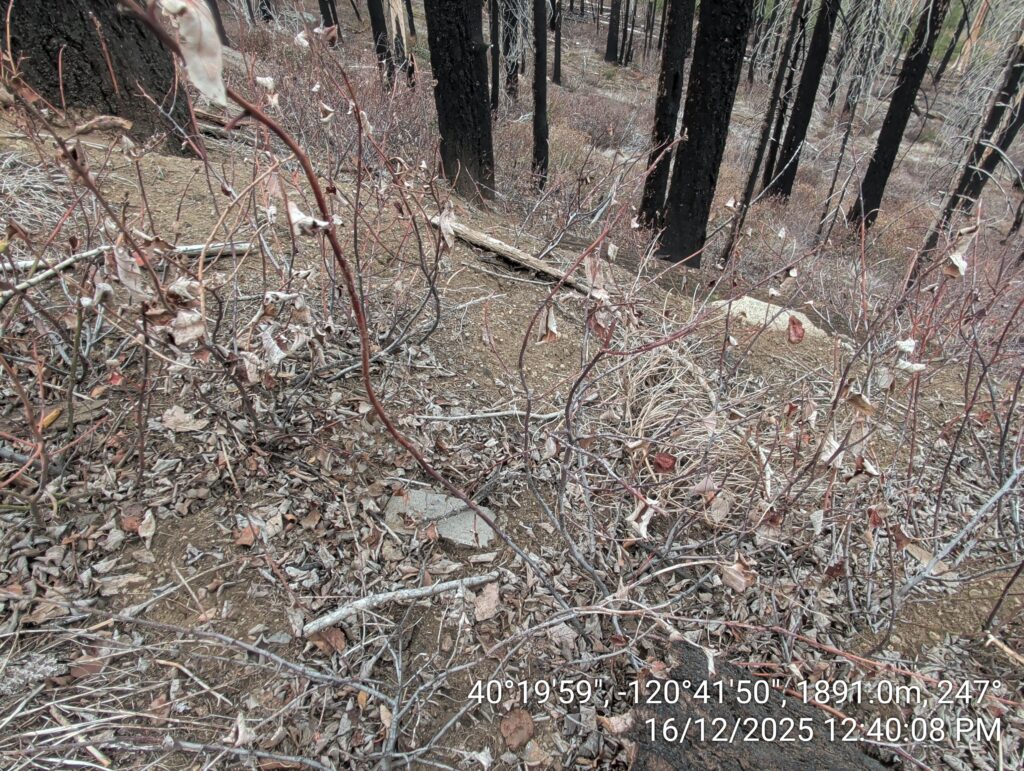
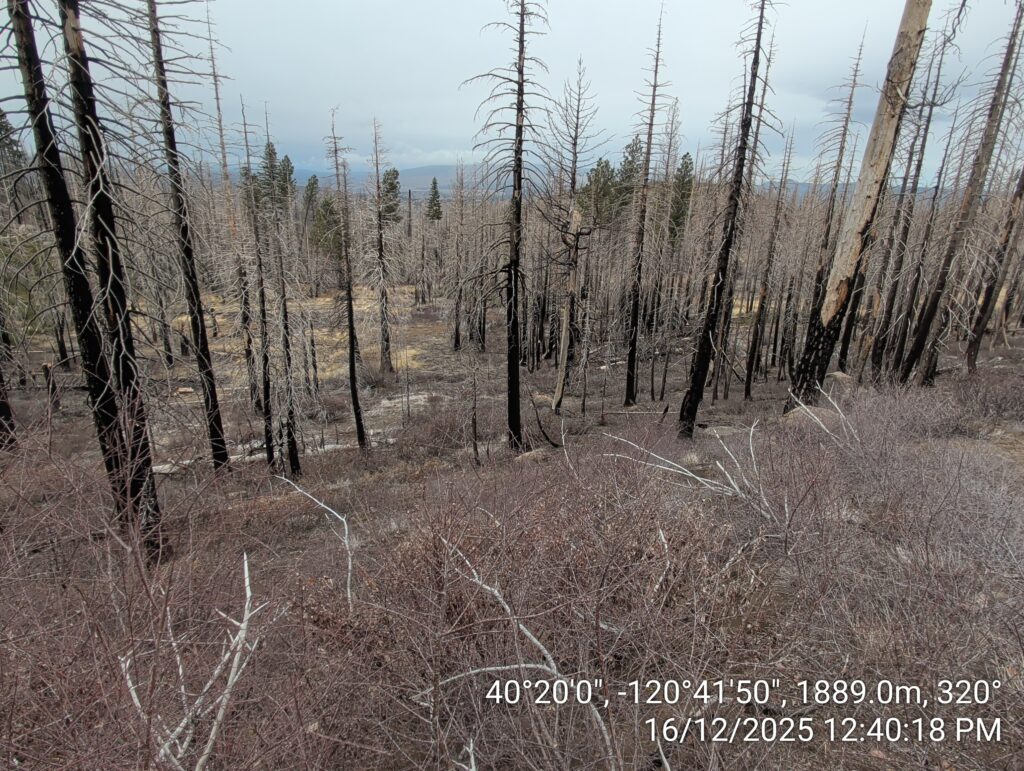
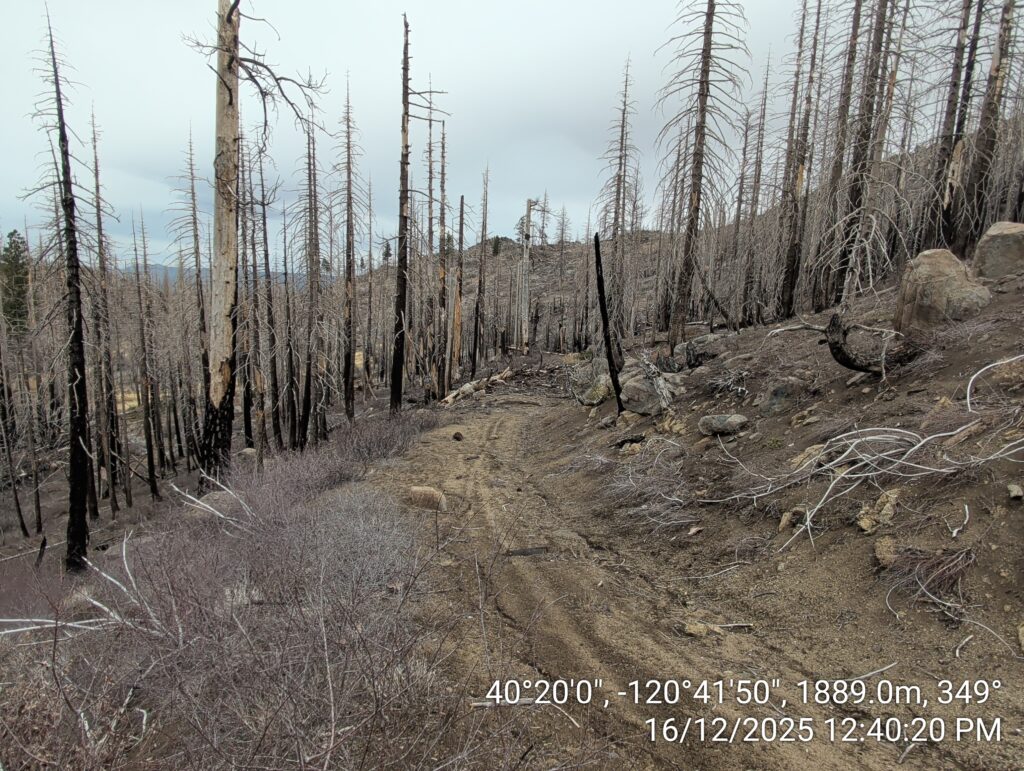
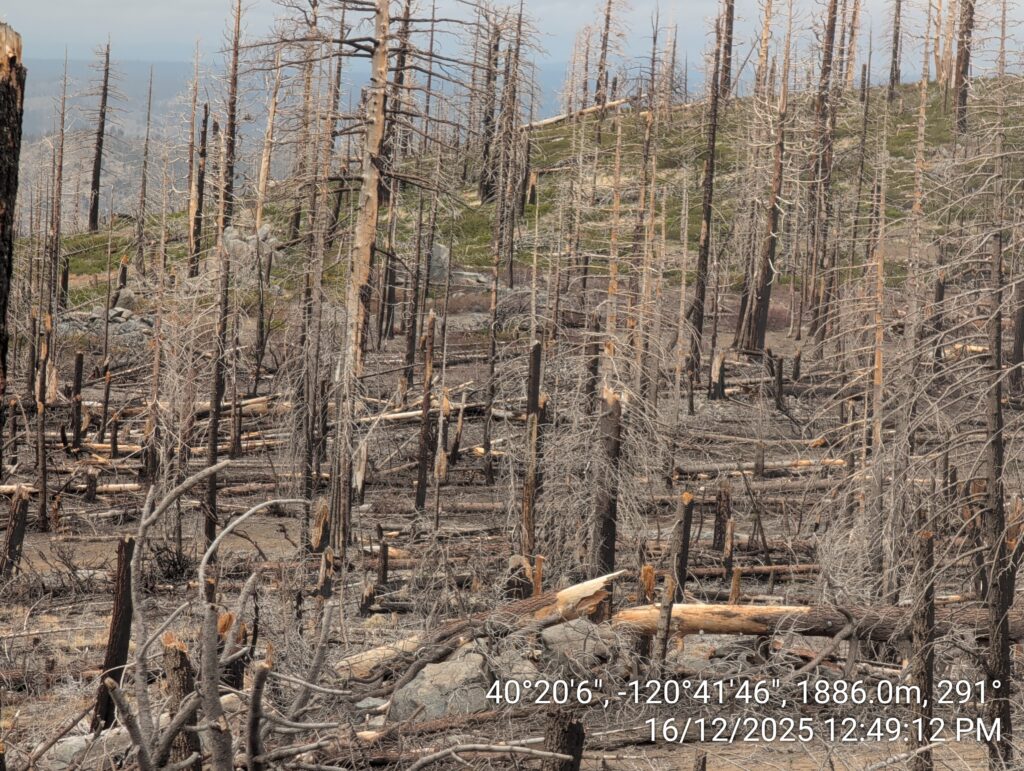
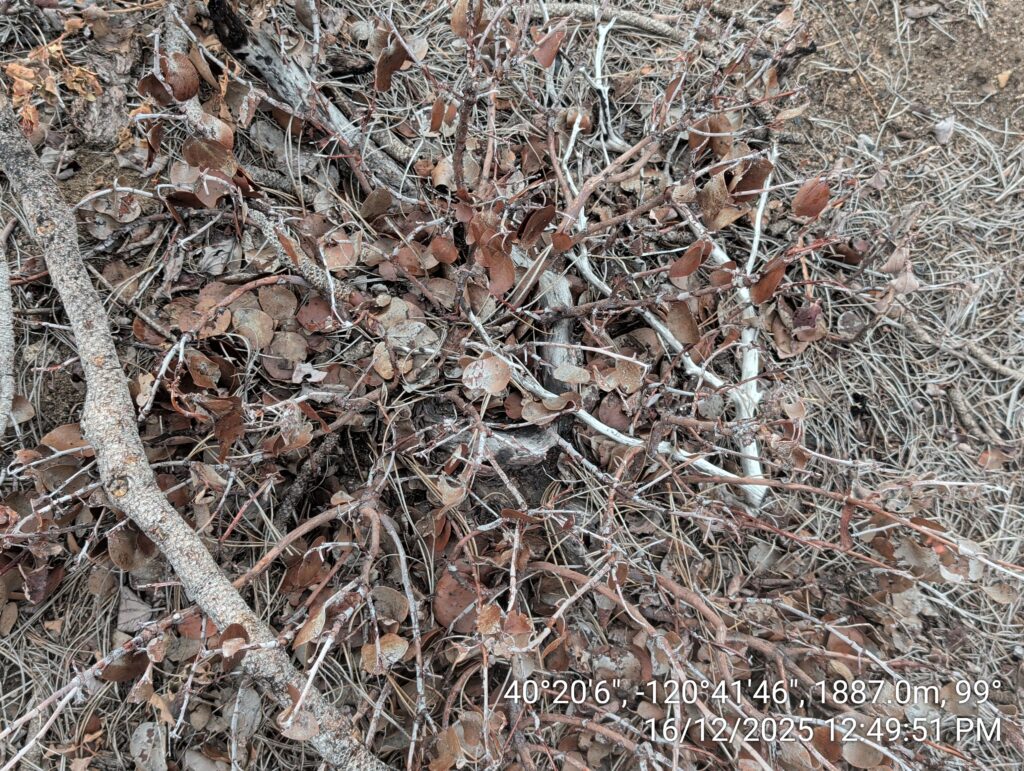
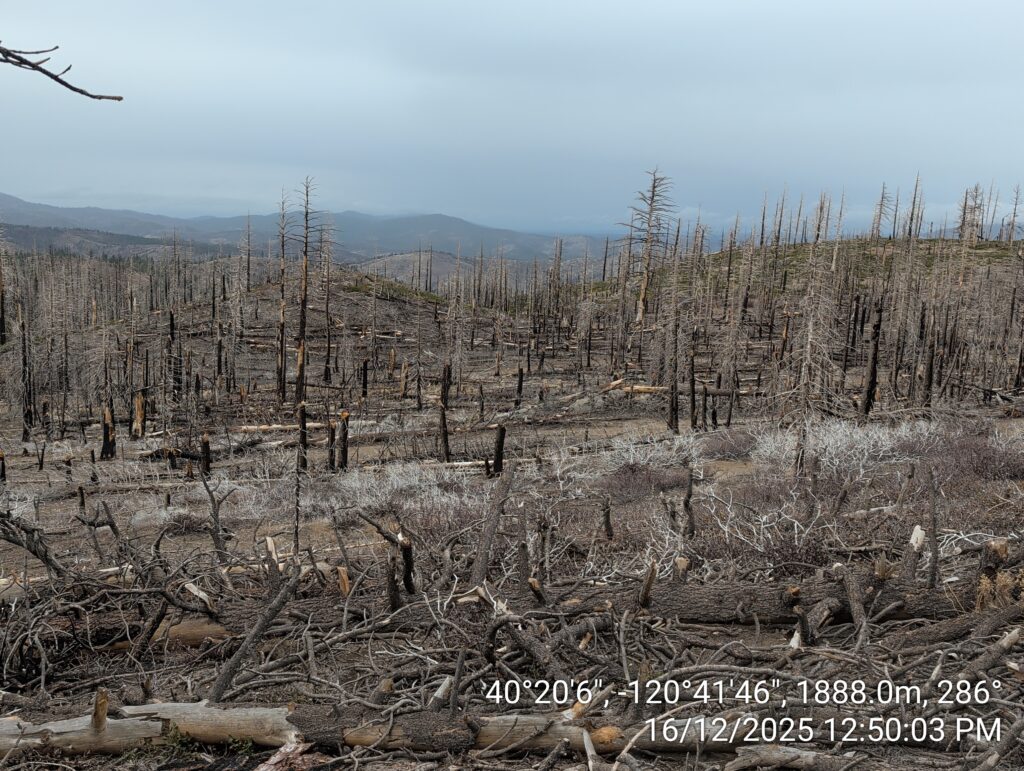
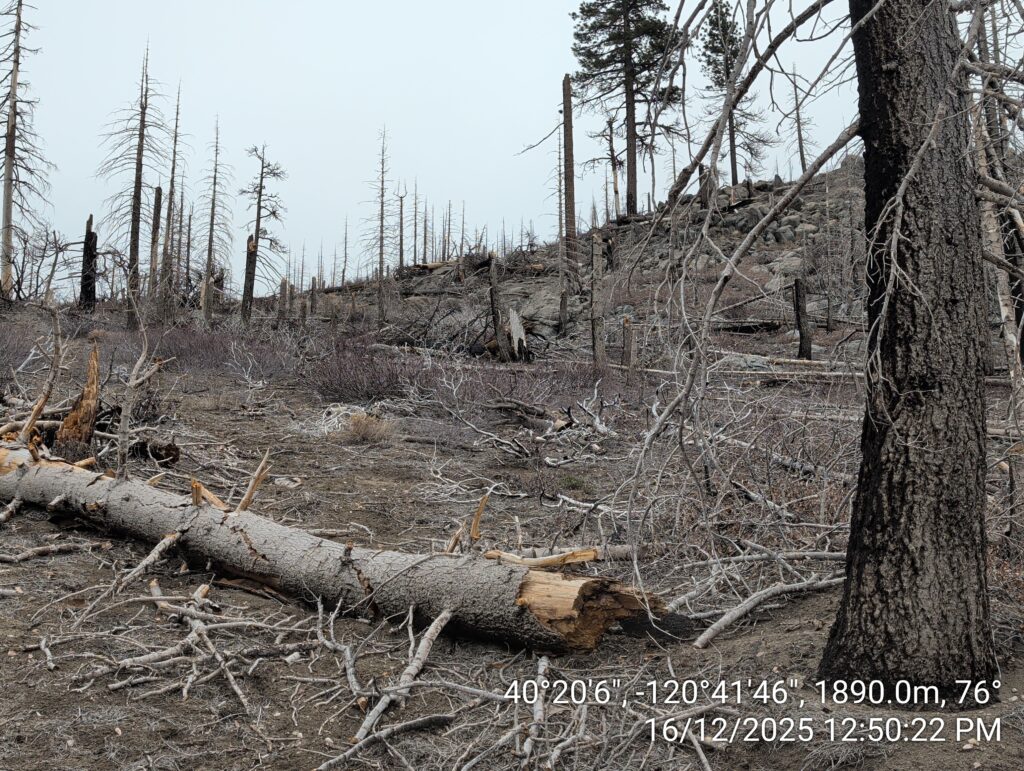
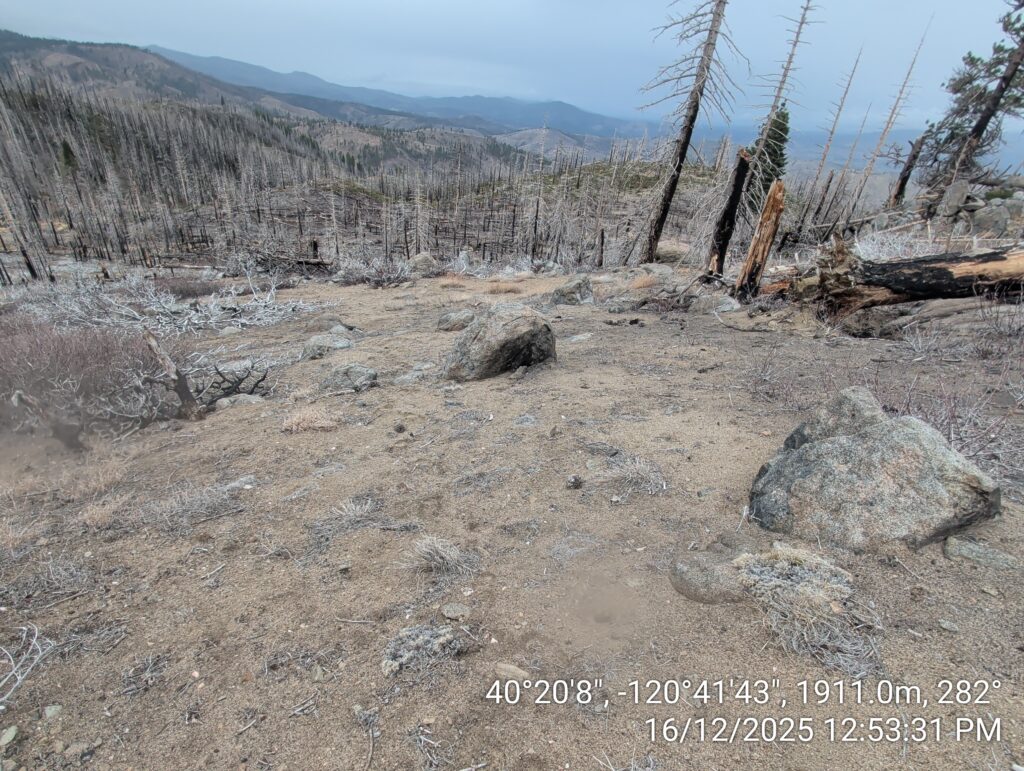
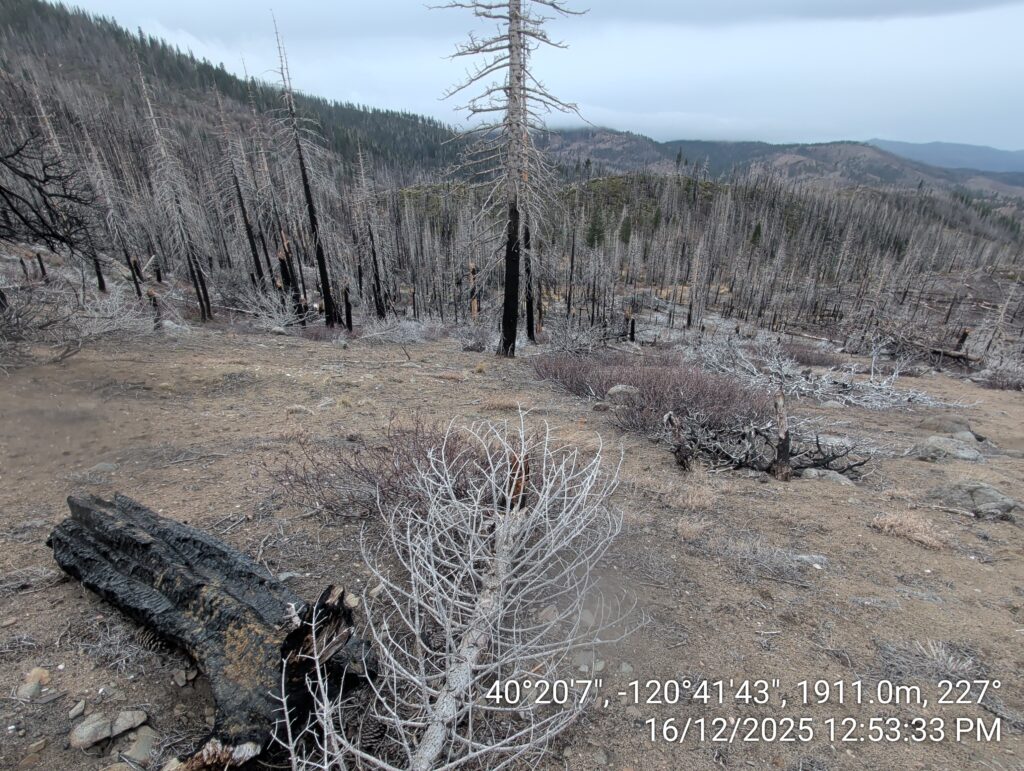
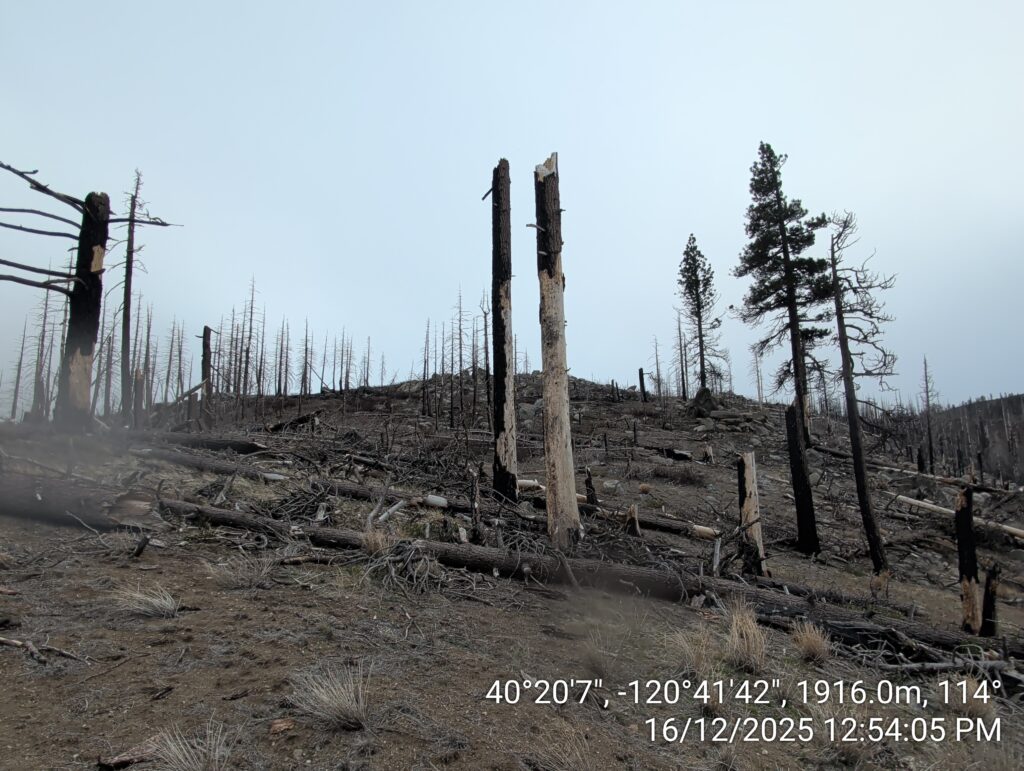
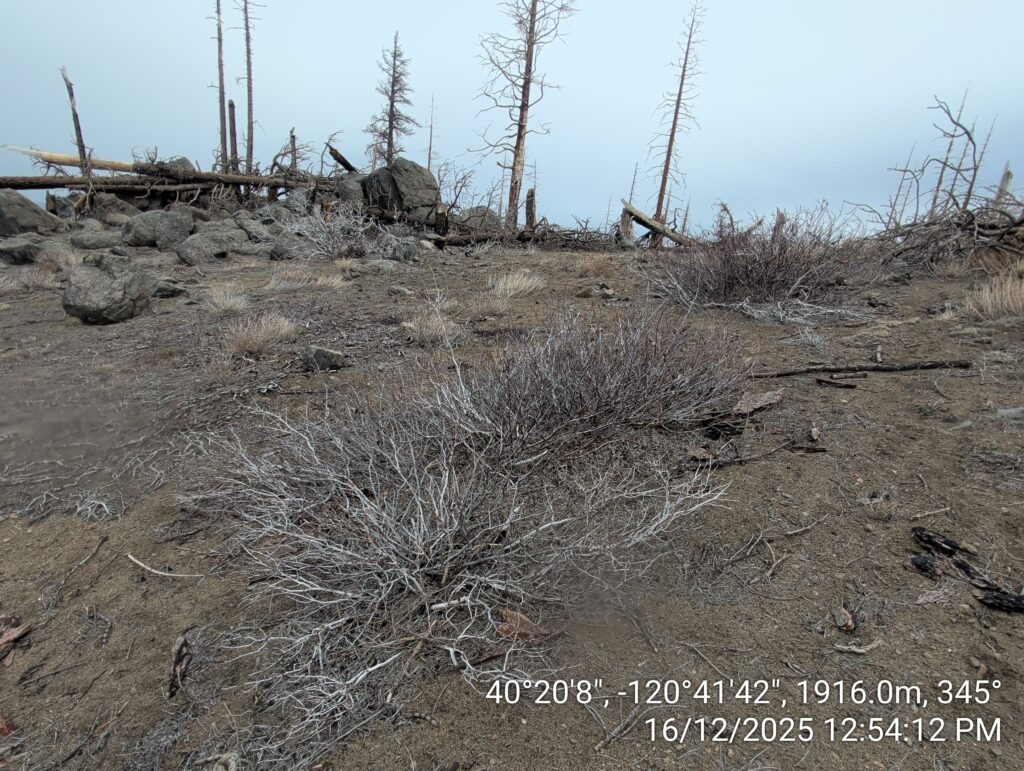
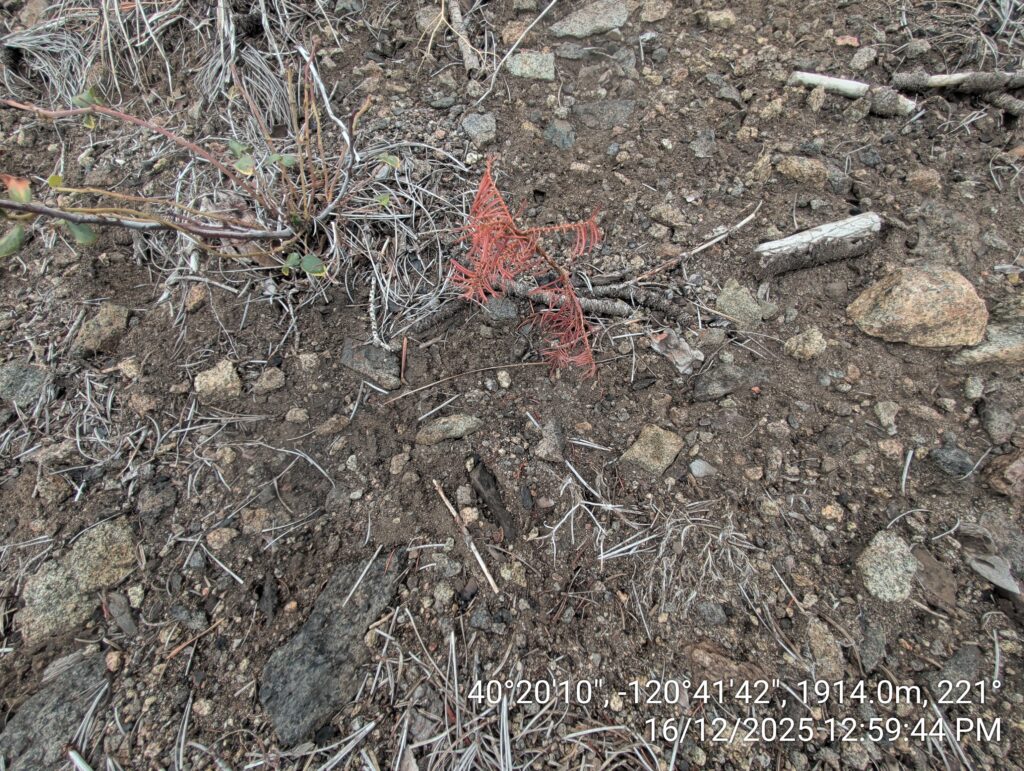
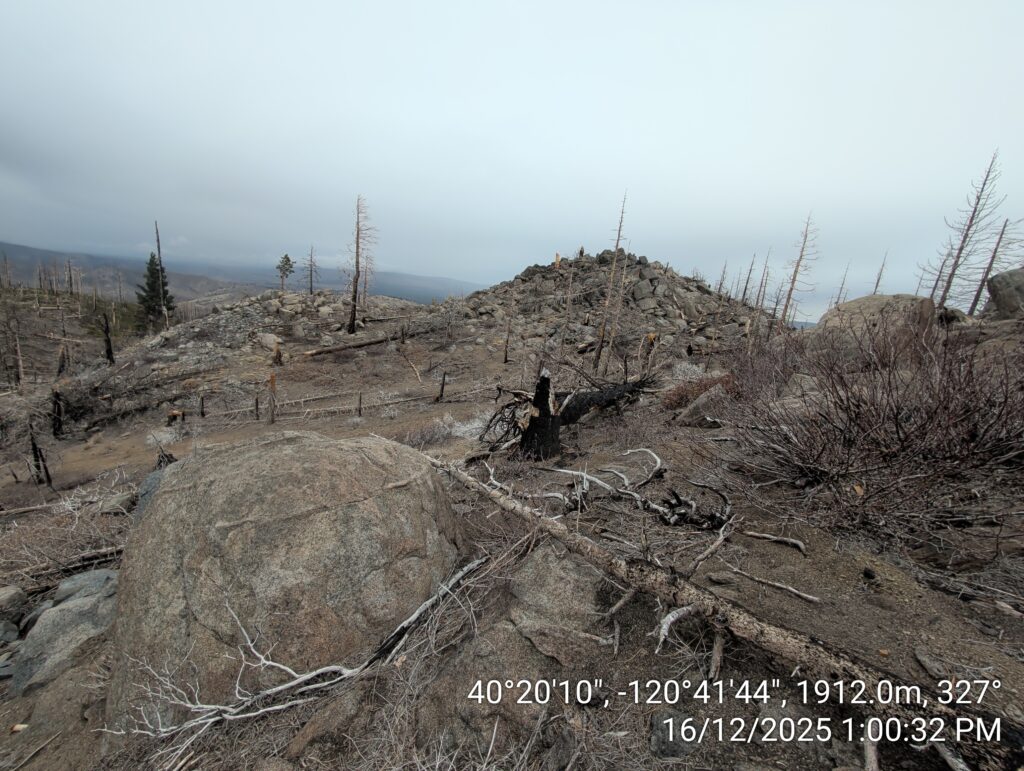
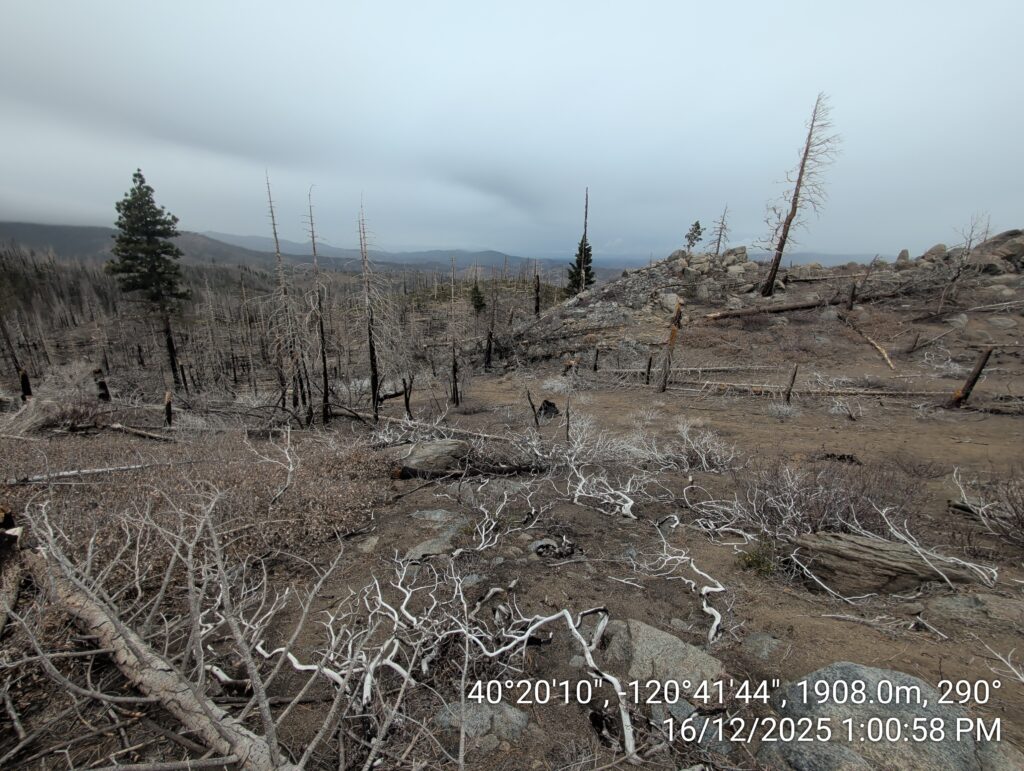
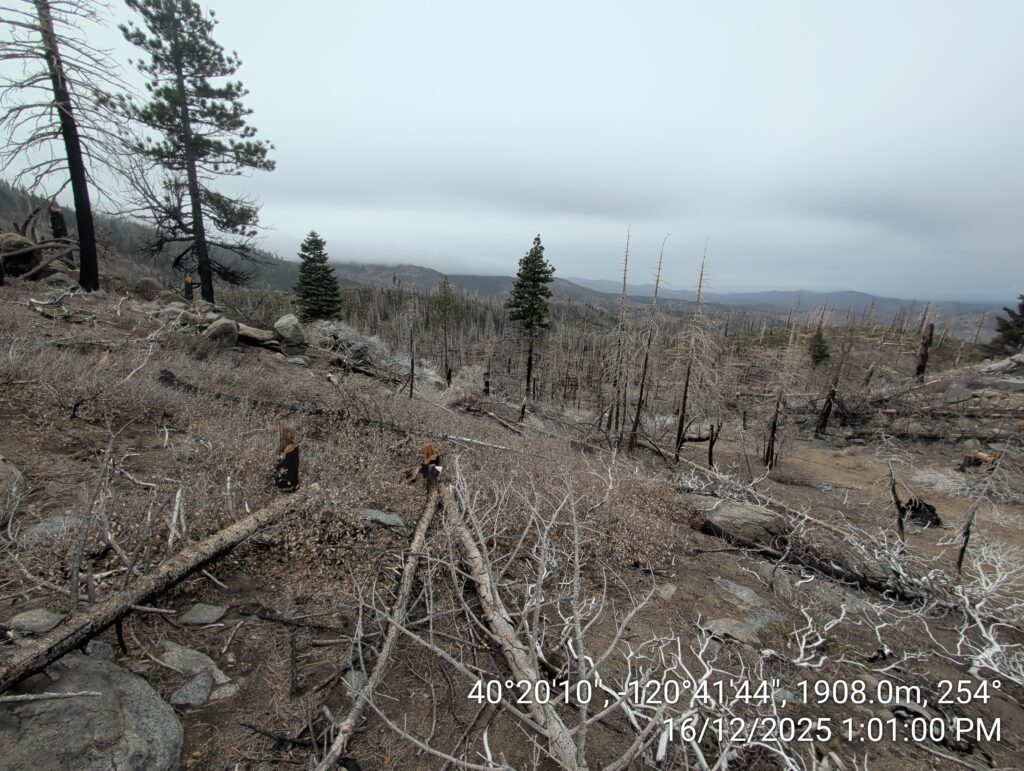
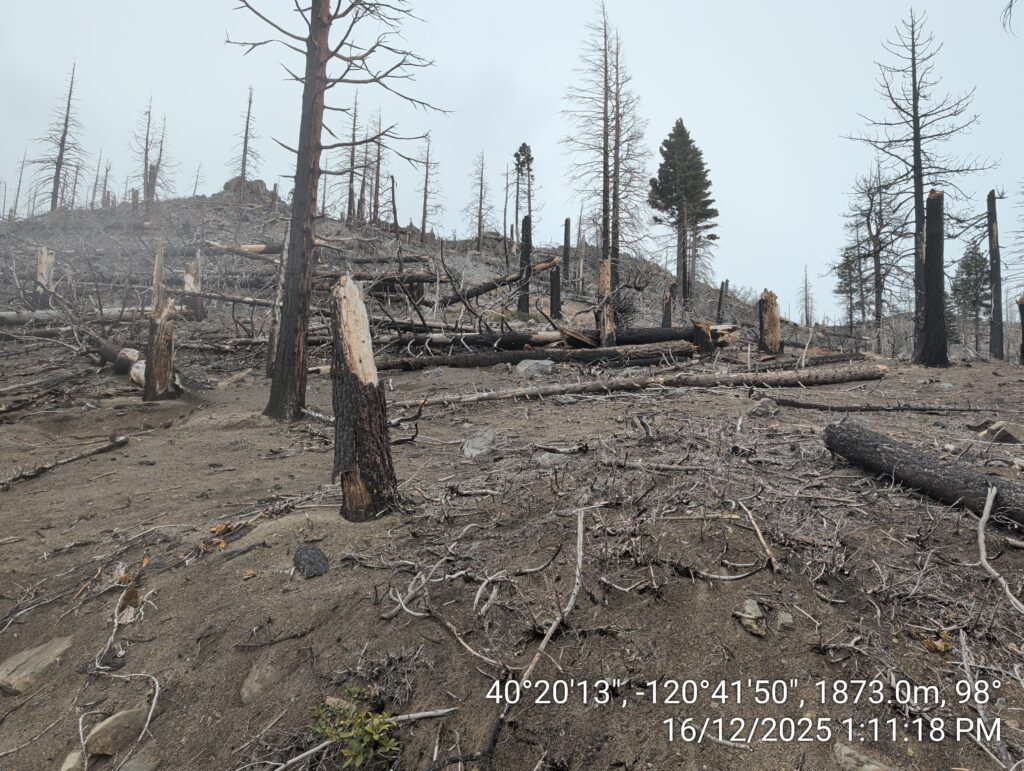
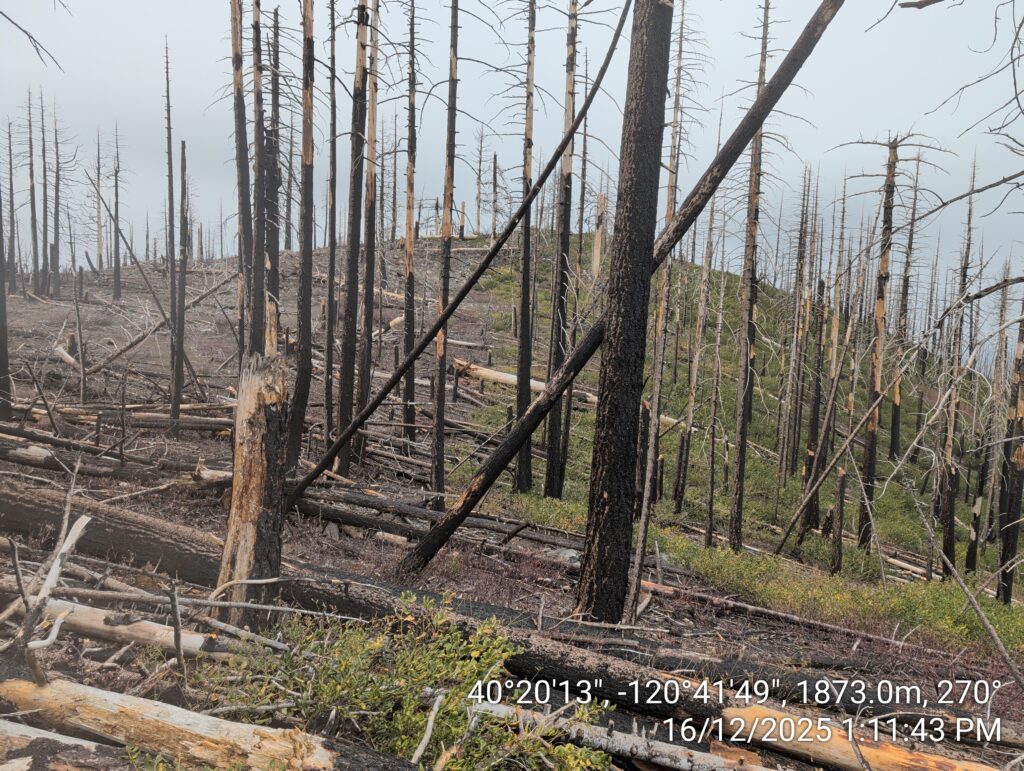
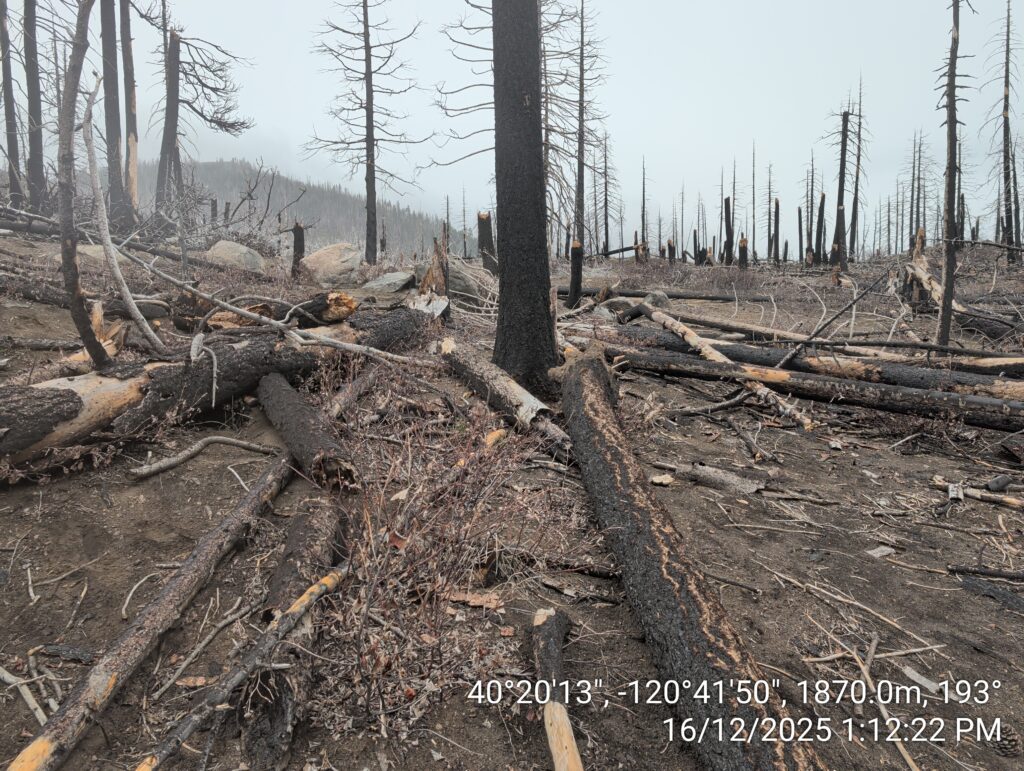
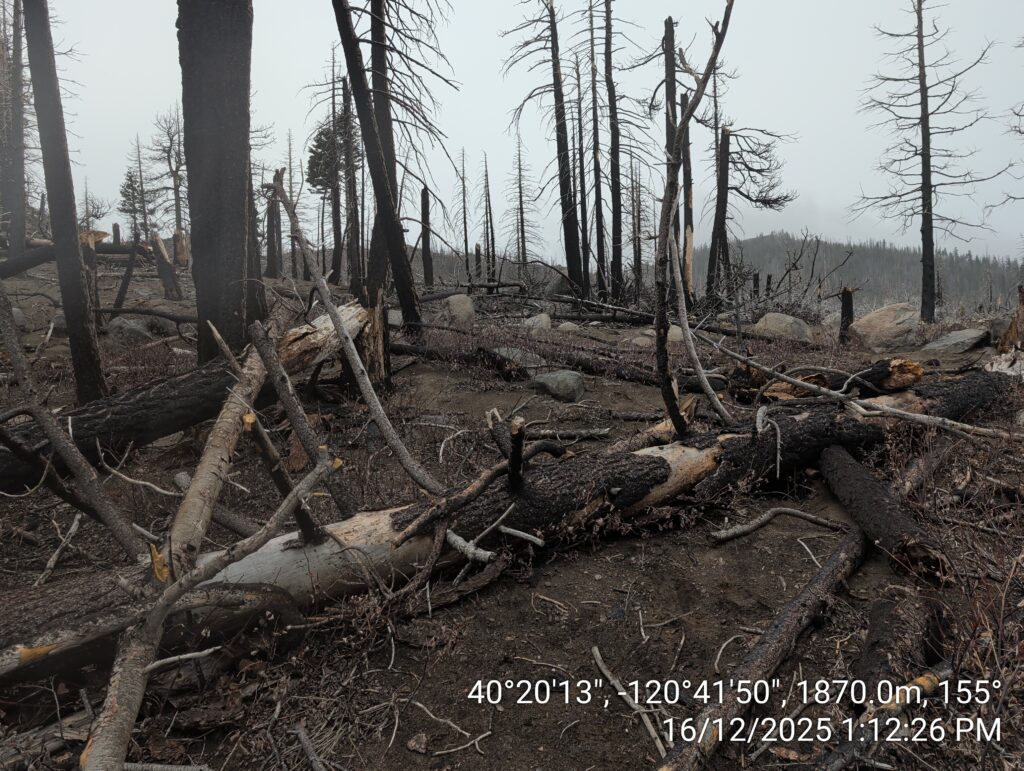
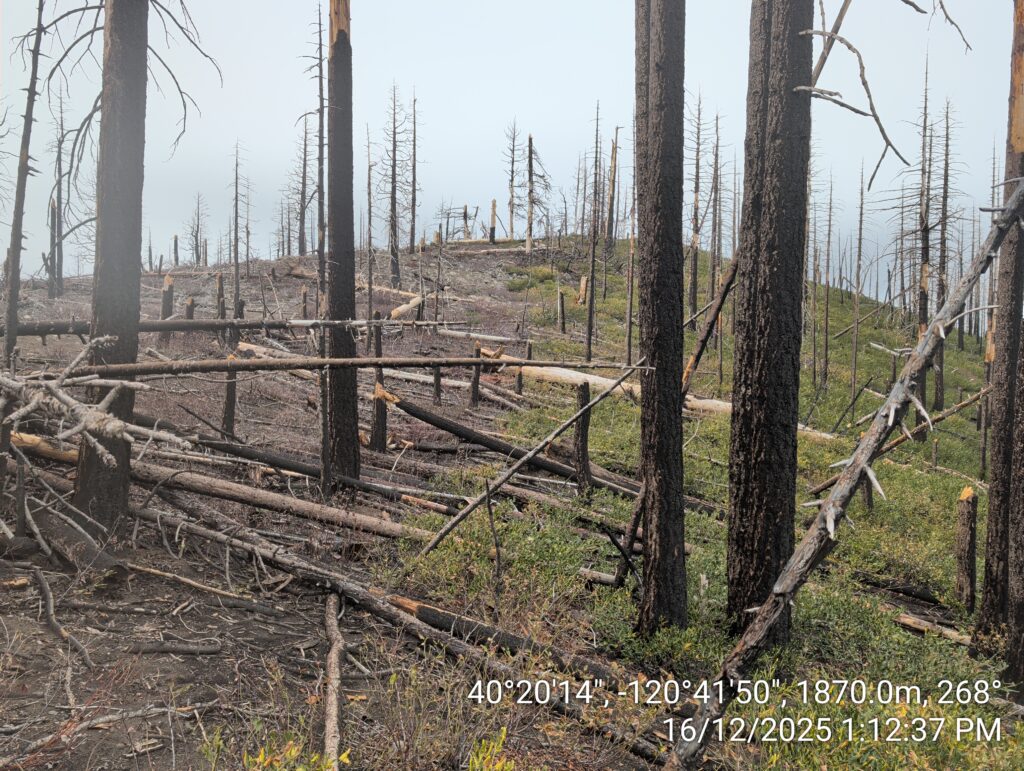
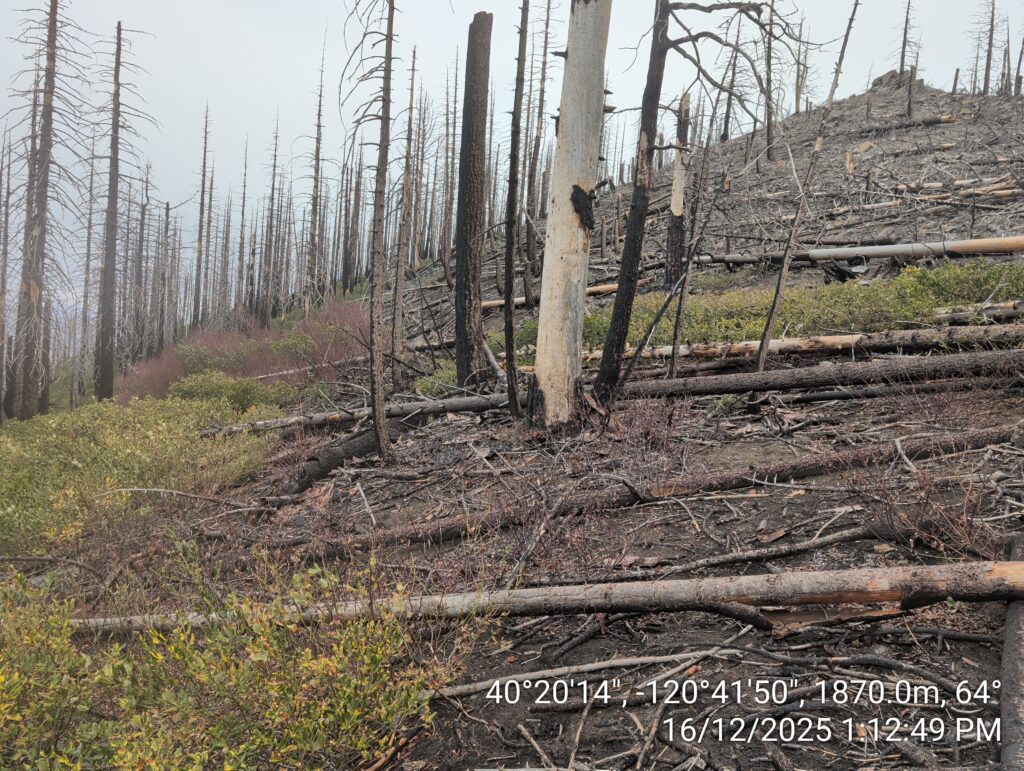
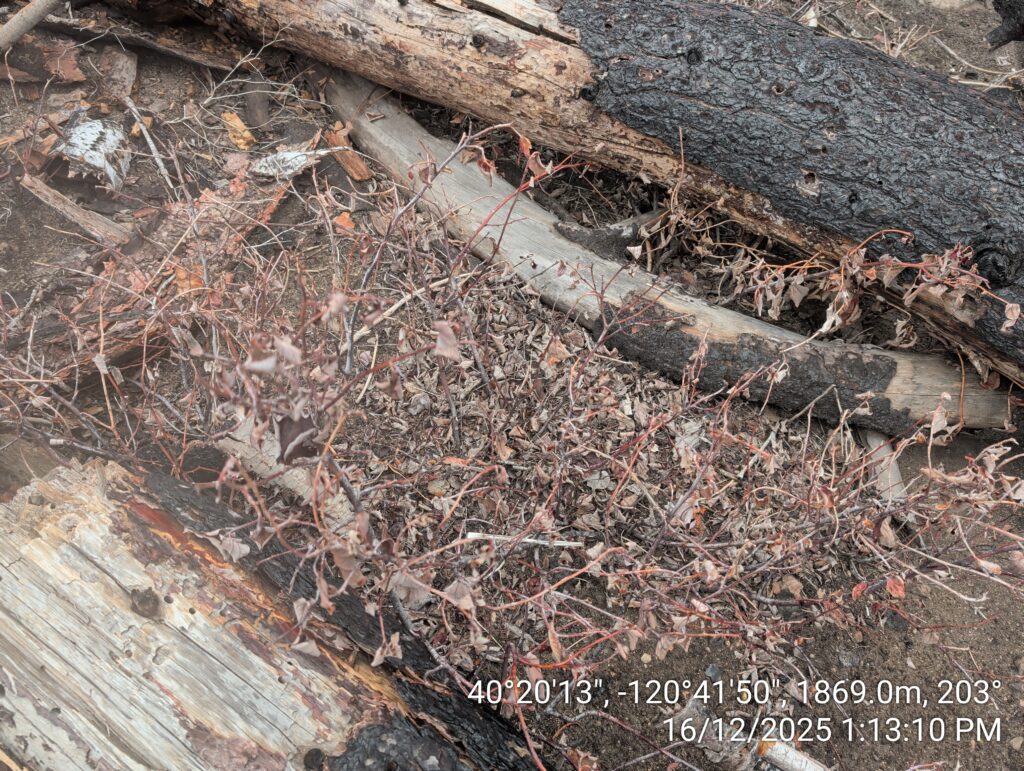
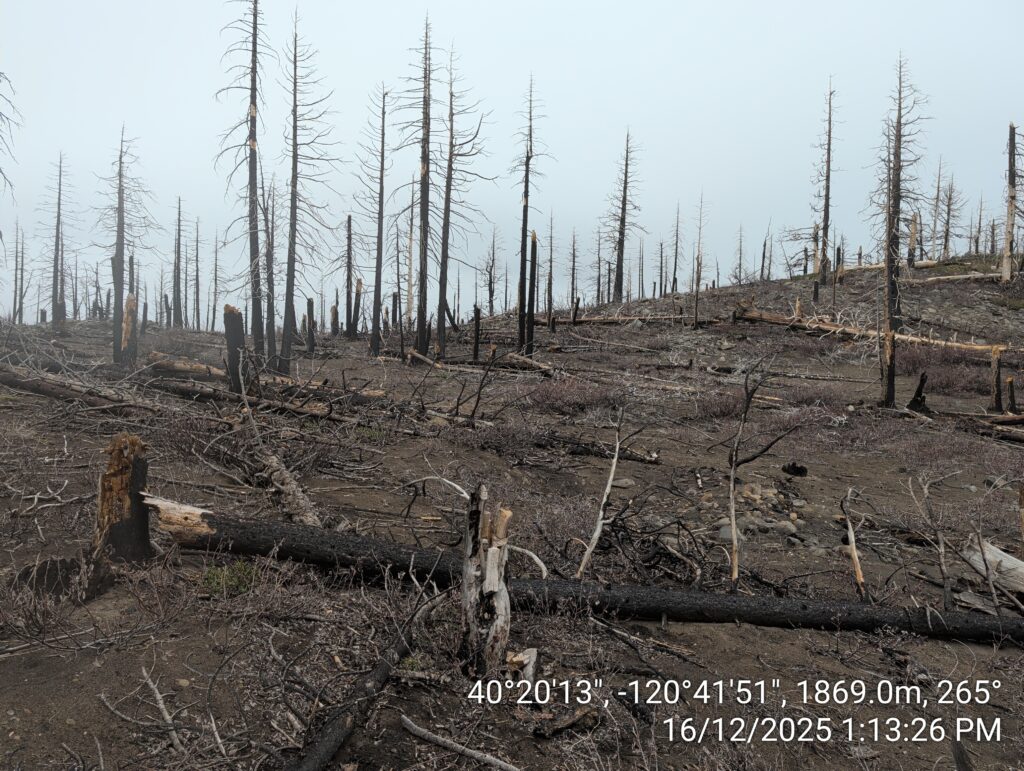
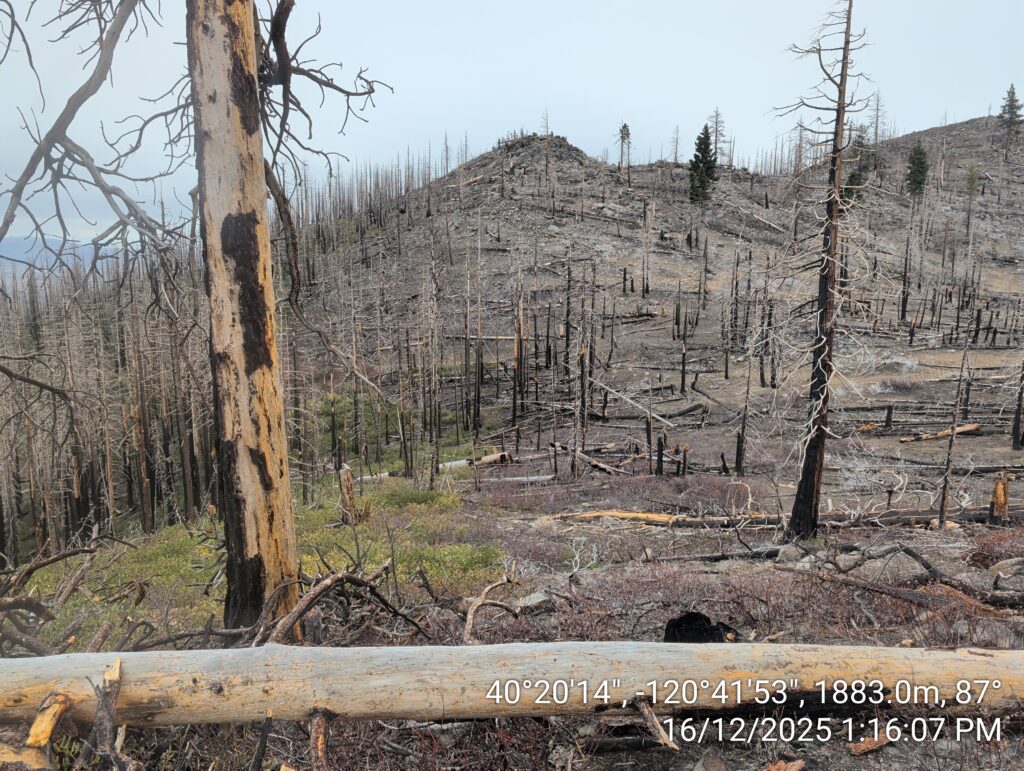
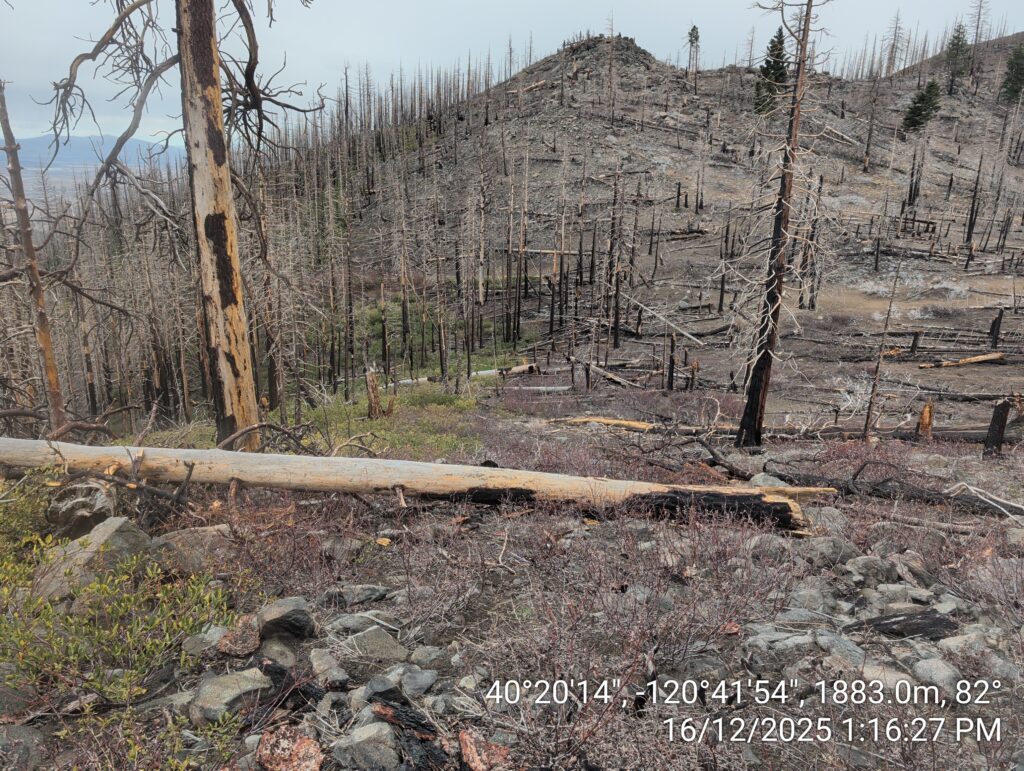
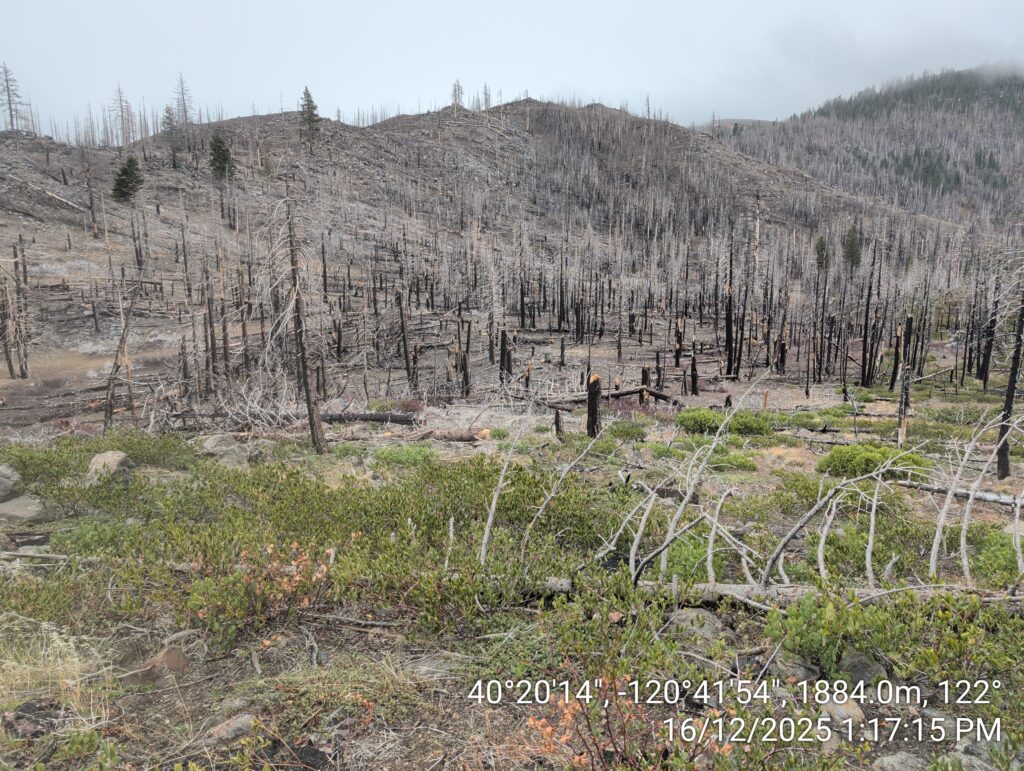
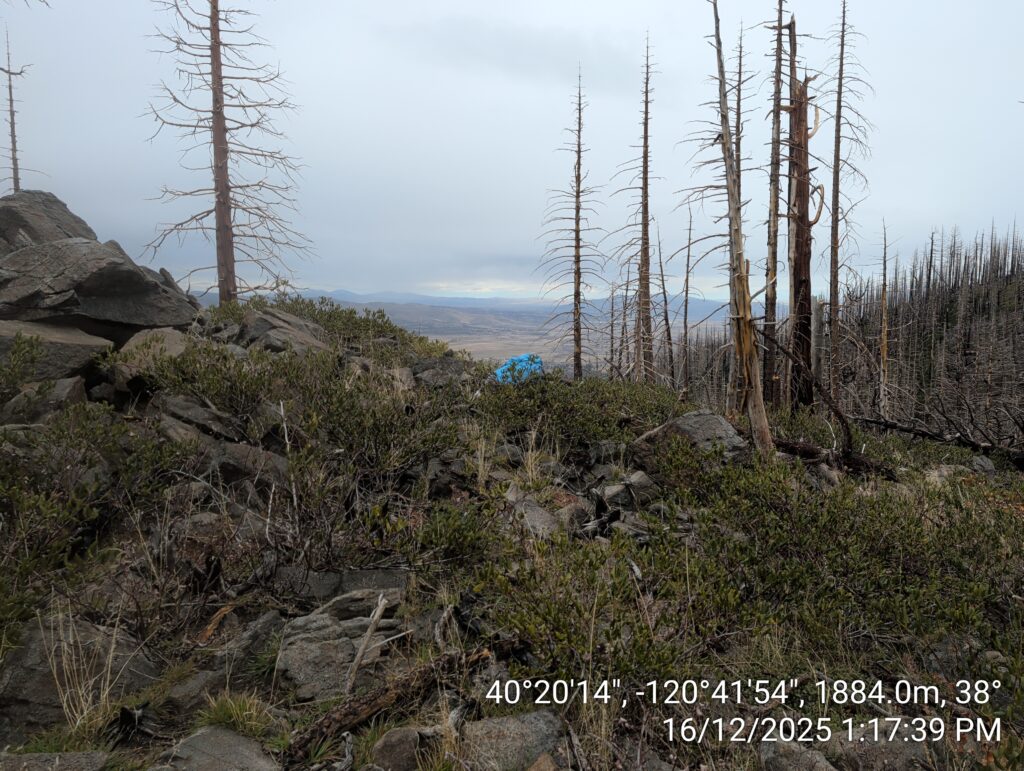
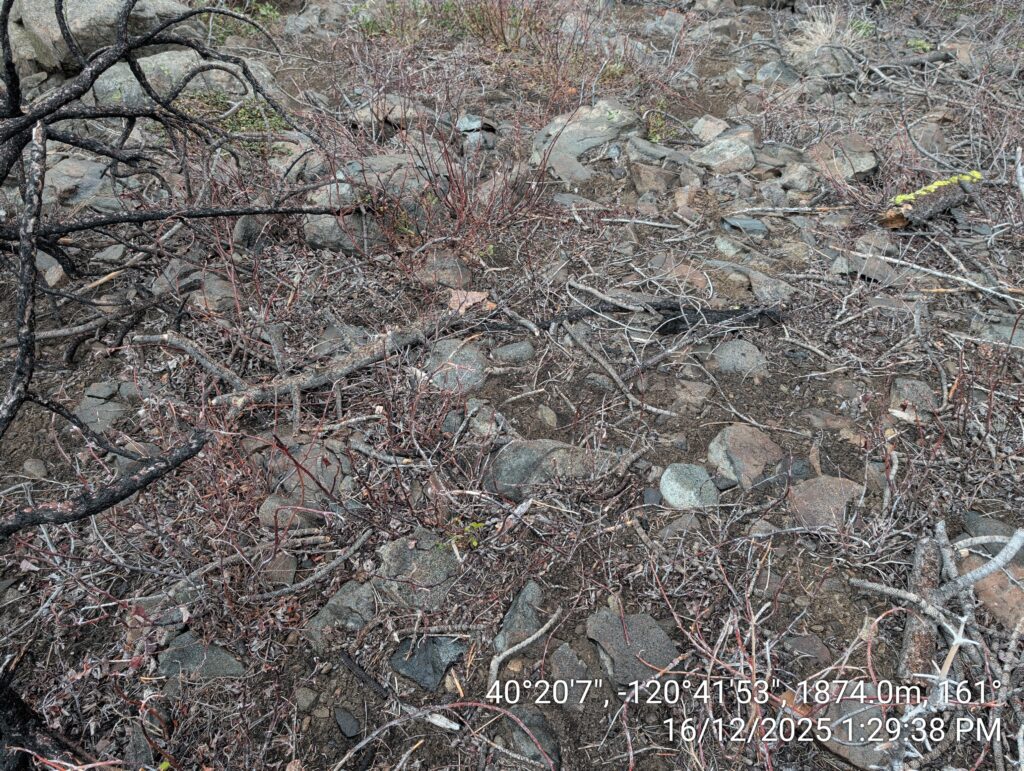
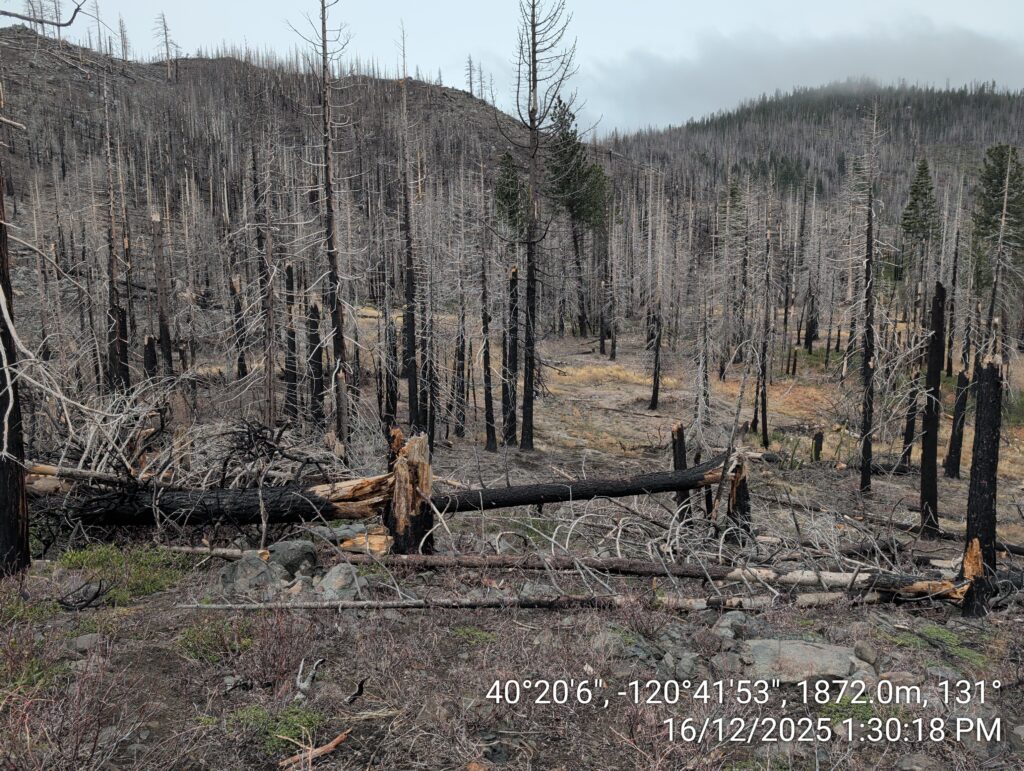
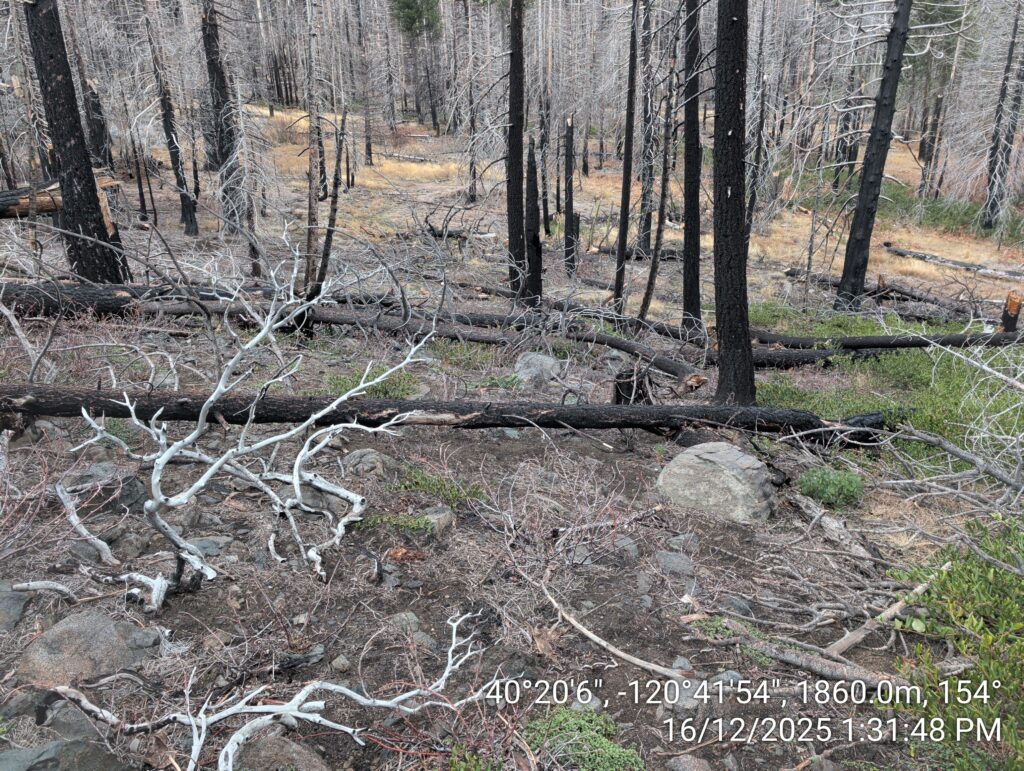
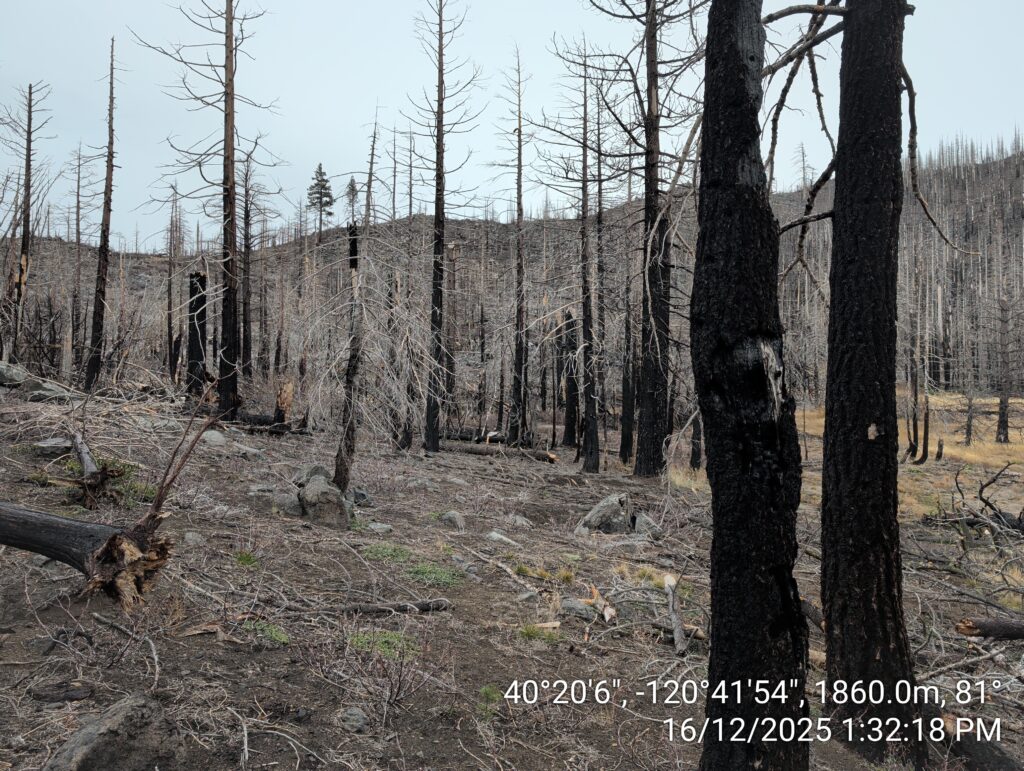
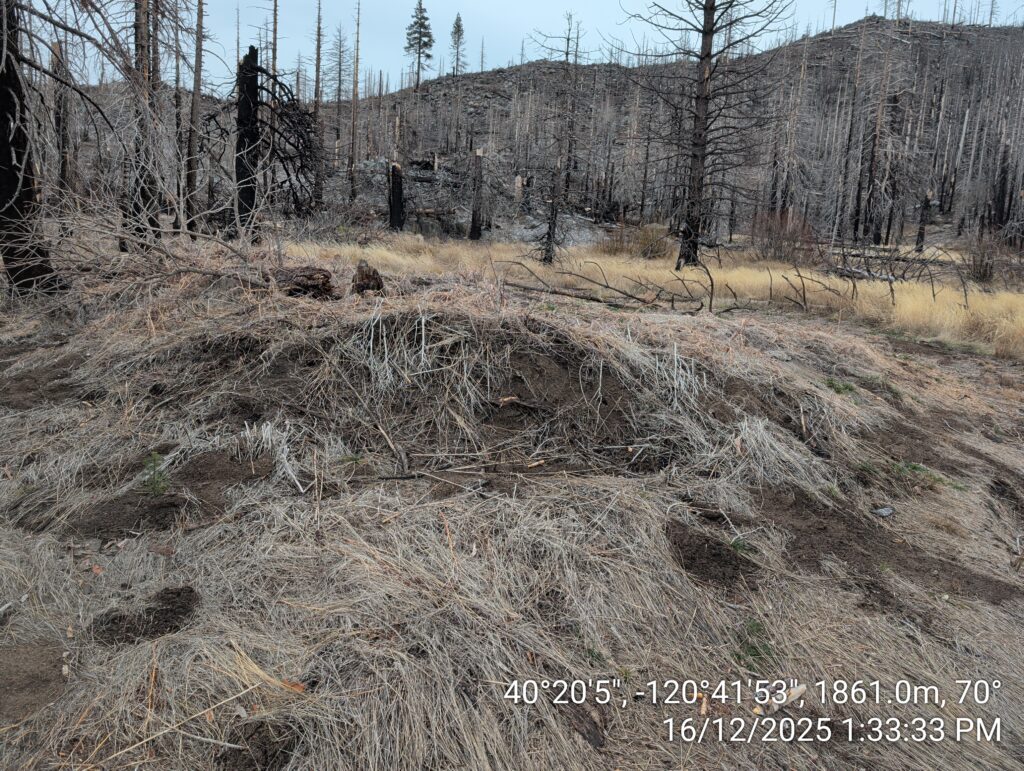
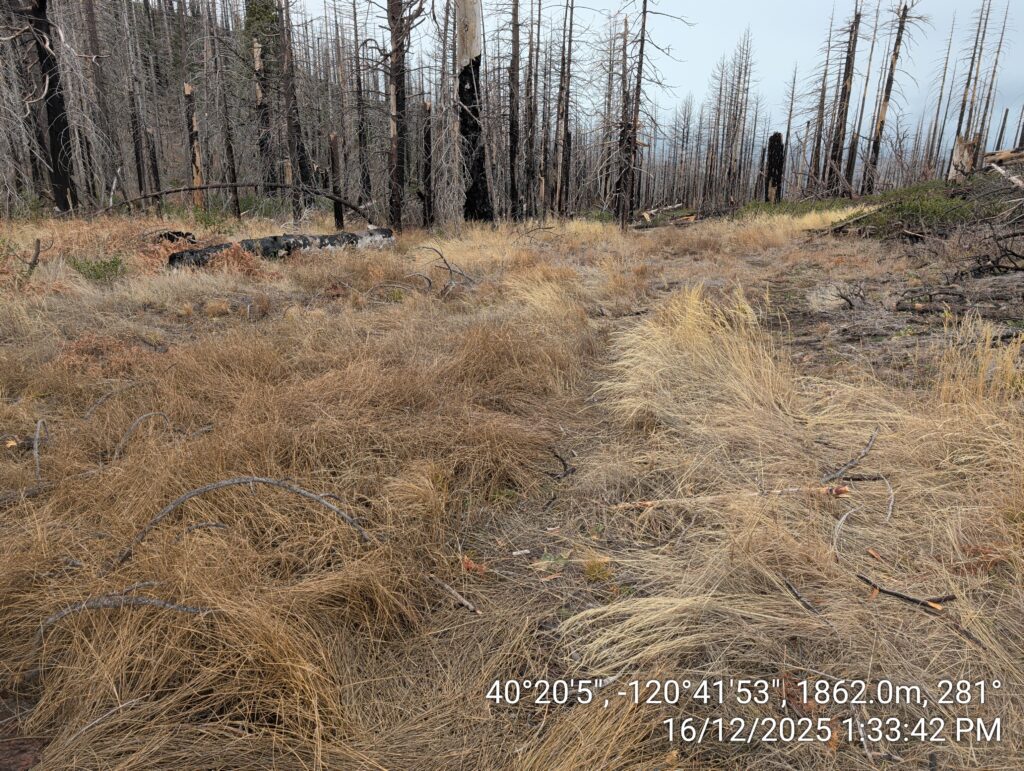
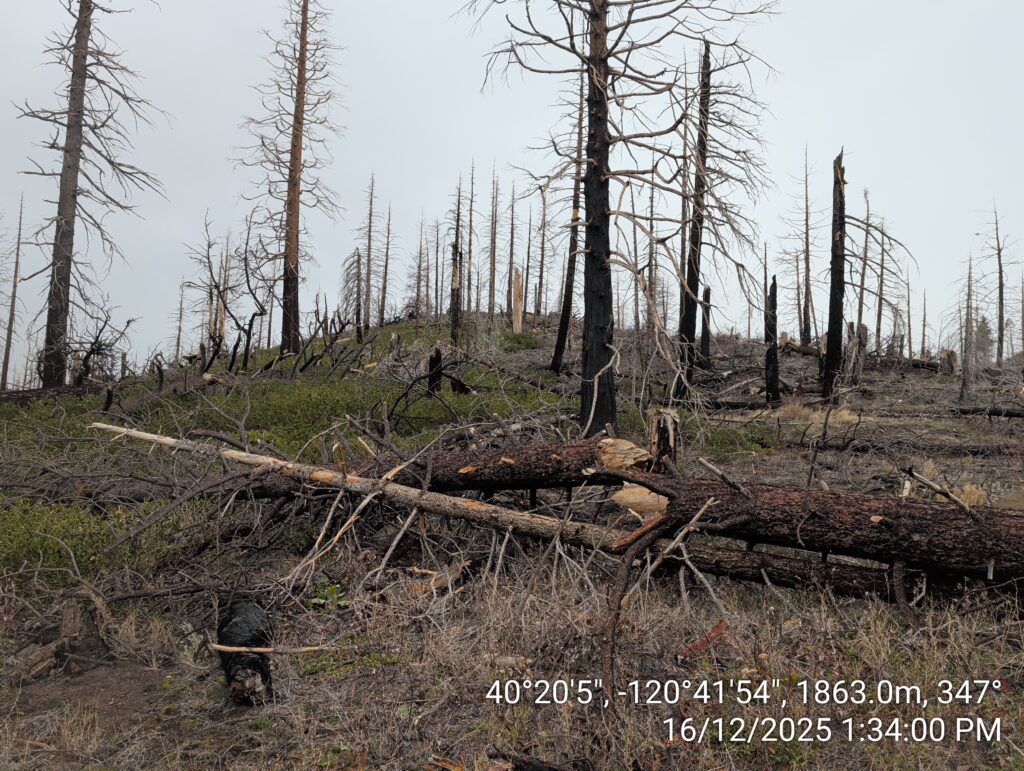
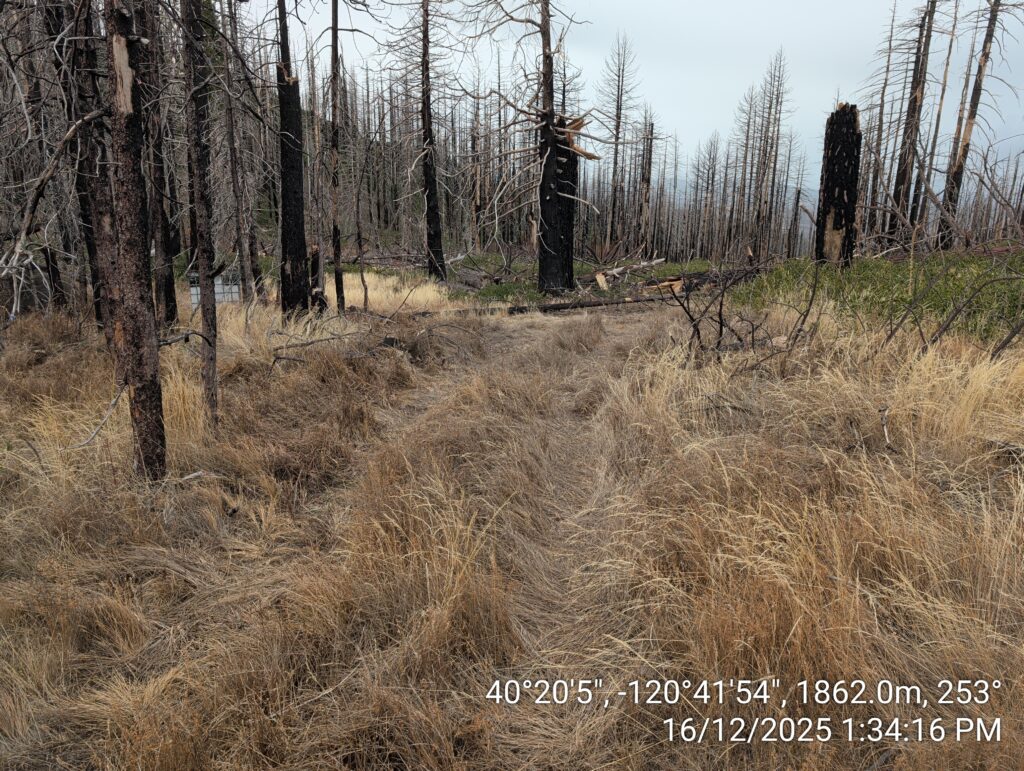
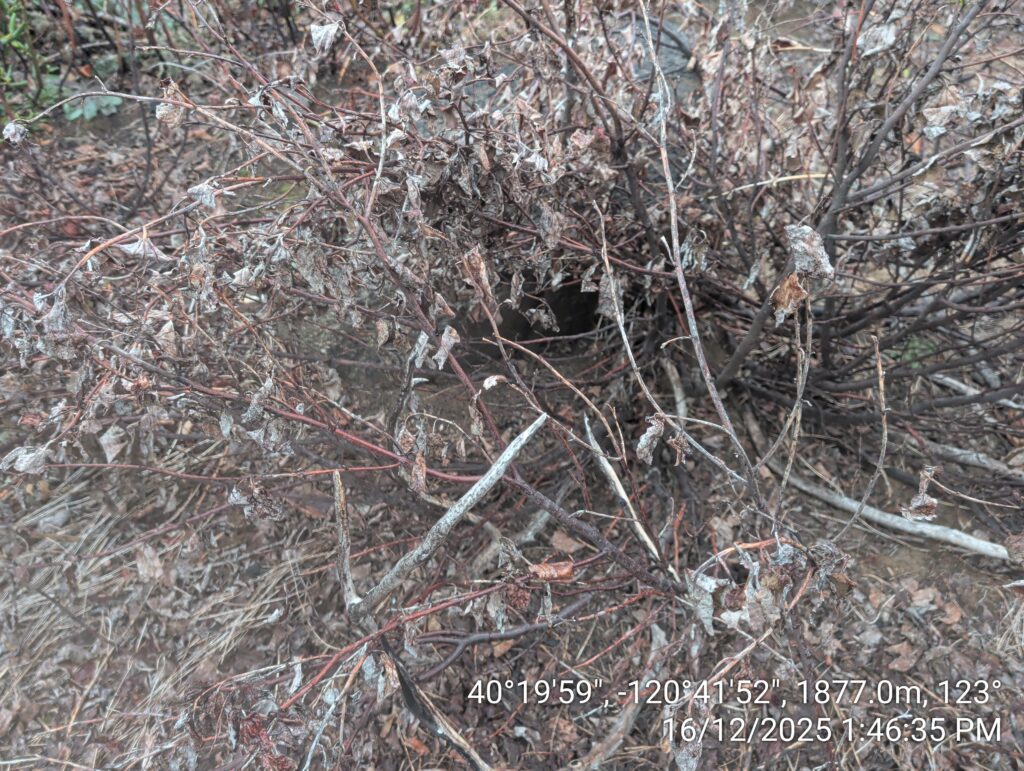
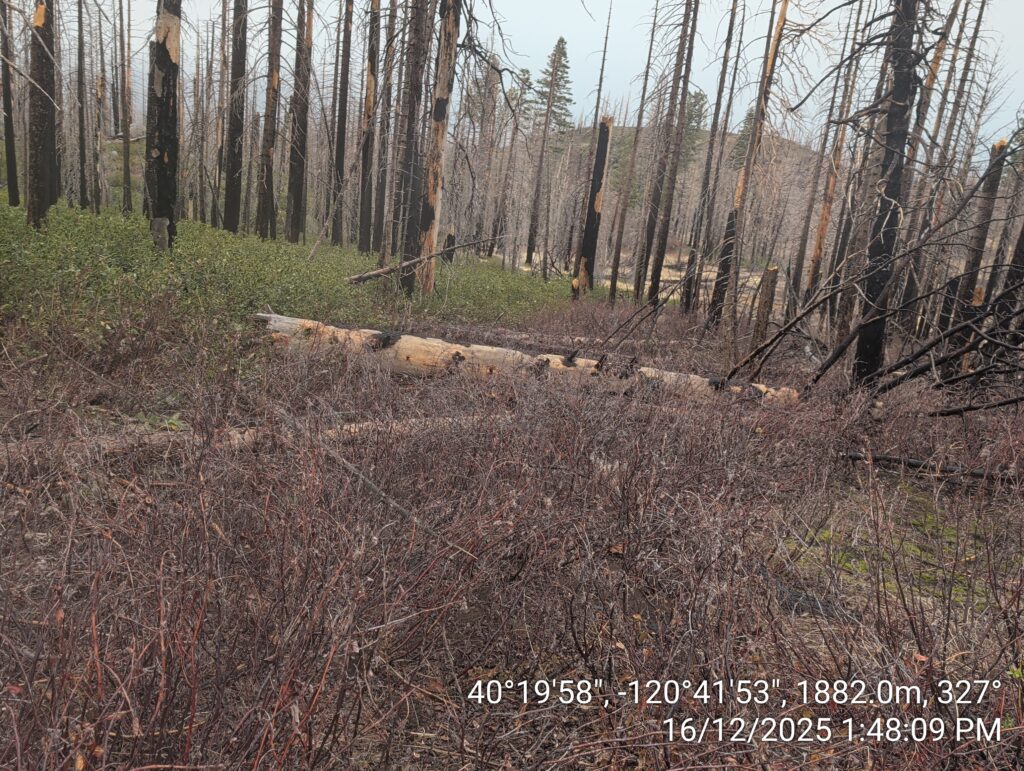
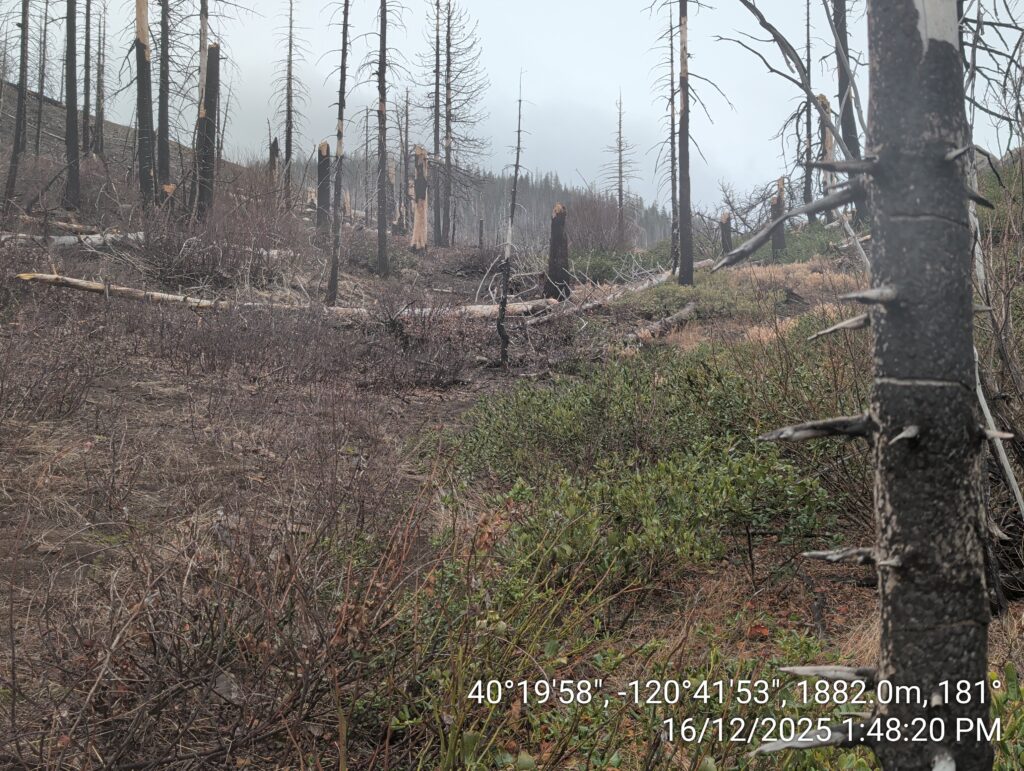
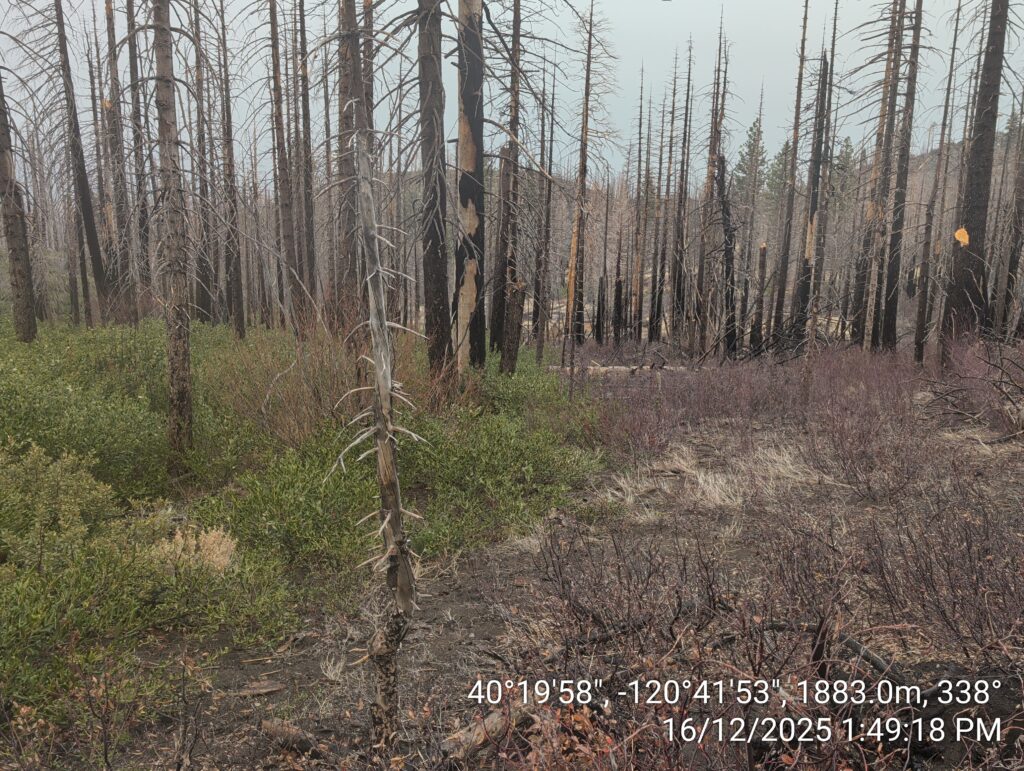
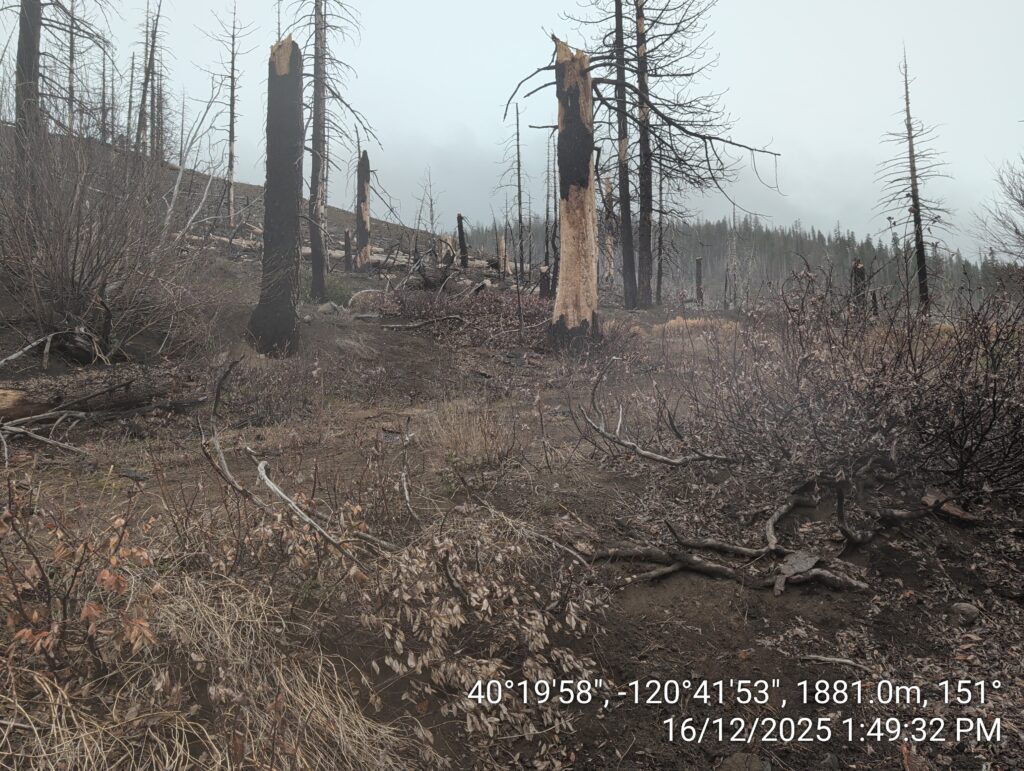
All photographs captured on December 16, 2025 and presented herein are embedded with immutable metadata directly displayed on the image face, including the exact date, time, GPS coordinates (latitude and longitude), elevation, and camera direction at the moment each photograph was taken. These data fields were generated automatically by the camera system and cannot be altered without leaving forensic traces. As a result, each image independently establishes its precise geographic location and orientation on the landscape.
Taken together, this metadata allows the Lahontan Regional Water Quality Control Board, or any third-party reviewer, to conclusively verify that these photographs originate from the same discrete geographic area. The coordinates and elevations shown in the images place the photographer squarely within the approximately 70-plus-acre herbicide-treated area located outside the Motor Sheep Biomass project boundary. This area is distinct, spatially fixed, and repeatedly confirmed across multiple photographs taken at different times and angles on the same date.
Because Lahontan staff have declined to conduct an on-site inspection of this treatment area, these photographs serve as a verifiable proxy for field observation. The embedded metadata removes any ambiguity regarding location, timing, or vantage point and eliminates any factual basis for denial, mischaracterization, or relocation of the documented impacts. Any assertion that these photographs depict a different project area or a permitted treatment zone would directly contradict the objective, machine-generated location data displayed on each image.
These photographs, and the embedded date, time, GPS coordinates, elevation, and camera-direction data displayed on each image, provide irrefutable evidence of an unauthorized herbicide application impacting approximately 70-plus acres outside the Motor Sheep Biomass project boundary. Assertions by Jan Zimmerman that this area falls within the approved project footprint are unsupported by any documentary, cartographic, or field-based evidence.
Eyewitness Confirmation of Off-Site Herbicide Impacts Observed During DPR Soil Sampling
During the July 2025 Department of Pesticide Regulation soil and water sampling conducted on my property, Atac Tuli, PhD, Research Scientist III with DPR’s Environmental Monitoring Branch, made direct, contemporaneous observations documenting herbicide impacts originating from a neighboring treated field and visibly affecting vegetation on my land.
In an internal DPR email circulated to multiple DPR enforcement and monitoring staff, Dr. Tuli documented the following observation verbatim:
“We observed that plant species clearly affected (burned to brown color some part of the plants’ foliage) by neighboring field applications.” DPR internal emails
This statement is significant for several reasons.
First, Dr. Tuli explicitly identifies the source of the observed vegetation damage as a neighboring field application, not any activity occurring on my property. This confirms that the impacted vegetation observed during sampling was attributed by DPR’s own field scientist to an off-site herbicide application.
Second, the description “burned to brown color” directly matches the extensive photographic documentation I have provided showing widespread browning, necrosis, and vegetation suppression across the affected portion of my property.
Third, it is physically impossible for this observation to be referring to the Motor Sheep Biomass project. That project area is located on the opposite side of a ridgeline and is not visible from my property. There is no line of sight between my land and the Motor Sheep treatment area due to topographic separation. As a result, any neighboring field visible from my property can only be the adjacent, unauthorized treatment area located outside the Motor Sheep Biomass project boundary.
Fourth, Dr. Tuli documented that sampling locations were intentionally selected in relation to the suspected off-site application area:
“These three sample locations have been selected based on drift complaint: one close to his property boundary with suspected herbicide applied fields, one close to his pond, and one far away from his pond. The idea of selecting these locations to evaluate how far the drift affected the property if any.” DPR internal emails
This confirms that DPR’s own scientific staff recognized a suspected herbicide application field adjacent to my property and structured the sampling design specifically to evaluate drift impacts originating from that field.
Dr. Tuli’s email further confirms that these observations were made during an official DPR field operation involving multiple staff, GPS-recorded sampling locations, and formal chain-of-custody procedures. His statements therefore constitute internal DPR eyewitness documentation, not speculation or post-hoc interpretation.
Taken together, DPR’s internal communications establish that herbicide-related vegetation damage was directly observed on my property, that the damage was attributed to neighboring field applications, and that DPR’s sampling effort was explicitly designed to assess drift from the adjacent, unauthorized treatment area outside the Motor Sheep Biomass project boundary.
Out of the 9 samples taken by the Department of Pesticide Regulation on July 2, 2025 all 9 came back positive for Hexazinone.
2 Private Herbicide Tests Also Confirmed Hexazinone Runoff into Waters of the State
No CalFire or CEQA Coverage
“To answer your second question- “Which THP covers the small orange area next to the Motor Sheep Biomass?”- The area you highlighted in orange is not included in a THP or Exemption/Emergency Notice recently approved by CAL FIRE.”
-Gwyndolyn Ozard
RPF #3035
Review Team – Northern Region
6105 Airport Rd, Redding, CA 96002
(530) 941-3063 Cell
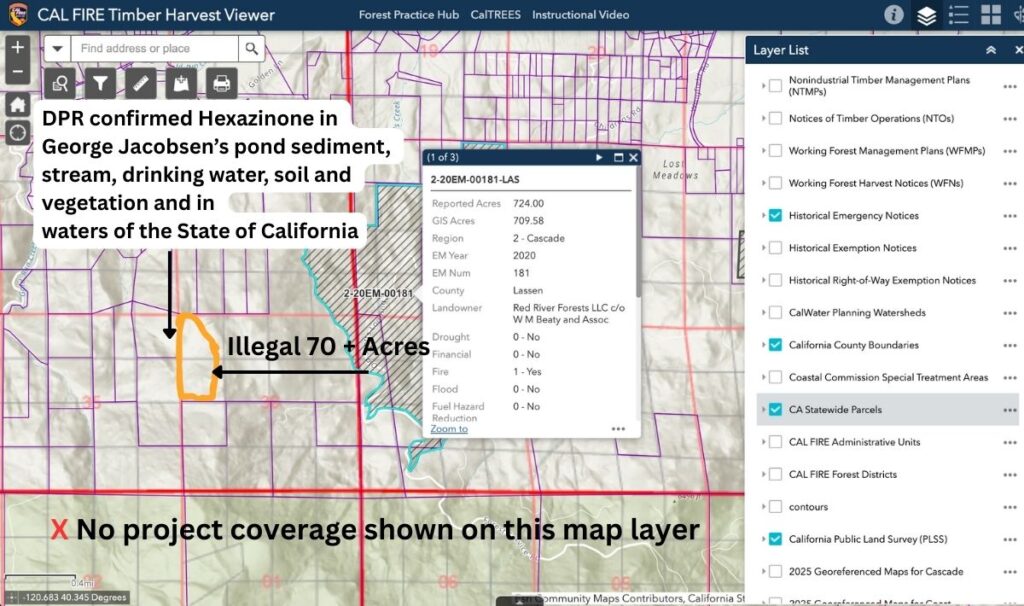
No best management practices were present anywhere on the illegal 70-plus acre herbicide application area that would restrict, slow, or prevent herbicide runoff on steep, post-fire, sandy soils
Documented Runoff Pathways and DPR-Confirmed Transport
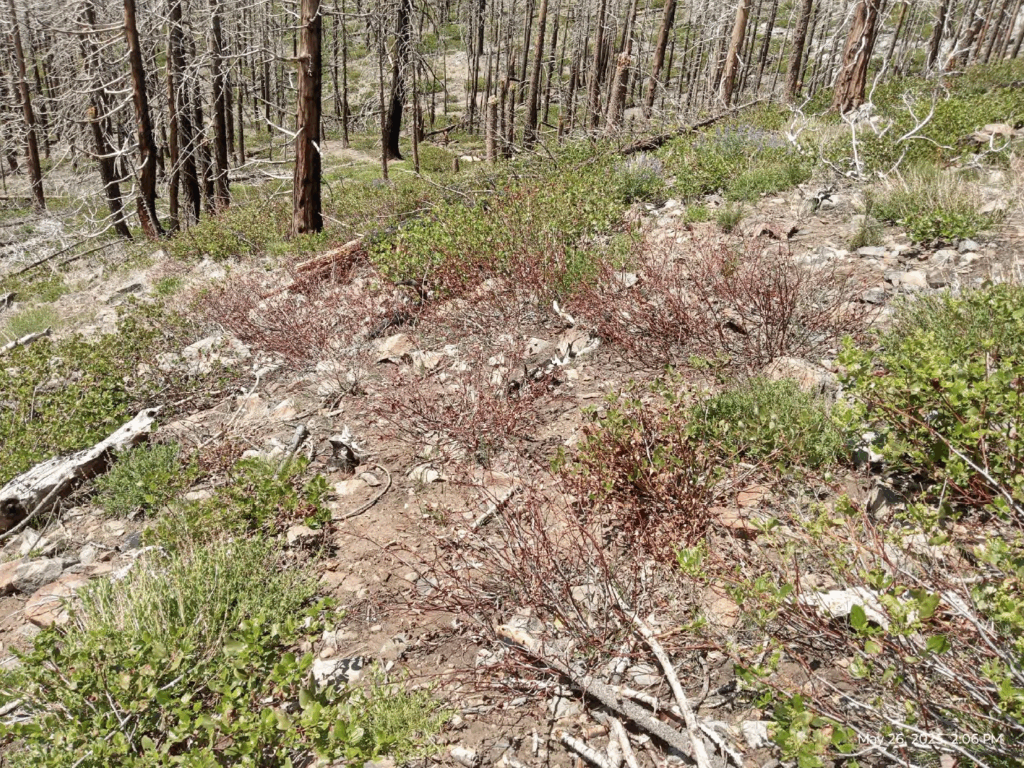
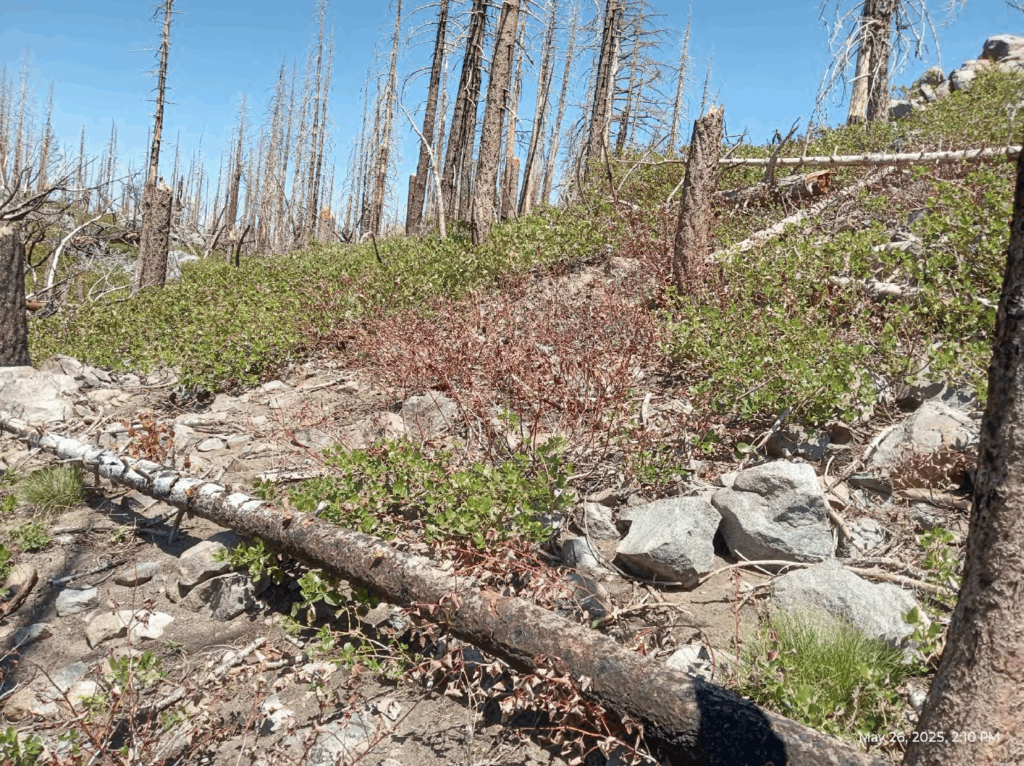
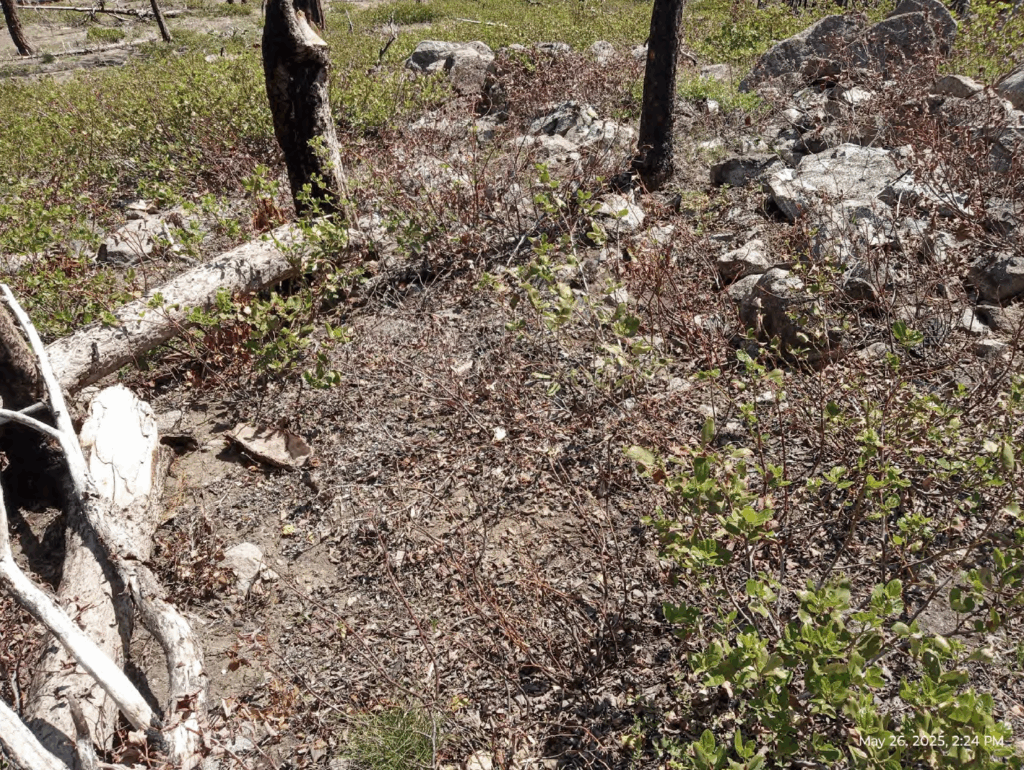
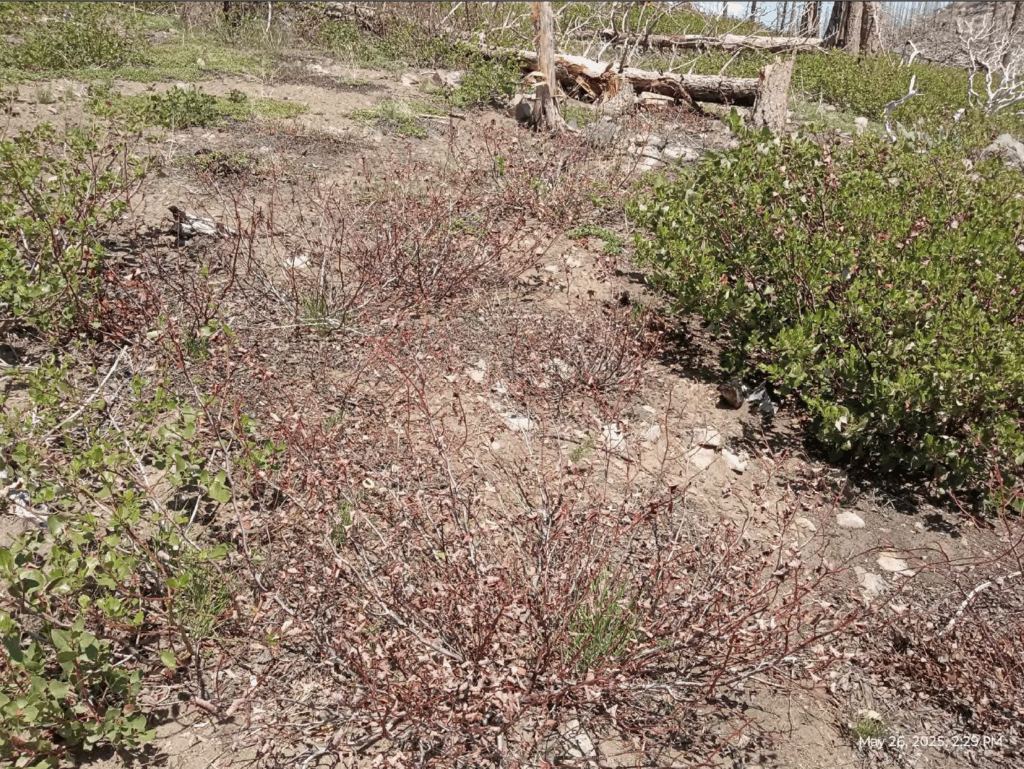
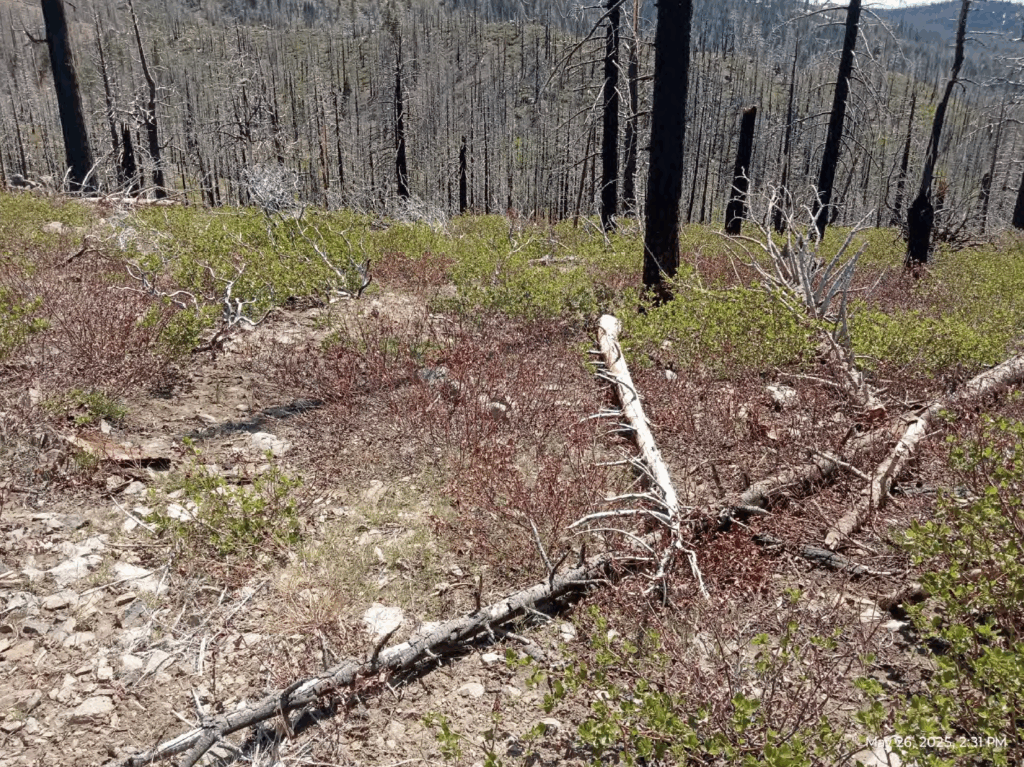
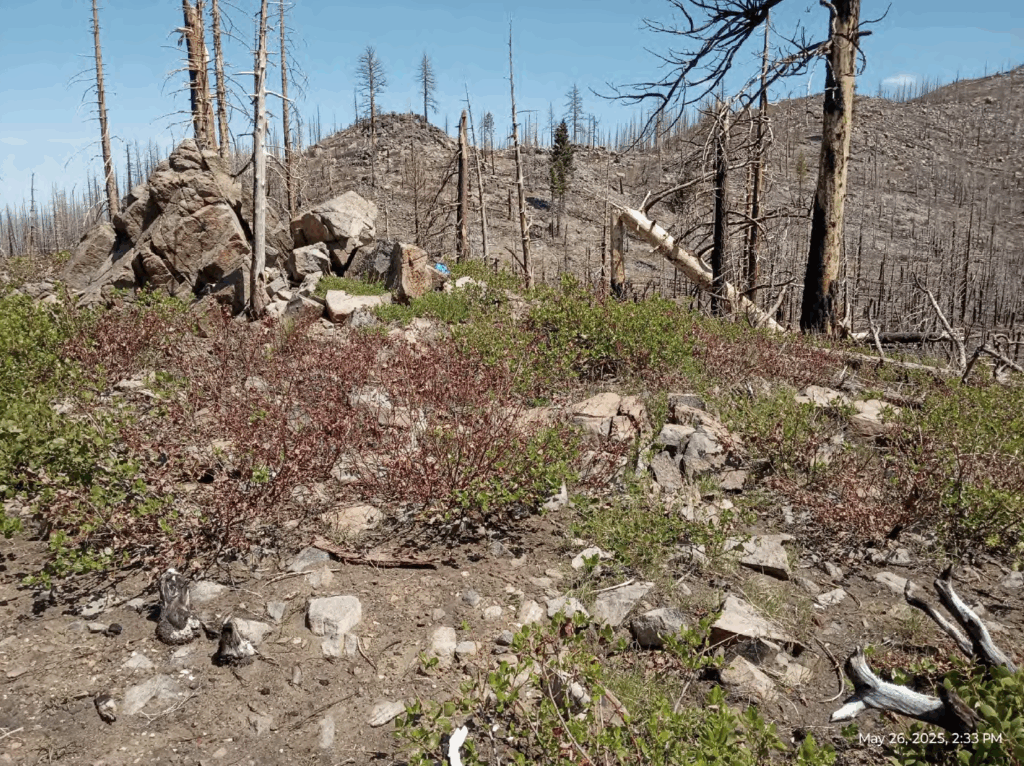
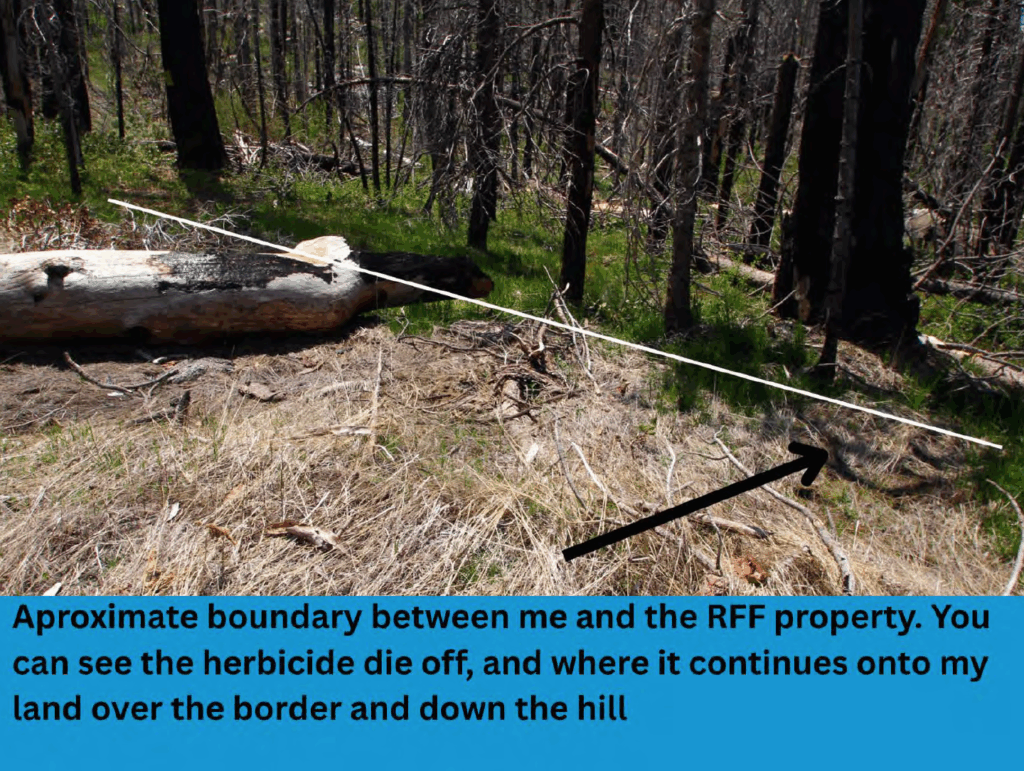
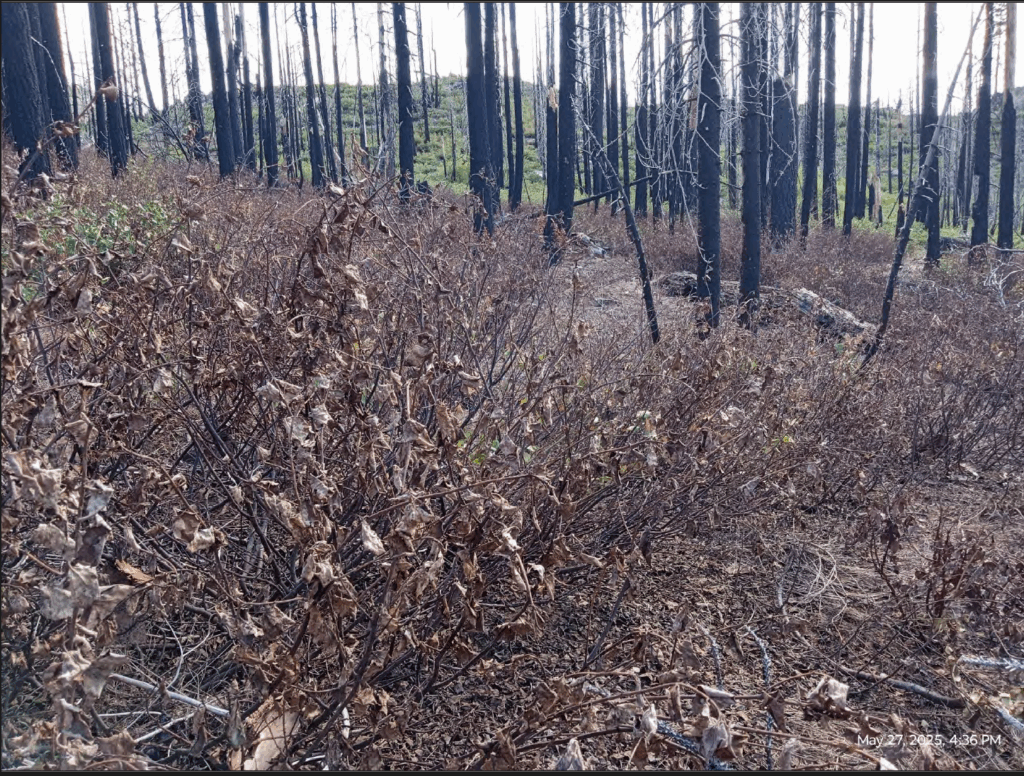
Since June 2025, I have repeatedly walked and photographed the approximately 70-plus acre illegal herbicide application area managed by W.M. Beaty & Associates. Based on these site visits and direct observations, I can attest that no best management practices were present anywhere on the illegal 70-plus acre herbicide application area to restrict or prevent herbicide runoff on steep, post-fire, sandy soils. The soils in this area are sandy, the terrain is steep, and surface runoff is prevalent.
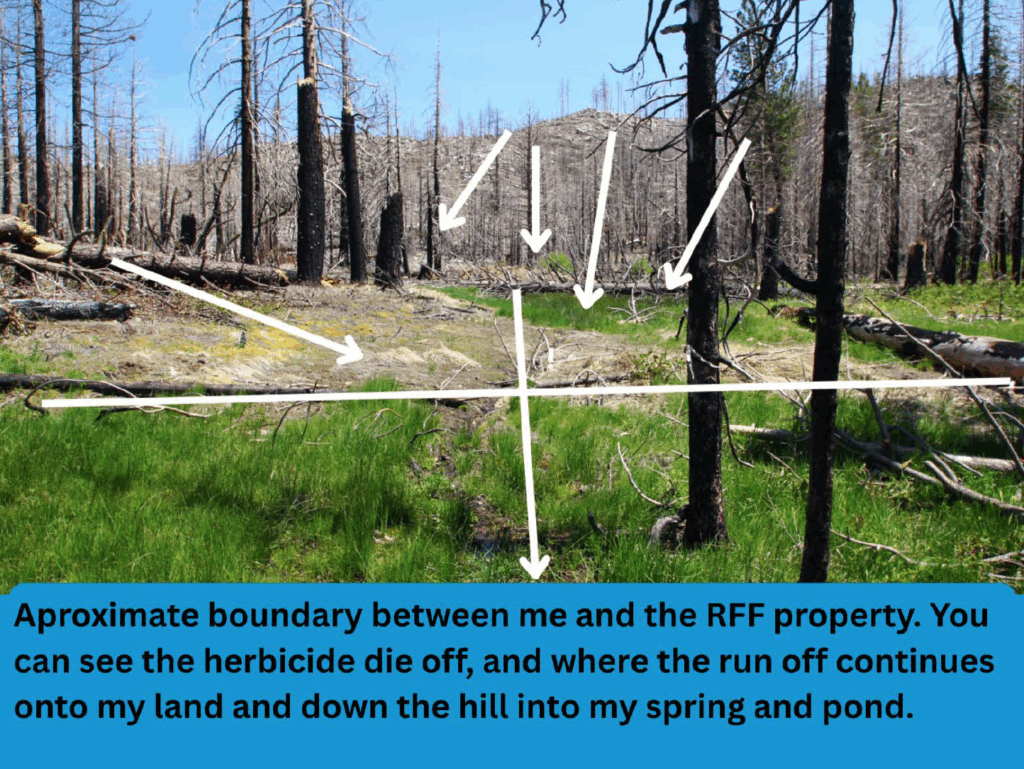
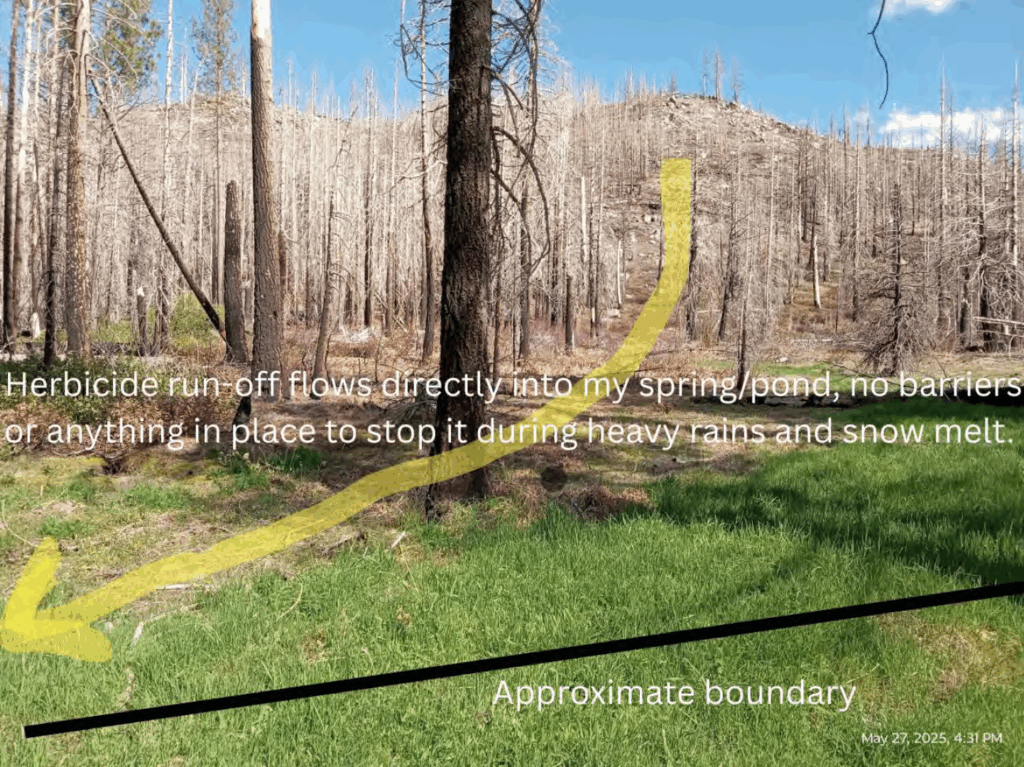
I have documented defined runoff channels that originate within the illegal 70-plus acre treatment area and flow downslope onto my property. These runoff pathways are further concentrated by existing roads within the treatment area, which function as drainage conduits during seasonal precipitation and spring snowmelt at approximately 6,200 feet elevation. Runoff from these channels flows directly onto my property and into my pond and associated surface waters.
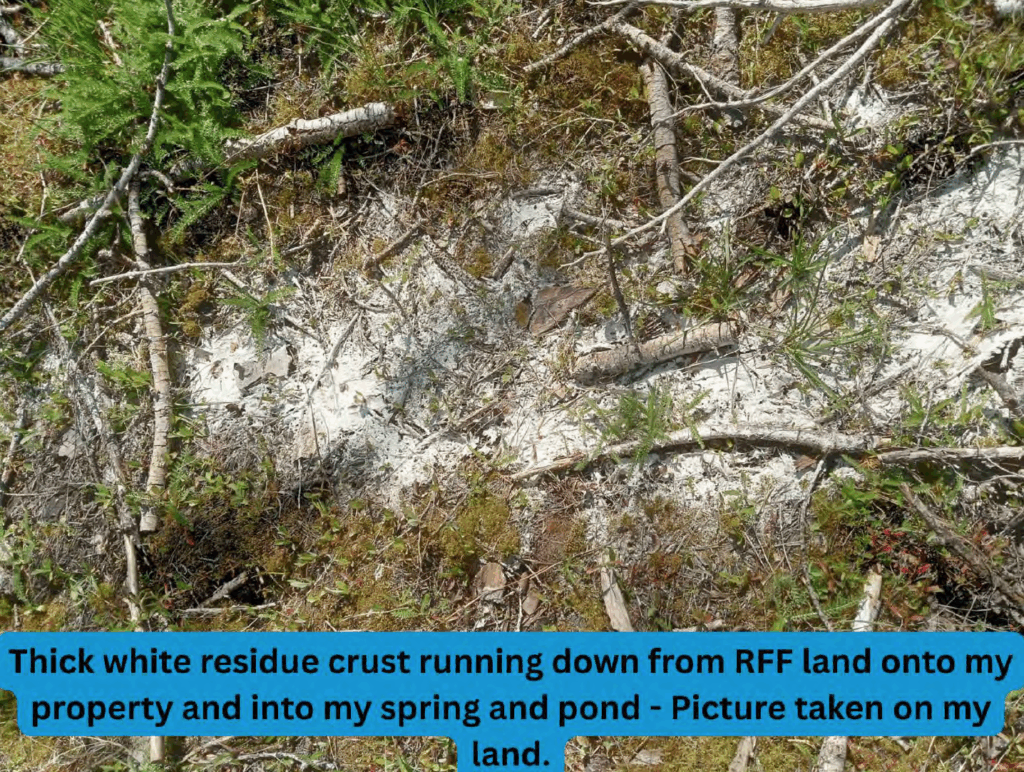
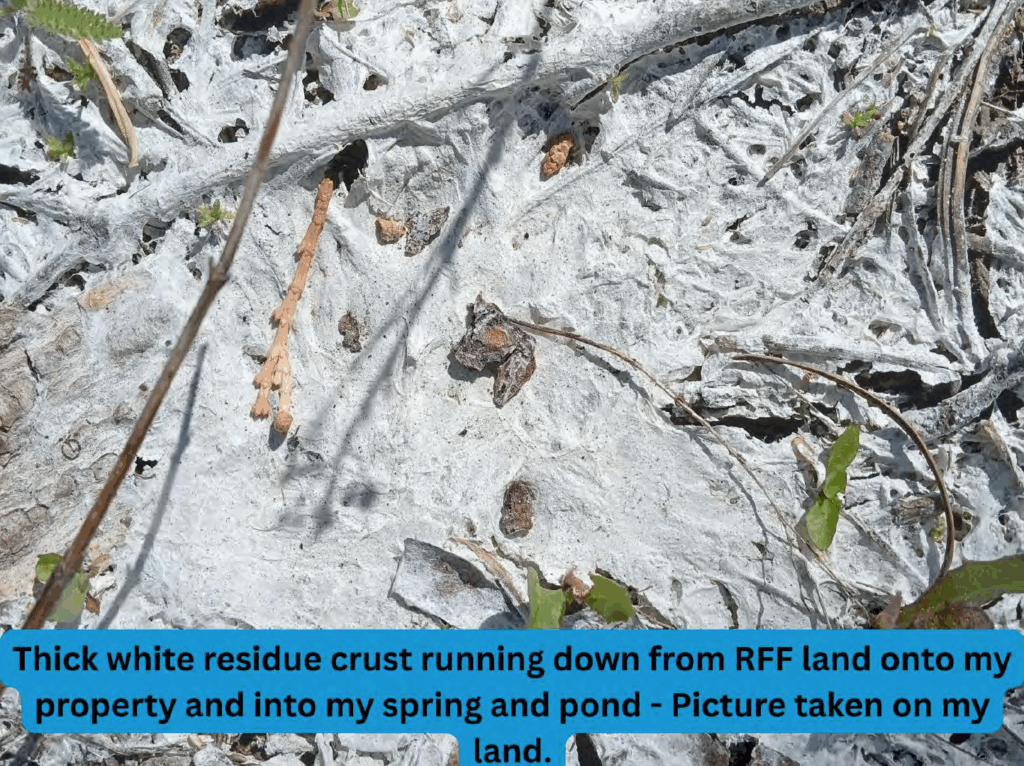
The California Department of Pesticide Regulation collected soil samples from these runoff pathways on my property. Those samples tested positive for hexazinone, confirming that herbicides applied within the illegal 70-plus acre treatment area were transported downslope and entered waters of the State. Despite this documented source-to-receptor pathway and confirmed contamination, Lahontan has refused to inspect the illegal treatment area, even though it has been aware of the existence and location of this area since early June 2025.
Offer to Identify Any Existing BMPs
Despite repeated written assertions by Assistant Executive Officer Jan M. Zimmerman of the Lahontan Regional Water Quality Control Board that “some of the photos depict typical forestry management BMPs (i.e., in-board ditch),” referring to photographs that I personally provided to Lahontan, and not to any photographs produced by W.M. Beaty & Associates, Ms. Zimmerman has never identified or produced the specific photograph she relies upon, nor specified the location, design, or function of any such BMP within the illegal 70-plus acre treatment area. Neither Ms. Zimmerman nor any Lahontan staff member has ever set foot on the illegal 70-plus acre treatment area. I have therefore publicly offered a $500 reward to any representative of Lahontan who can identify a single best management practice, either in my photographs or through an on-site inspection, that was specifically designed and implemented to restrict or prevent herbicide-laden runoff from leaving the project area, such as silt fencing, straw wattles, fiber rolls, sediment traps, water bars, rolling dips, check dams, or other structural erosion and runoff control measures. To date, Lahontan has refused to inspect the site and no BMPs have been identified. I have sworn under penalty of perjury that, to the best of my observations and knowledge, no such BMPs exist anywhere within the illegal 70-plus acre treatment area, and I have provided hundreds of photographs documenting the absence of runoff-control measures. In light of this sworn testimony and photographic record, Lahontan’s assertion that BMPs are visible is either factually incorrect or reflects a fundamental misunderstanding of what constitutes a BMP designed to prevent herbicide runoff. Moreover, DPR laboratory results confirm that hexazinone migrated from the treatment area into waters of the State and my private drinking water supply, demonstrating that any purported BMPs, if they existed, were ineffective. This represents a failure of oversight and enforcement by the Lahontan Regional Water Quality Control Board for Region 6.
Photos Originally Submitted with My Complaint to Lahontan in June 2025
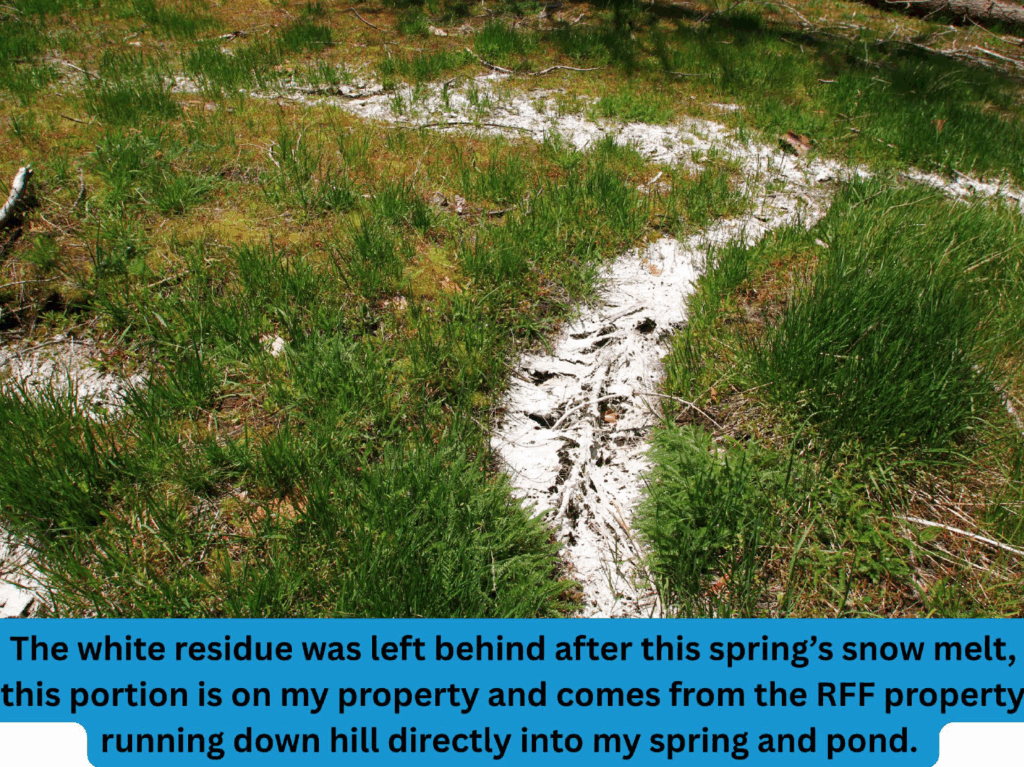
A soil sample collected by the California Department of Pesticide Regulation on July 2, 2025 from a white residue runoff channel originating within the unauthorized 70-plus-acre herbicide treatment area and flowing onto my property and into my pond tested positive for hexazinone.
Technical Finding
Reckless and Label-Inconsistent Use of Hexazinone on Steep, Post-Fire Soils
I. Observed Soil Conditions at the Application Site
Photographic evidence collected on December 16, 2025, with embedded GPS coordinates, elevation, and camera orientation, documents the following site conditions:
- Extensive exposed mineral soil, with little to no organic horizon, litter, or duff layer.
- Coarse-textured soil, including visible sand, gravel, and rock fragments.
- Post-fire disturbance, including burned woody material, ash residues, and loss of soil structure.
- Steep sloping terrain, with clear downslope gradients.
- Complete absence of erosion or runoff control measures, including but not limited to wattles, mulch, slash mats, contour barriers, or sediment interception features.
These characteristics are consistent with high-permeability, erosion-prone post-fire soils, which are widely recognized as highly susceptible to chemical transport via both surface runoff and subsurface leaching.
II. Hexazinone Properties Relevant to This Site
Hexazinone, the active ingredient in Velpar DF, has the following well-established properties:
- High water solubility
- Low soil adsorption
- Documented leaching potential
- Mobility in both surface runoff and subsurface flow
Because hexazinone does not strongly bind to soil particles, its movement is governed primarily by water flow, not soil retention. In disturbed or coarse soils, this significantly increases the likelihood of off-site migration.
III. Velpar DF Label Restrictions and Warnings
The Velpar DF label warns that:
- Hexazinone is known to leach through soil and may contaminate groundwater.
- Use in permeable, rocky, gravelly, exposed, or disturbed soils increases the risk of contamination.
- Special caution is required where water movement through soil is rapid.
- It is a violation of federal law to use this product in a manner inconsistent with its labeling.
The soil conditions documented at this site fall squarely within the risk categories identified on the label, including exposed subsoil, coarse texture, and rapid water movement potential.
IV. Foreseeable Transport Pathway at This Site
Given the observed conditions, the contaminant transport pathway is straightforward and predictable:
- Hexazinone is applied to exposed, coarse mineral soil.
- Precipitation or snowmelt dissolves the herbicide.
- Water moves downslope via surface runoff and preferential flow paths common in post-fire soils.
- No physical best management practices are present to intercept, slow, or retain contaminated water.
- Hexazinone migrates off-site into downslope soils, surface waters, and groundwater.
This sequence does not require unusual weather, equipment failure, or operator error. It is the expected outcome of applying a mobile herbicide under these conditions.
V. Elevated Application Intensity Was Known and Acknowledged in Advance
Project documentation prepared by CAL FIRE under the Disaster Recovery of Private Lands in California program explicitly acknowledges that planting design decisions would require increased herbicide use beyond normal practices.
In the Site Visit Report titled “Disaster Recovery of Private Lands in California – Site Visit Report – October 9th, 2024” (Agreement No. 8GA23900 / 23-DG-11052021-253), CAL FIRE and project participants stated:
“The group discussed how a lower density planting will impact the need for additional or more extensive release activities.”
This statement constitutes a clear advance acknowledgment that herbicide application would need to be more extensive than typical due to wider tree spacing and lower planting density.
Accordingly, the use of hexazinone at this site was not incidental or minimal. It was part of a planned treatment regime known in advance to involve elevated herbicide intensity.
Applying greater-than-average quantities of a highly mobile, leaching-prone herbicide onto steep, post-fire, coarse-textured soils already known to be unsuitable materially increases the probability of off-site transport and contamination. Under these conditions, increased herbicide use magnifies, rather than mitigates, environmental risk.
VI. Regulatory Oversight Failures, Application Method, and Refusal to Conduct On-Site Inspections
Despite the high-risk nature of the site and the known properties of hexazinone, multiple regulatory agencies failed to conduct on-site inspections or exercise meaningful oversight prior to or following the herbicide application, even after substantial evidence of off-site contamination was presented.
In addition, the herbicide was applied using aerial helicopter broadcast spraying rather than ground-based backpack application or targeted spot treatment. Aerial broadcast application is the least precise application method and inherently increases the risk of off-site movement, drift, overspray, and uneven distribution, particularly on steep, post-fire terrain.
The use of helicopter broadcast spraying is especially inappropriate under the documented site conditions, where exposed mineral soil, coarse texture, and slope-driven hydrology already favor rapid transport of dissolved herbicides. Unlike backpack or spot treatments, aerial broadcast application eliminates the ability to avoid flow paths, drainages, and highly permeable areas, and it substantially increases the total treated surface area.
The Lassen County Agricultural Commissioner’s Office, under the authority of Agricultural Commissioner Gary Fensler, issued or accepted the pesticide use authorization associated with this application but did not conduct an on-site inspection to evaluate whether the soil conditions, slope, hydrology, application method, and post-fire disturbance made hexazinone an appropriate or lawful choice for this location. No documentation has been produced showing that the Agricultural Commissioner assessed label consistency, leaching risk, runoff potential, or application method before allowing the application to proceed.
Further, despite being provided with extensive photographic documentation, mapping, and laboratory confirmation of hexazinone contamination in private drinking water and waters of the State, the California Department of Pesticide Regulation, under the direction of Director Karen Morrison, and the Lahontan Regional Water Quality Control Board, through staff including Jan Zimmerman, declined to conduct an on-site inspection of the treated area.
The herbicide application constitutes an unauthorized 70-plus acre extension of the Motor Sheep Biomass Project. The Motor Sheep Biomass Project is classified as a Category 6 project, the highest water quality risk classification, reserved for activities with substantial potential to affect waters of the State. Category 6 projects warrant heightened scrutiny, site-specific evaluation, and active oversight due to their proximity to and risk of impacting surface water and groundwater resources.
The continued refusal by regulatory agencies to inspect this site, even after confirmed off-site contamination, is inconsistent with the level of oversight expected for a Category 6 project and eliminated any remaining safeguards that might have prevented or mitigated environmental harm.
In addition, despite laboratory confirmation that hexazinone migrated off-site via drift and runoff, neither the Lassen County Agricultural Commissioner’s Office, the California Department of Pesticide Regulation, nor the Lahontan Regional Water Quality Control Board has taken steps to notify neighboring property owners or downstream property owners of the confirmed contamination. The failure to provide notice deprived affected landowners of the opportunity to protect drinking water supplies, livestock, crops, or surface waters, and further demonstrates a regulatory response focused on containment of institutional exposure rather than timely protection of public health and water resources.
Proceeding under these circumstances reflects a breakdown in regulatory oversight and a failure to meet basic standards of environmental protection and public health safeguarding.
VII. Ongoing Authorization Despite Documented Violations and Confirmed Contamination
Despite the documented soil unsuitability, acknowledged elevated herbicide intensity, use of aerial broadcast application, absence of best management practices, failure of regulatory inspection, and confirmed off-site contamination of hexazinone in private drinking water and waters of the State, W.M. Beaty & Associates continues to be permitted to carry out large-scale herbicide applications across thousands of acres in Lassen County and Plumas County.
There is no evidence that any regulatory agency has imposed interim restrictions, suspension, heightened monitoring requirements, or site-specific prohibitions on W.M. Beaty & Associates’ herbicide activities in response to the contamination documented at this site. Nor has any agency demonstrated that lessons learned from this incident have been incorporated into subsequent permitting decisions.
Allowing continued, large-scale herbicide applications under these circumstances creates an ongoing risk of additional off-site contamination and reflects a systemic regulatory failure to respond to known harm. The lack of corrective action effectively normalizes noncompliance and undermines the purpose of pesticide regulation, water quality protection, and post-fire environmental safeguards.
Although the Department of Pesticide Regulation, the Lassen County Agricultural Commissioner’s Office, and the Lahontan Regional Water Quality Control Board are legally mandated to protect public health and waters of the State, their conduct in this matter demonstrates a departure from those responsibilities. Their refusal to inspect, intervene, or notify affected landowners following confirmed contamination has functionally served to protect ongoing operations rather than the people of California or the integrity of clean and safe drinking water.