In Genesee, the debate over forest herbicides has produced a practical proposal: put animals to work on the vegetation, follow with carefully planned fire, and find out whether a different approach can meet the community’s needs.
The idea deserves more than a photograph of goats eating brush. It deserves a serious comparison with the treatments it would replace: how much vegetation is removed, what grows back, what happens to young trees and water, and what the work costs over several years.
That is what makes this a consequential Plumas County story. Residents are proposing an alternative that can be evaluated on the ground. Success would not mean that goats can do every forestry job. It would mean identifying the places and conditions where they can do a particular job well enough to reduce reliance on herbicides.
What Genesee residents have proposed
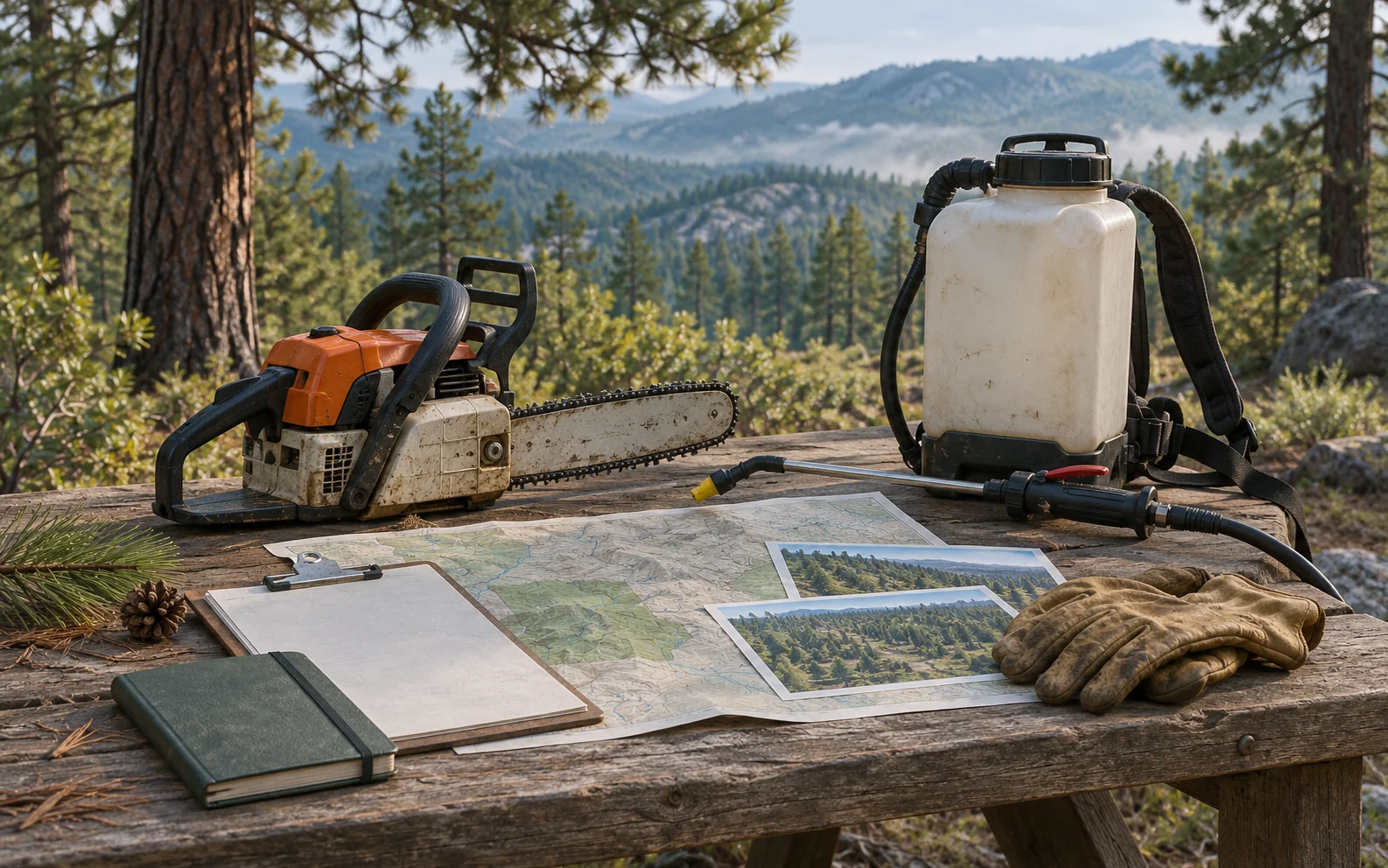
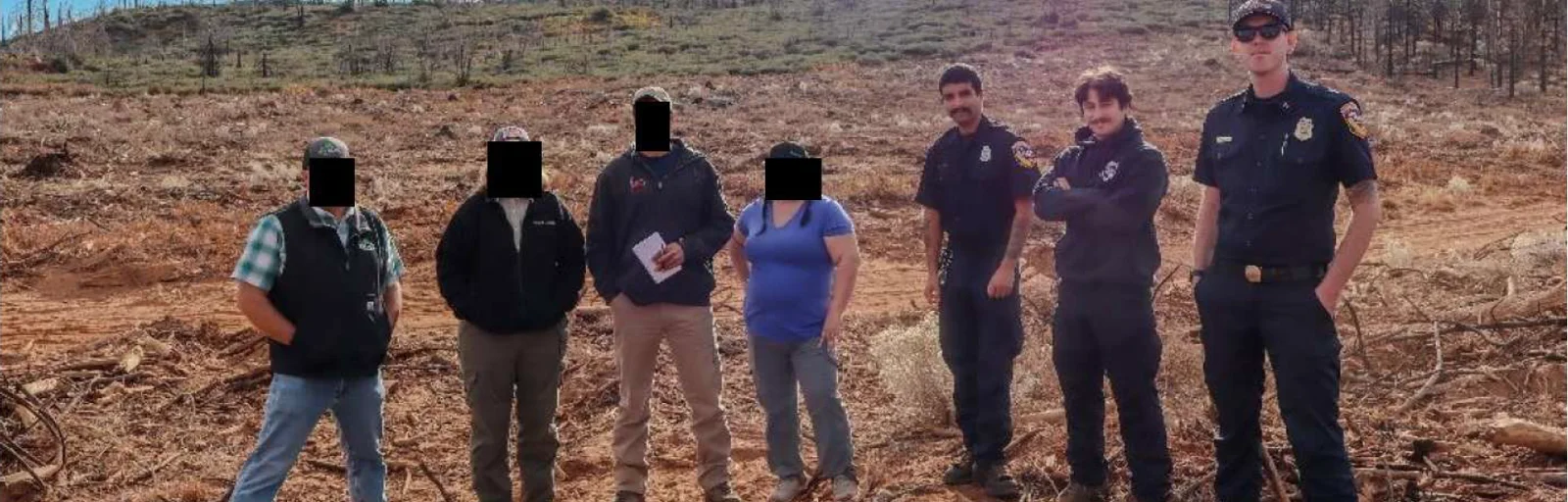
The Plumas Sun’s August 26, 2026 report described a proposed 100-acre pilot combining grazing with prescribed fire, with an estimated cost of $75,000. The effort involves Genesee residents near Taylorsville, including veterinarian Selena Jayo, prescribed-fire specialist Ryan Bauer, and grazer Tony Gonzalez. Bauer previously worked in Forest Service fuels management and now trains people in prescribed fire with the Watershed Research and Training Center.
The report connected the proposal to residents’ concerns about herbicides and local water sources. It described community organizing, including an August gathering in Quincy, rather than a completed treatment with measured results. The distinction remains important: the published account establishes a plan and the people pursuing it. It does not establish that the pilot has already reduced fire severity, protected a spring, or replaced a scheduled chemical application.
The useful next chapter is therefore implementation. A proposal can open a political door; a well-designed trial can show what belongs on the other side of it.
Why goats are a plausible tool—and an incomplete one
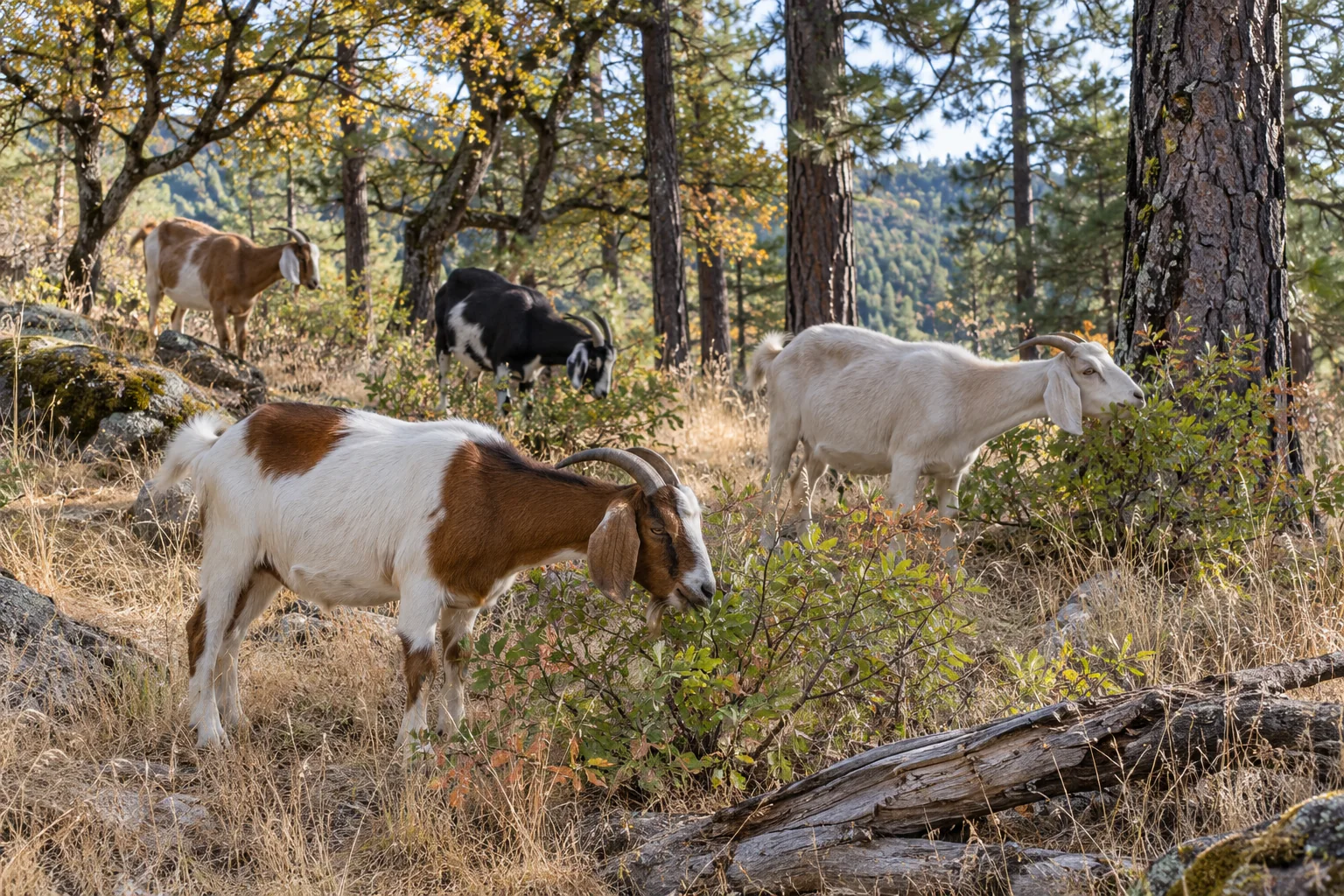
UC Agriculture and Natural Resources’ targeted-grazing guidance describes using livestock at selected times and intensities to meet a vegetation objective. Goats can browse shrubs and reach steep terrain. Grazing can reduce living fine fuels and some vegetation that connects ground-level fuels with taller plants.
It does not remove large dead wood. Resprouting plants may require repeated treatment, and animals need fencing, water, supervision, and protection. The appropriate animal, season, and duration depend on the site. Those limitations do not make grazing ineffective; they define the work it can reasonably be expected to accomplish.
Consider two different objectives. One landowner wants to reduce reachable brush around an access route. Another wants to eliminate dense woody debris across a burned hillside. Labeling both jobs “fuel reduction” does not make them equivalent. A treatment that performs well on the first may leave the central problem of the second untouched.
For Genesee, the strongest case will connect the animals to a clearly identified treatment need. How much of that need can grazing address? What remains afterward? Which additional operation handles it? Those answers matter more than whether goats are described as natural or innovative.
A separate California experiment is testing the comparison directly
A Western Sustainable Agriculture Research and Education project led by UC Cooperative Extension is examining grazing in post-fire reforestation. Awarded $74,995 in 2024, the project is led by Ricky Satomi and lists an April 2027 end date.
At Blodgett Forest, affected by the 2022 Mosquito Fire, the proposed experiment compares sheep, goats, and herbicide treatment using a randomized block design. Its questions include when to introduce animals, how vegetation and animal nutrition affect browsing, and how the costs compare. The research focuses on intervening while post-fire shrubs are still developing rather than waiting until every site supports mature, difficult-to-manage brush.
This is a separate project from Genesee, despite the similar dollar amounts. Its grant description establishes a funded research plan, not a published finding that grazing outperforms herbicides. It nevertheless shows that the comparison is a legitimate forestry research question, with measurable outcomes and practical management implications.
It also provides a useful model for interpreting a community trial. Different treatments should be compared on similar ground, with their starting conditions recorded. Otherwise, an apparent advantage might reflect the site rather than the treatment.
The animals do not read the vegetation prescription
Livestock preferences can complicate the idea that animals simply remove whatever a manager labels unwanted. UC’s WeedCUT guidance on grazing emphasizes plant palatability, growth stage, toxicity, and the limits of selectivity. The suitability of grazing depends on the target plant as well as the animal. Sensitive vegetation and erosion are among the potential environmental concerns.
That means a grazed area needs a plan for what should remain, not only what should disappear. Native plants, planted seedlings, streamside vegetation, and bare ground should be part of the evaluation. A hillside that looks tidier in a photograph may still have lost vegetation the community wanted to retain.
This is not an argument for assuming chemical treatment is more selective. It is an argument for applying the same standard to every option. Identify the target, examine effects beyond it, and describe any protective measures needed to make the treatment acceptable.
For a community concerned about water, replacing one practice should not end the water discussion. The grazing plan should address where animals gather and drink, how wet areas are handled, and how the condition of streamside ground will be compared before and after treatment.
Why prescribed fire changes the comparison
The Genesee proposal is a sequence of treatments, not simply goats standing in for a spray crew. That distinction affects both the claimed benefits and the eventual accounting.
If grazing is followed by prescribed fire, the evaluation should identify what each step accomplished. If the combined treatment succeeds, attributing the entire result to grazing would overstate the evidence. If burning is delayed and vegetation regrows, evaluating the unfinished sequence as though both steps occurred would also be misleading.
There is a practical question here for any community pilot: what happens if the second operation cannot occur when planned? A useful agreement would identify who makes that decision, what interim maintenance is possible, and whether the budget can accommodate another visit. Those are project-design choices, not reasons to abandon the alternative before testing it.
The same logic applies to a chemical treatment followed by later burning or planting. Compare complete management sequences. Comparing the price of one grazing visit with the price of an entire multi-year restoration program produces an answer to the wrong question.
The county has already asked for alternatives
Genesee’s proposal sits within a broader local debate. An April 2025 Plumas County planning memorandum, describing the county’s objections to the Community Protection project, urged consideration of other approaches, including goats, sheep, and cattle, before herbicides. It also sought attention to water quality and sensitive areas. That was a county recommendation, not a federal prohibition on chemical treatment.
A local trial could help move that debate from a list of preferred methods toward evidence about where an alternative works. It would not settle every dispute across Plumas National Forest. A hundred acres cannot represent every slope, plant community, or access problem. But a carefully documented hundred acres can provide considerably more useful information than competing promises.
What would make this a meaningful success?
Protect Lassen’s standard would be a comparison that follows the treatment beyond the day the animals leave. Record vegetation before work begins, revisit it afterward, and examine regrowth over subsequent seasons. Track desired plants and seedlings alongside the vegetation targeted for removal. Keep the costs of transport, tending, repeat visits, and follow-up fire together.
The result need not be a universal replacement for herbicides to matter. A finding that grazing works on a particular kind of site, at an acceptable cost, with manageable effects on habitat and water would give nearby communities a concrete option. A finding that it requires a different season or a second treatment would still help refine that option.
The proposal should be judged seriously enough to allow either conclusion. Genesee is offering something worth testing. The next measure of progress is what happens on the land—and whether the public can see the results.
Related: Inside the Plumas Community Protection project and the difference between tree growth and forest recovery.
This article distinguishes the reported Genesee proposal from the separate UC research project. The sources reviewed do not establish completed results for the Genesee pilot.